Jackson Pollock
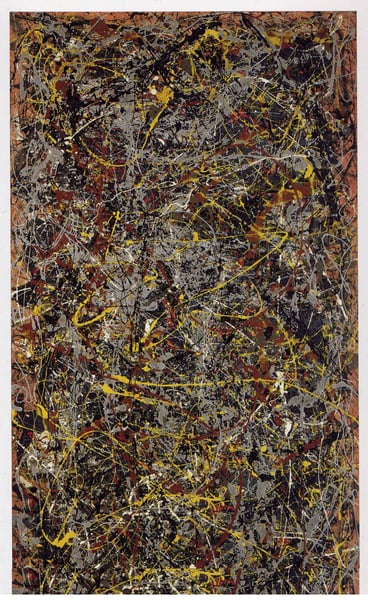
No. 5 est un tableau du peintre américain Jackson Pollock datant de 1948, c'est-à-dire du début de sa période dite « classique ».
30 œuvres essentielles du mouvement qui a fait de New York la capitale de l'art
L'expressionnisme abstrait a émergé à New York dans les années 1940 et 1950 comme le premier grand mouvement artistique américain à atteindre une influence internationale. Rejetant l'imagerie représentative, ces artistes ont poursuivi l'expression émotionnelle brute par des gestes audacieux et une échelle monumentale.
Le mouvement englobait l'« action painting » gestuel de Pollock et de Kooning, et la peinture contemplative « color field » de Rothko et Newman.
Utilisez la liste pour suivre les œuvres expressionnistes abstraites que vous avez vues.
Jackson Pollock
No. 5 est un tableau du peintre américain Jackson Pollock datant de 1948, c'est-à-dire du début de sa période dite « classique ».
Jackson Pollock · Action painting · abstract
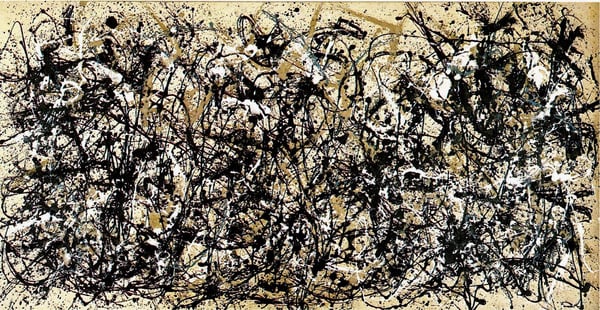
Autumn Rhythm (Number 30) is an abstract action painting by Jackson Pollock from 1950. The work exemplifies action painting through its non-representational approach and emphasis on the physical process of mark-making rather than a predetermined composition or recognizable subject.
Roger Weik · Abstract Expressionism · abstract
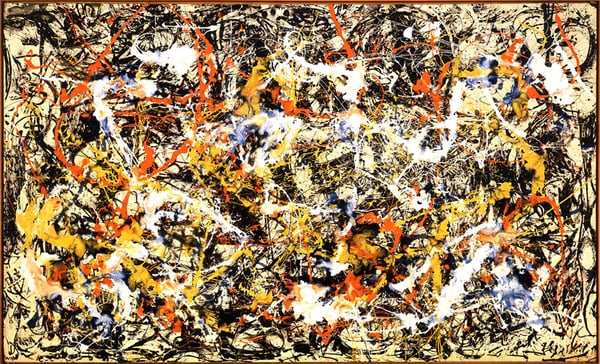
Convergence is an oil painting by Jackson Pollock, from 1952. It is held at the Buffalo AKG Art Museum, in Buffalo.
Jackson Pollock
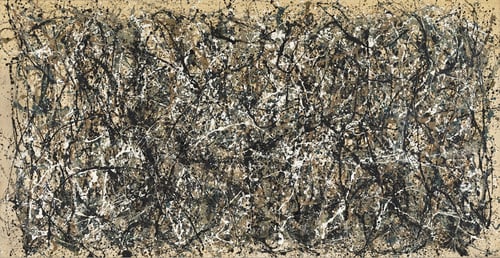
One : Number 31, 1950 est l'un des plus grands et des plus importants exemples du dripping de l'expressionnisme abstrait de Jackson Pollock. Cette œuvre d'art a appartenu à un collectionneur privé jusqu'en 1968, date à laquelle elle a été achetée par le Museum of Modern Art (MoMA) de New York, où elle est exposée depuis lors.
Jackson Pollock
Blue Poles est un tableau de l'artiste américain Jackson Pollock, réalisé en 1952.
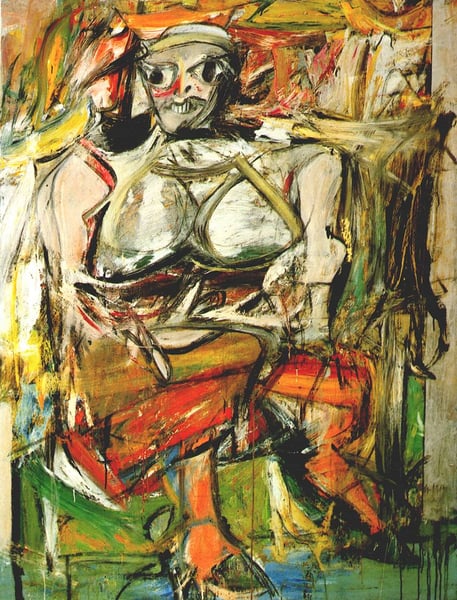
Willem de Kooning · Abstract Expressionism · portrait
Woman I est une peinture expressionniste abstraite de l'artiste américain Willem de Kooning.
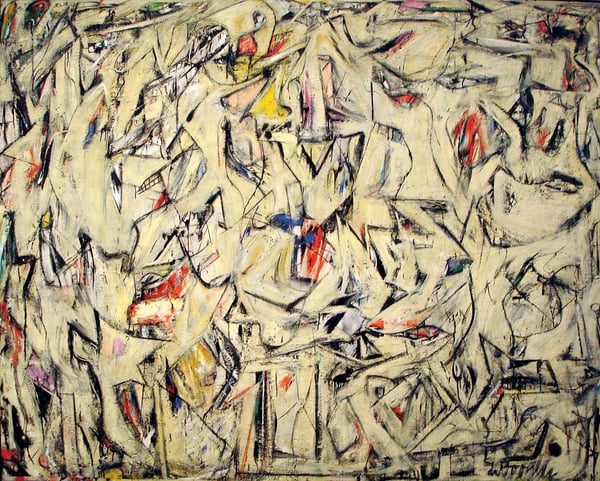
Willem de Kooning · Abstract Expressionism · abstract
In the late 1940s, even as De Kooning returned to figuration, he embarked on creating another abstraction, Excavation. While not as monumental as some later Abstract Expressionist paintings, the canvas was the biggest painting he had ever made, measuring just over six-and-a-half-feet tall and eight-feet wide. The pictorial space depicted in the painting was closely tied to De Kooning's sense of...
Willem de Kooning
Woman III est une peinture de Willem de Kooning issue d'une série de 6 peintures dont le thème est la femme. Il s'agit d'un nu réalisé en deux ans, de 1951 à 1953.
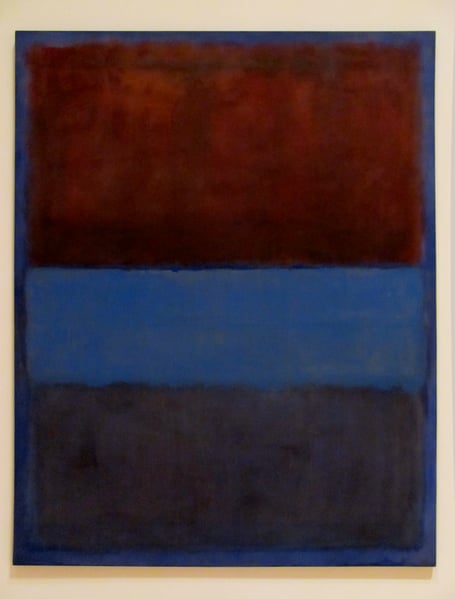
Mark Rothko
No. 61 (Rust and Blue) is an abstract composition by Mark Rothko consisting of large color fields in rust and blue tones.
Mark Rothko
Orange, Red, Yellow is an abstract composition by Mark Rothko featuring horizontal bands of color—orange, red, and yellow—characteristic of his Color Field painting approach.
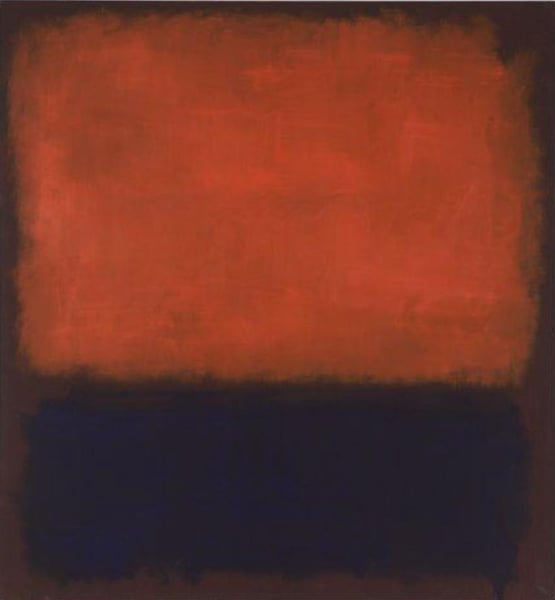
Mark Rothko
Mark Rothko's No. 14, 1960 is an untitled abstract work from the artist's mature period, when he was developing his characteristic color-field paintings composed of large, soft-edged rectangles of color.
Mark Rothko
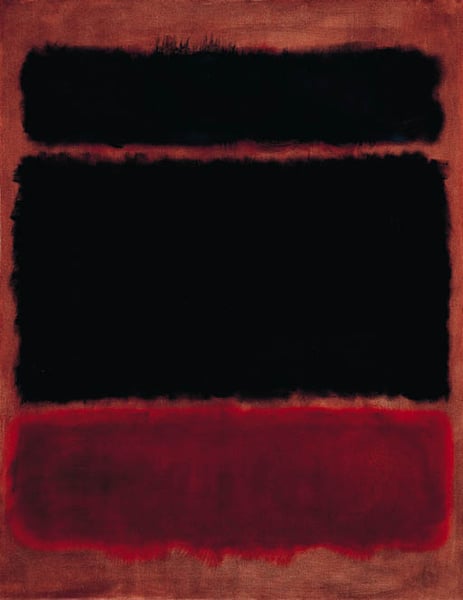
Untitled (Black in Deep Red) is a painting by Mark Rothko featuring black and deep red forms. The work exemplifies Rothko's characteristic approach to color field painting, in which large, softly-edged rectangular areas of color occupy the canvas to engage the viewer's direct perception of hue and tone.
Barnett Newman · Color Field Painting · abstract
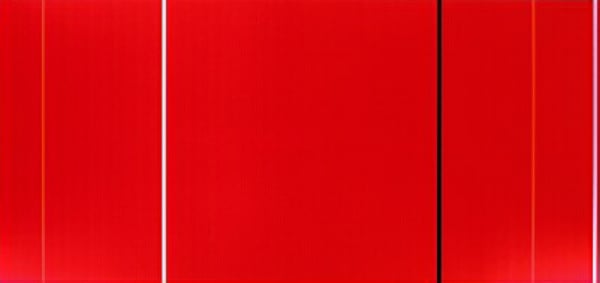
Vir Heroicus Sublimis is a 1951 painting by Barnett Newman, an American painter who was a key part of the abstract expressionist movement. Vir Heroicus Sublimis—"Man, Heroic and Sublime" in Latin—attempts to evoke a reaction from its viewers through its overwhelming scale and saturated color. The painting is part of the permanent collection of the Museum of Modern Art in New York City.
Barnett Newman · Color Field Painting · abstract
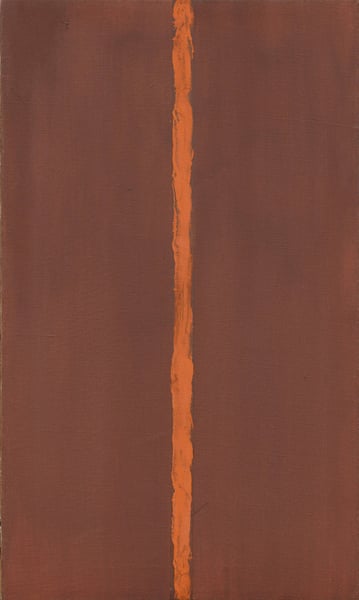
Onement I, a 1948 color field painting by Barnett Newman, consists of a large expanse of cadmium red interrupted by a single vertical stripe of lighter tone running from top to bottom.
Barnett Newman
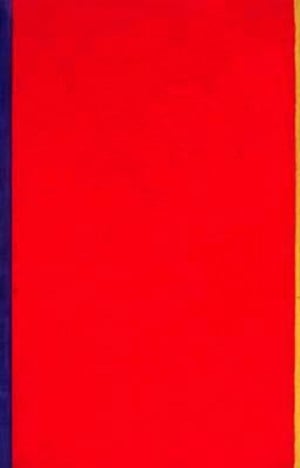
Who's Afraid of Red, Yellow and Blue est une série de quatre peintures de grande envergure de Barnett Newman réalisées entre 1966 et 1970. Deux d'entre elles ont été victimes d'actes de vandalisme au sein de musées. Le titre de cette série fait écho à Qui a peur de Virginia Woolf ?, la pièce de 1962 d'Edward Albee, elle-même inspirée de la chanson Qui a peur du grand méchant loup ?, célèbre dep...
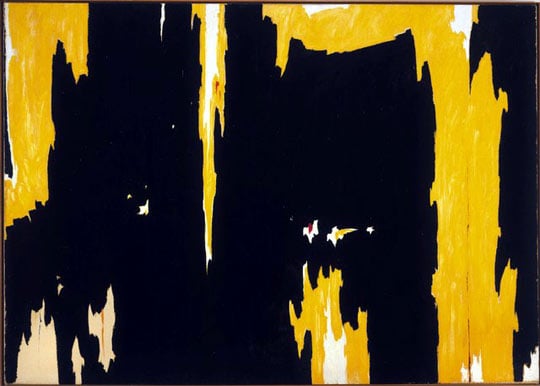
Clyfford Still · Color Field Painting · abstract
Clyfford Still's 1957-D No. 1 is a color field painting from 1957, employing the abstract vocabulary characteristic of that movement and moment in mid-twentieth-century American art.
Clyfford Still
Clyfford Still's PH-971 is an abstract work in the artist's characteristic style of large gestural forms and high-contrast color relationships. The painting employs Still's typical vocabulary of jagged, organic shapes in stark juxtaposition, without representational subject matter.
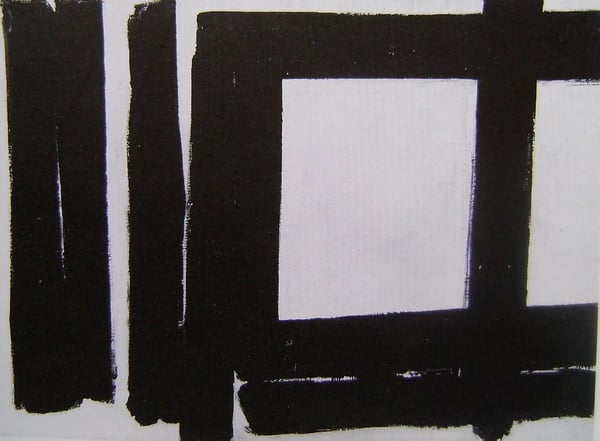
Arshile Gorky · Cubism · abstract
Arshile Gorky's Painting from 1937 is a work executed in the Cubist style, employing abstraction to structure its composition.
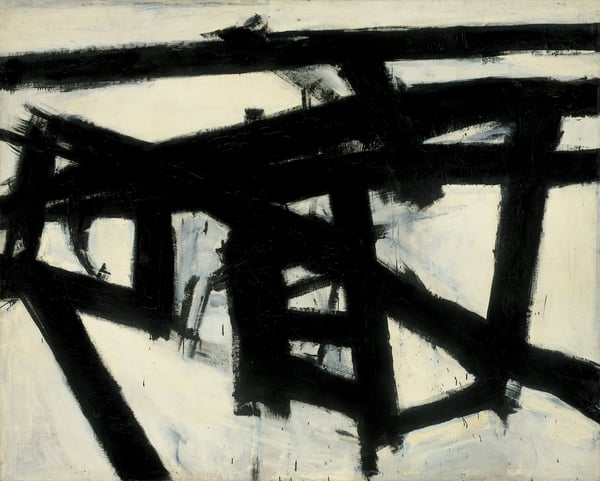
Franz Kline · Action painting · abstract
Mahoning is an abstract action painting by Franz Kline from 1956. The work exemplifies the gestural, energetic approach of action painting, characterized by bold, spontaneous brushwork and dynamic compositional movement.
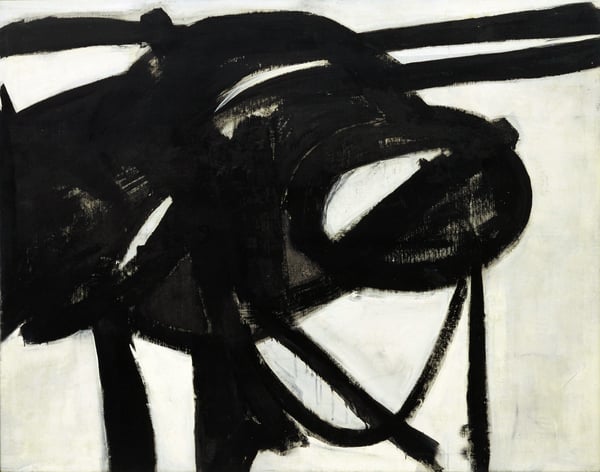
Franz Kline · Action painting · abstract
Chief is an abstract action painting by Franz Kline from 1950. The work exemplifies the gestural, energetic approach of action painting through its bold, dynamic brushwork.
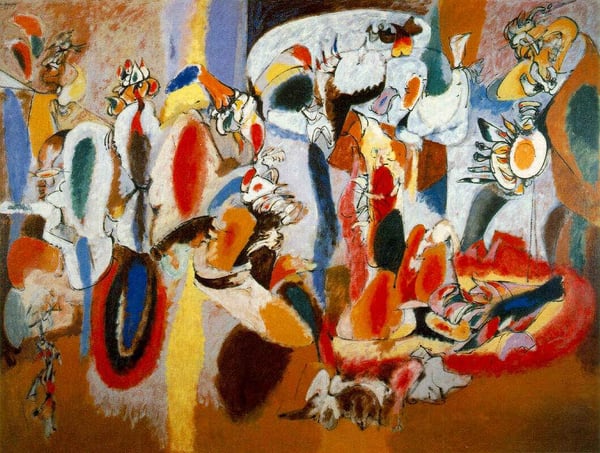
Arshile Gorky
The Liver is the Cock's Comb is a cubist painting by Armenian-American artist Arshile Gorky. It is one of his largest and most famous paintings.
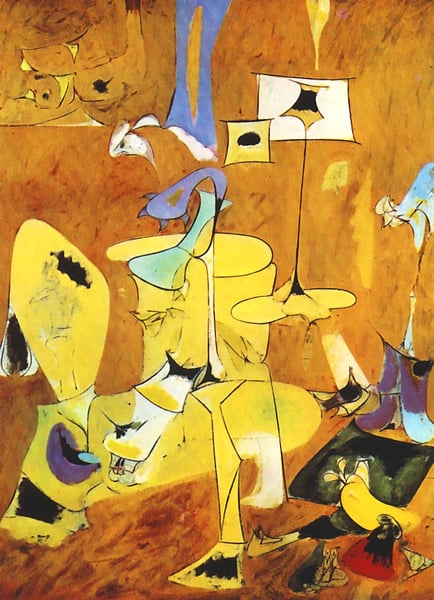
Arshile Gorky · Surrealism · abstract
The Betrothal II is an abstract Surrealist work by Arshile Gorky from 1947.
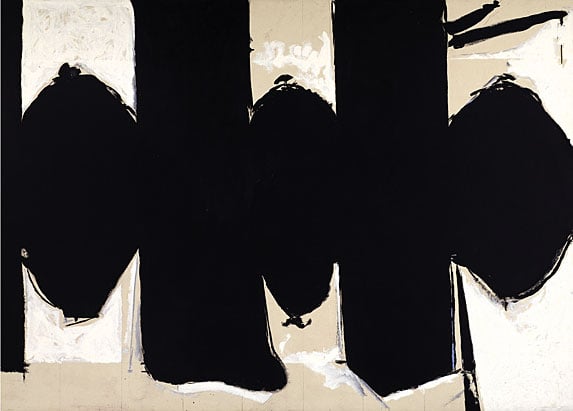
Robert Motherwell · Abstract Expressionism · abstract
Elegy to the Spanish Republic No. 110 is part of a series comprising more than 140 paintings, which Motherwell worked on throughout his long career. The series functioned as the artist's memorial to the Spanish Civil War, an event that had come to symbolize for him the human tragedies of oppression and injustice. No. 110 is typical in its stark black and white palette, and interplay of ovoid an...
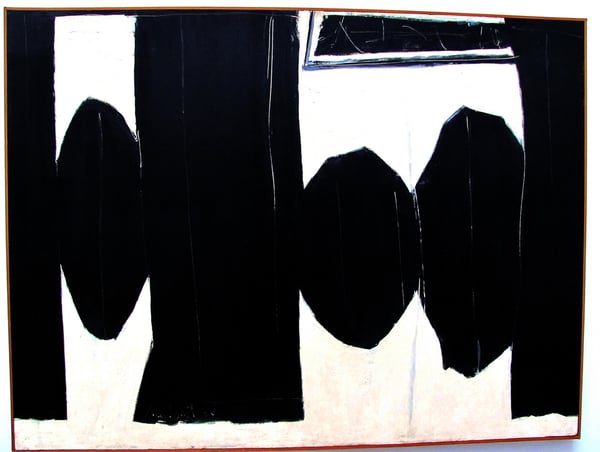
Robert Motherwell · Abstract Expressionism · abstract
À cinq heures de l'après-midi est un film dramatique franco-iranien réalisé par Samira Makhmalbaf, sorti en 2003. Il a remporté le prix du jury du Festival de Cannes en 2003.
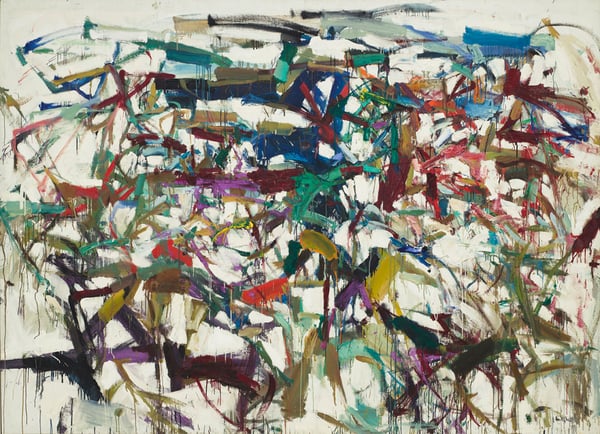
Joan Mitchell · Abstract Expressionism · abstract
Ladybug is an abstract painting by Joan Mitchell created in 1957, situated within the Abstract Expressionist movement. The work eschews representational imagery in favor of gestural abstraction.
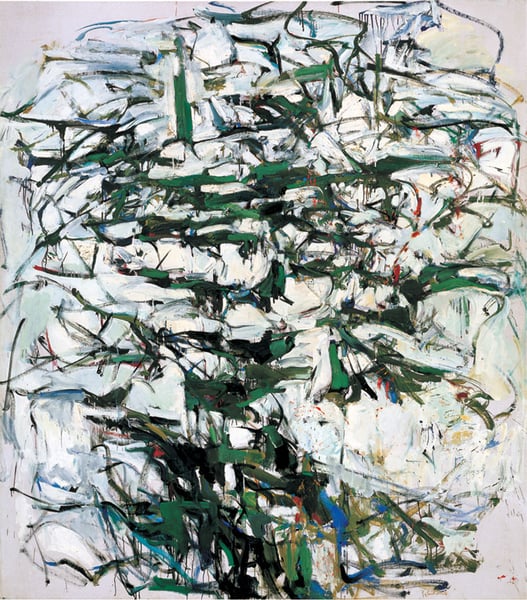
Joan Mitchell · Abstract Expressionism · abstract
Hemlock is a 1956 oil on canvas painting by the American New York School abstract expressionist artist Joan Mitchell. On this canvas Mitchell mixed horizontal strokes of green with white. The work is in the collection of the Whitney Museum of American Art, in New York.
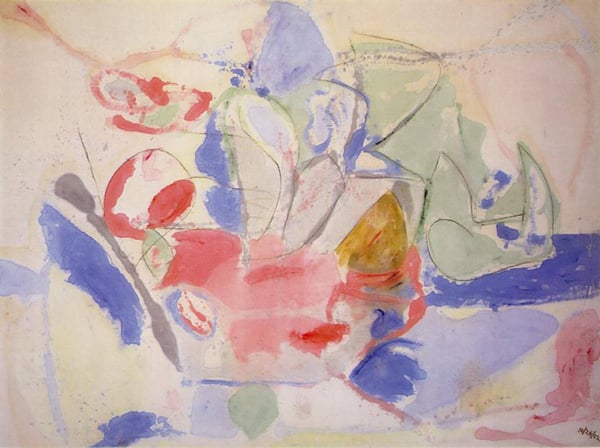
Helen Frankenthaler · Abstract Expressionism, Lyrical Abstraction · abstract
Montagnes et mer – en anglais Mountains and Sea – est un tableau réalisé par la peintre américaine Helen Frankenthaler en 1952, à l'âge de vingt-trois ans. De format horizontal, cette peinture à l'huile et au fusain est un paysage qui prétend représenter les montagnes tombant dans l'océan Atlantique en Nouvelle-Écosse, province du Canada dont l'artiste revient de voyage. Si sa composition errat...
Juan Gris · Synthetic Cubism · still life
The Bay is a still life by Juan Gris from 1921, executed in the synthetic cubism style. The work breaks down its subject matter into geometric planes and reassembles them according to cubist principles, characteristic of Gris's approach to form and composition during this period.
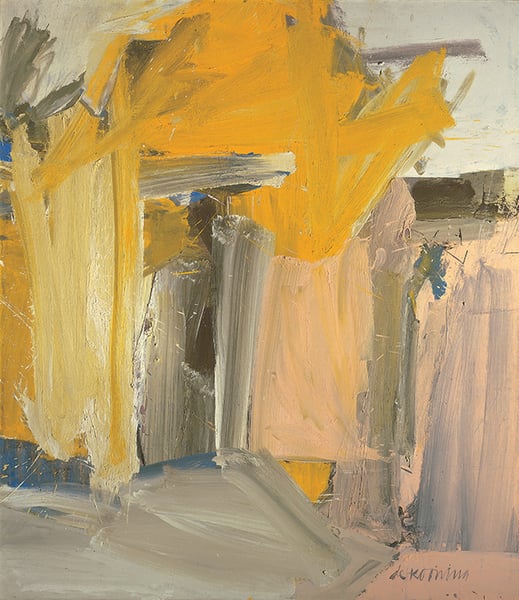
Willem de Kooning · Abstract Expressionism · abstract
Door to the River is an abstract expressionist work by Willem de Kooning from 1960. The title names a threshold and a waterway, though the painting itself is abstract rather than representational.
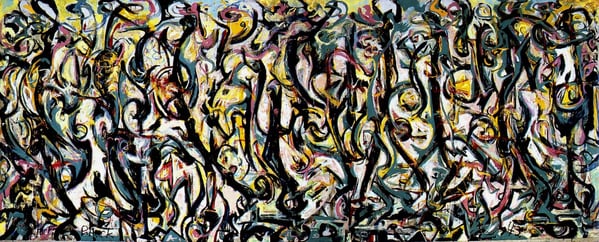
Jackson Pollock · Abstract Expressionism · abstract
La peinture murale est une peinture monumentale dont le support est un mur intérieur ou extérieur, une voûte ou un plafond, par opposition à la peinture de chevalet qui est transportable. Cette peinture est en relation avec l'architecture. L'artiste-peintre qui se spécialise dans cet art est appelé « peintre muraliste ».
Aucun commentaire pour l’instant — soyez le premier.