30 opere essenziali del movimento che ha reso New York la capitale dell'arte
CE
Caleido Editorial Team9 giugno 202622 min di lettura0 visualizzazioni
L'Espressionismo Astratto emerse a New York negli anni '40 e '50 come il primo grande movimento artistico americano a raggiungere un'influenza internazionale. Rifiutando l'immaginario rappresentativo, questi artisti perseguirono l'espressione emotiva cruda attraverso gesti audaci e scala monumentale.
Il movimento comprendeva l'« action painting » gestuale di Pollock e de Kooning, e la contemplativa pittura « color field » di Rothko e Newman.
Usa la checklist per tenere traccia delle opere espressioniste astratte che hai visto di persona.
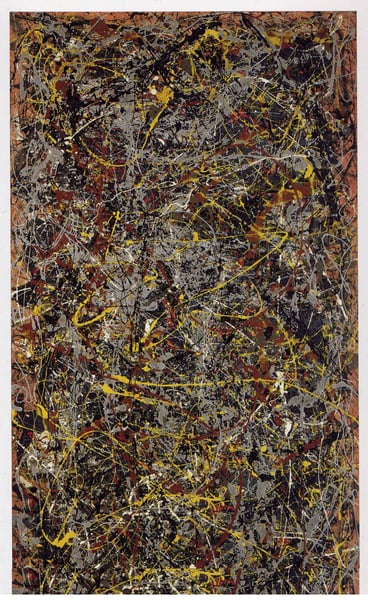
No. 5, 1948 is a 1948 painting by Jackson Pollock, an American painter known for his contributions to the abstract expressionist movement. It was sold on 22 May 2006 for $140 million, a new mark for highest ever price for a painting, not surpassed until April 2011.
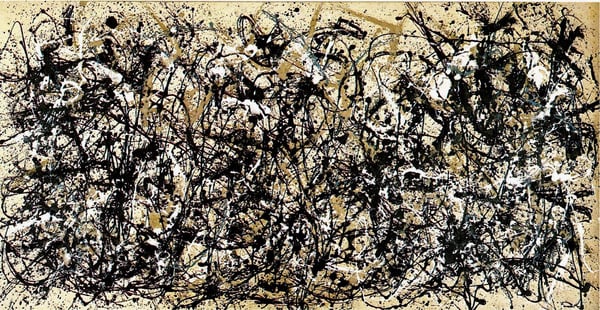
Autumn Rhythm (Number 30) is an abstract action painting by Jackson Pollock from 1950. The work exemplifies action painting through its non-representational approach and emphasis on the physical process of mark-making rather than a predetermined composition or recognizable subject.
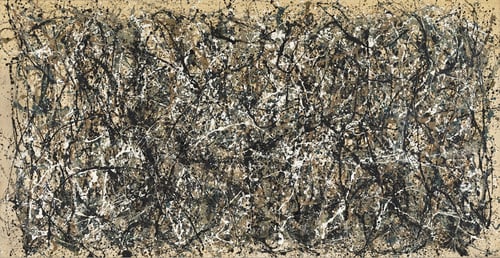
One: Number 31, 1950 is a painting by American painter Jackson Pollock, from 1950. It is one of the largest and most prominent examples of the artist's Abstract Expressionist drip-style works. The work was owned by a private collector until 1968 when it was purchased by the Museum of Modern Art, in New York, where it has been displayed since then.
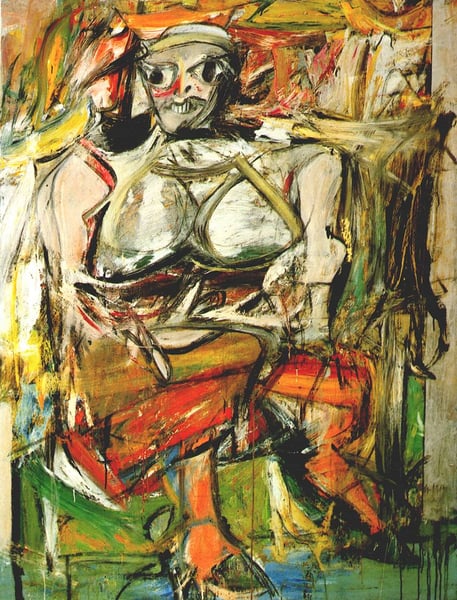
Willem de Kooning · Abstract Expressionism · portrait
'Woman I' is part of the 'Women' series that de Kooning presented at the Sidney Janis Gallery, causing controversy in the art world. The canvas is covered with vigorous, creamy, and silvery hues in a frenzy of vertical and horizontal gestures, from which a wide-eyed, large-breasted woman emerges, with blonde hair and a big smile. The figure appears constrained yet full of energy, and her taperi...
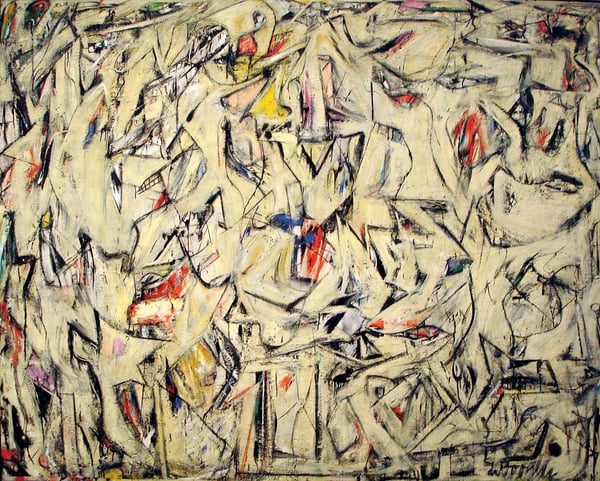
Willem de Kooning · Abstract Expressionism · abstract
In the late 1940s, even as De Kooning returned to figuration, he embarked on creating another abstraction, Excavation. While not as monumental as some later Abstract Expressionist paintings, the canvas was the biggest painting he had ever made, measuring just over six-and-a-half-feet tall and eight-feet wide. The pictorial space depicted in the painting was closely tied to De Kooning's sense of...
Woman III is a 1953 painting by abstract expressionist painter Willem de Kooning. It is one of a series of six Women paintings done by de Kooning in the early 1950s, which were first exhibited at the Sidney Janis gallery in 1953. Woman III measures 68 by 48+1⁄2 inches and was completed that same year.
Orange, Red, Yellow is an abstract composition by Mark Rothko featuring horizontal bands of color—orange, red, and yellow—characteristic of his Color Field painting approach.
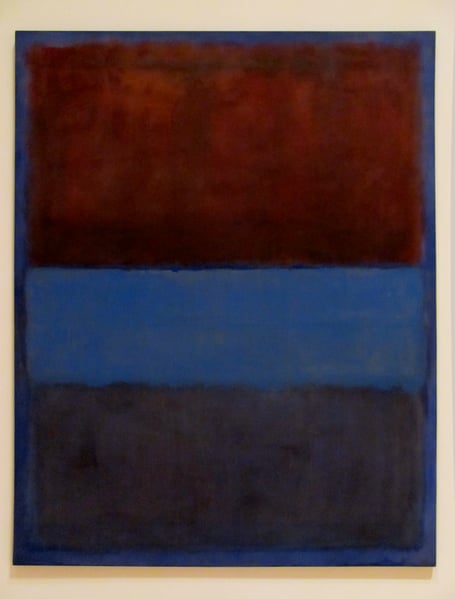
Mark Rothko's No. 14, 1960 is an untitled abstract work from the artist's mature period, when he was developing his characteristic color-field paintings composed of large, soft-edged rectangles of color.
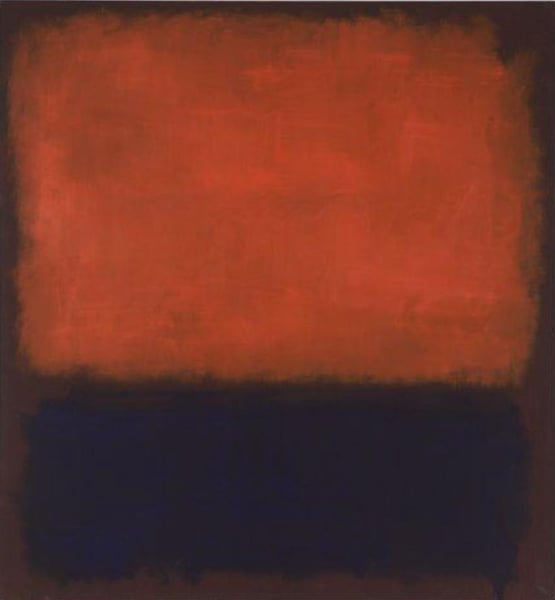
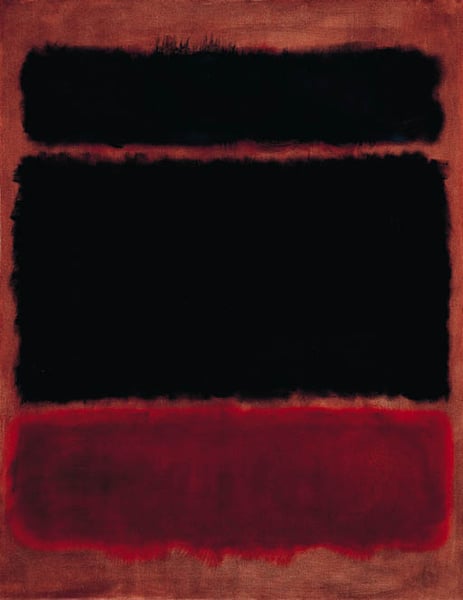
Untitled (Black in Deep Red) is a painting by Mark Rothko featuring black and deep red forms. The work exemplifies Rothko's characteristic approach to color field painting, in which large, softly-edged rectangular areas of color occupy the canvas to engage the viewer's direct perception of hue and tone.
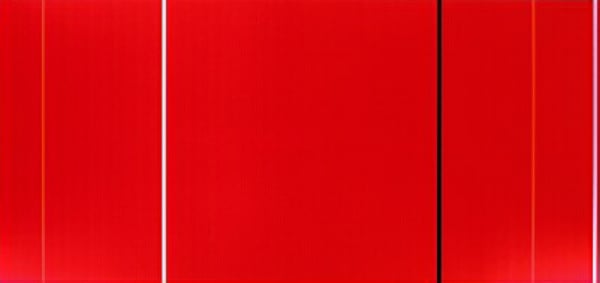
Vir Heroicus Sublimis is a 1951 painting by Barnett Newman, an American painter who was a key part of the abstract expressionist movement. Vir Heroicus Sublimis—"Man, Heroic and Sublime" in Latin—attempts to evoke a reaction from its viewers through its overwhelming scale and saturated color. The painting is part of the permanent collection of the Museum of Modern Art in New York City.
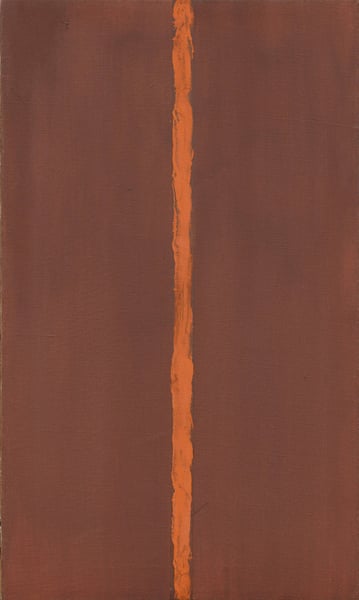
Onement I, a 1948 color field painting by Barnett Newman, consists of a large expanse of cadmium red interrupted by a single vertical stripe of lighter tone running from top to bottom.
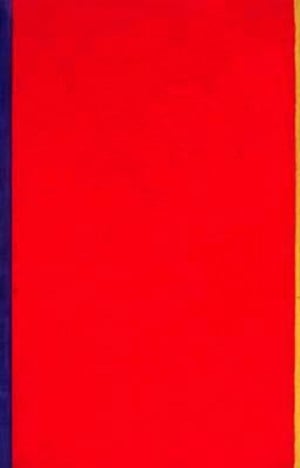
Who's Afraid of Red, Yellow and Blue is a series of four large-scale paintings by Barnett Newman painted between 1966 and 1970. Two of them have been the subject of vandalistic attacks in museums. The series' name was a reference to Who's Afraid of Virginia Woolf?, the 1962 play by Edward Albee, which was in itself a reference to "Who's Afraid of the Big Bad Wolf?", the 1933 song immortalized i...
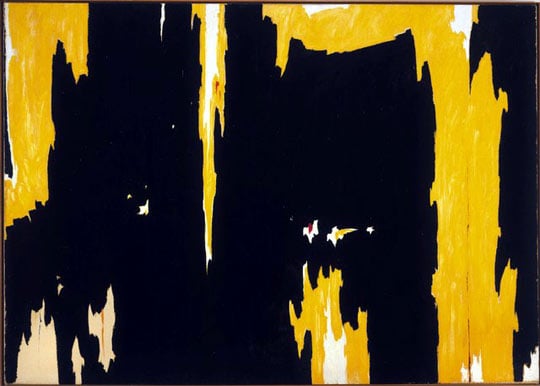
Clyfford Still's 1957-D No. 1 is a color field painting from 1957, employing the abstract vocabulary characteristic of that movement and moment in mid-twentieth-century American art.
Clyfford Still's PH-971 is an abstract work in the artist's characteristic style of large gestural forms and high-contrast color relationships. The painting employs Still's typical vocabulary of jagged, organic shapes in stark juxtaposition, without representational subject matter.
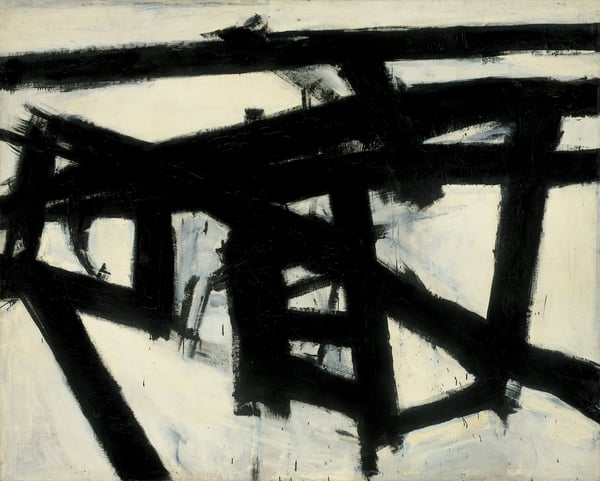
Mahoning is an abstract action painting by Franz Kline from 1956. The work exemplifies the gestural, energetic approach of action painting, characterized by bold, spontaneous brushwork and dynamic compositional movement.
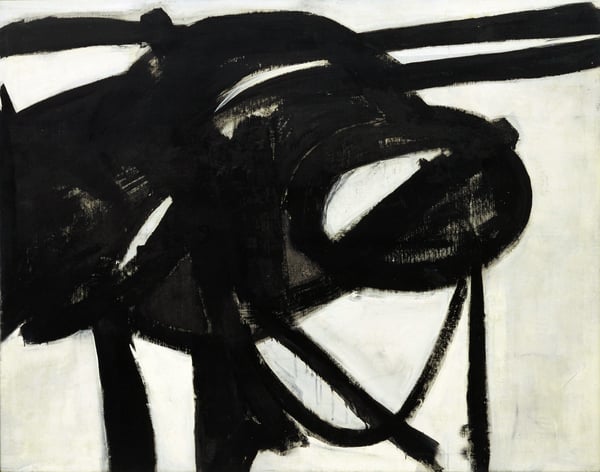
Chief is an abstract action painting by Franz Kline from 1950. The work exemplifies the gestural, energetic approach of action painting through its bold, dynamic brushwork.
Robert Motherwell · Abstract Expressionism · abstract
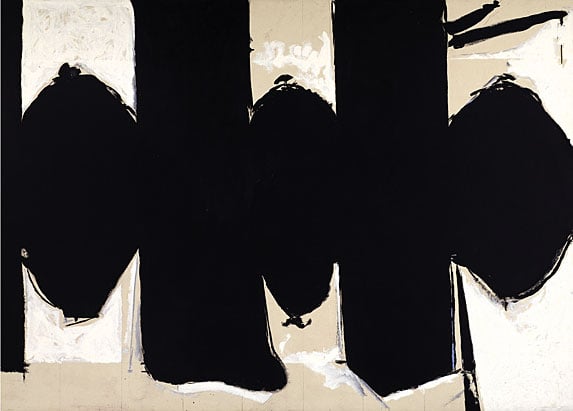
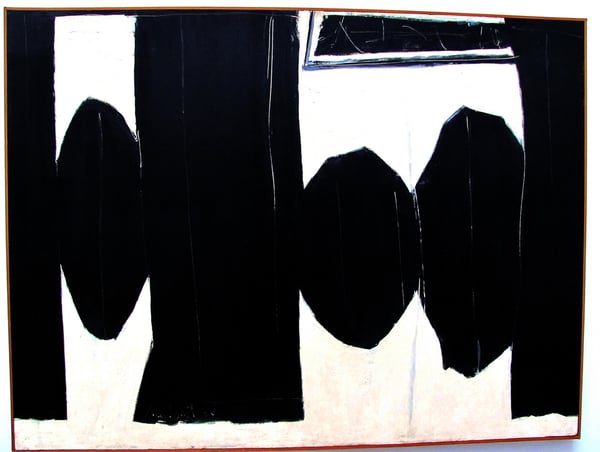
Elegy to the Spanish Republic No. 110 is part of a series comprising more than 140 paintings, which Motherwell worked on throughout his long career. The series functioned as the artist's memorial to the Spanish Civil War, an event that had come to symbolize for him the human tragedies of oppression and injustice. No. 110 is typical in its stark black and white palette, and interplay of ovoid an...
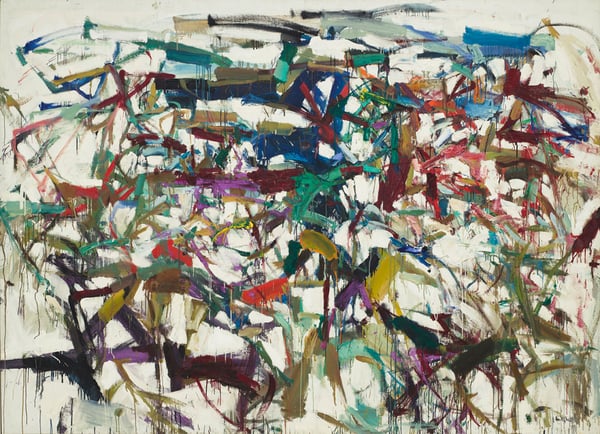
Ladybug is an abstract painting by Joan Mitchell created in 1957, situated within the Abstract Expressionist movement. The work eschews representational imagery in favor of gestural abstraction.
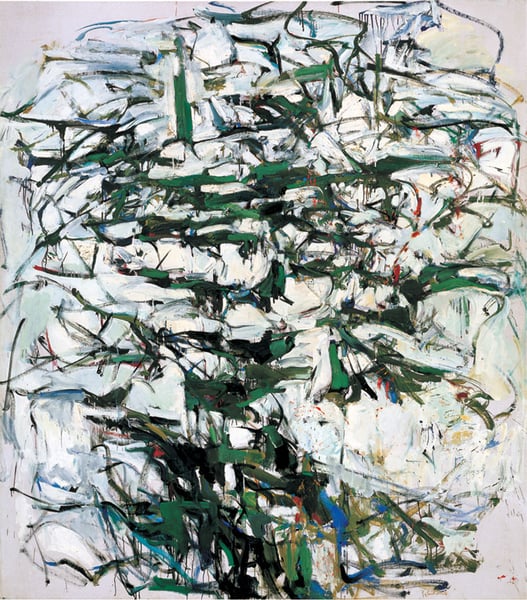
Hemlock is a 1956 oil on canvas painting by the American New York School abstract expressionist artist Joan Mitchell. On this canvas Mitchell mixed horizontal strokes of green with white. The work is in the collection of the Whitney Museum of American Art, in New York.
Helen Frankenthaler · Abstract Expressionism, Lyrical AbstractionOpera
Helen Frankenthaler · Abstract Expressionism, Lyrical Abstraction · abstract
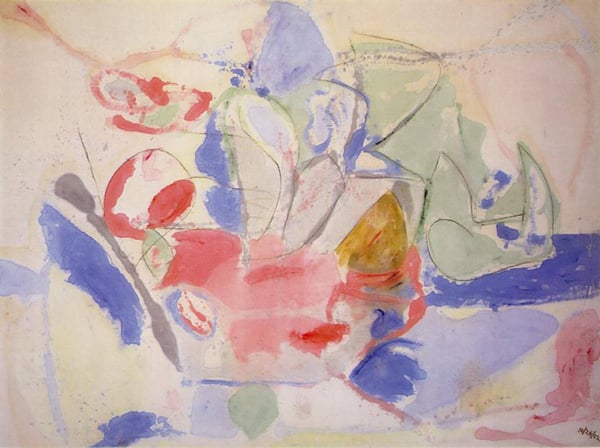
Initially associated with abstract expressionism, her career was launched in 1952 with the exhibition of Mountains and Sea. This painting (inspired by inspired by a trip to Nova Scotia) is large - measuring seven feet by ten feet - and has the effect of a watercolor, though it is painted in oils. In it, she introduced the technique of painting directly onto an unprepared canvas so that the mate...
The Bay is a still life by Juan Gris from 1921, executed in the synthetic cubism style. The work breaks down its subject matter into geometric planes and reassembles them according to cubist principles, characteristic of Gris's approach to form and composition during this period.
Willem de Kooning · Abstract Expressionism · abstract
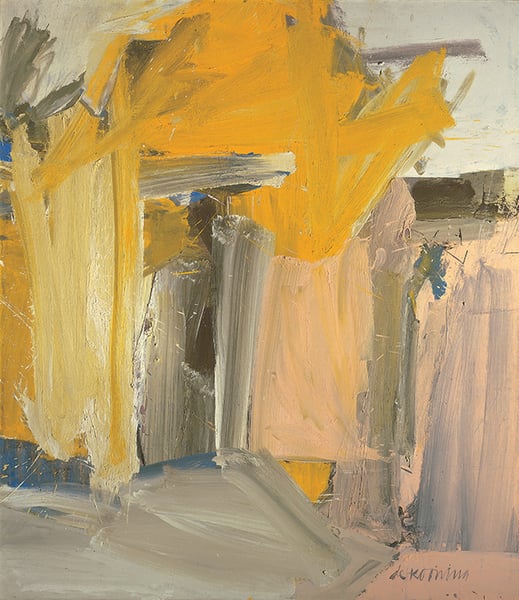
Door to the River is an abstract expressionist work by Willem de Kooning from 1960. The title names a threshold and a waterway, though the painting itself is abstract rather than representational.
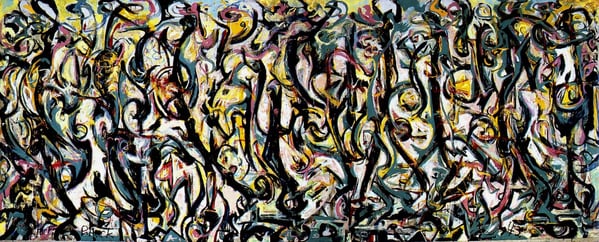
Jackson Pollock · Abstract Expressionism · abstract
Un murale è un dipinto realizzato su una parete, un soffitto o altra larga superficie permanente in muratura. Il termine indica anche il genere di pittura, ed è divenuto celebre per il movimento artistico messicano noto come "muralismo".
Ancora nessun commento — scrivi il primo.