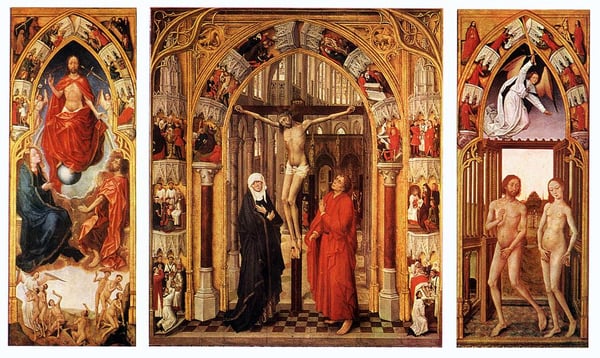
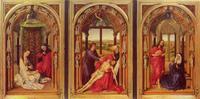
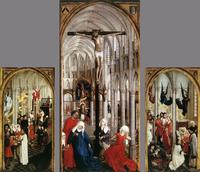
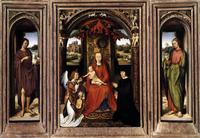
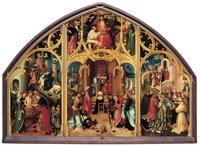
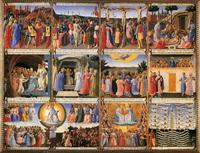
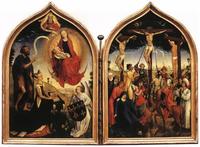
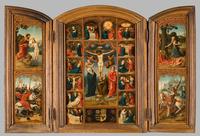
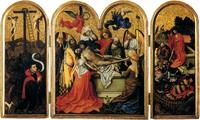
The Triptych of the Redemption (also known as the Miraflores Altarpiece) exemplifies Rogier van der Weyden’s mastery of the Northern Renaissance, a period defined by meticulous naturalism and profound spiritual emotion. What makes this work significant is its revolutionary integration of narrative clarity with expressive human pathos, elevating the triptych format from a mere devotional object into a deeply moving meditation on Christ’s sacrifice.
Van der Weyden abandons the crowded, episodic compositions of earlier Flemish painting in favor of a stark, symmetrical structure: the central panel depicts the Crucifixion, flanked by the Nativity (left) and the Resurrection (right). This triptych is not simply a sequence of events but a theological argument—redemption is born in humility, fulfilled in suffering, and completed in triumph. The artist’s signature use of brilliant, translucent oil glazes renders textures with astonishing fidelity: the sheen of silk, the coarse wood of the cross, the glint of tears. Yet the true innovation lies in the emotional charge. Van der Weyden intensifies the viewer’s empathy through elongated, elegantly sorrowful figures—the swooning Virgin, the anguished St. John—whose poses and gestures are choreographed to draw the eye into the drama. The shallow, sculptural space and compressed perspective foretell the psychological immediacy that would later define Northern devotional art. This triptych remains a cornerstone of the Northern Renaissance because it transforms pain into transcendent beauty, making divine mystery tangibly human.