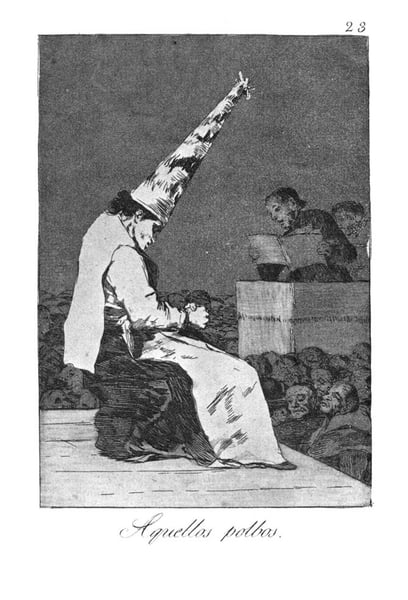
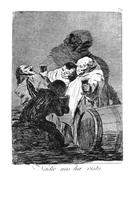
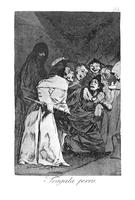
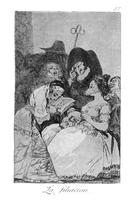
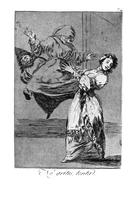
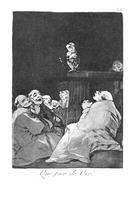
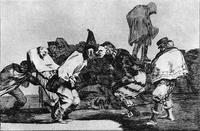
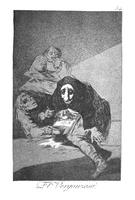
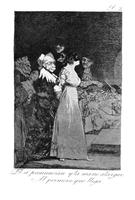
The artwork Those Specks of Dust by Francisco Goya is significant as a masterful fusion of Romanticism and caricature, two seemingly disparate modes that Goya aligns to produce a deeply critical and emotionally charged vision. Within the Romantic tradition, Goya eschews idealized beauty for raw, often unsettling psychological truth; here, the caricature genre allows him to exaggerate human folly and reduce grand pretensions to trivial, ephemeral “specks.” This reduction is itself a Romantic gesture, emphasizing the fragility and absurdity of human existence against a vast, indifferent universe. By using caricature—a form typically associated with satire and the grotesque—Goya channels Romanticism’s preoccupation with the irrational, the dark, and the subjective. The work thus stands as a pointed social commentary, mocking vanity, ignorance, or spiritual emptiness with a visual wit that is both immediate and profound. In this, Goya transcends mere entertainment, demonstrating how caricature can carry the full weight of Romantic intensity, making the viewer confront the minuscule yet haunting nature of human pride and error.