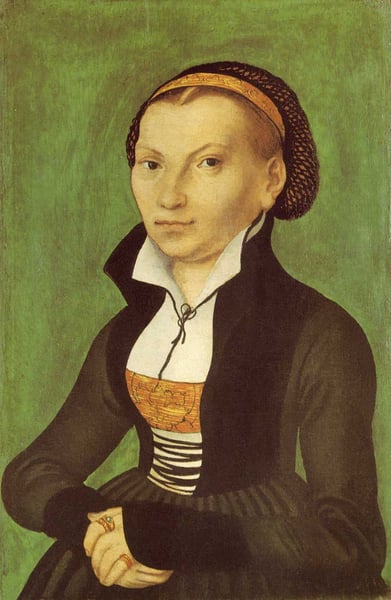
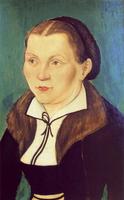
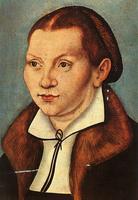
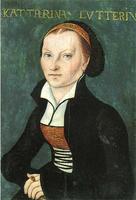
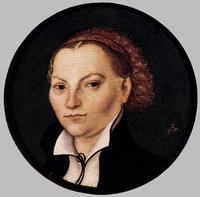
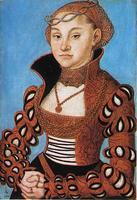
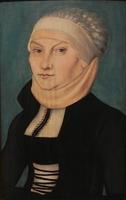
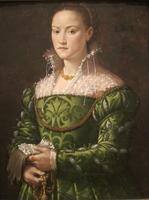
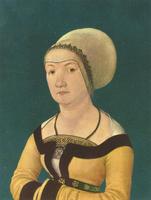
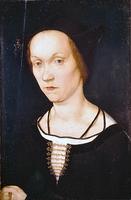
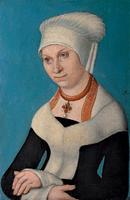
Expert Analysis: "Katharina von Bora, future wife of Martin Luther" by Lucas Cranach the Elder
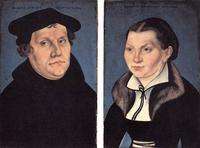
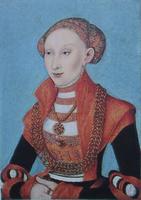
As a portrait from the Northern Renaissance, this work by Lucas Cranach the Elder is significant for its intersection of artistic mastery and pivotal historical moment. The Northern Renaissance is characterized by meticulous attention to detail, crisp linearity, and a focus on individual identity—all hallmarks of Cranach’s portrait style. Here, the subject is Katharina von Bora, a former nun who would become the wife of Martin Luther, placing the painting at the heart of Reformation history.
Cranach, a close friend and supporter of Luther, used his portraiture not only to capture likeness but also to convey the dignity and humanity of key Reformation figures. In this genre, the artist achieves a balance between realism and idealized representation, typical of his courtly yet incisive approach. The significance lies in the work’s dual role: as a masterful example of Northern Renaissance portraiture—with its precise rendering of costume, expression, and character—and as a visual document of a woman who played a crucial role in the Protestant Reformation. The portrait thus transcends mere likeness, becoming a symbol of a transformative era in European religious and cultural history.