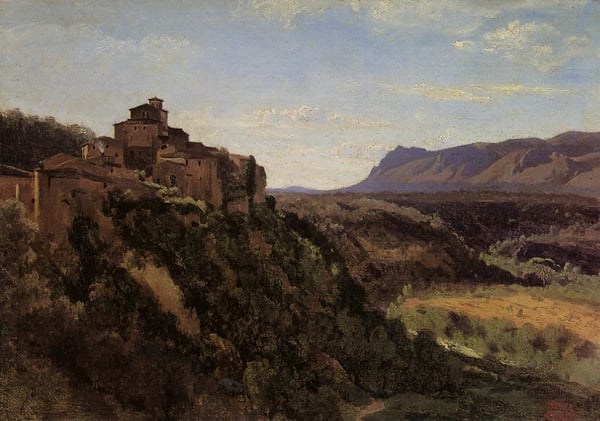
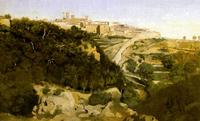
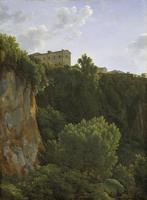
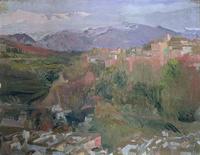
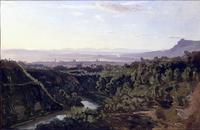
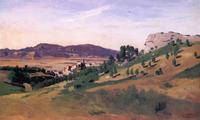
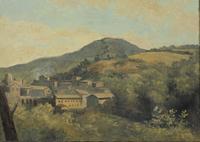
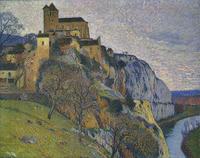
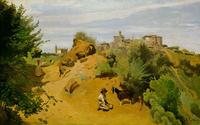
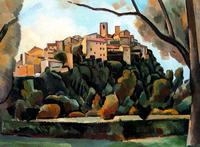
Though titled "The Roman Odalisque (Marietta)" and depicting a figure, the work is firmly rooted in the landscape tradition of the Realist style. Corot treats the human figure not as a separate narrative focus, but as an organic element of the natural environment—a living component of the Roman countryside.
The significance of this painting within Realism lies in its quiet departure from idealized studio portraits. Instead of a theatrical or exoticized odalisque, Corot presents a real woman (the model Marietta) in a believable outdoor setting. The landscape itself is not merely a backdrop; its soft, atmospheric light and earthy tonalities dominate the composition, integrating the figure through subtle color harmonies. This approach anticipates the plein air ethos that would later define Impressionism, while remaining grounded in Realism's commitment to observable truth—even the truth of a person existing peacefully within a specific place and moment. The work thus exemplifies how Corot expanded the landscape genre to include human presence without sacrificing the sincerity and direct observation central to Realist practice.