
Analisi esperta di Garment studies di Albrecht Durer
Stile: Northern Renaissance · Genere: sketch and study
Expert Analysis: "Garment Studies" by Albrecht Dürer
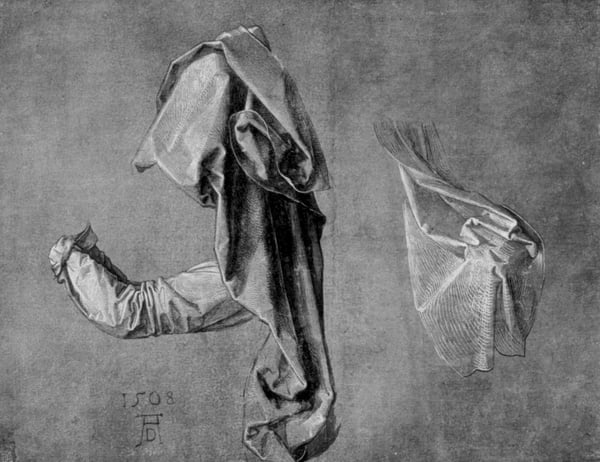
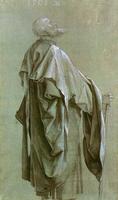
Albrecht Dürer’s Garment Studies represents a pinnacle of observational draftsmanship within the Northern Renaissance, demonstrating how the genre of the sketch and study was elevated from a mere preparatory tool to a work of intrinsic artistic and intellectual value. Created during a period when Dürer was deeply engaged with both Italian Renaissance humanism and the precise naturalism of Flemish art, these drawings reveal his systematic investigation into the behavior of fabric as a means of conveying volume, texture, and movement.
Significance in the Northern Renaissance Context
Dürer’s garment studies are significant because they embody the Northern Renaissance fascination with empirical observation and meticulous detail. Unlike many Italian contemporaries who often idealized drapery into elegant, rhythmic folds, Dürer records the specific wrinkles, creases, and fall of cloth with almost scientific accuracy. In Garment Studies, he uses fine hatching and cross-hatching to model the interplay of light and shadow across the material, creating a convincing illusion of weight and texture. This approach reflects Dürer’s belief that nature—including the artificial nature of draped fabric—could be captured through rigorous study, a cornerstone of his own theoretical writings on proportion and perspective.
Role as Preparatory Study
These sketches were likely executed as references for larger compositions, such as altarpieces or engravings, where the emotional and narrative impact of a figure depended heavily on the expressive power of its clothing. By isolating the garment from the body, Dürer could concentrate on the abstract geometry of folds, often arranging them in controlled, rhythmical patterns that prefigure his later masterworks like The Four Apostles. The study thus highlights the artist’s methodical process: first understanding the part, then assembling the whole.
Technical Mastery
The work showcases Dürer’s exceptional control of pen and ink, a medium favored for its clarity and precision. The overlapping strokes create not only tonal depth but also a sense of directional flow, as if the viewer can trace the path of the fabric’s fall. In some areas, the lines appear almost calligraphic, blending Northern draftsmanship with a hint of the decorative elegance found in contemporary German woodcuts. This technical bravura reinforces the idea that even a simple study could stand as a finished work of art.
Legacy
Garment Studies is a testament to Dürer’s role in elevating the status of drawing from craft to intellectual pursuit. It anticipates later Northern European traditions of highly finished preparatory drawings—by artists such as Hans Baldung Grien and the Dutch realists—and underscores Dürer’s influence on the integration of Italian Renaissance compositional ideals with Northern European attention to material reality. In this unassuming sheet, we see the foundations of a new artistic self-consciousness: the artist as both observer and analyst of the visible world.
Visivamente simili
20 opere con composizione e palette affini
Father's robe God
Albrecht Durer
Drapery for a seated figure
Leonardo da Vinci
Drapery for a seated figure
Leonardo da Vinci
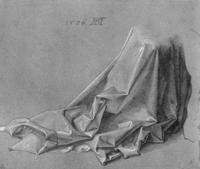
Robe study
Albrecht Durer
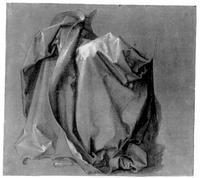
Father's robe God
Albrecht Durer
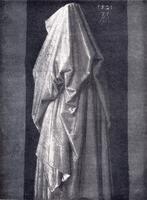
Study Of Drapery
Albrecht Durer
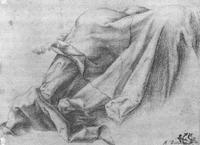
Drapery Study
Matthias Grünewald
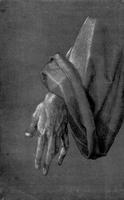
Left Hand of an Apostle
Albrecht Durer
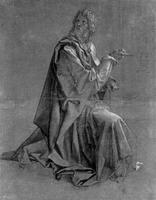
Kneeling Apostle
Albrecht Durer
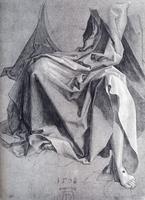
Study Of Drapery
Albrecht Durer
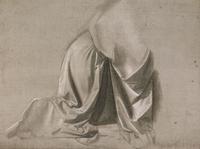
The Study of a Drapery of a Figure Kneeling
Leonardo da Vinci
Dress studies
Noè Bordignon
Moses
Matthias Grünewald
Complaining Pharisee
Matthias Grünewald
Study of Garments
Domenico Ghirlandaio
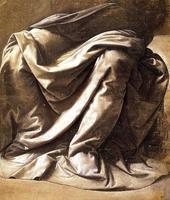
The Study of Drapery of a Seated Figure
Leonardo da Vinci
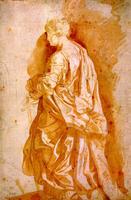
Study for a Standing Female Saint
Peter Paul Rubens
Study of an Apostle
Matthias Grünewald
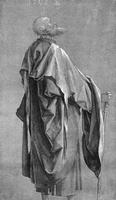
Study of Drapery
Albrecht Durer
Standing Apostle
Albrecht Durer