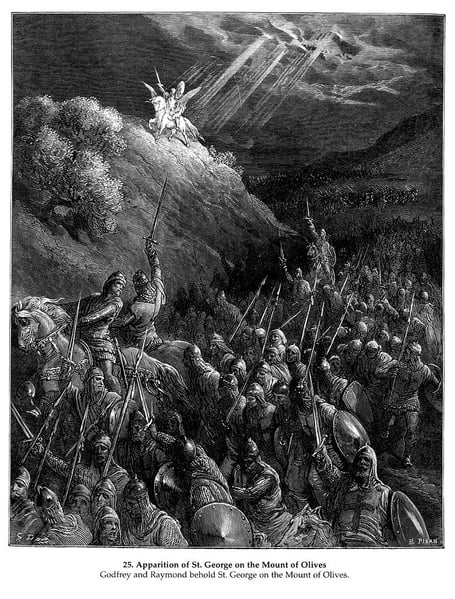
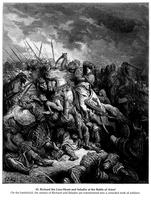
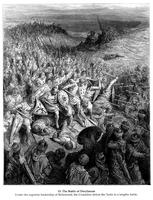
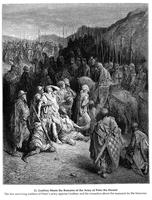
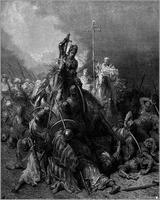
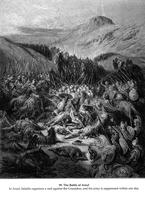
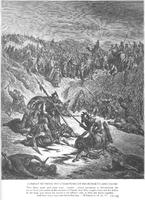
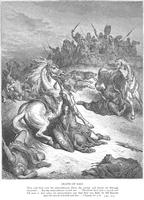
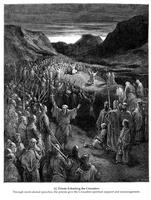
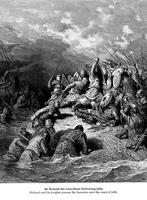
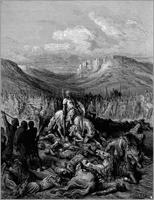
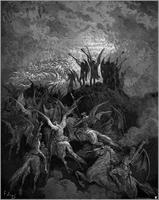
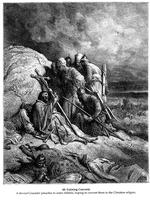
Based solely on the structured facts provided—that Gustave Doré’s "Apparition of St. George on the Mount of Olives" belongs to the Romanticism style and the illustration genre—the work’s significance lies in how it exemplifies Romantic ideals within a narrative illustration.
As a Romantic piece, the artwork prioritizes intense emotion, dramatic tension, and the sublime. The subject—a supernatural apparition on a sacred, historically charged site (Mount of Olives, linked to the Crusades)—allows Doré to contrast the earthly struggle of crusaders with the divine, otherworldly presence of St. George. This fusion of the spiritual and the historical is a hallmark of Romanticism, which often sought to elevate the past through heroic and miraculous moments.
As an illustration, the work demonstrates Doré’s mastery of visual storytelling. The composition likely uses strong chiaroscuro (light/dark contrast) to heighten the apparition’s supernatural glow against a dark, tumultuous landscape, while the figures of the crusaders register awe or fear. The significance here is in how Doré transforms a textual narrative into a vivid, emotionally charged scene that stands alone as a work of art, influencing later book illustration and popular imagery of medieval legends.