
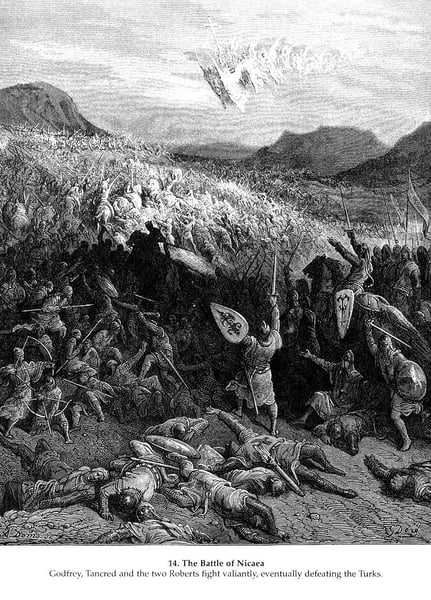
Expert analysis of Gustave Dore’s The Battle of Nicaea in 1097
Style: Romanticism · Genre: illustration
Analysis of "The Battle of Nicaea in 1097" by Gustave Doré
Gustave Doré’s The Battle of Nicaea in 1097 stands as a quintessential example of Romantic illustration, where the boundaries between fine art and narrative imagery dissolve. Though the provided facts specify the style as Romanticism and the genre as illustration, the work’s true significance lies in how Doré elevated the book illustration—often considered a secondary art form—into a vehicle for epic, emotional storytelling that rivaled monumental painting.
Dramatic Romanticism in Action
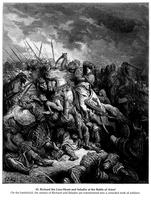
Romanticism prized intense emotion, heroic struggle, and the sublime power of nature and history. Doré’s composition embodies these ideals: the battlefield is a swirling vortex of clashing cavalry, billowing dust, and dynamic diagonals. The viewer is immersed in the chaos of the First Crusade, with Christian knights and Muslim defenders locked in a ferocious melee. Doré uses stark chiaroscuro—deep shadows pierced by shafts of light—to heighten the tension, a hallmark of Romantic drama. The central figures are not individualized portraits but archetypes of courage and fury, their gestures exaggerated to convey the moral weight of the conflict.
Narrative Power Through Detail
Despite being an illustration, the scene is packed with meticulous detail: the textures of armor, the panic of horses, the distant walls of Nicaea. This density of information was Doré’s signature. He transformed illustrations into self-contained masterpieces that could be read as both historical documents and allegorical visions. The Battle of Nicaea is not merely a visual aid for a text; it is a dramatic interpretation of a pivotal moment, emphasizing the brutality and heroism that Romantic audiences craved.
Significance Within Romanticism
Doré’s work is significant because it expanded Romanticism’s reach beyond painting and sculpture into the realm of mass-produced book illustration, making epic, emotional art accessible to a broader public. His illustrations for The History of the Crusades (1877) and similar works helped define the visual imagination of the 19th century. In this piece, the sublime horror of war is rendered with a theatrical grandeur that aligns with Romanticism’s fascination with medieval chivalry and historical cataclysm. The composition does not simply depict a battle; it performs the Romantic ideals of sacrifice, destiny, and overwhelming force.
Legacy
Gustave Doré’s illustrations remain among the most reproduced images of the 19th century. The Battle of Nicaea exemplifies how he fused the precision of a draftsman with the emotional intensity of a Romantic poet. It stands as a bridge between academic history painting and popular visual culture, proving that illustration could be as lasting and significant as any canvas in a museum.
Museum / Gallery
Visually similar
20 works with related composition and palette
The Israelites Slaughter the Syrians
Gustave Dore
The Battle of Dorylaeum
Gustave Dore
The Battle of Arsuf
Gustave Dore
Apparition of St. George on the Mount of Olives_GustaveDore_sqs__crusades_george_mt_olives__xyz32728.gif
Gustave Dore
Two Hundred Knights Attack Twenty Thousand Saracens
Gustave Dore
Glorious death of Jacques de Maille Marshal of the temple
Gustave Dore
Samson Destroys the Philistines with an Ass' Jawbone
Gustave Dore
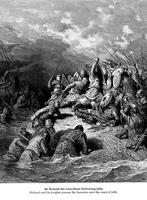
Richard I the Lionheart delivering Jaffa
Gustave Dore
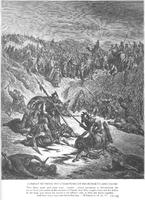
Combat between Soldiers of Ish-bosheth and David
Gustave Dore
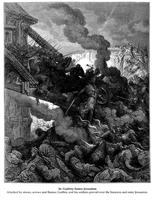
Godfrey enters Jerusalem
Gustave Dore
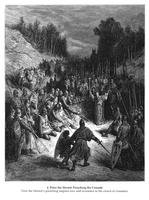
Peter the Hermit Preaching the Crusade
Gustave Dore
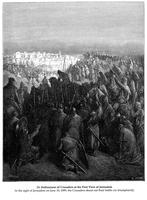
Enthusiasm of Crusaders at the First View of Jerusalem
Gustave Dore
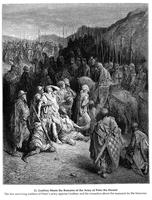
Godfrey Meets the Remains of the Army of Peter the Hermit
Gustave Dore
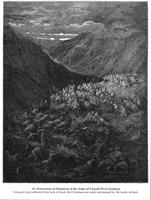
Destruction at Damascus of the Army of Conrad III of Germany
Gustave Dore
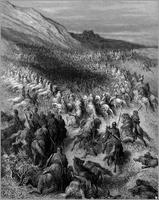
Crusaders surrounded by Saladin's army
Gustave Dore
The Battle of Antioch
Gustave Dore
The Crusaders Crossing Mount Taurus
Gustave Dore
The Death of Saul
Gustave Dore
The Angel Is Sent to Deliver Israel
Gustave Dore
Richard I the Lionheart in battle at Arsuf in 1191
Gustave Dore