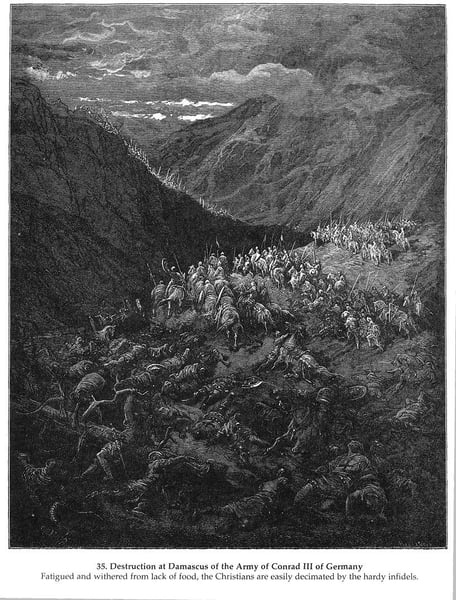
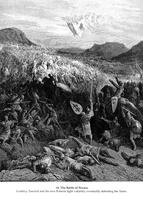
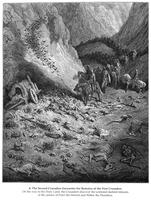
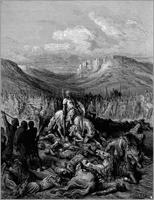
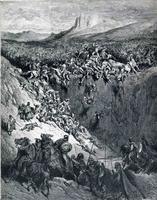
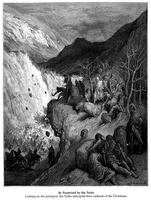
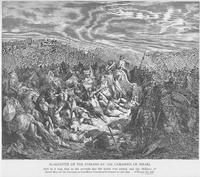
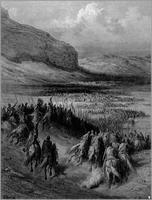
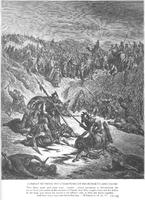
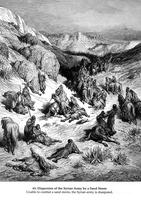
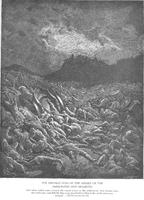
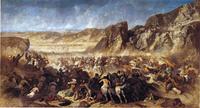
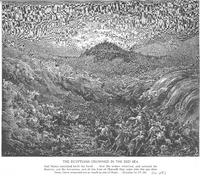
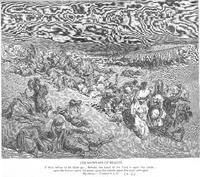
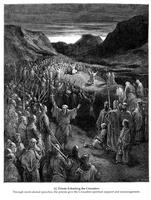
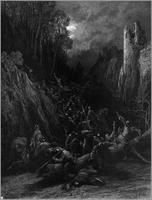
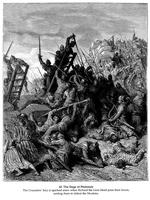
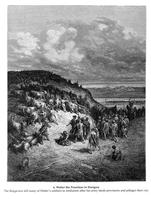
In Gustave Doré's Destruction at Damascus of the Army of Conrad III of Germany, the artist harnesses the dramatic intensity of Romanticism to transform a historical illustration into a visceral experience of chaos and despair. The work’s significance lies in how it merges the period’s fascination with sublime violence and human fragility with Doré’s masterful command of light and shadow. As an illustration, it steps beyond mere documentation—every fallen figure, swirling cloud, and burst of flame is orchestrated to evoke emotional turmoil, making the viewer feel the desperation of defeat rather than simply observe it. This piece exemplifies Romanticism’s rejection of neoclassical order by emphasizing raw, uncontained action and the overwhelming power of nature—here, the burning city and dust-choked air consume the Crusader army. Doré’s ability to compress epic narrative into a single, cathartic scene marks his illustration as both a storytelling triumph and a quintessential Romantic meditation on the futility of ambition.