Analisi esperta di Traitors--Bocca Degli Abati di Gustave Dore
Stile: Romanticism · Genere: illustration
Analysis of "Traitors—Bocca Degli Abati" by Gustave Doré
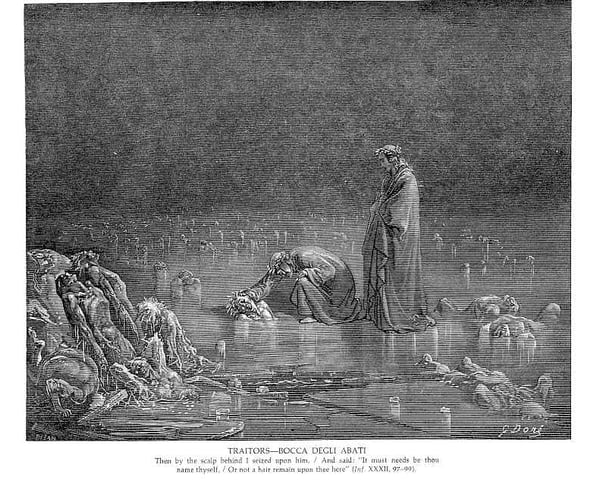
Gustave Doré's illustration for Dante's Inferno—depicting the traitor Bocca degli Abati in Canto XXXII—is a masterwork of Romantic visual storytelling. Created in the style of Romanticism and as a book illustration, the piece achieves a profound emotional and psychological impact that elevates it beyond mere accompaniment to the text.
Key Romantic Elements:
Doré harnesses the Romantic obsession with the sublime and the terrifying. The scene is set in the frozen ninth circle of Hell (Cocytus), where traitors are encased in ice. Doré’s dramatic use of chiaroscuro—sharp contrasts between deep shadow and stark light—intensifies the horror. Bocca’s head is the only visible part of his body, craned painfully upward, his expression a mixture of defiance and agony. The surrounding figures are barely discernible in the frozen mass, creating a claustrophobic, desolate atmosphere.
Significance Within Romanticism and Illustration:
- Psychological Depth: Unlike purely decorative illustrations, Doré’s work captures the internal torment of the damned. Bocca’s exposed head and rigid neck muscles convey a stubborn, unrepentant will, aligning with the Romantic fascination with fallen, defiant figures.
- Technique as Emotional Conduit: Doré’s meticulous engraving—with thousands of fine lines—builds a dense, almost tactile texture. The ice is rendered as both a physical and metaphysical trap: the traitor is isolated, silenced, and stripped of dignity. This visual density mirrors the complex moral weight of Dante’s conception of justice.
- Influence on the Illustration Genre: Doré’s Inferno illustrations redefined the role of the visual artist in literature. They are not passive translations but interpretive expansions, using Romantic dynamism to make the invisible (hell’s geography, the soul’s anguish) viscerally present. This piece, in particular, demonstrates how illustration can achieve the same narrative and emotional power as an independent painting.
Historical & Thematic Context:
Bocca degli Abati was a real 13th-century Florentine who betrayed his Guelph faction in battle. Doré chooses the moment after Dante accidentally kicks Bocca’s head (confusing it for a stone), prompting the traitor to curse and reveal his identity. The composition focuses on Bocca’s face and the surrounding ice—no heroic gestures, no grand landscape. This intimate, horrifying focus is characteristic of Romanticism’s shift from neoclassical idealization toward gritty, subjective human experience.
Conclusion:
"Traitors—Bocca Degli Abati" is significant not only as a faithful yet imaginative rendering of Dante’s text but as a pinnacle of Romantic illustration. It harnesses the sublime terror of damnation through masterful engraving, psychological nuance, and a stark, unforgiving atmosphere. Doré’s work here set a standard for literary illustration that balances narrative clarity with profound emotional resonance, making the viewer complicit in the frozen, eternal punishment.
Visivamente simili
20 opere con composizione e palette affini
The Inferno, Canto 32
Gustave Dore
Cocytus--Traitors
Gustave Dore
The Crusaders on the Nile
Gustave Dore
The Inferno, Canto 32
Gustave Dore
Sordello and Virgil
Gustave Dore
Ugolino and Archbishop Ruggieri
Gustave Dore
Gideon Chooses 300 Soldiers
Gustave Dore
The Envious
Gustave Dore
The Ark Is Returned to Beth shemesh
Gustave Dore
The Vessel
Gustave Dore
The Death of Gideon's Sons
Gustave Dore
The Inferno, Canto 32
Gustave Dore
The Suicides
Gustave Dore
The Battlefield
Kathe Kollwitz
Israelite Women Mourn with Jephthah's Daughter
Gustave Dore
The Inferno, Canto 19
Gustave Dore
The Punishment of the Simonists
Gustave Dore
Heresiarchs
Gustave Dore
The Avaricious
Gustave Dore
The Vision of the Valley of Dry Bones
Gustave Dore