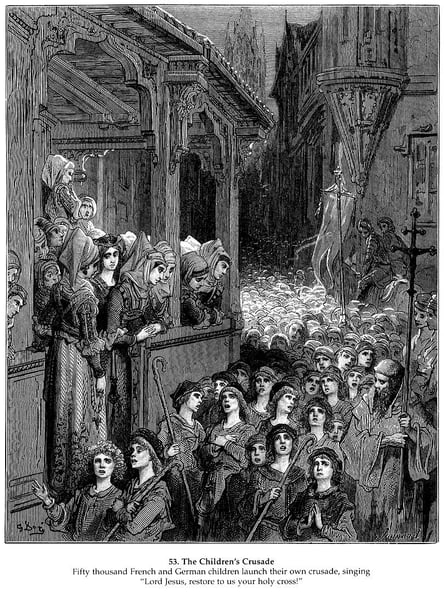
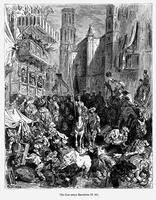
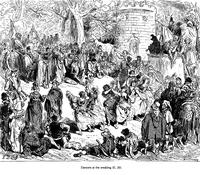
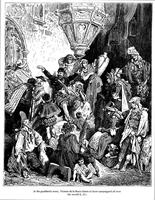
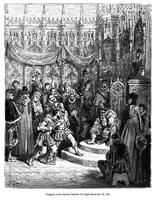
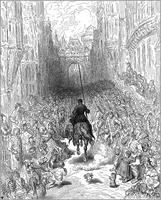
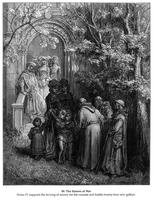
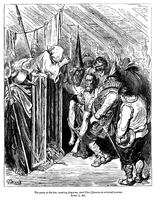
Gustave Doré’s The Children’s Crusade in 1212 is a quintessential example of Romanticism channeled through the genre of illustration—an art form Doré elevated to the level of high drama and emotional depth. The work draws its power from the Romantic fascination with medieval history, particularly episodes of tragic heroism and spiritual fervor. Doré seizes upon the haunting story of thousands of children marching to the Holy Land, capturing both innocence and impending doom. The composition is likely marked by his characteristic chiaroscuro: dark, brooding skies and jagged, ruined landscapes contrast with the fragile, massed figures of the young crusaders, their faces a mix of devotion and exhaustion. As an illustration, it serves not merely as a visual accompaniment but as a standalone narrative that amplifies the pathos of the event. The significance lies in how Doré uses the Romantic idiom—exaggerated emotion, sublime setting, and historical grandeur—to transform a real tragedy into a universal meditation on faith, loss, and the folly of innocence. This work exemplifies how Romantic-era illustrators could marry meticulous draftsmanship with profound symbolic weight, making the illustration genre a vehicle for sophisticated artistic commentary.