
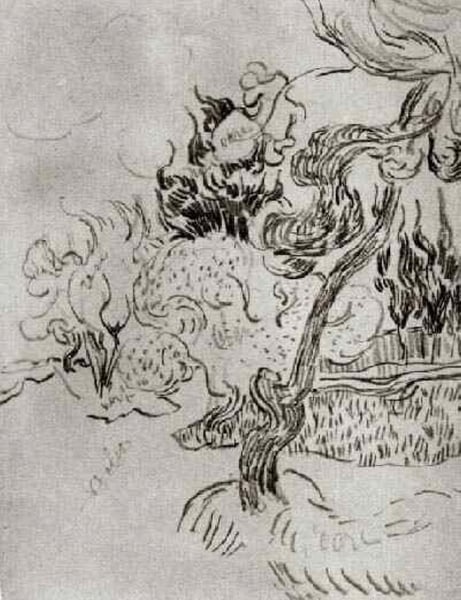
A Pine Tree and Cypresses in the Garden of the Asylum
Details
Expert analysis of Vincent van Gogh’s A Pine Tree and Cypresses in the Garden of the Asylum
Style: Post-Impressionism · Genre: sketch and study
Expert Analysis of "A Pine Tree and Cypresses in the Garden of the Asylum" by Vincent van Gogh
This work—classified as a sketch and study within the Post-Impressionist style—holds particular significance as it reveals the foundational, experimental phase of van Gogh’s creative process. Unlike finished paintings, this study prioritizes raw gesture and structural exploration over refined details, allowing the artist to distill the essential rhythms of nature.
Significance within Post-Impressionism:
- Expressive line and form: Van Gogh’s vigorous, repetitive strokes (evident even in a sketch) demonstrate his departure from Impressionism’s optical accuracy. The pine tree and cypresses are not rendered naturalistically but as swirling, almost flame-like shapes that convey emotional intensity—a hallmark of his mature style.
- Symbolic potential of subject matter: The contrast between the stout, grounded pine and the soaring, undulating cypresses hints at van Gogh’s preoccupation with life, death, and eternity. The “asylum” setting (provided by the title) adds biographical resonance, as these trees become metaphors for resilience and turmoil—themes central to Post-Impressionism’s shift toward subjective expression.
- Study as a self-contained artwork: This piece showcases how van Gogh used rapid sketching to capture essential energy before committing to canvas. Its unfinished quality is not a flaw but a deliberate focus on structure and movement, offering insight into his method of building compositions from bold, directional lines.
Why it matters: Even as a sketch, this work embodies the Post-Impressionist drive to transcend mere visual record and imbue nature with psychological depth. The loose, energetic marks prefigure the iconic, flame-like cypresses of his later masterpieces (e.g., The Starry Night), proving that van Gogh’s revolutionary vision was honed in the very act of studying the world around him—even within the confines of an asylum garden.
Museum / Gallery
Visually similar
20 works with related composition and palette
A Group of Pine Trees near a House
Vincent van Gogh
Houses among Trees
Vincent van Gogh
Pine Trees in Front of the Wall of the Asylum
Vincent van Gogh
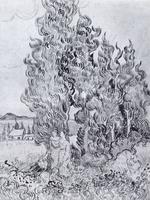
Cypresses
Vincent van Gogh
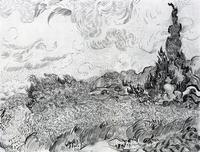
Wheat Field with Cypresses at the Haude Galline near Eygalieres
Vincent van Gogh
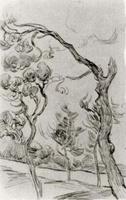
Pine Trees Seen against the Wall of the Asylum
Vincent van Gogh
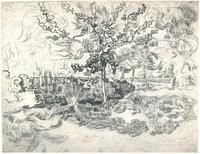
Garden of the Asylum
Vincent van Gogh
Enclosed Wheat Field with Reaper
Vincent van Gogh
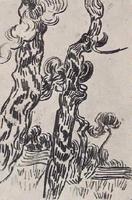
Two Pinetrees
Vincent van Gogh
Old Vineyard with Peasant Woman
Vincent van Gogh
Pine Trees Seen against the Wall of the Asylum
Vincent van Gogh
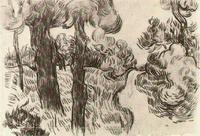
Path between Pine Trees
Vincent van Gogh
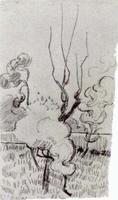
Pine Trees near the Wall of the Asylum
Vincent van Gogh
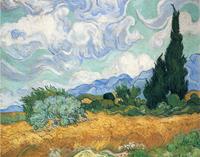
Wheatfield with cypress tree
Vincent van Gogh
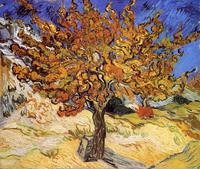
Mulberry Tree
Vincent van Gogh
Madame Matisse in the Olive Grove
Henri Matisse
Wheat Field with a Stack of Wheat or Hay
Vincent van Gogh
Tree roots
Vincent van Gogh
Trees and Shrubs
Vincent van Gogh
Mountain Landscape Seen across the Walls
Vincent van Gogh