
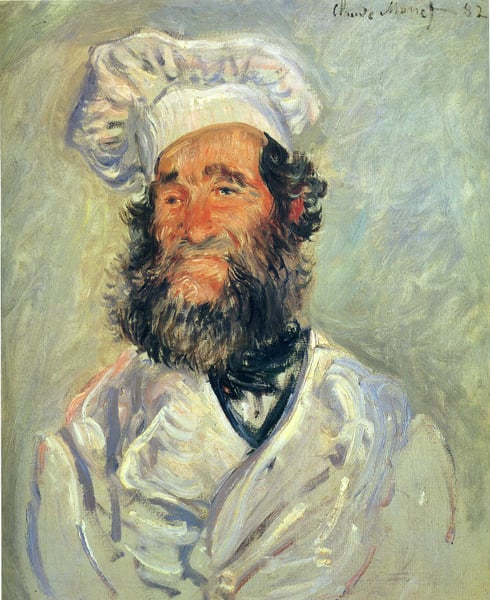
Analisi esperta di Portrait of Pere Paul di Claude Monet
Stile: Impressionism · Genere: portrait
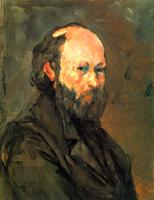
Expert Art Historical Analysis: "Portrait of Père Paul" by Claude Monet
Significance Within Impressionism and Monet’s Oeuvre
Claude Monet is universally celebrated for his revolutionary landscapes and series paintings (e.g., Water Lilies, Haystacks), but his portraits are comparatively rare and often overlooked. "Portrait of Père Paul" stands as a compelling exception, offering a vital glimpse into the artist’s early exploration of Impressionist principles applied to the human figure.
Breaking with Conventional Portraiture
Traditional nineteenth-century portraits emphasized detailed likeness, idealized features, and a polished finish. Monet, however, approaches Père Paul with the same radical energy he applied to outdoor scenes. The brushwork is loose, visible, and seemingly spontaneous—a hallmark of Impressionism. Rather than meticulously modeling the sitter’s face, Monet captures a momentary impression of character and presence, using dabs of color to suggest light falling across the subject’s features. This technique prioritizes the effect of light over precise anatomical rendering.
Use of Color and Atmosphere
Monet’s palette in this work—likely built from subtle greens, blues, and warm flesh tones—reflects his belief that local color is modified by surrounding light and atmosphere. The portrait does not rely on strong chiaroscuro; instead, shadows are rendered as colored reflections rather than black or brown. This approach anticipates the later breakdown of form seen in his series paintings. The sitter’s identity (“Père Paul,” possibly a family member or acquaintance) becomes secondary to the sensory experience of the painting.
A Document of Monet’s Development
Painted during a formative period (often dated to the late 1860s or early 1870s), this portrait shows Monet experimenting with the same principles he would apply to works like Impression, Sunrise (1872). It demonstrates that Impressionism was not merely a landscape movement—it could transform portraiture by dissolving solid contours into flickering light and atmosphere. In this sense, "Portrait of Père Paul" is significant as a bridge between traditional figure painting and the fully realized Impressionist vision.
Legacy
While not as famous as Renoir’s lush portraits or Degas’ intimate studies, Monet’s portrait challenges the notion that his genius was confined to nature. It reveals a painter capable of rendering human presence with the same fleeting, luminous quality he brought to haystacks and cathedrals. For scholars, it underscores the breadth of Impressionist ambition: to capture not just a face, but the very act of seeing.
Visivamente simili
20 opere con composizione e palette affini
Self-portrait with white turbaned (detail)
Paul Cezanne
Portrait of Poly, fisherman at Kervillaouen
Claude Monet
Portrait of Postman Roulin
Vincent van Gogh
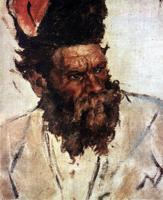
Don Cossack Rjidin (Study to "The Conquest of Siberia by Yermak")
Vasily Surikov
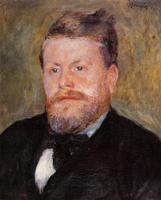
Jacques Eugene Spuller
Pierre-Auguste Renoir
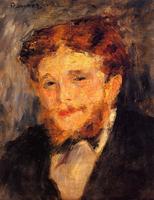
Portrait of Eugene Pierre Lestringuez
Pierre-Auguste Renoir
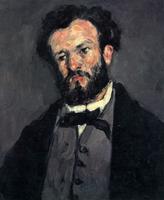
Portrait of Anthony Valabregue
Paul Cezanne
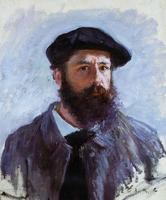
Self-Portrait with a Beret
Claude Monet
Portrait of Edouard Manet
Carolus-Duran
Portrait of the Postman Joseph Roulin
Vincent van Gogh
Self-Portrait in a Casquette
Paul Cezanne
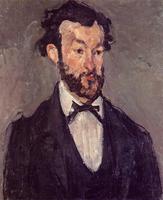
Portrait of Antoine Valabregue
Paul Cezanne
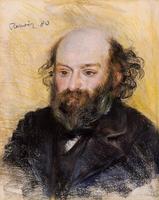
Paul Cezanne
Pierre-Auguste Renoir
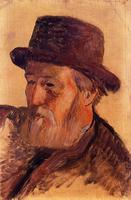
Portrait of Isidore Gauguin
Paul Gauguin
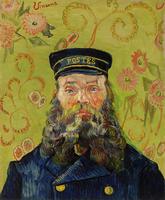
Joseph-Etienne Roulin
Vincent van Gogh
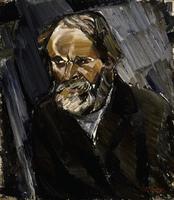
Maalaisukko, Osatutkielma Hihhuleihin
Sallinen Tyko
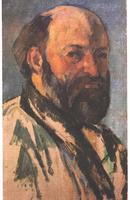
Self-portrait
Paul Cezanne
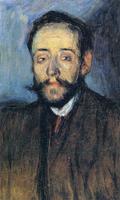
Portrait of Minguell
Pablo Picasso
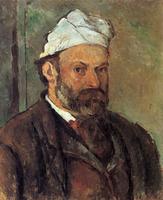
Self-portrait with white turbaned
Paul Cezanne
Self-Portrait
Paul Cezanne