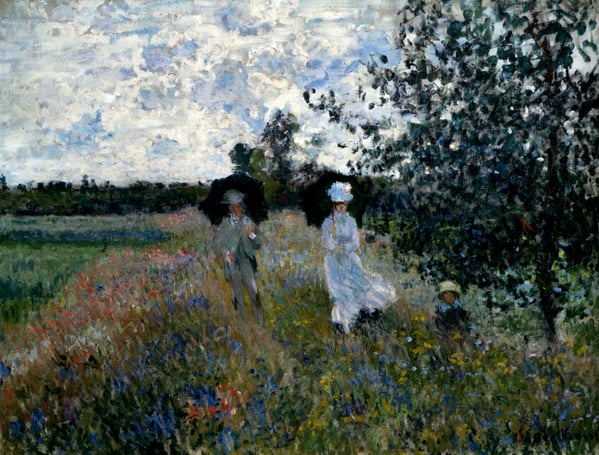
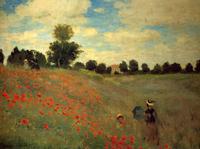
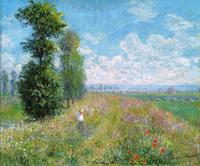
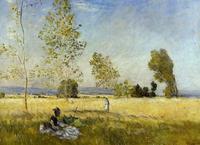
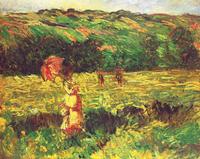
"Promenade near Argenteuil" by Claude Monet is a quintessential example of Impressionism, a movement that sought to capture fleeting moments of modern life through vibrant color, loose brushwork, and an emphasis on natural light. As a genre painting, it portrays a casual, everyday scene—likely figures strolling along a path or riverbank—that reflects the leisure activities of the burgeoning middle class in the late 19th century.
The significance of this work lies in Monet’s radical departure from academic conventions. Instead of a polished, detailed narrative, he uses rapid, visible strokes to convey the shimmering atmosphere of a suburban outing. The interplay of light and shadow, the reflection of sky on water, and the sense of movement all typify Impressionist innovation. By elevating a simple promenade to the subject of high art, Monet asserts the beauty and importance of contemporary life, making this painting a key document of the era’s shifting social and artistic priorities.