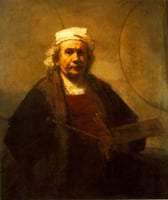
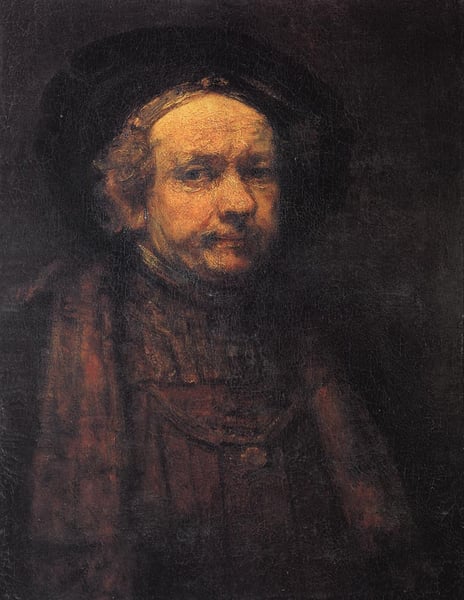
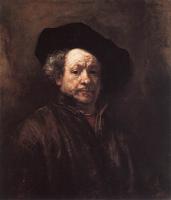
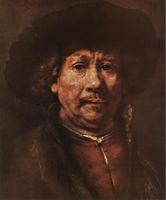
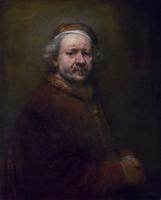
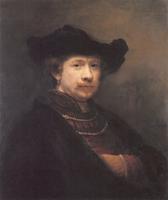
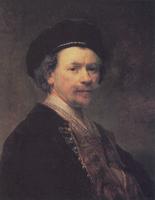
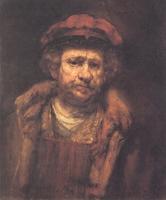
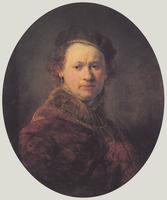
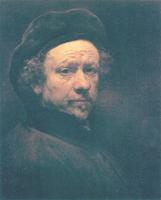
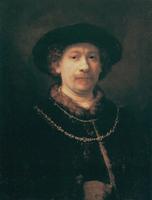
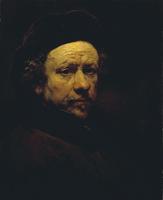
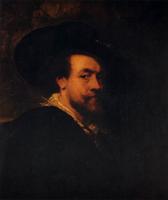
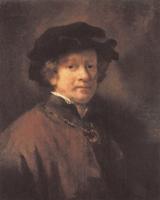
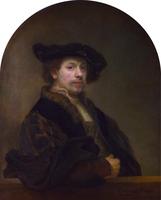
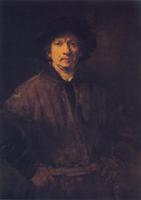
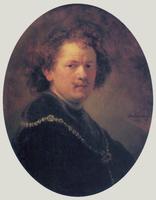
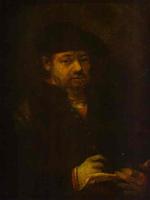
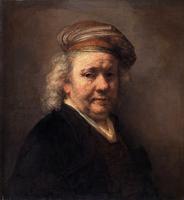
This self-portrait by Rembrandt exemplifies the Baroque fascination with dramatic emotion and theatrical light, while also operating as a tronie—a study of expression and character rather than a literal likeness. The use of Tenebrism creates a stark, almost spotlight-like contrast between the illuminated face and the deep, enveloping shadows, a hallmark of Rembrandt’s mature style that heightens the psychological intensity. As a self-portrait, the work is significant not merely as a record of the artist’s features, but as a probing exploration of identity, aging, and artistry—Rembrandt often used his own face to experiment with chiaroscuro and emotional nuance. The tronie genre allows him to shift focus from documentary accuracy to universal human emotion, making this piece a landmark in the Baroque period’s move toward subjective, dramatic storytelling within portraiture.