Expertenanalyse zu Nicholas Roerichs He who hastens
Stil: Symbolism · Genre: landscape
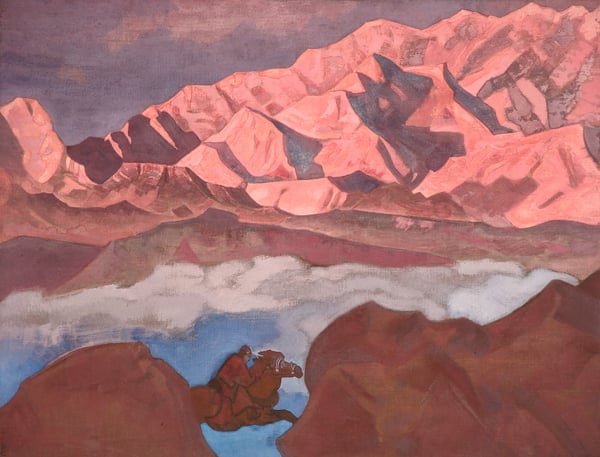
Expert Analysis of "He who hastens" by Nicholas Roerich
Nicholas Roerich’s "He who hastens" stands as a compelling example of Symbolist landscape painting, where the natural world is not merely depicted but imbued with spiritual and metaphysical meaning. Within the Symbolist movement, artists sought to evoke inner emotions, mystical truths, and transcendent states through allegory, dreamlike imagery, and the deliberate distortion of natural forms. Roerich, deeply influenced by his interests in theosophy, Eastern philosophy, and the ancient cultures of Russia and the Himalayas, consistently used landscape as a vehicle for meditative and cosmic themes.
In this work, the genre of landscape is elevated beyond conventional scenery. The composition likely emphasizes vast, unpopulated terrains—perhaps rugged mountains, sweeping plains, or a dramatic sky—that suggest an eternal or divine presence. The title "He who hastens" introduces a narrative or symbolic figure (or the invisible force of motion itself) that propels the scene, aligning with Symbolism’s preference for suggestive rather than literal storytelling. The use of color, light, and form would be deliberately expressive, aiming to evoke a sense of urgency, spiritual journey, or the passage of time within the stillness of nature.
The significance of this artwork lies in its fusion of landscape as a reflective, philosophical space with the Symbolist quest for deeper truths. Roerich’s landscapes often serve as thresholds between the material and the spiritual, and "He who hastens" likely embodies this transition, making it a key work in understanding how Symbolism transformed natural settings into arenas for contemplation of the human condition and the divine. Its power resides in the tension between the earthbound genre and the ethereal, urgent message of the title—a hallmark of Roerich’s ability to make landscape speak of the unseen.
Museum / Gallery
Visuell ähnlich
20 Werke mit ähnlicher Komposition und Farbpalette
Compassion
Nicholas Roerich
Fire Blossom
Nicholas Roerich

Hunting
Nicholas Roerich
Genghis Khan
Nicholas Roerich

Kuluta
Nicholas Roerich
Oirot Messenger of the White Burkhant
Nicholas Roerich
Mother of Genghis Khan
Nicholas Roerich
She who leads
Nicholas Roerich
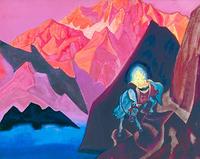
A depiction of the Cintamani being carried by the Lung Ta (Wind Horse)
Nicholas Roerich
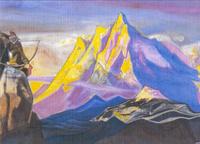
Message from Shambhala
Nicholas Roerich

Himalayas
Nicholas Roerich
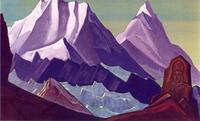
Maitreya
Nicholas Roerich
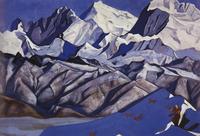
Red horses
Nicholas Roerich
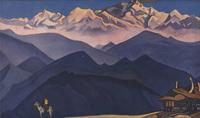
Remember
Nicholas Roerich

Mount of five treasures (Two worlds)
Nicholas Roerich

Everest
Nicholas Roerich

Himalayas. Chain of Kanchenjunga.
Nicholas Roerich
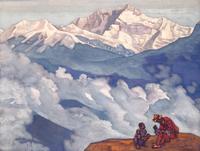
Pearl of Searching
Nicholas Roerich

Himalayas
Nicholas Roerich
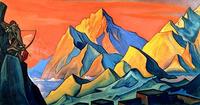
Message from Shambhala (Arrow-letter)
Nicholas Roerich