Analisi esperta di The Hour of the Dragon di Kitagawa Utamaro
Stile: Ukiyo-e · Genere: genre painting
Expert Analysis: "The Hour of the Dragon" by Kitagawa Utamaro
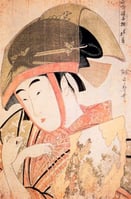
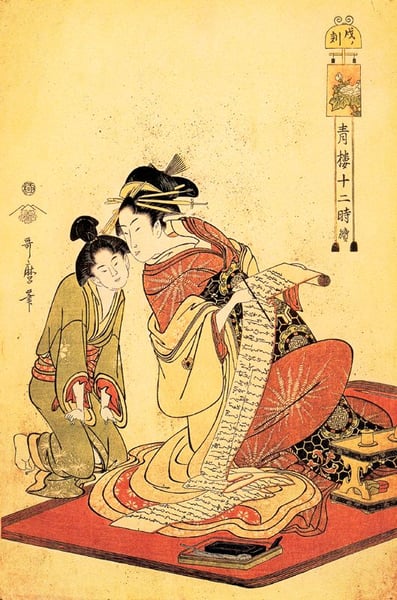
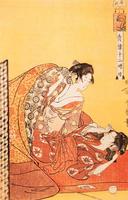
Kitagawa Utamaro's "The Hour of the Dragon" stands as a quintessential example of Ukiyo-e, the "pictures of the floating world," and a masterful work within the genre painting tradition. Utamaro is celebrated for his groundbreaking depictions of women (bijin-ga), and this piece exemplifies his ability to elevate everyday life into an art of subtle psychological depth and exquisite formal refinement.
As a genre painting, the work captures a specific moment in the daily rhythms of the Edo period—the "Hour of the Dragon" (traditionally 8:00–10:00 AM) at the Yoshiwara pleasure district. Utamaro’s significance here lies in his innovative composition and his mastery of the ōkubi-e (large-headed picture) format, which he pioneered. By focusing closely on a single figure or a small group, he eliminates extraneous background detail and forces the viewer to read the subject’s expression, posture, and clothing with extraordinary sensitivity.
The work is significant for its psychological nuance. Utamaro rarely depicts overt drama; instead, he captures fleeting, introspective states—a woman adjusting her hair, pausing while dressing, or gazing into a mirror. In "The Hour of the Dragon," the viewer is drawn into a quiet, intimate ritual of preparation or reflection. The sense of temporality is key: the title’s reference to a specific hour grounds the scene in the cyclical, ephemeral nature of life in the floating world, a core tenet of Ukiyo-e aesthetics.
Technically, Utamaro’s linework is revered for its expressive economy. The sinuous, calligraphic outlines define the drapery of the kimono, the fall of the hair, and the soft contours of the face with both precision and grace. His use of color—often muted, earthy tones punctuated by a single vibrant accent—demonstrates a sophisticated handling of woodblock printing’s limitations to achieve richness. The kimekomi technique of pressing the paper into carved lines further adds texture.
Within Ukiyo-e history, Utamaro’s genre scenes elevated the courtesan and ordinary woman to subjects of high art, influencing later artists such as Hokusai and Hiroshige, and eventually European Impressionists. "The Hour of the Dragon" represents the peak of his ability to infuse a simple moment—one of many in the daily cycle—with grace, intimacy, and the poignant beauty of the transient.
Visivamente simili
20 opere con composizione e palette affini
Reading a letter
Kitagawa Utamaro
The four virtues
Kitagawa Utamaro
Courtesan writing a letter
Kitagawa Utamaro
The Third Month, Cherry Blossoms in Naka-no-chô
Keisai Eisen
The lazy bone
Kitagawa Utamaro
The Hour of the Boar
Kitagawa Utamaro
A Geisha in her Lover`s Room
Kitagawa Utamaro
Komurasaki of the Tamaya with pipe in hand
Kitagawa Utamaro
The Hour of the Horse
Kitagawa Utamaro
A scene on the bridge and beld
Kitagawa Utamaro
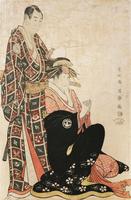
Kabuki Actors Sawamura Sōjūrō III as Nagoya Sanza, and Segawa Kikunojō Iii as the Courtesan Katsuragi
Tōshūsai Sharaku
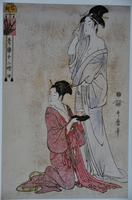
Hour of the Snake
Kitagawa Utamaro
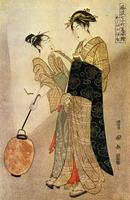
Courting Komachi
Utagawa Toyokuni
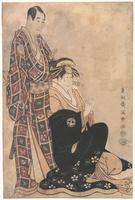
Sagawa Kikunojo III as the Courtesan Katsuragi,and Sawamura Sojuro
Tōshūsai Sharaku
Dressing a Boy on the Occasion of His First Letting His Hair Grow
Kitagawa Utamaro
Actor Segawa Tomisaburo II as the Geisha Asaka
Tōshūsai Sharaku
Women making dresses
Kitagawa Utamaro
Woman sitting in front of a screen, titled Fukurokuju
Utagawa Sadatora
The Hour of the Dragon
Kitagawa Utamaro
Women making dresses
Kitagawa Utamaro