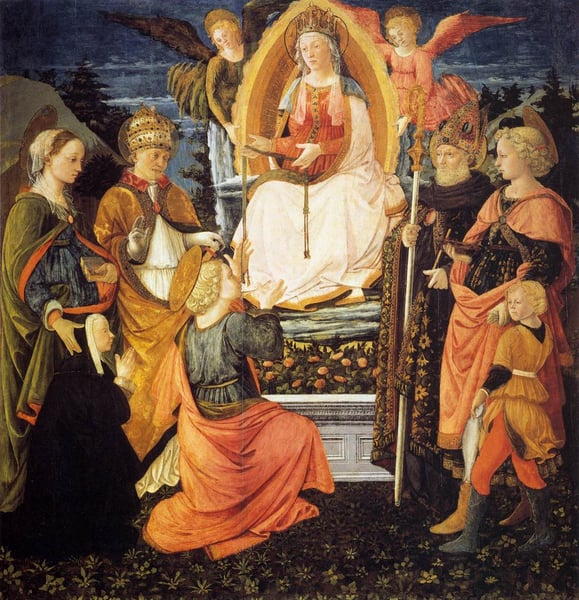
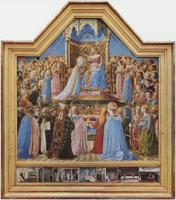
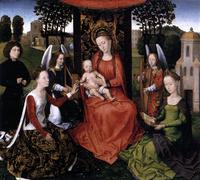
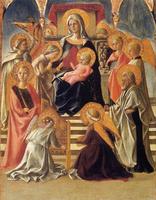
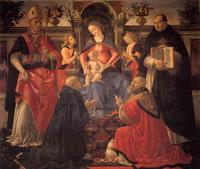
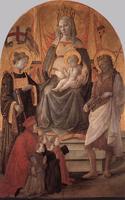
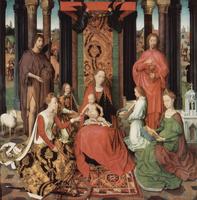
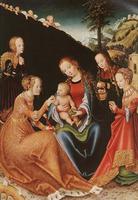
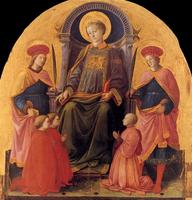
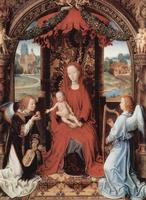
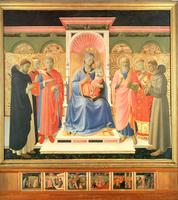
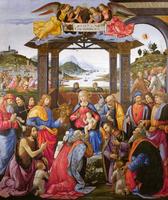
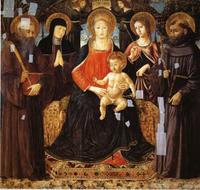
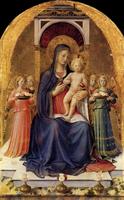
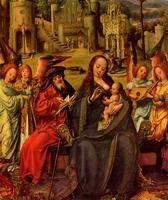
Based solely on the provided facts—that this is an Early Renaissance religious painting by Filippo Lippi—the significance of Madonna della Cintola lies in its embodiment of the transitional artistic values of the period. As a religious work of the Early Renaissance, it reflects the shift from the flat, hieratic forms of medieval art toward a more naturalistic, human-centered approach. Lippi’s treatment of the Madonna would likely display a softer, more intimate humanity, with a focus on clear composition, gentle modeling of forms, and a sense of spatial depth—hallmarks of Early Renaissance innovation. The genre (religious painting) underscores the era’s continued devotion to sacred subjects, but here reimagined through a lens of earthly tenderness and perspective, making the work a key example of how religious narratives were made more accessible and emotionally resonant during this pivotal stylistic period.