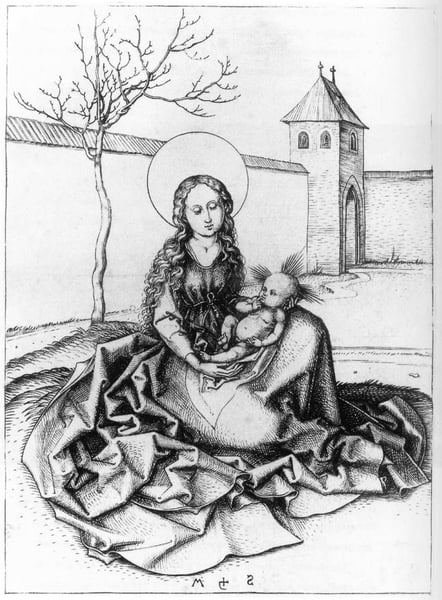
Madonna and Child in the Courtyard
Dettagli
Analisi esperta di Madonna and Child in the Courtyard di Martin Schongauer
Stile: Northern Renaissance · Genere: religious painting
Expert Analysis of "Madonna and Child in the Courtyard" by Martin Schongauer
Martin Schongauer’s Madonna and Child in the Courtyard stands as a quintessential example of the Northern Renaissance’s fusion of meticulous naturalism with profound spiritual intimacy. Painted in the late 15th century, the work is significant for its pioneering representation of the Holy Family within a domestic yet sacred courtyard—a setting that grounds divine figures in the earthly realm, a hallmark of Northern Renaissance devotion.
Significance within the Northern Renaissance
Schongauer, primarily celebrated as a master engraver, brings his unparalleled precision of line and detail to this painting. The courtyard itself is not merely a backdrop but a carefully composed microcosm: the architectural features, foliage, and light reveal his obsession with texture and reality. The tiled floor, the wooden bench, and the distant landscape all demonstrate the Northern Renaissance’s commitment to observed nature and symbolic minutiae. Each element—the vine, the enclosed garden (hortus conclusus), the small wall—serves as a Marian symbol of purity and seclusion, subtly woven into the composition.
Contribution to Religious Art
Unlike earlier, more hieratic treatments of the Madonna and Child, Schongauer’s Mary is tender and human. She supports the infant Jesus with a gentle, maternal gesture, while Christ reaches toward a fruit or flower—likely a symbol of the Fall and Redemption. The courtyard setting removes the scene from a formal throne room, suggesting that the divine can dwell in the everyday. This intimacy, combined with Schongauer’s sharp, almost graphic defining of folds and faces, foreshadows the work of Albrecht Dürer, who deeply admired Schongauer and carried his legacy into the next century.
Technical and Stylistic Mastery
Schongauer’s background as a printmaker is evident in the crisp, linear clarity of the drapery and the delicate modeling of faces. The light falls evenly, illuminating the scene without dramatic contrast, focusing attention on the emotional exchange between mother and child. The courtyard’s framing device—an arch or wall—creates a stage-like depth, drawing the viewer into a privileged, private moment.
In sum, Madonna and Child in the Courtyard is significant for its synthesis of naturalistic detail, symbolic richness, and humanized piety—a work that exemplifies the Northern Renaissance’s shift toward personal, perceptible faith through the meticulous observation of the world.
Visivamente simili
20 opere con composizione e palette affini
Madonna on the Turf Bench
Martin Schongauer
Madonna and Child
Hans Baldung
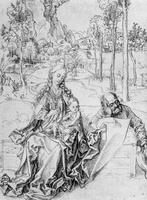
Holy Family
Albrecht Durer
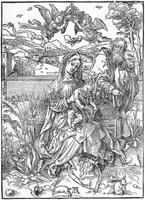
Holy Family with three Hares
Albrecht Durer
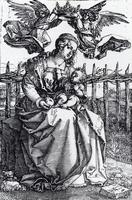
Madonna Crowned By Two Angels
Albrecht Durer
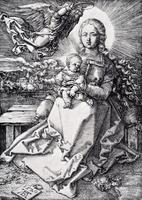
Madonna Crowned By An Angel
Albrecht Durer
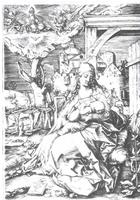
Mary at the gate
Albrecht Durer
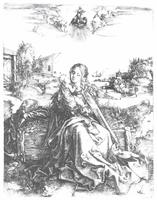
The holy family with the dragon fly
Albrecht Durer
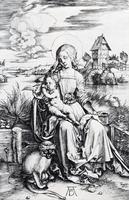
Madonna With The Monkey
Albrecht Durer
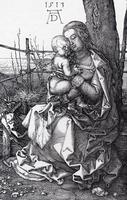
Madonna By The Tree
Albrecht Durer
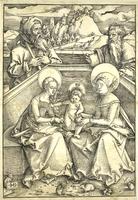
The Holy Family with Saint Anne and Saint Joachim Gravure sur bois vers realisee 1510 1511 (Allemagne) 5 lapins se trouvent aux pieds de la Sai.jpg
Hans Baldung
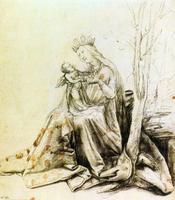
Virgin and Child
Matthias Grünewald
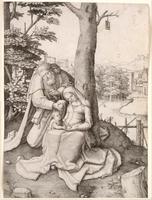
The Holy Family
Lucas van Leyden
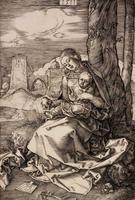
Mary with a pear
Albrecht Durer
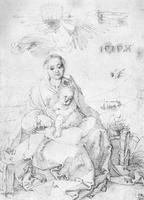
Madonna and child on the grassy bank
Albrecht Durer
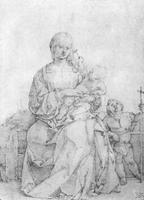
Madonna and Child with John the Baptist
Albrecht Durer
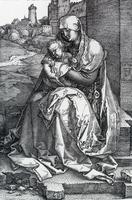
Madonna By The Wall
Albrecht Durer
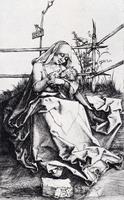
Madonna On A Grassy Bench
Albrecht Durer
St. Margaret
Albrecht Durer
Madonna With The Swaddled Infant
Albrecht Durer