
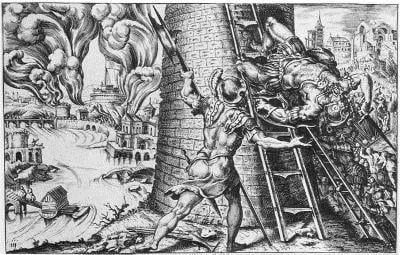
Analisi esperta di Sack of Rome di Maerten van Heemskerck
Stile: Mannerism (Late Renaissance) · Genere: allegorical painting
Expert Analysis: "Sack of Rome" by Maerten van Heemskerck
As a masterwork of Mannerism (Late Renaissance), Maerten van Heemskerck’s Sack of Rome exemplifies the period’s departure from High Renaissance harmony toward heightened emotion, complex composition, and intellectual allegory. Painted in the aftermath of the 1527 catastrophe, the work is not a literal chronicle but an allegorical meditation on divine retribution, imperial ambition, and human suffering—a hallmark of Mannerist moralizing.
Significance within Mannerism
- Allegorical Overload: Heemskerck layers classical, biblical, and contemporary symbols. The sack becomes a universal cautionary tale: figures of Victory and Fortune tumble amid ruins, while personifications of Vice (Greed, Wrath) overrun Rome. This dense iconography demands active interpretation, a Mannerist preference for intellectual complexity over naturalistic clarity.
- Contorted Figures & Spatial Compression: Bodies writhe in exaggerated, serpentine postures—borrowed from Michelangelo’s Late Renaissance style but pushed toward Mannerist artificiality. The crowded, shallow space denies illusionistic depth, creating a suffocating tension that mirrors the chaos of the historical event.
- Exaggerated Color & Emotion: Acidic greens, lurid reds, and harsh chiaroscuro heighten the theatrical dread. Heemskerck uses color not for naturalism but for expressive impact, a technique that would influence Northern Mannerism.
Historical & Artistic Impact
As a Dutch painter who had studied in Italy, Heemskerck fused Italian Mannerist devices (elongated anatomy, intricate foreshortening) with Northern attention to material detail (armor, textiles). Sack of Rome thus bridges the Mediterranean and transalpine Mannerist currents, marking a critical moment when the trauma of the Reformation and the 1527 sack reshaped Renaissance optimism into a grim, allegorical introspection. The work stands as a pivotal example of how Mannerist artists used history as a mirror for moral decay—a theme that would echo through Bruegel, El Greco, and later Baroque allegorists.
Visivamente simili
20 opere con composizione e palette affini
Samson and Delila
Lucas van Leyden
13 Year Old Pelagius Martyred, Cordoba, Spain, AD 925
Jan Luyken
The Conversion Of St. Paul
Albrecht Durer
Felicitas Killed with Her 7 Sons, Rome, AD 104
Jan Luyken
Ecce Homo
Martin Schongauer
Burning of 180 Albigensians, AD 1210
Jan Luyken
The Flagellation of Christ in the pavement
Andrea Mantegna
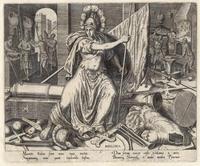
Bellona
Frans Floris de Vriendt
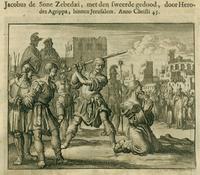
Apostle James Beheaded, AD 45
Jan Luyken
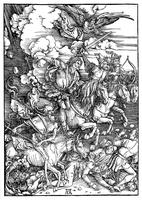
The Four Horsemen of the Apocalypse, Death, Famine, Pestilence and War
Albrecht Durer
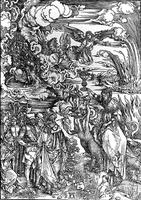
The Whore of Baylon
Albrecht Durer
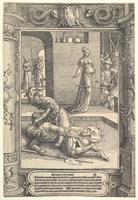
Jael Killing Sisera, Ornamental Frame
Lucas van Leyden
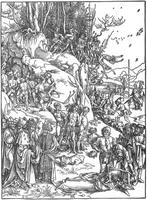
Martyrdom of the Ten Thousand
Albrecht Durer
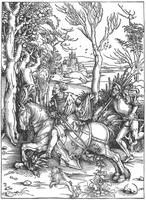
The Knight and the Landsknecht
Albrecht Durer
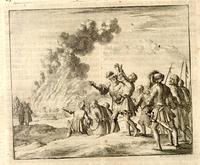
Burning of 14 Persons, Orleans, France, AD 1022
Jan Luyken
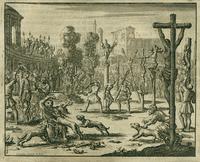
Persecution by Emperors Diocletian and Maximus, AD 301
Jan Luyken
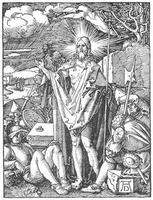
The Resurrection
Albrecht Durer
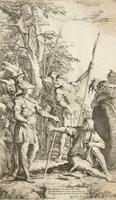
Diogenes and Alexander
Salvator Rosa
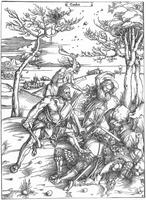
Hercules Killing the Molionides
Albrecht Durer
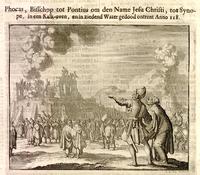
Phocus Thrown into a Lime Kiln Filled with Boiling Water, Pontus, AD 118
Jan Luyken