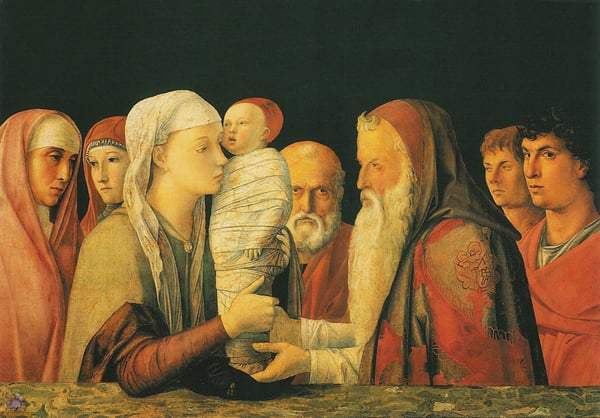
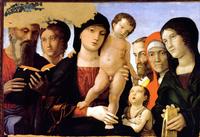
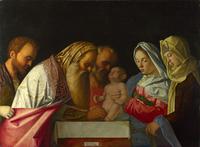
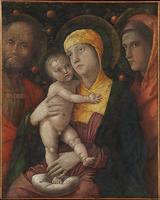
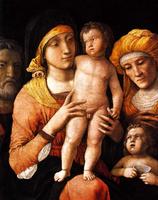
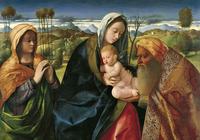
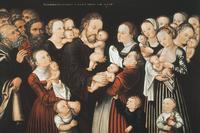
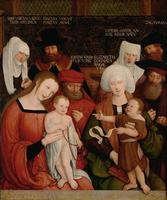
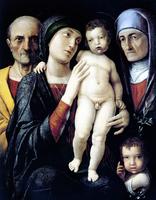
This artwork is a quintessential example of Early Renaissance religious painting, and its significance lies in how it embodies the period's defining shift toward naturalism and human emotional engagement within a sacred narrative. Within the context of the Early Renaissance, "Presentation at the Temple" demonstrates a move away from the flat, symbolic representations of the Gothic era toward a more grounded, spatially coherent depiction of a biblical scene. The religious genre is not merely a repetition of tradition; rather, Mantegna’s approach elevates it by emphasizing the humanity of the figures and the tangible reality of the temple setting, making the divine moment feel immediate and accessible. This work is significant for exemplifying the Early Renaissance commitment to blending devotional content with a new, empirically observed sense of form and space—a hallmark that would define the period’s lasting influence on Western art.