Expertenanalyse zu Edward Wadsworths Imaginary Harbour II
Stil: Metaphysical art, Surrealism · Genre: cityscape
Expert Art Historical Analysis: "Imaginary Harbour II" by Edward Wadsworth
Stylistic Context and Significance
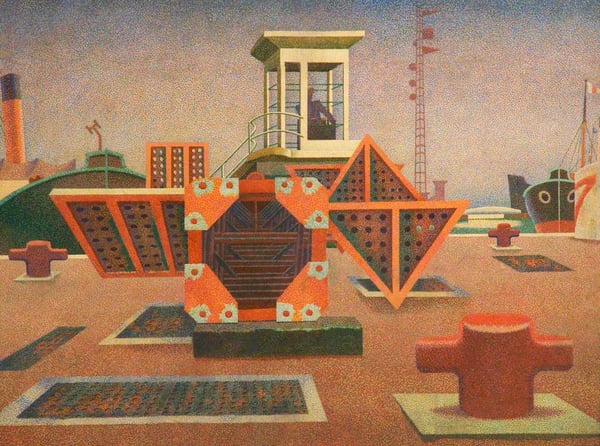
Painted within the intersecting currents of Metaphysical art and Surrealism, Imaginary Harbour II stands as a pivotal work in Edward Wadsworth’s transition from his earlier Vorticist precision to a more contemplative, dreamlike mode. The painting belongs to the cityscape genre, yet transforms the urban harbor into a realm of silent, enigmatic geometry.
What Makes the Work Significant
-
Hybrid of Metaphysical and Surrealist Sensibilities
- The work embodies the central tenets of Metaphysical art (inspired by Giorgio de Chirico): a sense of uncanny stillness, stark architectural forms, and dramatic shadow play that imbues the ordinary harbor with an air of timeless mystery.
- At the same time, it adopts Surrealism’s logic of the unconscious: the harbor is not a real port but an “imaginary” construction, where familiar objects (docks, cranes, ships) are rearranged in a psychologically charged, oneiric space.
-
Bridge Between Vorticism and Surrealism
- Wadsworth’s background in Vorticism lends the composition a crisp, almost industrial clarity—sharp lines, flattened planes, and a restrained palette of blues, ochres, and whites. This precision counterbalances Surrealism’s fluid irrationality, creating a distinctive tension between order and dream.
-
Exemplary of the “Imaginary” Cityscape
- Unlike conventional cityscapes that document actual places, Imaginary Harbour II invents its own urban geography. The title itself invites the viewer to accept the scene as a mental construct—a poetic, archetypal harbor that speaks to universal themes of arrival, departure, and isolation.
-
Contribution to British Surrealism
- As a British artist, Wadsworth was a key figure in adapting Continental Surrealism to a more restrained, architectonic vocabulary. This work demonstrates how Surrealism could be inflected with local traditions of landscape and maritime imagery, making the movement accessible to British audiences without losing its enigmatic charge.
Final Assessment
Imaginary Harbour II is significant as a masterful synthesis of Metaphysical stillness and Surrealist invention, rooted in Wadsworth’s own Vorticist discipline. It reimagines the cityscape as a psychological threshold—a haunting, liminal space that remains one of the most compelling examples of early British Surrealism.
Genre
Visuell ähnlich
20 Werke mit ähnlicher Komposition und Farbpalette
Satellitium
Edward Wadsworth
Frontalna Postavka
Leonid Šejka
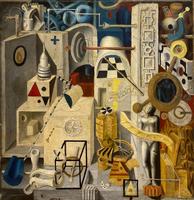
Frontal Setting
Leonid Sejka
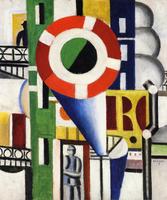
A Disc in the City
Fernand Leger
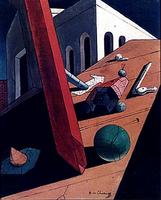
The Evil Genius of a King
Giorgio de Chirico
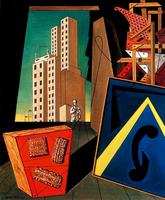
The Evangelical still life
Giorgio de Chirico
Metaphysical Interior with Biscuits
Giorgio de Chirico
Hexagram 57
Oleksandr Aksinin
Nautical Still Life
Jean Metzinger
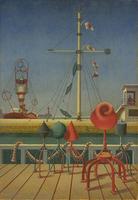
Signals
Edward Wadsworth
Mild process
Wassily Kandinsky
Untitled
Leonid Sejka
The Great Machine
Giorgio de Chirico
Crazy Drinking. Alice in Wonderland
Oleksandr Aksinin
The Station
Fernand Leger
Hydrometric Demonstration
Max Ernst
Series 3
Alfio Giuffrida
Wells
Oleksandr Aksinin
Machine elements
Fernand Leger
Children's Portraits
Johannes Itten