The ultimate bucket list of the world's greatest paintings
CE
Caleido Editorial Team2026年6月9日35 分钟阅读0 次浏览
Some paintings transcend their frames to become part of our collective consciousness. From Leonardo's Mona Lisa to Van Gogh's Starry Night, from Vermeer's Girl with a Pearl Earring to Klimt's The Kiss, these are the works that define what painting can achieve.
Spanning centuries, continents, and movements — from Renaissance Florence to Abstract Expressionist New York — this bucket list represents the 50 paintings that every art lover should experience in person. Nothing compares to standing before these masterworks and feeling the texture of brushstrokes, the scale of ambition, and the weight of history.
Use the checklist below to track your progress through the world's greatest paintings.
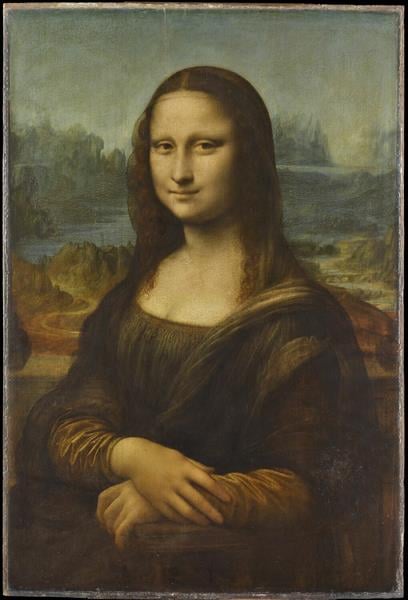
One of the most iconic and recognizable paintings in the world is the [i]Mona Lisa[/i] (ca. 1503-1519) painted by Leonardo da Vinci. The unique appeal of the portrait lies in its enigmatic nature, Mona Lisa’s smile radiates mystery, sensuality and contentment. This was achieved through sfumato, Leonardo’s painting technique that softened the transition between colors. This depth and complexity ...
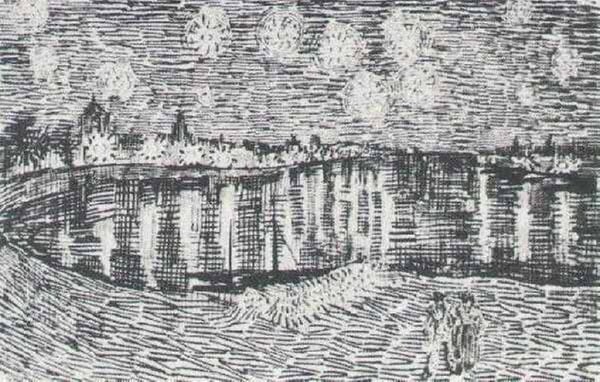
Vincent van Gogh · Post-Impressionism · sketch and study
The Starry Night, is an oil-on-canvas painting by the Dutch Post-Impressionist painter Vincent van Gogh. Painted in June 1889, it depicts the view from the east-facing window of his asylum room at Saint-Rémy-de-Provence, just before sunrise, with the addition of an imaginary village. It has been in the permanent collection of the Museum of Modern Art in New York City since 1941, acquired throug...
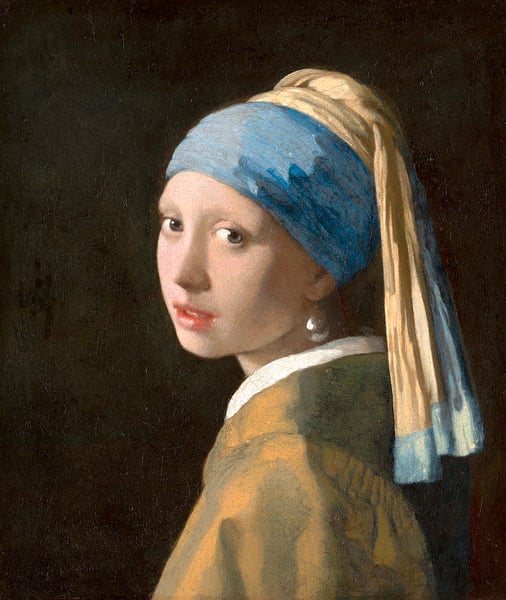
Girl with a Pearl Earring is an oil painting by Dutch Golden Age painter Johannes Vermeer, dated c. 1665. Going by various names over the centuries, it acquired its present title towards the end of the 20th century. The work has been in the collection of the Mauritshuis in The Hague since 1902 and has been the subject of various literary and cinematic treatments.
Sandro Botticelli · Early Renaissance · mythological painting
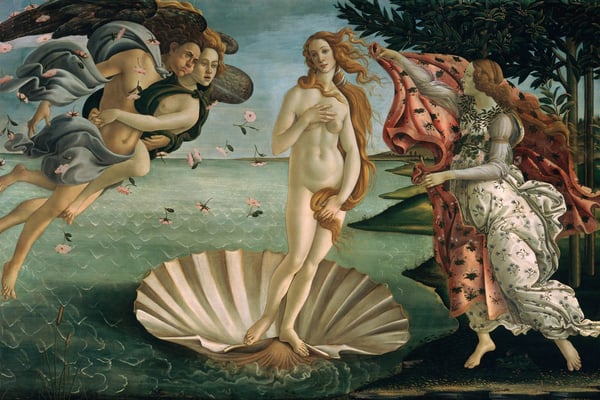
[i]The Birth of Venus[/i], painted by Sandro Botticelli in the 1480s, is one of the most famous paintings in the world: it is a celebrated work of art and the high point of a visit to the Uffizi Gallery in Florence. It is also a commercial icon and a line mark of European Art.
The real subject of the painting and its meaning is a mystery under discussion. Over the centuries, many theories and ...
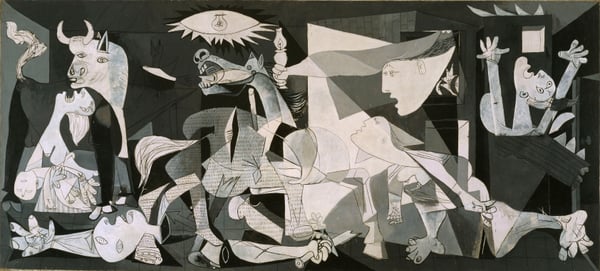
Pablo Picasso · Cubism, Surrealism · allegorical painting
[i]Guernica[/i] was Picasso's response to the bombing of the Basque town of the same name on April 26, 1937 during the Spanish Civil War. Picasso was commissioned by the republican government of Spain to produce a mural painting for the Spanish Pavilion at the World Fair in Paris. Painted in one month - from May to June 1937 - [i]Guernica[/i] became the centerpiece of the Spanish pavilion and a...
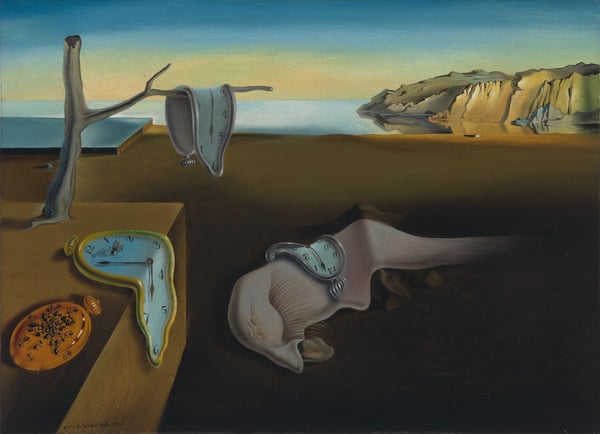
[i]The Persistence of Memory[/i] (1931) is one of the most iconic and recognizable paintings of [url href=https://www.wikiart.org/en/artists-by-art-movement/surrealism]Surrealism[/url]. Frequently referenced in popular culture, the small canvas (24x33 cm) is sometimes known as “Melting Clocks”, “The Soft Watches” and “The Melting Watches”. The painting depicts a dreamworld in which common objec...
Charles Blackman · Expressionism · flower painting
Militia Company of District II under the Command of Captain Frans Banninck Cocq, also known as The Shooting Company of Frans Banning Cocq and Willem van Ruytenburch, but commonly referred to as The Night Watch, is a 1642 painting by Rembrandt van Rijn. It is in the collection of the Amsterdam Museum but is prominently displayed in the Rijksmuseum as the best-known painting in its collection. Th...
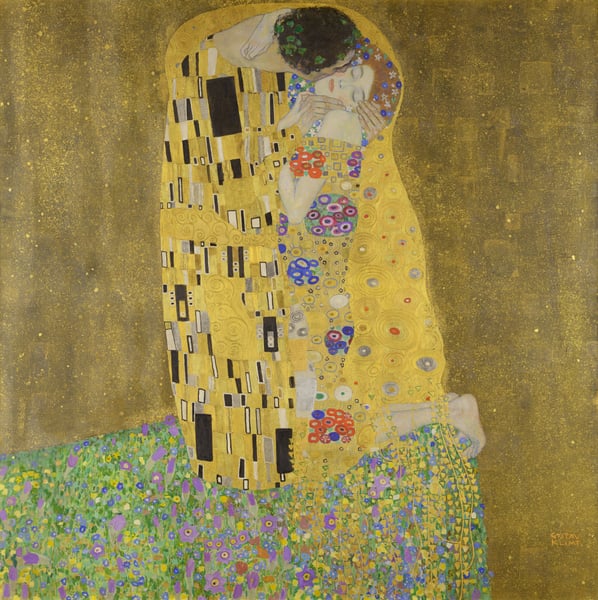
Gustav Klimt · Art Nouveau (Modern) · genre painting
The Kiss is probably Gustav Klimt’s most famous work. It is also the high point of the artist’s Gold Period, which was characterized by his use of gold leaf in his work. This painting is one in which Klimt deviated from his portrayal of dominant in women in the form of a femme fatale. Instead is the portrayal of love and art, a couple locked in a golden-flecked, flower-filled embrace. Klimt was...
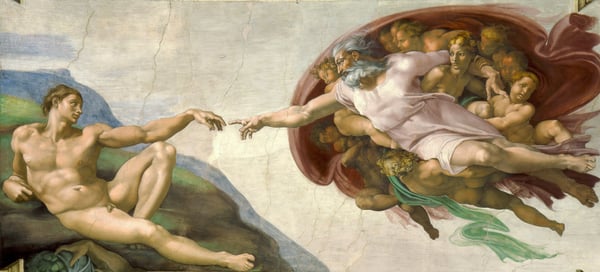
Michelangelo · High Renaissance · mythological painting
The Creation of Adam, also known as The Creation of Man, is a fresco painting by Italian artist Michelangelo, which forms part of the Sistine Chapel's ceiling, painted 1508-1512. It illustrates the Biblical creation narrative from the Book of Genesis in which God gives life to Adam, the first man. The fresco is part of a complex scheme and is chronologically the fourth in the series of panels d...
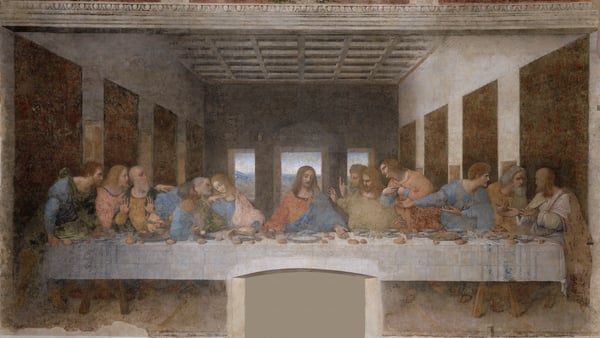
Leonardo da Vinci · High Renaissance · religious painting
One of the most famous paintings in the world, [i]The Last Supper[/i] by Leonardo da Vinci was painted in the late 15th century for the Dominican monastery Santa Maria delle Grazie in Milan. The wall painting was commissioned by the Duke of Milan, Ludovico Sforza, who was Leonardo’s patron during his first extended stay in Milan.
The composition of [i]The Last Supper[/i] is neatly arranged - J...
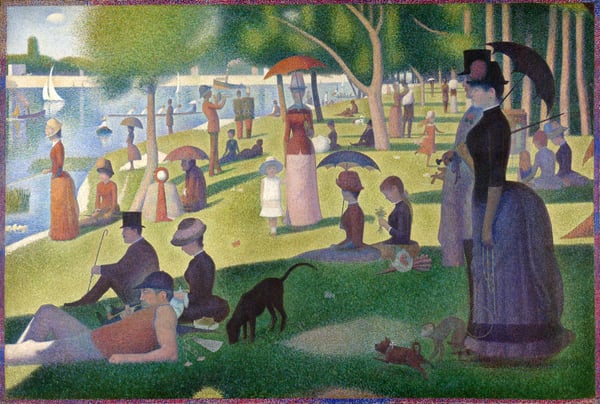
Georges Seurat · Pointillism, Neo-Impressionism艺术作品
Georges Seurat
A Sunday Afternoon on the Island of La Grande Jatte was painted from 1884 to 1886 and is Georges Seurat's most famous work. A leading example of pointillist technique, executed on a large canvas, it is a founding work of the neo-impressionist movement. Seurat's composition includes a number of Parisians at a park on the banks of the River Seine. It is held in the collection of the Art Institute...
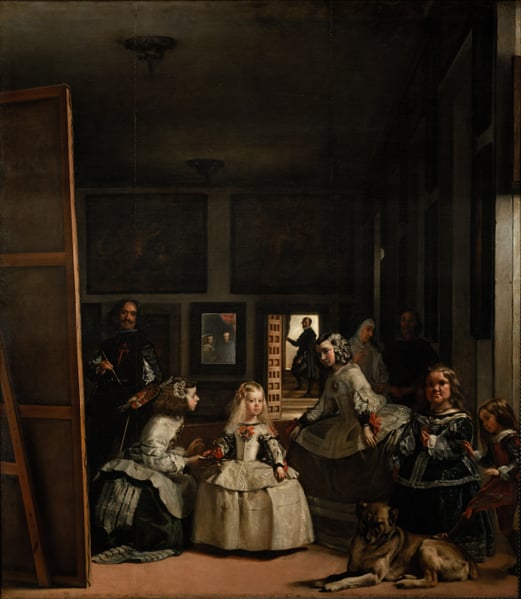
Las Meninas is a 1656 painting in the Museo del Prado in Madrid, by Diego Velázquez, the leading artist in the court of King Philip IV of Spain and Portugal, and of the Spanish Golden Age. It has become one of the most widely analyzed works in Western painting for the way its complex and enigmatic composition raises questions about reality and illusion, and for the uncertain relationship it cre...
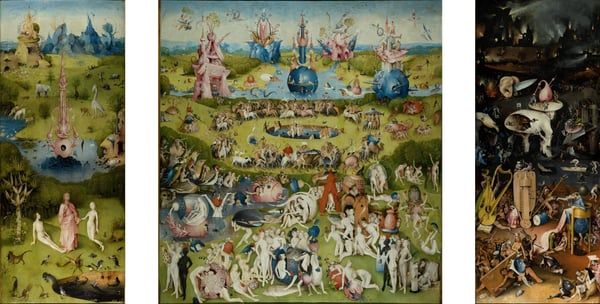
The Garden of Earthly Delights is the modern title given to a five-panel triptych by the Early Netherlandish master Hieronymus Bosch, between 1490 and 1510, when Bosch was between 40 and 60 years old. Because of Bosch's religious beliefs, interpretations of the work typically assume it is a warning against the perils of temptation. The outer panels place the work on the Third Day of Creation. T...
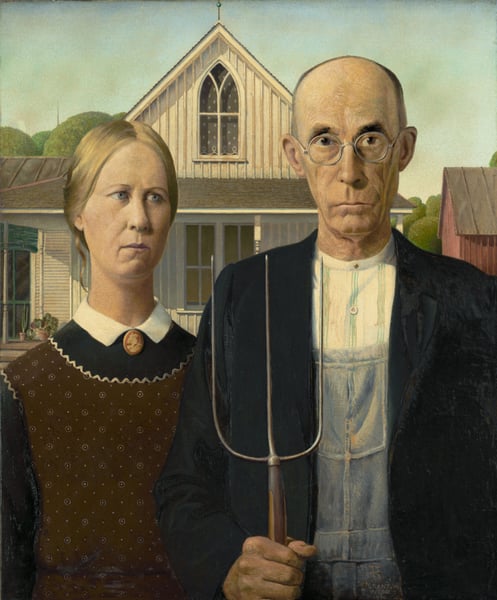
Grant Wood adopted the precise realism of 15th-century northern European artists, but his native Iowa provided the artist with his subject matter. American Gothic depicts a farmer and his spinster daughter posing before their house, whose gabled window and tracery, in the American gothic style, inspired the painting's title. In fact, the models were the painter's sister and their dentist. Wood ...
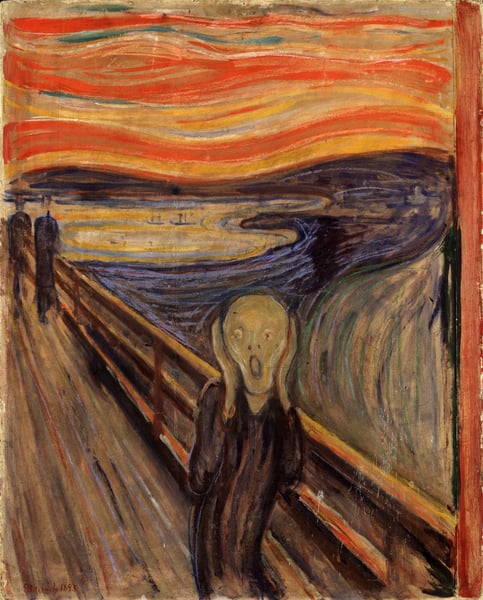
The Scream is the best known and most frequently reproduced of all Munch’s motifs. With its expressive colours, its flowing lines and striking overall effect, its appeal is universal.
Despite radical simplification, the landscape in the picture is recognisable as the Kristiania Fjord seen from Ekeberg, with a broad view over the fjord, the town and the hills beyond. In the background to the ...
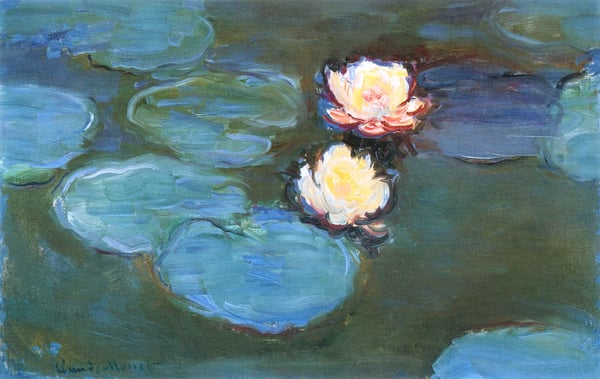
Water Lilies is a series of approximately 250 oil paintings by French Impressionist Claude Monet (1840–1926). The paintings depict his flower garden at his home in Giverny, and were the main focus of his artistic production during the last 31 years of his life. Many of the works were painted while Monet suffered from cataracts.
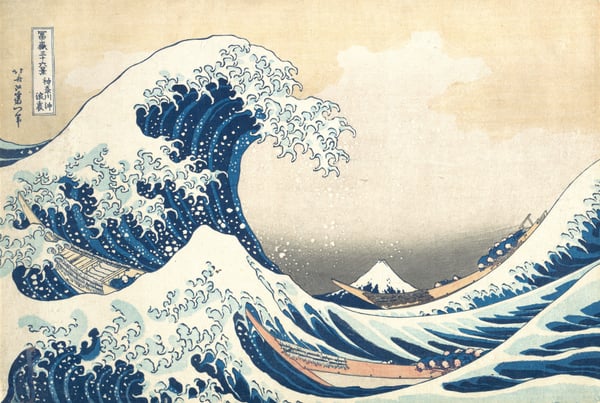
This is the most famous print created by Katsushika Hokusai, and it continues to grow in popularity and recognition worldwide. The image is of two boats, full of Japanese sailors, coming up against the namesake of the print, the Great Wave. The wave looks as if it will swallow the boats whole, and that the boat men are sure to be devoured in the wave. Although it is such a strong image, it is s...
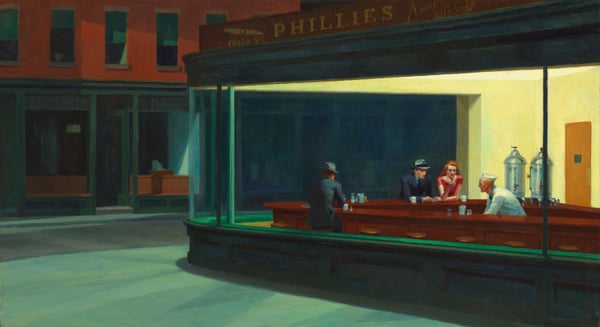
Edward Hopper said that Nighthawks was inspired by "a restaurant on New York's Greenwich Avenue where two streets meet," but the image, with its carefully constructed composition and lack of narrative, has a timeless quality that transcends its particular locale. One of the best-known images of 20th-century art, the painting depicts an all-night diner in which three customers, all lost in their...
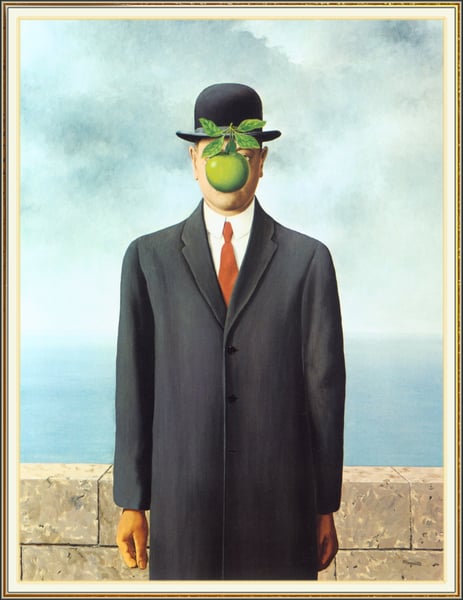
Magritte created two versions of this painting, of the same name, which both portray a large green apple in the middle of a room. This painting illustrates the many themes running through Magritte’s work. The first is the apple, which he uses to great lengths in many of his works, the most famous of which is The Son of Man, depicting a man wearing a bowling hat, with a green apple covering his ...
Andrew Wyeth · Contemporary Realism, Regionalism艺术作品
Andrew Wyeth · Contemporary Realism, Regionalism · genre painting
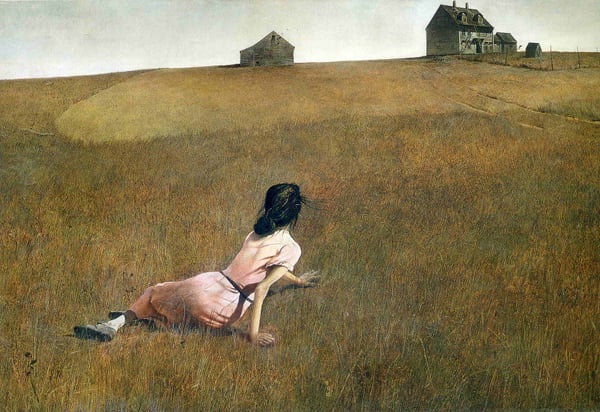
With her back to the viewer, Wyeth's subject Anna Christina Olson stares into the distance, looking out at her farmhouse in Cushing, Maine. Suffering from a degenerative muscular disease, Christina was unable to walk. Wyeth said that she was "limited physically but by no means spiritually" and that "the challenge was to do justice to her extraordinary conquest of a life which most people would ...
Arrangement in Grey and Black No. 1, best known under its colloquial name Whistler's Mother or Portrait of Artist's Mother, is a painting in oils on canvas created by the American-born painter James McNeill Whistler in 1871. The subject of the painting is Whistler's mother, Anna McNeill Whistler. The painting is 56.81 by 63.94 inches, displayed in a frame of Whistler's own design. It is held by...
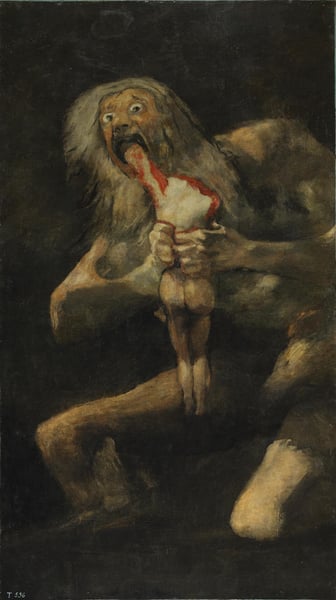
Saturn Devouring His Son is a painting by Spanish artist Francisco Goya. The work is one of the 14 so-called Black Paintings that Goya painted directly on the walls of his house some time between 1820 and 1823. It was transferred to canvas after Goya's death and is now in the Museo del Prado in Madrid.
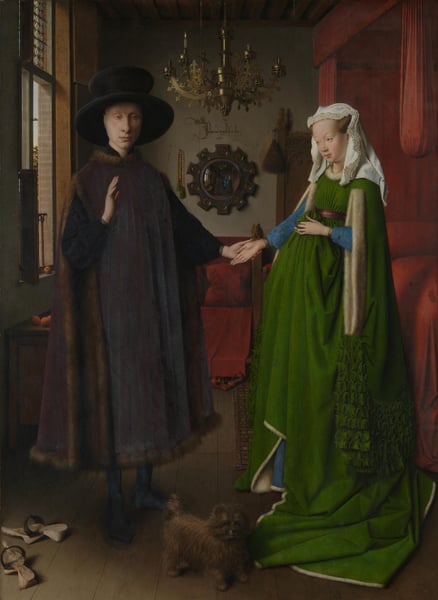
The Arnolfini Portrait is an oil painting on oak panel by the Early Netherlandish painter Jan van Eyck, dated 1434 and now in the National Gallery, London. It is a full-length double portrait, believed to depict the Italian merchant Giovanni di Nicolao Arnolfini and his wife, presumably in their residence at the Flemish city of Bruges.
Eugene Delacroix · Romanticism · history painting, symbolic painting
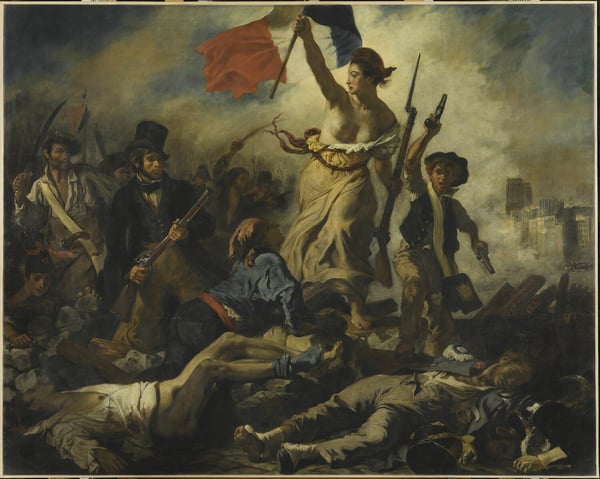
Perhaps Delacroix’s most influential and most recognizable paintings, Liberty Leading the People was created to commemorate the July Revolution of 1830, which removed Charles X of France from power. Delacroix wrote in a letter to his brother that a bad mood that had been hold of him was lifting due to the painting on which he was embarking (the Liberty painting), and that if he could not fight ...
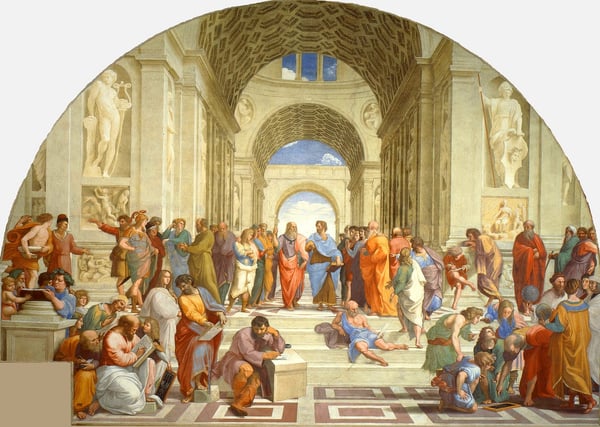
The School of Athens fresco, which is one of Raphael’s most famous works, was completed to decorate the Stanza della Segnatura commission by the Pope. The Stanza was the first set of rooms to be decorated, and this painting was the second in the set of paintings that adorn the walls. Although it was created for a grand room in the Vatican, nearly every one of the figures in the painting can be ...
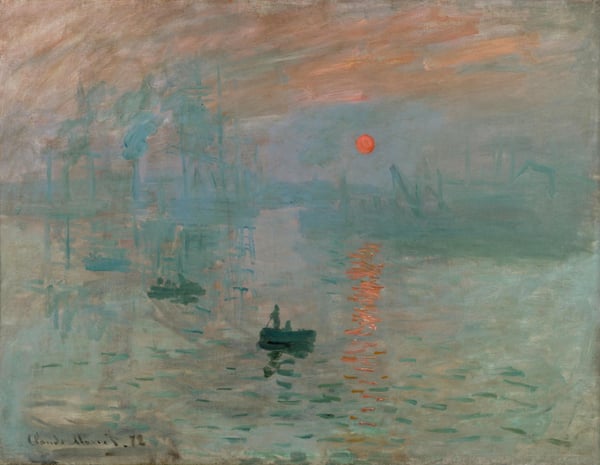
Impression, Sunrise is an 1872 painting by Claude Monet first shown at what would become known as the "Exhibition of the Impressionists" in Paris in April, 1874. The painting is credited with inspiring the name of the Impressionist movement.
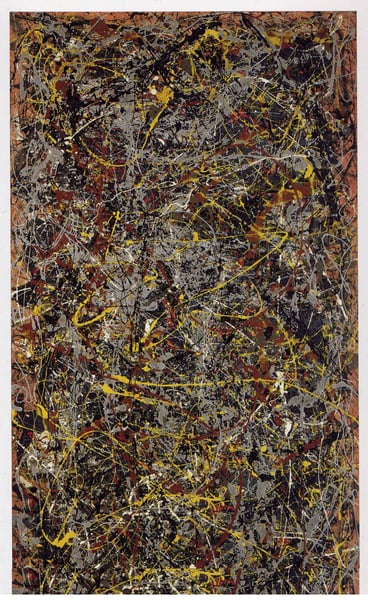
No. 5, 1948 is a 1948 painting by Jackson Pollock, an American painter known for his contributions to the abstract expressionist movement. It was sold on 22 May 2006 for $140 million, a new mark for highest ever price for a painting, not surpassed until April 2011.
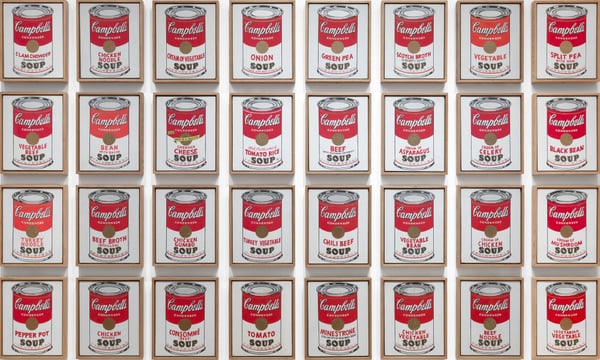
Campbell's Soup Cans is a series of 32 paintings produced by American artist Andy Warhol between 1961 and 1962. Each painting depicts a different variety of Campbell's soup cans in a uniform 20-by-16-inch format. First exhibited in July 1962 at the Ferus Gallery in Los Angeles, the works marked a breakthrough for Pop art and challenged traditional distinctions between fine art and commercial im...
The Treachery of Images is a 1929 painting by Belgian surrealist painter René Magritte. It is also known as This Is Not a Pipe, Ceci n'est pas une pipe and The Wind and the Song. It is on display at the Los Angeles County Museum of Art.
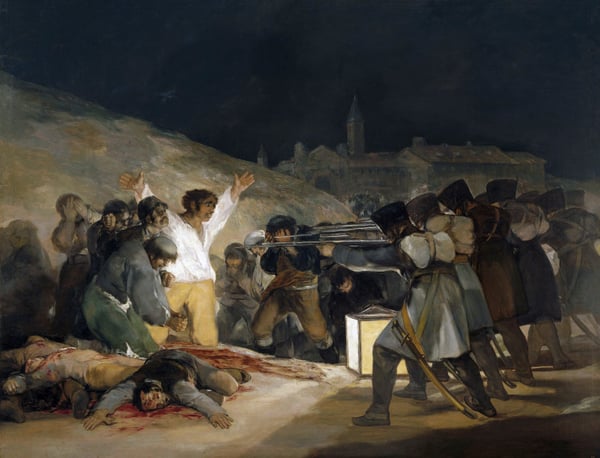
The Third of May 1808 in Madrid and also known, in Spanish, as El tres de mayo de 1808 en Madrid or Los fusilamientos de la montaña del Príncipe Pío, or Los fusilamientos del tres de mayo, is a painting completed in 1814 by the Spanish painter Francisco Goya, now in the Museo del Prado, Madrid. In the work, Goya sought to commemorate Spanish resistance to Napoleon's armies during the occupation...
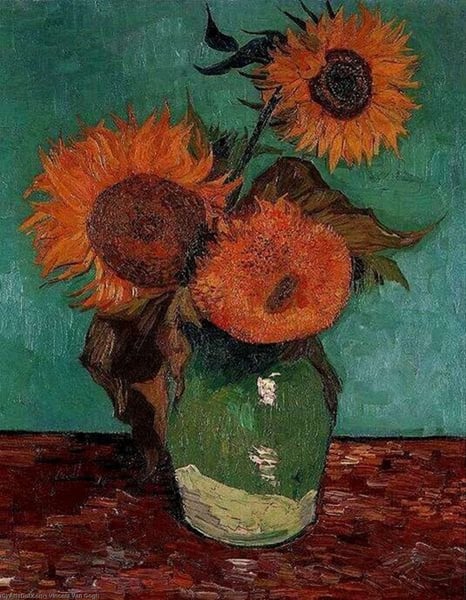
Vincent van Gogh · Post-Impressionism · flower painting
Helianthus is a genus comprising around 70 species of annual and perennial flowering plants in the daisy family Asteraceae commonly known as sunflowers. Except for three South American species, the species of Helianthus are native to North America and Central America. The best-known species is the common sunflower. This and other species, notably Jerusalem artichoke, are cultivated in temperate...
Les Demoiselles d'Avignon is a large oil painting created in 1907 by the Spanish artist Pablo Picasso. Part of the permanent collection of the Museum of Modern Art in New York, it portrays five nude female prostitutes in a brothel on Carrer d'Avinyó, a street in Barcelona, Spain. The figures are confrontational and not conventionally feminine, being rendered with angular and disjointed body sha...
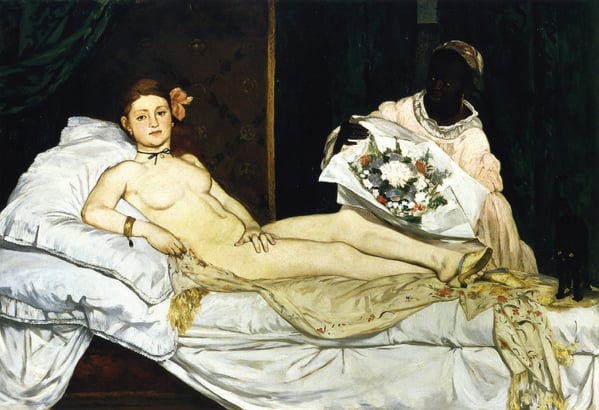
When Manet exhibited Olympia at the Paris Salon in 1865, it caused an immediate sensation. Although it was immediately condemned as “immoral” and “vulgar” by conservative critics, it was lauded by critics such as Emile Zola, the French writer, who proclaimed the painting to be Manet’s masterpiece. Unlike Titian’s Venus de Urbino or Giorgione’s Sleeping Venus, both of which were sources of inspi...
Henri Rousseau · Naïve Art (Primitivism) · genre painting
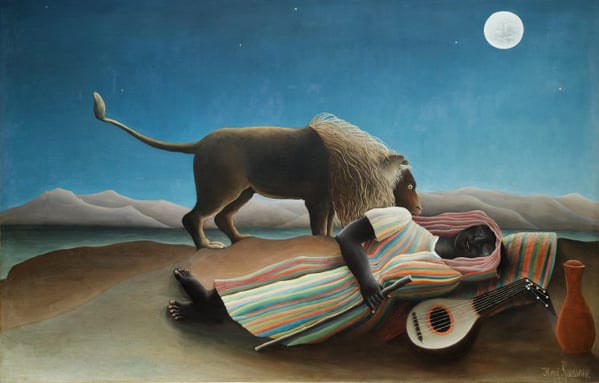
Rousseau described the subject of The Sleeping Gypsy: “A wandering Negress, a mandolin player, lies with her jar beside her (a vase with drinking water), overcome by fatigue in a deep sleep. A lion chances to pass by, picks up her scent yet does not devour her. There is a moonlight effect, very poetic.” A toll collector for the city of Paris, Rousseau was a largely self-taught painter, although...
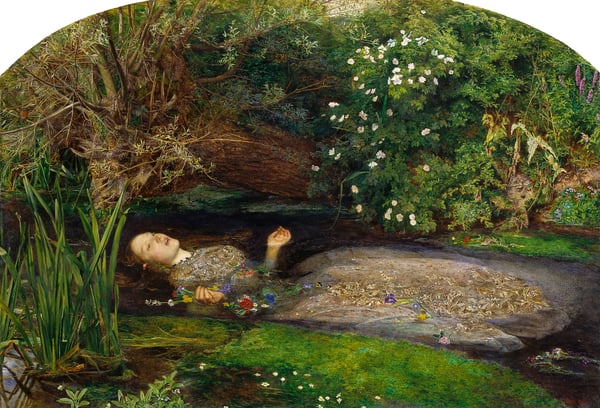
John Everett Millais · Romanticism · literary painting
Ophelia is a literary painting by John Everett Millais, created in 1852 in the Romantic style. The work depicts the figure named in its title, drawing from literary source material characteristic of Romantic art's engagement with classical and literary narratives.
A Bar at the Folies-Bergère is a painting by Édouard Manet, considered to be his last major work. It was painted in 1882 and exhibited at the Paris Salon of that year. It depicts a scene in the Folies Bergère nightclub in Paris. The painting originally belonged to the composer Emmanuel Chabrier, a close friend of Manet, and hung over his piano. It is now in the Courtauld Gallery in London.
The Old Guitarist is an oil painting by Pablo Picasso, which he created in late 1903 and early 1904. It depicts an elderly musician, a haggard man with threadbare clothing, who is hunched over his guitar while playing in the streets of Barcelona, Spain. It is on display at the Art Institute of Chicago as part of the Helen Birch Bartlett Memorial Collection.
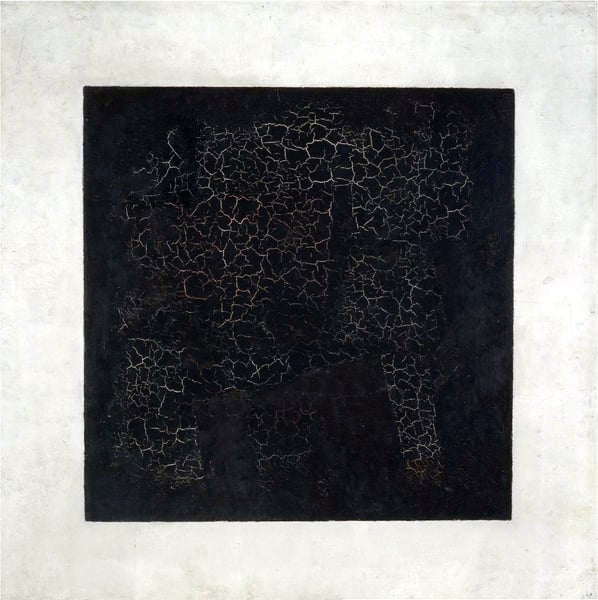
One of the most famous paintings in Russian art, Black Square marked the turning point of the Russian avant-garde movement. Before creating this painting, Malevich spent eighteen months in his studio, laboring over thirty non-objective paintings. In the end, he had created a series of non-objective paintings, of which Black Square is one. His invention of the word “suprematism” was meant to ref...
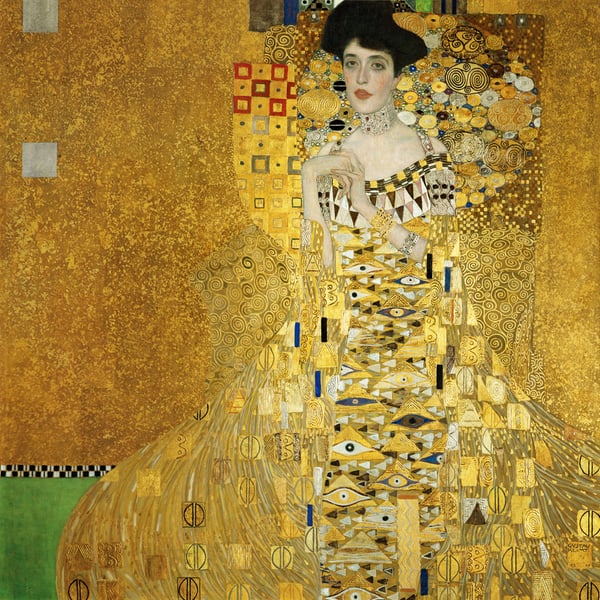
This painting, which took three years to complete, was commissioned by the wealthy industrialist Ferdinand Bloch-Bauer, who made his money in the sugar industry. Ferdinand Bloch-Bauer favored the arts, especially Klimt, and commissioned him to complete another portrait of his wife Adele in 1912. Adele Bloch-Bauer was the only person to be painted twice by Klimt. This painting is perhaps most fa...
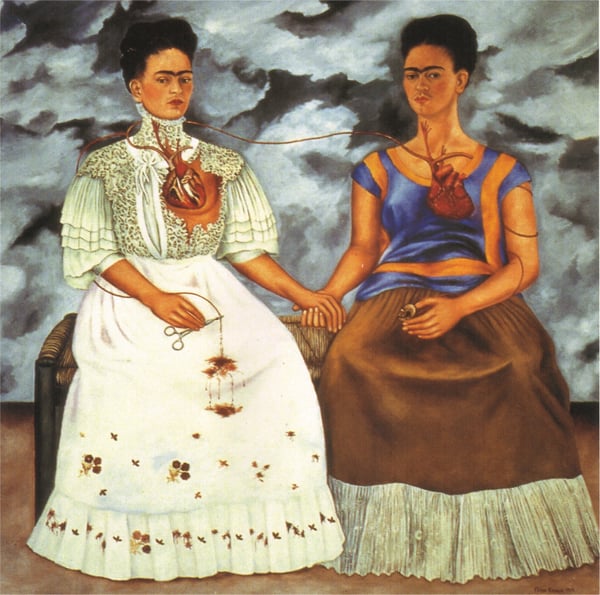
Frida Kahlo · Naïve Art (Primitivism) · self-portrait
Frida Kahlo's work placed Mexican art on the international stage. Her style was figurative and self-taught, with elements of the fantastical and an emphasis on her own individual, biographical perspective. Her self-referential art, now a media phenomenon, originated in the development of her portrait painting which, from early on, became her most effective device for expressing a certain unease...
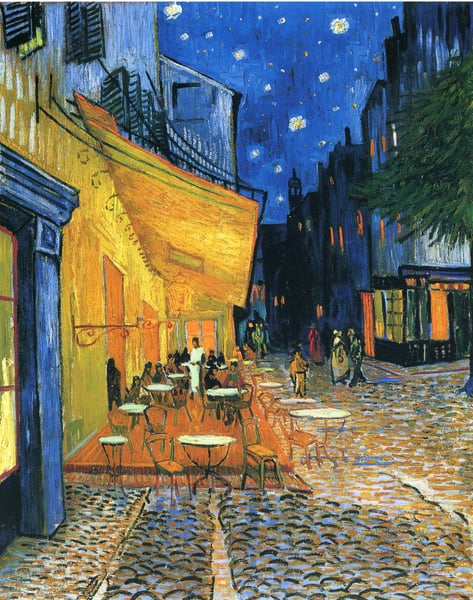
Café Terrace at Night is an 1888 oil painting by the Dutch artist Vincent van Gogh. It is also known as The Cafe Terrace on the Place du Forum, and, when first exhibited in 1891, was entitled Coffeehouse, in the evening.
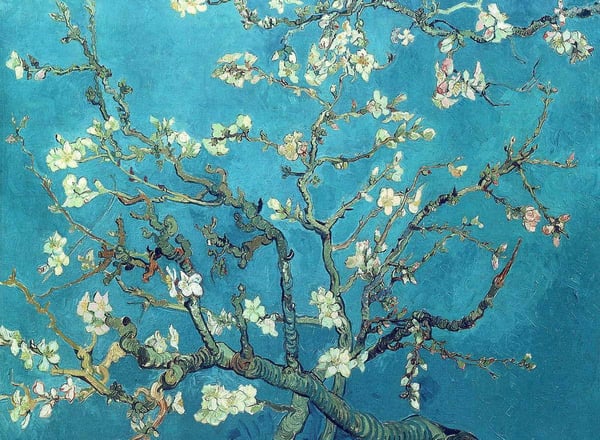
Almond Blossoms is a group of several paintings made in 1888 and 1890 by Vincent van Gogh in Arles and Saint-Rémy, southern France of blossoming almond trees. Flowering trees were special to van Gogh. They represented awakening and hope. He enjoyed them aesthetically and found joy in painting flowering trees. The works reflect the influence of Impressionism, Divisionism, and Japanese woodcuts. ...
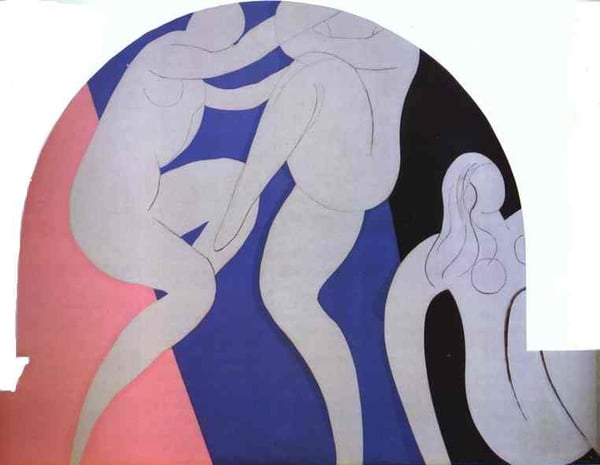
Dance (La Danse) is a painting made by Henri Matisse in 1910, at the request of Russian businessman and art collector Sergei Shchukin, who bequeathed the large decorative panel to the Hermitage Museum, in Saint Petersburg, where it hangs beside Music. The composition of dancing figures is commonly recognized as "a key point of (Matisse's) career and in the development of modern painting". A pre...
Mikhail Vrubel · Art Nouveau (Modern), Symbolism · portrait
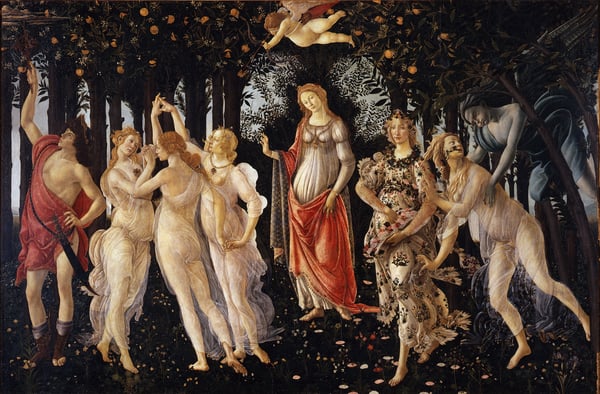
Primavera is a large panel painting in tempera paint by the Italian Renaissance painter Sandro Botticelli made in the late 1470s or early 1480s. It has been described as "one of the most written about, and most controversial paintings in the world", and also "one of the most popular paintings in Western art".
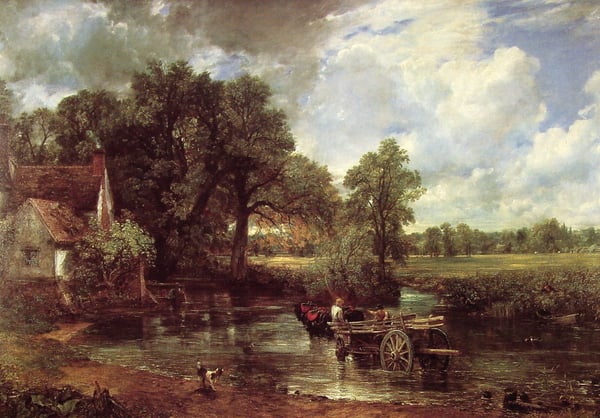
The Hay Wain, one of Constable's most renowned works, was initially unremarkable when it was exhibited. The painting depicts the River Stour, which separates Suffolk and Essex, with Willy Lott's cottage to the left. The cart in the painting might have been positioned in the water to prevent the wooden wheels from shrinking in the sun and loosening their metal rims.
还没有评论 — 来抢沙发吧。