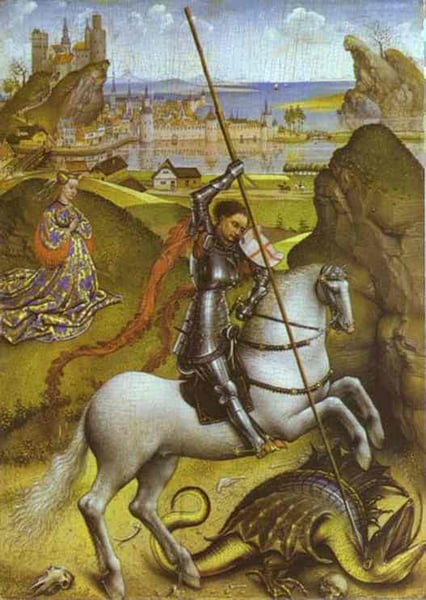
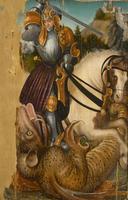
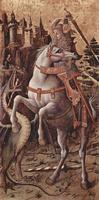
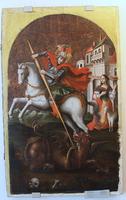
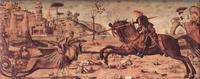
Based solely on the provided structured facts—that the artwork is Saint George and the Dragon by Rogier van der Weyden, belonging to the Northern Renaissance style and the religious painting genre—its significance lies in how it exemplifies the core innovations of Northern Renaissance religious art. Van der Weyden’s treatment of a popular hagiographic subject would typically emphasize meticulous naturalistic detail (a hallmark of the Northern Renaissance) even in a miraculous scene, using rich oil glazes to render textures, light, and spatial depth. As a religious painting, it would convey intense emotional restraint and spiritual drama—qualities for which van der Weyden is renowned—focusing on the human and divine tension between the saint, the dragon, and the princess. The artwork’s importance thus derives from demonstrating how Northern Renaissance artists transformed a conventional saint’s legend into a vehicle for profound devotional feeling and technical virtuosity, reinforcing the period’s shift toward intimate, psychologically charged sacred narratives.