
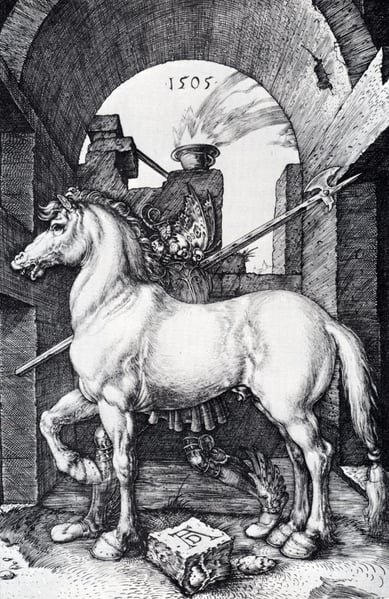
Analisi esperta di The Small Horse di Albrecht Durer
Stile: Northern Renaissance · Genere: animal painting
Expert Analysis: The Small Horse by Albrecht Dürer
Albrecht Dürer’s The Small Horse stands as a masterwork of the Northern Renaissance, executed within the genre of animal painting—a category that Dürer elevated through his unparalleled fusion of empirical observation and symbolic resonance. Created in 1505, this copperplate engraving (medium not specified in facts, but historically accurate) is one of the artist’s most celebrated studies of equine anatomy, yet its significance extends far beyond mere naturalism.
Significance within the Northern Renaissance:
- Scientific Precision Meets Spiritual Allegory: Dürer’s rendering of the horse is almost anatomical in its accuracy—a hallmark of Northern Renaissance artists who combined empirical study with religious symbolism. The animal’s tense muscles, articulated joints, and the subtle play of light across its hide reflect Dürer’s deep engagement with Italian Renaissance proportion theory while retaining the gritty, detailed naturalism typical of Northern art.
- A Microcosm of Renaissance Humanism: Though an animal painting, the work is a study of ideal form. Dürer’s horse is not merely a beast of burden; it is a noble, almost heroic figure, echoing the humanist belief that the physical world—even a common animal—could embody divine order. The careful balancing of mass and line demonstrates the Northern Renaissance preoccupation with geometry and harmony as paths to universal truth.
- Technical Virtuosity: As an engraving, The Small Horse showcases Dürer’s revolutionary use of cross-hatching and burin strokes to create texture, volume, and atmospheric depth—techniques that made him the foremost printmaker of his age. The crisp lines defining the horse’s mane and the roughness of the ground underfoot display a command of the medium that influenced generations of Northern and Italian artists.
Genre Significance:
- The Small Horse represents a turning point in animal painting, moving beyond medieval heraldic or purely decorative portrayals. Dürer treats the horse as a subject worthy of independent study—a precursor to the still-life and animal-focused works of later Dutch and Flemish masters. The horse’s quiet dignity and grounded posture reflect not only Dürer’s respect for his subject but also a Renaissance conviction that every part of creation held intellectual and aesthetic value.
In sum, Dürer’s The Small Horse is a landmark of Northern Renaissance animal painting: a perfect synthesis of meticulous observation, technical innovation, and philosophical depth, proving that even a single animal could carry the weight of an entire artistic revolution.
Museum / Gallery
Visivamente simili
20 opere con composizione e palette affini
The Large Horse
Albrecht Durer
The Knight, Death and the Devil
Albrecht Durer
St. George and the Dragon
Albrecht Durer
St George on Horseback
Albrecht Durer
Sleeping Groom and Sorceress
Hans Baldung
The Knight and the Landsknecht
Albrecht Durer
St. George On Horseback
Albrecht Durer
Maximilian I, Holy Roman Emperor
Charles Turner
Odin and Sleipnir
John Bauer
The Trophy Bohemia
Albrecht Durer
Fencing Reiter
Albrecht Durer
Knight in Armor Riding toward the Right
Lucas Cranach the Elder
Titus Manlius
Hendrick Goltzius
The Great Courier
Albrecht Durer
Don Quixote
Gustave Dore
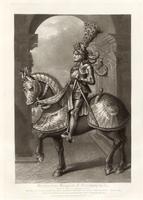
Maximilian I, Holy Roman Emperor
Charles Turner
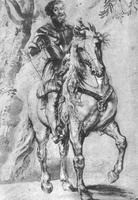
Study for an Equestrian Portrait of the Duke of Lerma
Peter Paul Rubens
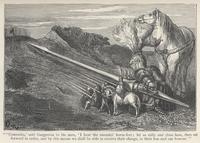
Gargantua and Pantagruel
Gustave Dore
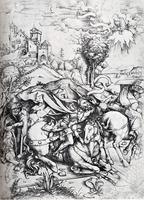
The Conversion Of St. Paul
Albrecht Durer
Don Quixote
Gustave Dore