
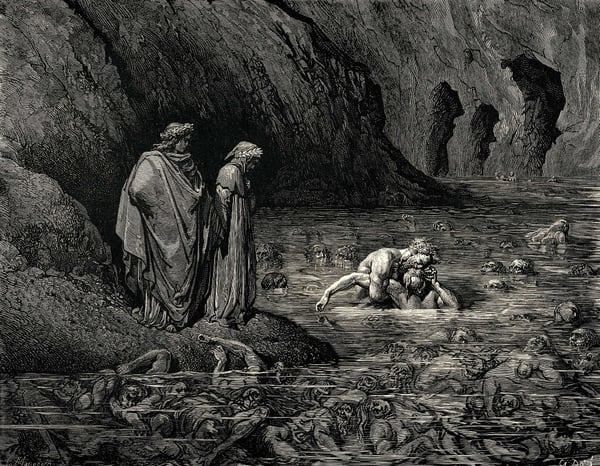
Expertenanalyse zu Gustave Dores The Inferno, Canto 32
Stil: Romanticism · Genre: illustration
Expert Analysis of "The Inferno, Canto 32" by Gustave Doré
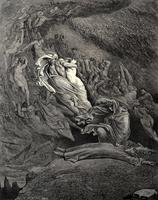
As an illustration created within the Romantic movement, this work exemplifies the period’s obsession with the sublime, the terrifying, and the emotionally overwhelming. Doré’s rendering of Dante’s frozen ninth circle—where traitors are submerged in ice—captures Romanticism’s core drive to render the invisible and the extreme. The composition thrusts the viewer into a claustrophobic, nocturnal landscape of jagged ice and contorted bodies, where light barely pierces the gloom. This chiaroscuro technique heightens the psychological horror and physical agony, making the scene feel both monumental and intimate.
What makes this artwork significant within its style and genre is Doré’s ability to translate Dante’s allegorical epic into a visual language that is at once meticulously descriptive and deeply emotional. In Romanticism, the artist is a conduit for raw human experience; here, Doré does not merely illustrate a text but amplifies its moral terror through dramatic scale and texture. The victims’ frozen postures—caught mid-struggle or locked in eternal silence—evoke the Romantic fascination with death, punishment, and the limits of human endurance.
As an illustration, the work also pushed the boundaries of the genre. Doré elevated book illustration from decorative accompaniment to a powerful, independent art form. His dense, cross-hatched engravings allowed mass reproduction without losing atmospheric depth, making complex literary themes accessible to a broader 19th-century audience. In this canto, the meticulous rendering of ice, flesh, and shadow demonstrates how illustration could rival painting in emotional weight and technical precision, solidifying Doré’s legacy as a master who made the terrifying visions of the Inferno unforgettable.
Visuell ähnlich
20 Werke mit ähnlicher Komposition und Farbpalette
Ugolino and Archbishop Ruggieri
Gustave Dore
Geri Del Bello
Gustave Dore
The Inferno, Canto 18
Gustave Dore
The Inferno, Canto 15
Gustave Dore
The Inferno, Canto 7
Gustave Dore
Forgers II
Gustave Dore
The Inferno, Canto 6
Gustave Dore
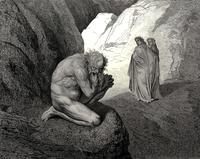
The Inferno, Canto 7
Gustave Dore
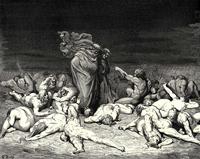
The Inferno, Canto 6
Gustave Dore
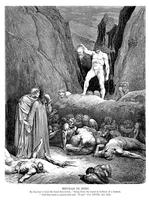
Bertram De Born
Gustave Dore
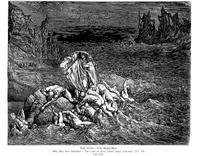
The Styx--The Irascible
Gustave Dore
The Embarkation of the Souls
Gustave Dore
Pluto and Virgil
Gustave Dore
Brunetto Latini
Gustave Dore
The Inferno, Canto 19
Gustave Dore
Paramours and Flatterers
Gustave Dore
The Greeks Leave after Fire of Troy
Theodoor van Thulden
The Inferno, Canto 28
Gustave Dore
The Inferno, Canto 13
Gustave Dore
The Inferno, Canto 5
Gustave Dore