
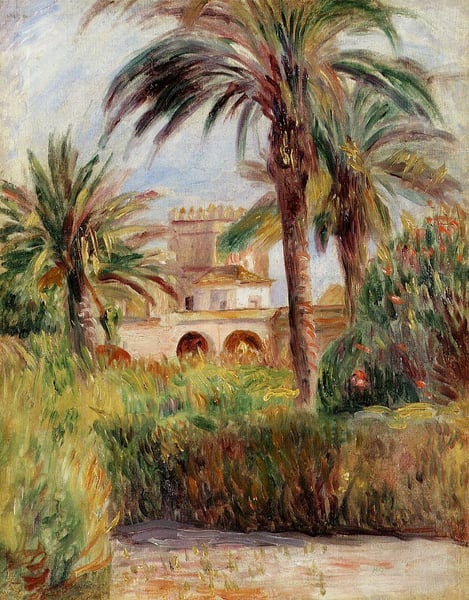
Analisi esperta di The Test Garden in Algiers di Pierre-Auguste Renoir
Stile: Impressionism · Genere: landscape
Expert Art Historical Analysis of "The Test Garden in Algiers" by Pierre-Auguste Renoir
Style & Period Context
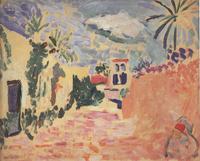
Though Renoir is celebrated as a founding figure of Impressionism, this landscape belongs to his later "Rejection of Impressionism" period—a critical pivot in his career. After 1883, Renoir grew dissatisfied with the spontaneous, dissolving brushwork of pure Impressionism and sought a more structured, enduring approach influenced by classical masters like Raphael and Ingres. "The Test Garden in Algiers" exemplifies this transition: while still employing the bright, sun-drenched palette of Impressionism, the composition reveals a new emphasis on solid forms and linear clarity, moving away from the atmospheric flux of his earlier works.
Significance within the Landscape Genre
Painted during Renoir’s travels to North Africa, the work captures the lush, exotic vegetation of Algiers with a sensuous, almost tactile treatment of foliage. The "test garden" (a botanical experiment station) serves as a perfect subject for Renoir’s evolving method: he retains the Impressionist love of natural light but organizes the scene with firmer spatial structure—notice the balanced layering of trees, shadows, and sky. This hybrid approach foreshadows his later, more monumental nudes and still lifes, making this painting a pivotal marker of his stylistic evolution away from fleeting sensations toward timeless harmony. The interplay of warm greens and golds also demonstrates Renoir’s enduring fascination with color as a vehicle for both joy and formal discipline.
Key Takeaway
"The Test Garden in Algiers" is significant as a transitional work: it bridges Renoir’s early, fragmented Impressionist style with his mature, synthesizing classicism. It offers a rare glimpse into an artist deliberately breaking from the very movement he helped define, using a foreign landscape to experiment with permanence and structure—without losing the radiant beauty that made his name.
Museum / Gallery
Visivamente simili
20 opere con composizione e palette affini
Villas at Bordighera 03
Claude Monet
Small Country Farm in Bordighera
Claude Monet
The Moreno Garden at Bordighera
Claude Monet
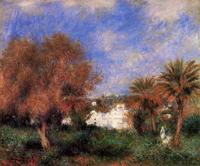
The Garden of Essai in Algiers
Pierre-Auguste Renoir
House Manhufe
Amadeo de Souza-Cardoso
Palm Tree at Bordighera
Claude Monet
Cypress-House
Thalia Flora-Karavia
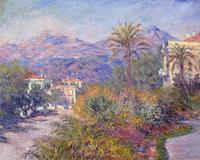
Strada Romada in Bordighera
Claude Monet
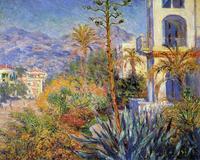
Villas at Bordighera
Claude Monet
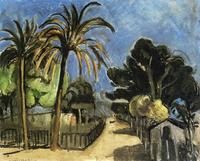
Untitled
Henri Matisse
Landscape
Henri Matisse
Garden in Cannes
Edouard Vuillard
Malvarrosa, Valencia
Joaquín Sorolla
The Alcazar
Joaquín Sorolla
Villas at Bordighera
Claude Monet
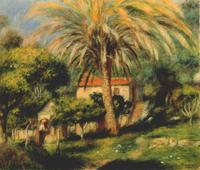
The palm tree
Pierre-Auguste Renoir
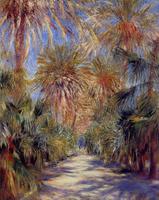
Algiers, the Garden of Essai
Pierre-Auguste Renoir
The Valley of Sasso, Bordighera
Claude Monet
Palm Trees at Bordighera
Claude Monet
Street at Biskra
Henri Matisse