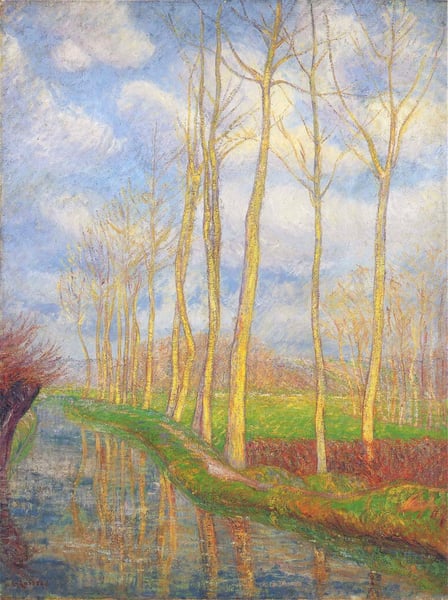
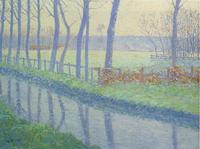
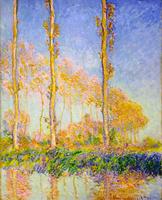
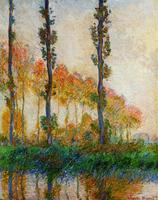
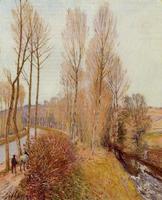
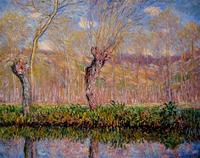
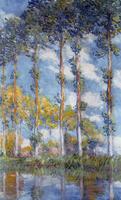
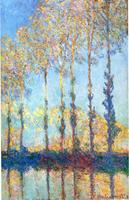
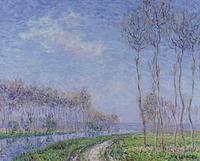
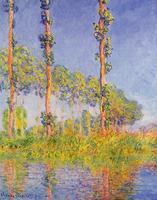
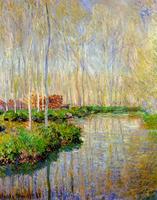
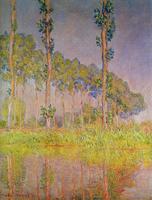
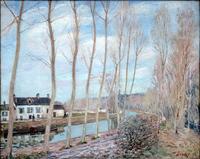
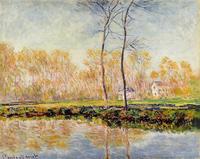
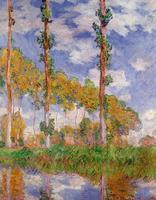
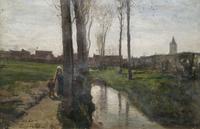
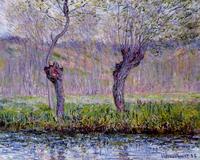
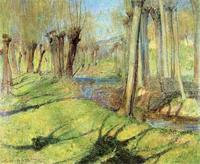
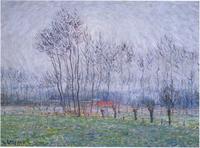
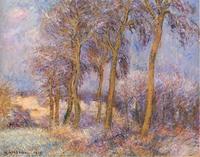
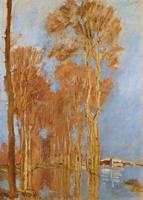
“Poplars” by Gustave Loiseau exemplifies the Post-Impressionist shift from fleeting impressions toward a more structured, expressive treatment of landscape. Loiseau, a key figure of the Pont-Aven School, merges the broken, atmospheric brushwork of Impressionism with a Synthetist emphasis on bold outlines and rhythmic composition. The vertical rhythm of the poplars creates a dynamic, almost decorative pattern—a hallmark of his mature style—while the layered application of green, blue, and earthy tones captures the changing light and air of the French countryside. Unlike pure Impressionism, Loiseau’s work asserts a deliberate, ordered geometry: the trees anchor the composition with a sense of permanence, yet their shimmering surfaces and the dappled foreground preserve the immediacy of plein-air observation. This balance—between the natural and the constructed, the ephemeral and the enduring—makes “Poplars” significant as a bridge between Impressionist sensation and the more symbolic, formal concerns of later Post-Impressionist movements.