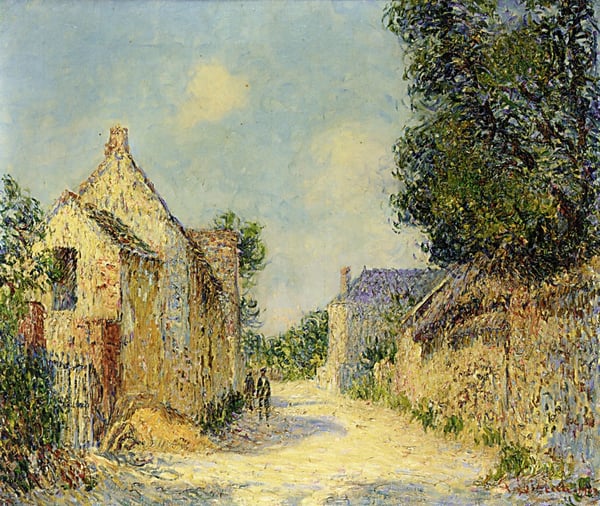
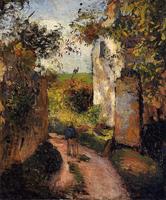
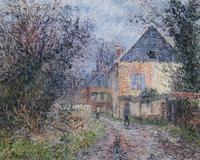
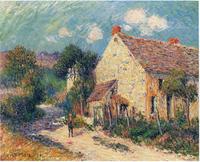
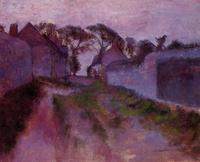
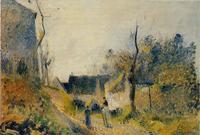
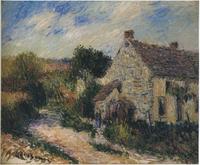
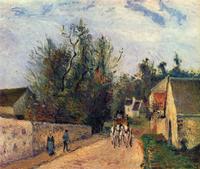
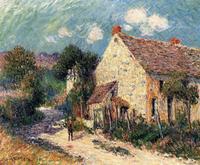
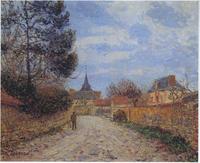
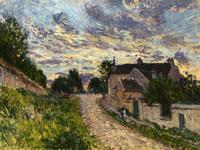
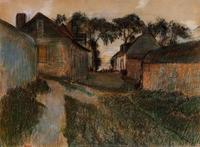
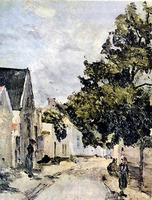
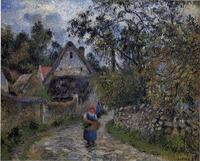
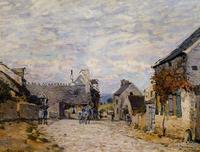
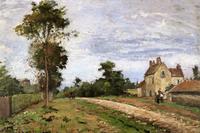
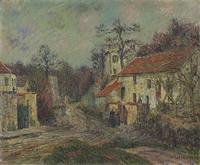
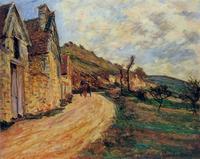
The significance of Gustave Loiseau's Village Street, Vaudreuil lies in its embodiment of Post-Impressionist principles while remaining tethered to the sensory immediacy of the cityscape genre. Loiseau, a French painter associated with the Pont-Aven School, moved beyond Impressionism’s fleeting atmospheric effects toward a more deliberate, structured composition. In this work, the village street is not merely a record of light but a constructed harmony of color and form. The scene achieves a quiet monumentality through Loiseau’s characteristic en treillis brushwork—a web-like, cross-hatched stroke that unifies the rooftops, foliage, and roadway into a dense, rhythmic surface. This technique transforms the ordinary rural lane into a tapestry of layered hues, where the blue-grey sky and warm terracotta walls pulse with contained energy. The painting’s significance within Post-Impressionism is its synthesis: it retains the plein-air freshness of Impressionism while asserting the painter’s subjective arrangement of reality, making the familiar street feel both immediate and timeless.