The paintings that captured light, movement, and modern life
CE
Caleido Editorial TeamJune 9, 202635 min read0 views
Impressionism emerged in 1860s Paris as a radical break from academic painting. A group of young artists — including Monet, Renoir, Degas, Pissarro, Sisley, Morisot, and Cassatt — rejected the dark palettes and mythological subjects of the Salon in favor of painting outdoors, capturing the fleeting effects of light on landscapes, city streets, and everyday scenes.
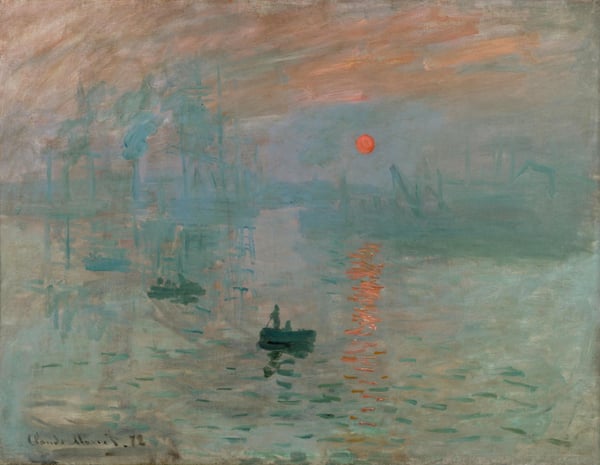
Named (mockingly) after Monet's Impression, Sunrise, the movement shocked critics but ultimately transformed art forever. The loose brushwork, vibrant color, and emphasis on the artist's subjective perception laid the groundwork for virtually every modern art movement that followed.
Use the checklist below to track which Impressionist masterworks you've seen in person.
Impression, Sunrise is an 1872 painting by Claude Monet first shown at what would become known as the "Exhibition of the Impressionists" in Paris in April, 1874. The painting is credited with inspiring the name of the Impressionist movement.
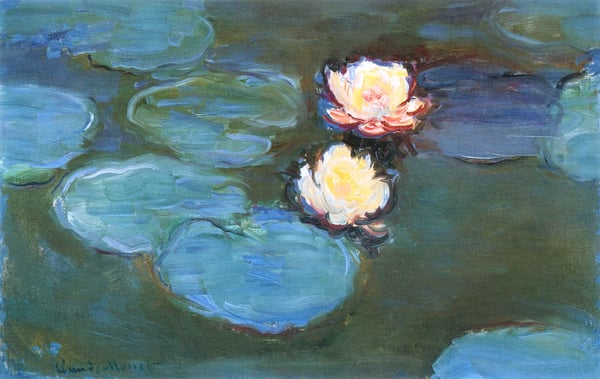
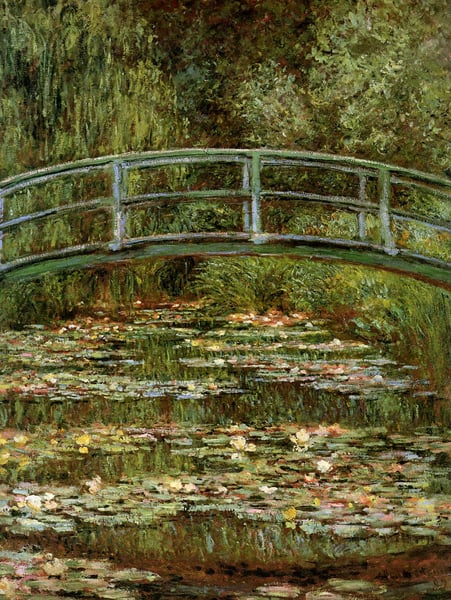
Water Lilies is a series of approximately 250 oil paintings by French Impressionist Claude Monet (1840–1926). The paintings depict his flower garden at his home in Giverny, and were the main focus of his artistic production during the last 31 years of his life. Many of the works were painted while Monet suffered from cataracts.
Georges Seurat · Pointillism, Neo-ImpressionismArtwork
Georges Seurat
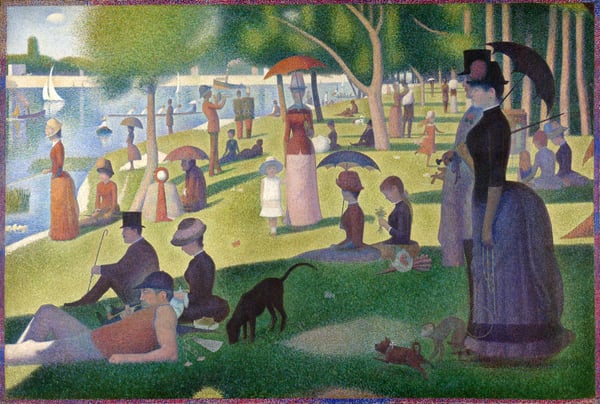
A Sunday Afternoon on the Island of La Grande Jatte was painted from 1884 to 1886 and is Georges Seurat's most famous work. A leading example of pointillist technique, executed on a large canvas, it is a founding work of the neo-impressionist movement. Seurat's composition includes a number of Parisians at a park on the banks of the River Seine. It is held in the collection of the Art Institute...
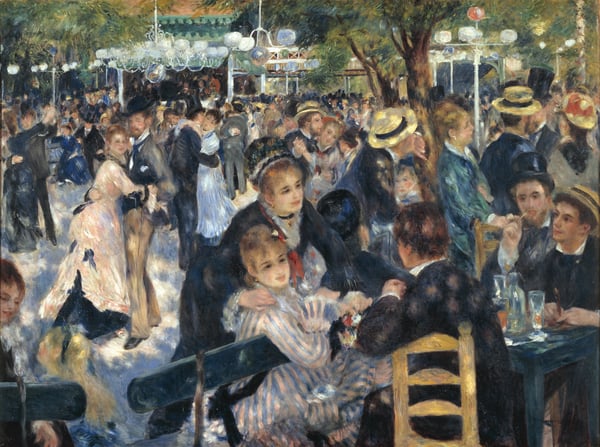
Luncheon of the Boating Party is an 1881 painting by French impressionist Pierre-Auguste Renoir. Exhibited at the Seventh Impressionist Exhibition in 1882, it was identified as the best painting in the show by three critics. It was purchased from the artist by the dealer-patron Paul Durand-Ruel and bought in 1923 from his son by industrialist Duncan Phillips, who spent a decade in pursuit of th...
Rouen Cathedral, Facade depicts the Gothic cathedral's front elevation, rendered in Monet's serial method of capturing the same motif under varying light conditions. The work belongs to the Impressionist tradition, where atmospheric effects and chromatic variation take precedence over architectural detail.
Water Lilies is a series of approximately 250 oil paintings by French Impressionist Claude Monet (1840–1926). The paintings depict his flower garden at his home in Giverny, and were the main focus of his artistic production during the last 31 years of his life. Many of the works were painted while Monet suffered from cataracts.
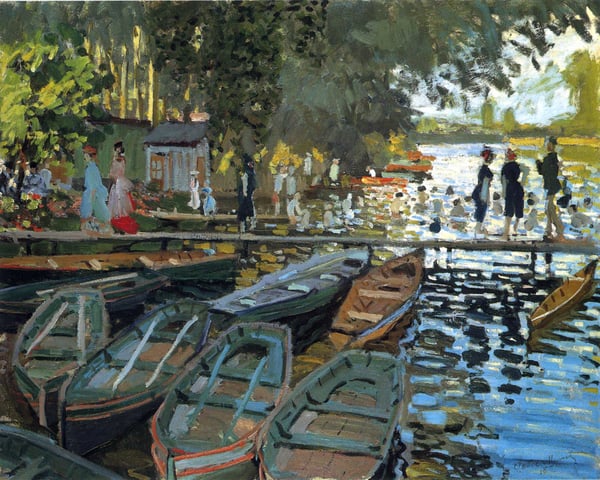
La Grenouillère is an 1869 painting by the French impressionist painter, Claude Monet. It depicts "Flowerpot Island", also known as the Camembert, and the gangplank to La Grenouillère, a floating restaurant and boat-hire on the Seine at Croissy-sur-Seine. He was accompanied by Pierre-Auguste Renoir, who also painted the scene at the same time.
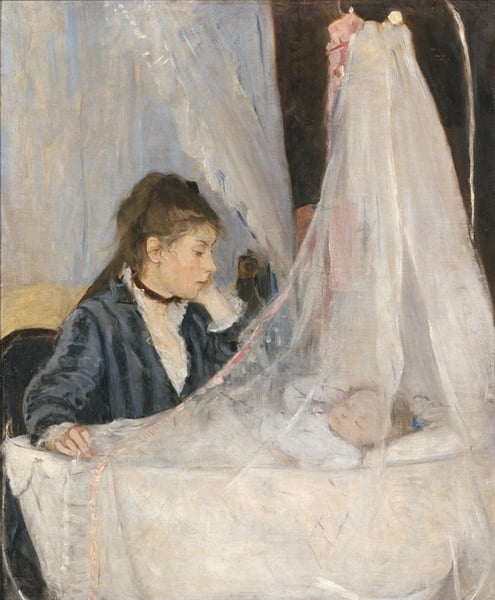
Berthe Morisot's most well-known painting, The Cradle, depicts her sister Edma looking down at her sleeping daughter Blanche in a cradle behind a gauzy veil. The painting, completed during the early part of Morisot's career, is the first example of her exploration of motherhood as a recurring subject, which was limited by the social norms of the era that restricted women's public activities wit...
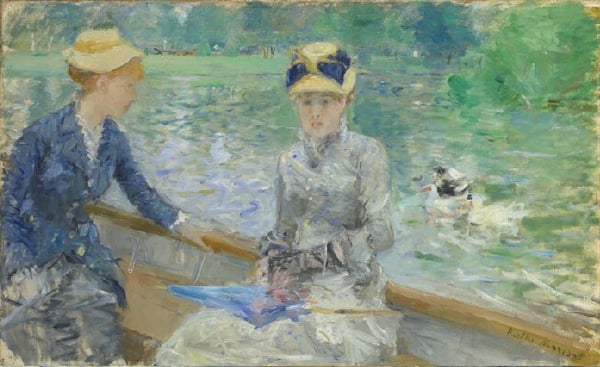
Summer's Day is an oil-on-canvas painting by the French Impressionist painter Berthe Morisot, created in 1879. The painting depicts two women seated in a row boat, and was painted in the Bois de Boulogne. It is held at the National Gallery, in London.
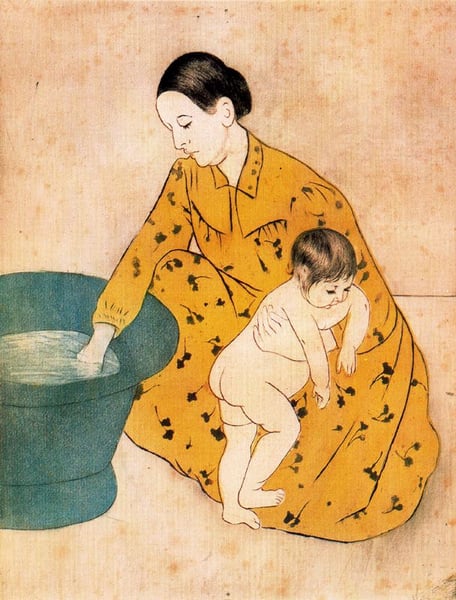
Although she exhibited at the Impressionist Salon, Cassatt’s works encompassed many styles, and she frequently innovated new techniques for her paintings. In The Child’s Bath, we can see her influence from Japanese wood block prints. At the time she created this painting, the high vantage point, tight cropping of the forms, and bold outline were all unconventional artistic devices. Cassatt was ...
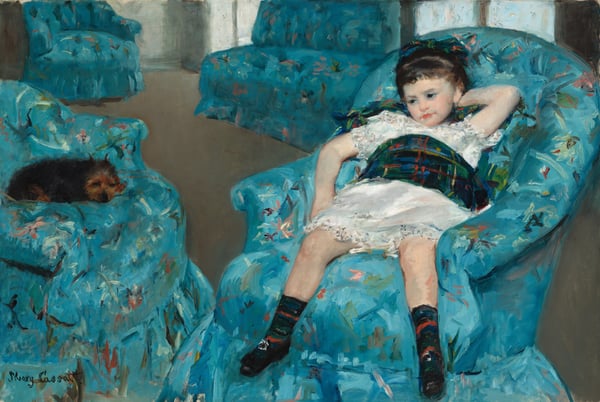
In this significant piece from her later career, Cassatt decided to depict a solitary young girl within the confines of a domestic setting. The Impressionist style is evident in the discernible brushwork and casual posture of the figure. The composition's asymmetry, elevated perspective, limited depth, and abrupt cropping of the scene indicate the influence of Japanese art. Cassatt's own insigh...
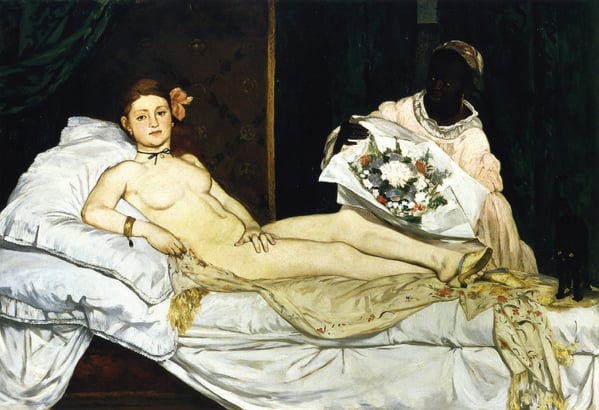
When Manet exhibited Olympia at the Paris Salon in 1865, it caused an immediate sensation. Although it was immediately condemned as “immoral” and “vulgar” by conservative critics, it was lauded by critics such as Emile Zola, the French writer, who proclaimed the painting to be Manet’s masterpiece. Unlike Titian’s Venus de Urbino or Giorgione’s Sleeping Venus, both of which were sources of inspi...
A Bar at the Folies-Bergère is a painting by Édouard Manet, considered to be his last major work. It was painted in 1882 and exhibited at the Paris Salon of that year. It depicts a scene in the Folies Bergère nightclub in Paris. The painting originally belonged to the composer Emmanuel Chabrier, a close friend of Manet, and hung over his piano. It is now in the Courtauld Gallery in London.
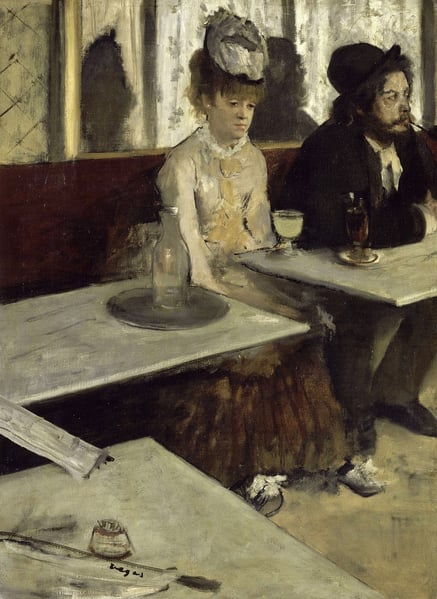
The two figures in this painting are Ellen Andree, a noted French Actress, and Marcellin Desboutin, an artist and noted bohemian personality, sitting at the Café de la Nouvelle-Athenes, in Paris, France. In front of the woman sits a glass of the greenish colored liquid, Absinthe. It was first exhibited in 1872, where it was criticized as ugly and disgusting, and a later exhibition in 1892 it wa...
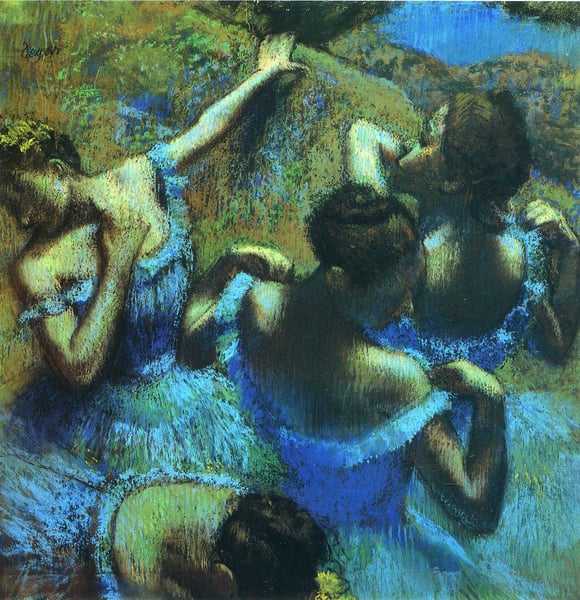
Blue Dancers is an 1897 pastel by Edgar Degas. It is held in the Pushkin Museum, in Moscow, which it entered in 1948 from the State Museum of Modern Western Art. It was in Durand-Ruel's collection and then until 1918 in Sergei Shchukin's collection in Moscow.
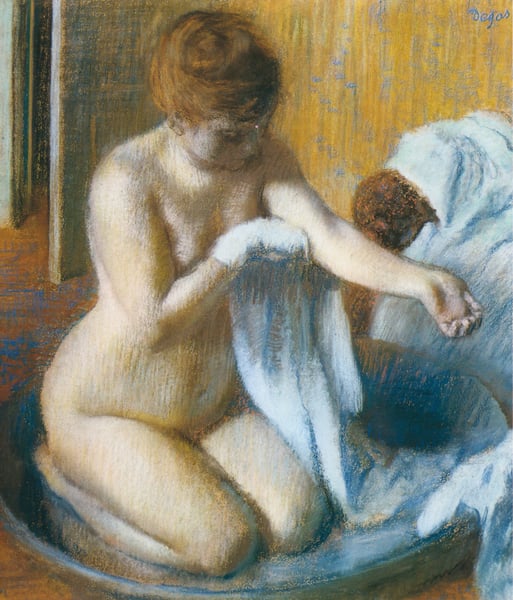
After the Bath is an 1886 nude painting by Edgar Degas executed in the Impressionist style. The work depicts a figure in the bathing context that its title names.
Georges Seurat · Pointillism, Neo-ImpressionismArtwork
Georges Seurat · Pointillism, Neo-Impressionism · genre painting
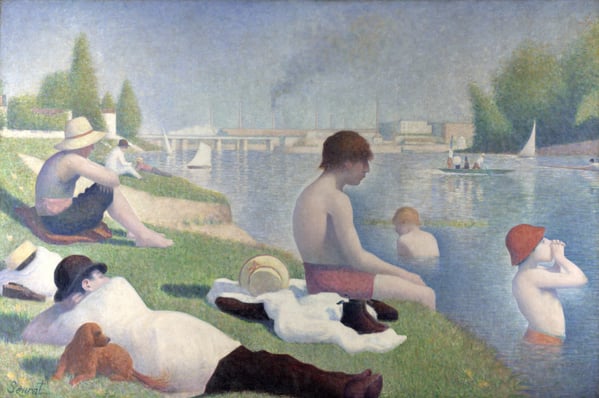
Bathers at Asnières is an 1884 oil on canvas painting by the French artist Georges Pierre Seurat, the first of his two masterpieces on the monumental scale. The canvas is of a suburban, placid Parisian riverside scene. Isolated figures, with their clothes piled sculpturally on the riverbank, together with trees, austere boundary walls and buildings, and the River Seine are presented in a formal...
Georges Seurat · Pointillism, Neo-ImpressionismArtwork
Georges Seurat · Pointillism, Neo-Impressionism · genre painting
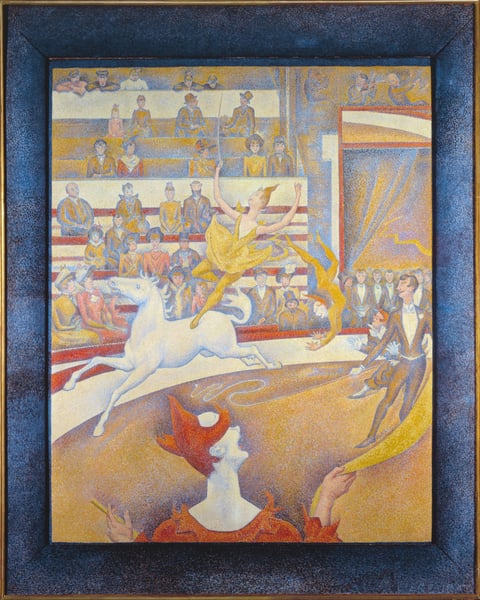
The Circus by Georges Seurat (1891) is a pointillist painting that applies the optical-mixing techniques of Neo-Impressionism to a genre scene. The work demonstrates Seurat's systematic application of small, distinct dots of color to create form and atmosphere, characteristic of his method developed throughout the 1880s.
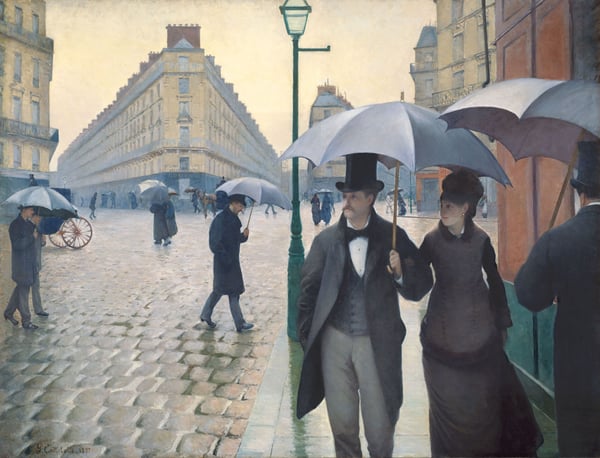
Paris Street; Rainy Day is a large 1877 oil painting by the French artist Gustave Caillebotte (1848–1894), and is his best known work. It shows a number of individuals walking through the Place de Dublin, then known as the Carrefour de Moscou, at an intersection to the east of the Gare Saint-Lazare in north Paris. Although Caillebotte was a friend and patron of many of the impressionist painter...
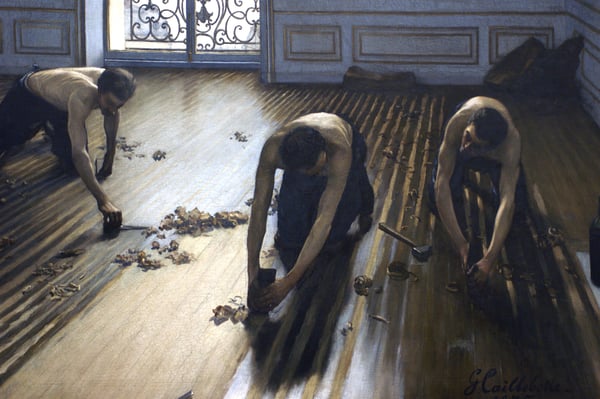
Les raboteurs de parquet is an oil painting by French Impressionist Gustave Caillebotte. The canvas measures 102 by 146.5 centimetres. It was originally given by Caillebotte's family in 1894 to the Musée du Luxembourg, then transferred to the Musée du Louvre in 1929. In 1947, it was moved to the Galerie nationale du Jeu de Paume, and in 1986, it was transferred again to the Musée d'Orsay in Par...
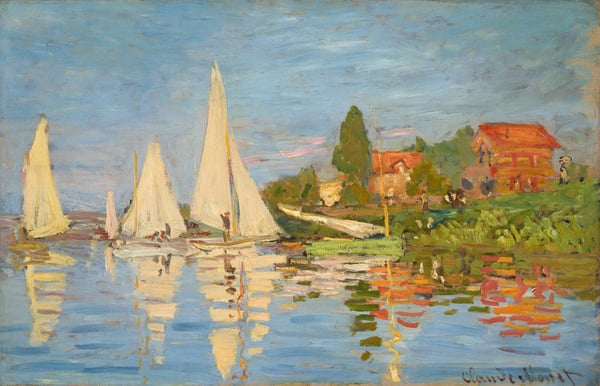
Regatta at Argenteuil is a c. 1872 painting by Claude Monet, now in the Musée d'Orsay. It was left to the French state in 1894 by the painter and collector Gustave Caillebotte.
Poppies is a flower painting by Henri Matisse created in 1919 within the Expressionist style.
32
Women in the Garden (1947)
Claude MonetArtwork
Rene Portocarrero · Modernismo · figurative
Women in the Garden is an oil painting begun in 1866 by French artist Claude Monet when he was 26. It is a large work painted en plein air; the size of the canvas necessitated Monet painting its upper half with the canvas lowered into a trench he had dug, so that he could maintain a single point of view for the entire work. The setting is the garden of a property he was renting. His companion a...
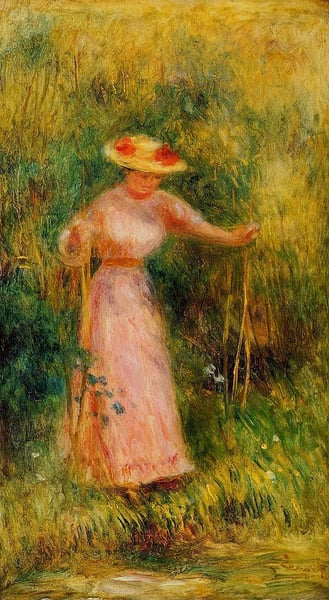
The Swing is an Impressionist genre painting by Pierre-Auguste Renoir from 1895, depicting the leisure activity named in its title through the soft, luminous brushwork characteristic of the movement.
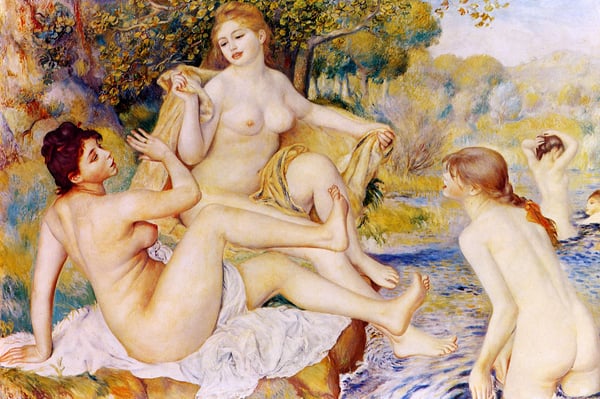
Renoir labored over this painting for a period of three years before he was happy with its composition. Along with at least two full-sized figure drawings of the models, Renoir also created many preparatory drawings for each of the figures before eventually putting brush to canvas. Due to the criticism he received for the painting’s sculptural smoothness and a change in the artist’s perceived ...
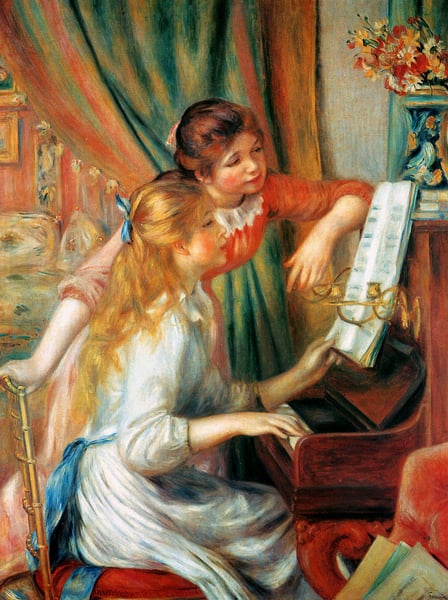
Young Girls at the Piano is an oil-on-canvas painting by French artist Pierre-Auguste Renoir, a leading painter in the development of the Impressionist style. The painting represents his late work period (1892–1919). It was completed in 1892 as an informal commission for the Musée du Luxembourg. Renoir painted three other variations of this composition in oil and two sketches, one in oil and on...
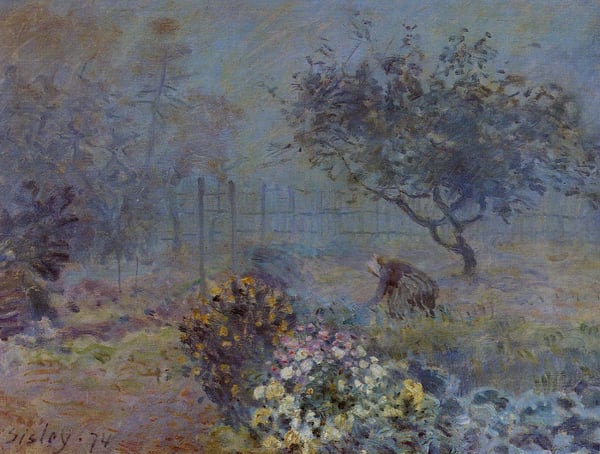
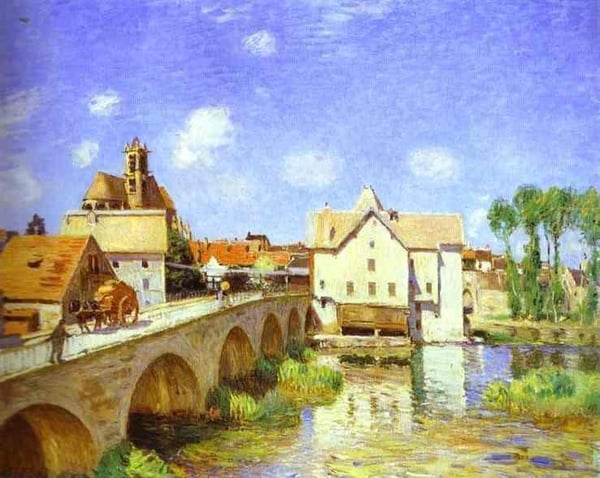
Alfred Sisley's Fog, Voisins is a landscape painting executed in the Impressionist style, depicting atmospheric conditions in the locale named by its title through the characteristic light-sensitive brushwork of that movement.
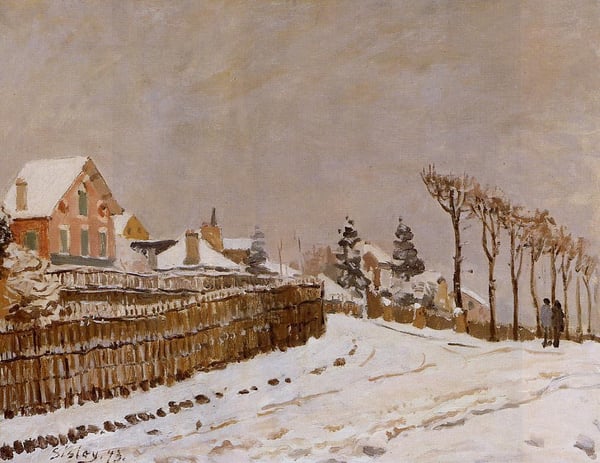
Snow at Louveciennes is a landscape painted by Alfred Sisley in 1873 in the Impressionist style. The work depicts a snow-covered scene at Louveciennes, a village northwest of Paris that Sisley painted frequently during the 1870s.
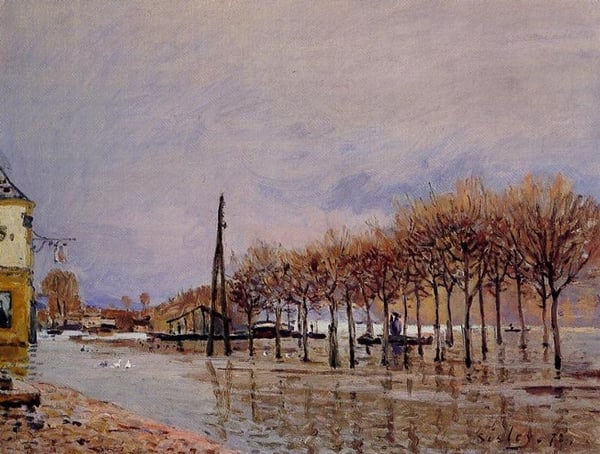
Flood at Port-Marly depicts the subject named in its title, a flooding event at Port-Marly rendered in the Impressionist style characteristic of Alfred Sisley's landscape work.
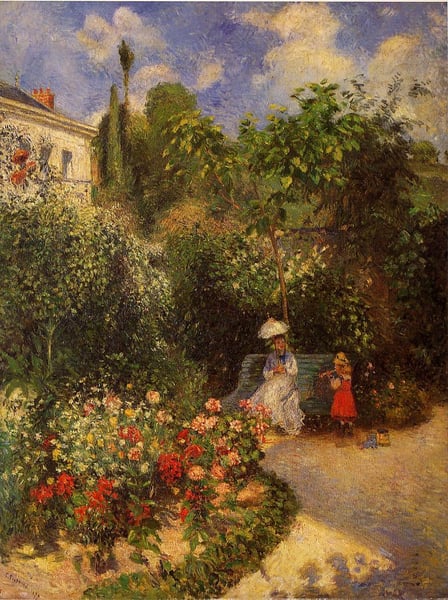
The Garden at Pontoise is a landscape painting by Camille Pissarro from 1877, executed in the Impressionist style. The work depicts a garden setting at Pontoise, rendered with the characteristic Impressionist attention to light and atmospheric effect.
Giuseppe Arcimboldo · Mannerism (Late Renaissance) · self-portrait
Self-portraits are portraits artists make of themselves. Although self-portraits have been made since the earliest times, it is not until the mid-15th century that artists can be frequently identified depicting themselves, as either the main subject or important characters in their work. With better and cheaper mirrors, and the advent of the panel portrait, many painters, sculptors and printmak...
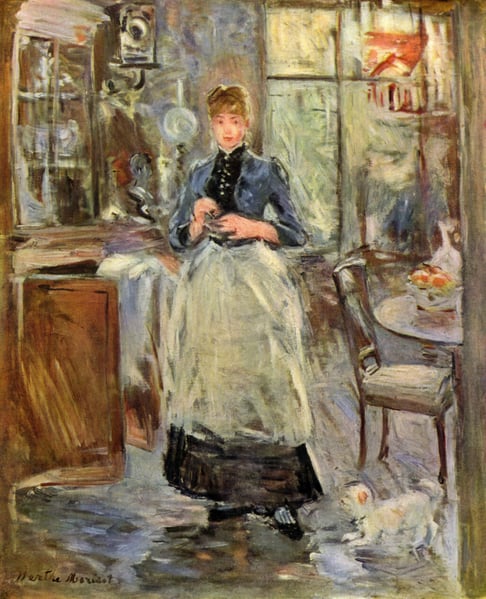
In the Dining Room is an oil-on-canvas painting by the French impressionist artist Berthe Morisot, created in 1886. It shows a young woman in the center of the domestic environment of a dining room. The painting is in the collection of the National Gallery of Art, in Washington, D.C.
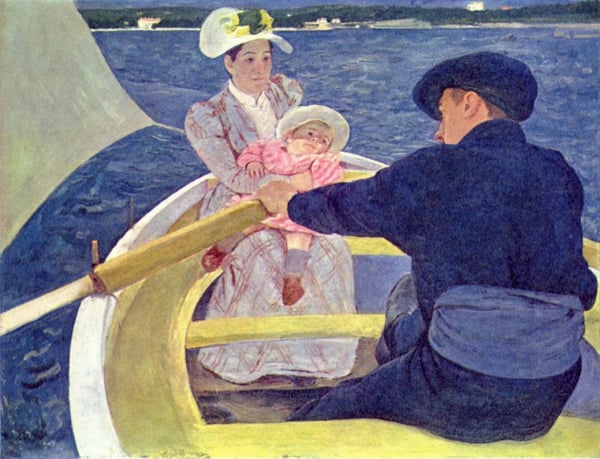
The Boating Party is an oil painting by American artist Mary Cassatt created in 1893. It is also known under the titles La partie en bateau; La barque; Les canotiers; and En canot. Measuring nearly three by four feet, it is one of Cassatt’s largest and most ambitious paintings. It has been in the Chester Dale Collection of the National Gallery of Art since 1963.
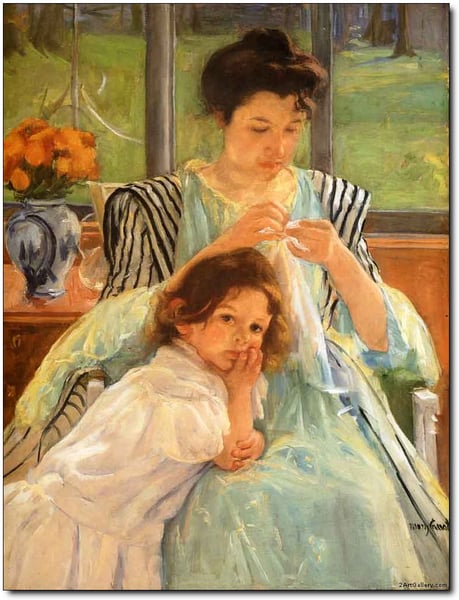
Mary Cassatt’s most recurrent themes were women out and about in society or in the privacy of their own home with their children, or spending time alone. By the 1890’s, she had settled primarily on painting mothers and their children, or children alone. The themes of children and childhood reflected Cassatt’s deep affection for her family, including many nieces and nephews. Young Mother Sewing ...
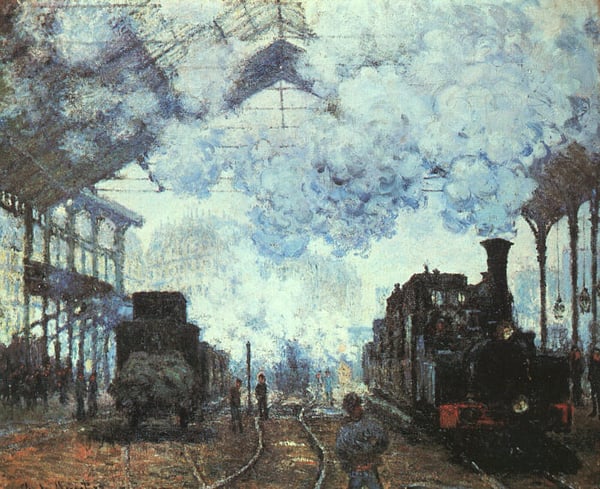
The Gare Saint-Lazare depicts the railway station of that name, rendered in Monet's Impressionist style with characteristic attention to light and atmospheric effects across the canvas.
Mikalojus Konstantinas Ciurlionis · Symbolism · marina
Sunrise is a 1904 symbolist marina by Mikalojus Konstantinas Ciurlionis, depicting a seascape at dawn in the style characteristic of early-twentieth-century symbolist painting.
No comments yet — be the first.