The most iconic masterpieces housed in the world's most visited museum
CE
Caleido Editorial TeamJune 9, 202625 min read0 views
The Musée du Louvre in Paris is not just the world's largest art museum — it is a treasure house spanning thousands of years of human creativity. From ancient Egyptian antiquities to Renaissance masterpieces and Neoclassical triumphs, its collection of over 380,000 objects includes some of the most famous works ever created.
This guide highlights 30 of the Louvre's greatest treasures, from Leonardo da Vinci's enigmatic Mona Lisa and the ancient Winged Victory of Samothrace to Delacroix's revolutionary Liberty Leading the People. These are the works that define Western art history and draw millions of visitors each year to the banks of the Seine.
Use the checklist below to track which Louvre masterpieces you've seen in person.
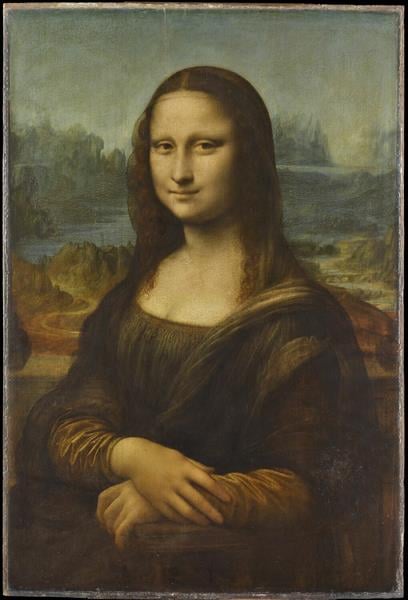
One of the most iconic and recognizable paintings in the world is the [i]Mona Lisa[/i] (ca. 1503-1519) painted by Leonardo da Vinci. The unique appeal of the portrait lies in its enigmatic nature, Mona Lisa’s smile radiates mystery, sensuality and contentment. This was achieved through sfumato, Leonardo’s painting technique that softened the transition between colors. This depth and complexity ...
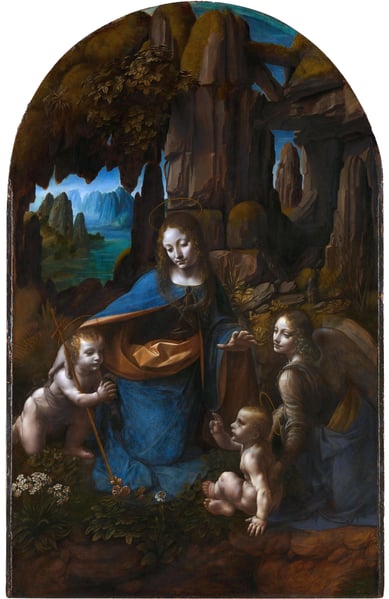
Leonardo da Vinci · High Renaissance · religious painting
The Virgin of the Rocks, sometimes the Madonna of the Rocks, is the name of two paintings by the Italian Renaissance artist Leonardo da Vinci, of the same subject, with a composition which is identical except for several significant details. The version generally considered the prime version, the earlier of the two, is unrestored and hangs in the Louvre in Paris. The other, which was restored b...
The Winged Victory of Samothrace, or the Niké of Samothrace, is a votive monument originally discovered on the island of Samothrace in the northeastern Aegean Sea. It is a masterpiece of Greek sculpture from the Hellenistic era, dating from the beginning of the 2nd century BC. It is composed of a statue representing the goddess Nike (Victory), whose head and arms are missing, and a base in the ...
04
Venus de Milo (2017)
Alexandros of AntiochArtwork
Saul Zanolari · Digital Art · figurative, digital
Venus de Milo is a 2017 digital artwork by Saul Zanolari working in the figurative genre. The work titles itself after the classical sculpture, rendering the subject through digital means.
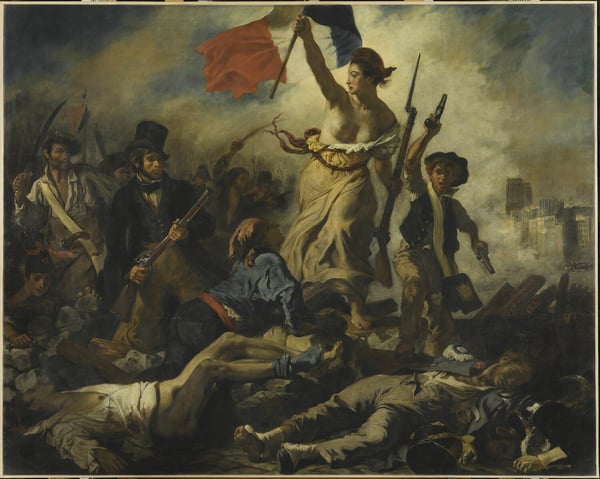
Eugene Delacroix · Romanticism · history painting, symbolic painting
Perhaps Delacroix’s most influential and most recognizable paintings, Liberty Leading the People was created to commemorate the July Revolution of 1830, which removed Charles X of France from power. Delacroix wrote in a letter to his brother that a bad mood that had been hold of him was lifting due to the painting on which he was embarking (the Liberty painting), and that if he could not fight ...
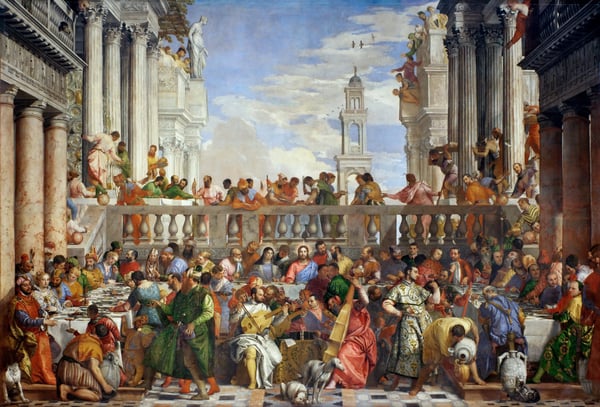
Paolo Veronese · Mannerism (Late Renaissance), OrientalismArtwork
Adam van Noort · Mannerism (Late Renaissance), Northern Renaissance
The Wedding at Cana by Adam van Noort is a Mannerist work depicting the biblical wedding feast at which Christ performed his first miracle by transforming water into wine.
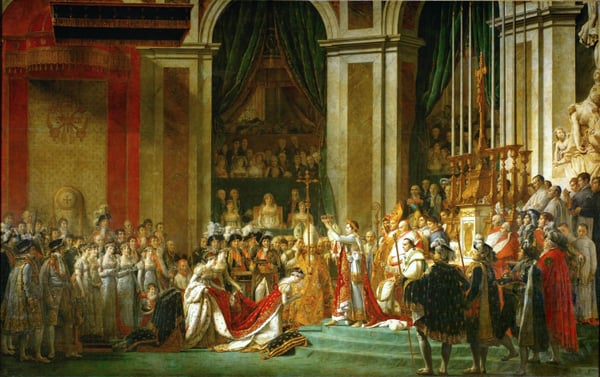
The Coronation of Napoleon is a painting completed in 1807 by Jacques-Louis David, the official painter of Napoleon, depicting the coronation of Napoleon at Notre-Dame de Paris. The oil painting has imposing dimensions – it is almost 10 metres (33 ft) wide by a little over 6 metres (20 ft) tall. The work is on display at the Louvre Museum in Paris.
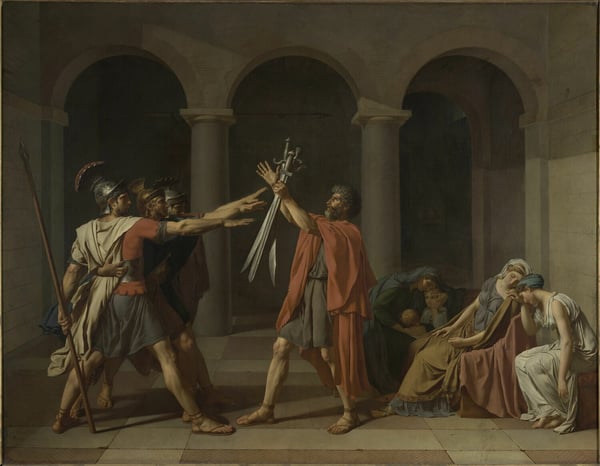
Oath of the Horatii is a large painting by the French artist Jacques-Louis David painted in 1784 and 1785 and now on display in the Louvre in Paris. The painting immediately became a huge success with critics and the public and remains one of the best-known paintings in the Neoclassical style.
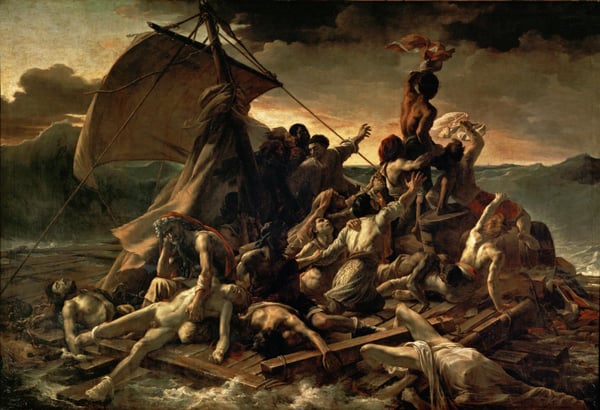
Théodore Géricault · Romanticism, Realism · history painting
The epic painting [i]The Raft of the Medusa[/i] features a gruesome mass of figures afloat at sea, some dead, some struggling for life, in a tangled mass positioned on a crudely-made raft. The only African figure on the raft waves a cloth at the top of a pile of a few men who are struggling to get the attention of a ship in the distance (located on the far right of the horizon line). The sail o...
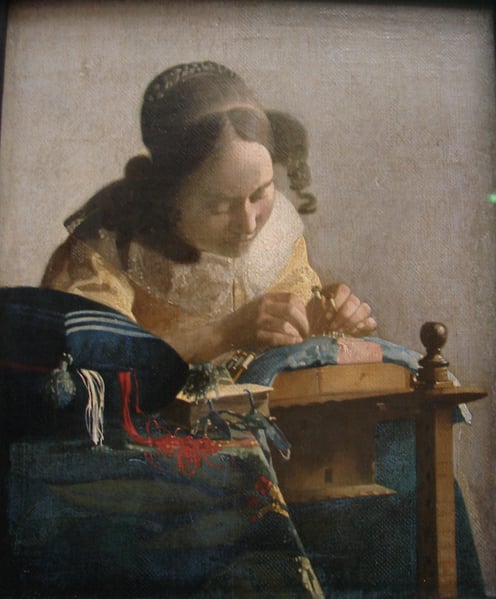
The Lacemaker is a painting by the Dutch artist Johannes Vermeer (1632–1675), completed around 1669–1670 and held in the Louvre, Paris. The work shows a young woman wearing a yellow bodice, holding up a pair of bobbins in her left hand as she carefully places a pin in the pillow on which she is making her bobbin lace.
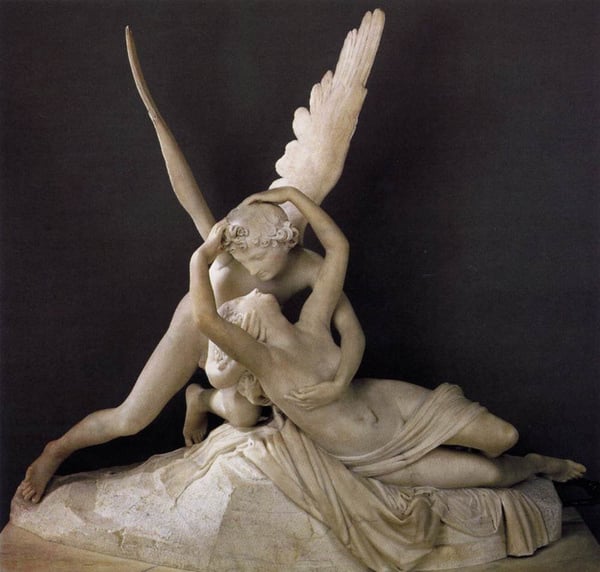
Psyche Revived by Cupid's Kiss is a sculpture by Italian artist Antonio Canova first commissioned in 1787 by Colonel John Campbell. It is regarded as a masterpiece of Neoclassical sculpture, but shows the mythological lovers at a moment of great emotion, characteristic of the emerging movement of Romanticism. It represents the god Cupid in the height of love and tenderness, immediately after aw...
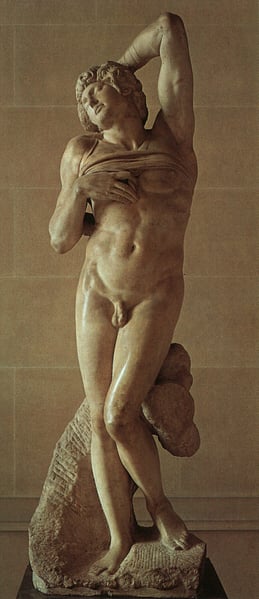
The Dying Slave is a sculpture by the Italian Renaissance artist Michelangelo, created between 1513 and 1516. It was intended to accompany another figure, the Rebellious Slave, as part of the design for the tomb of Pope Julius II. The marble figure is 215 centimetres, and is housed in the Louvre Museum in Paris.
Grande Odalisque, also known as Une Odalisque or La Grande Odalisque, is an oil painting by Jean-Auguste-Dominique Ingres depicting an odalisque, or concubine in 1814. Ingres' contemporaries considered the work to signify Ingres' break from Neoclassicism, indicating a shift toward exotic Romanticism.
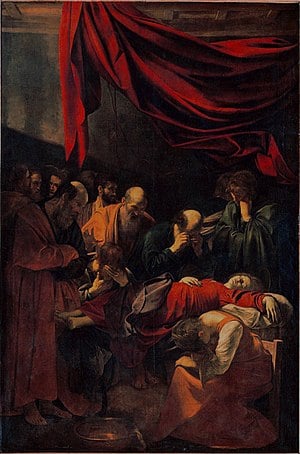
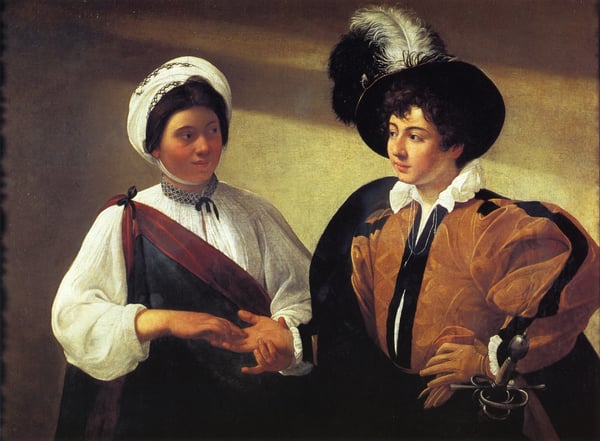
Caravaggio · Baroque, Tenebrism · religious painting
Death of the Virgin was commissioned by a wealthy papal lawyer for his chapel in Trastevere, Rome, in 1601. Upon completion, it was deemed unfit for the parish, who rejected the depiction of the dead body of Mary. Other reports say the painting was unfit for the parish because of Mary’s bare legs. It was also a controversial piece because Caravaggio is said to have used a prostitute, one of his...
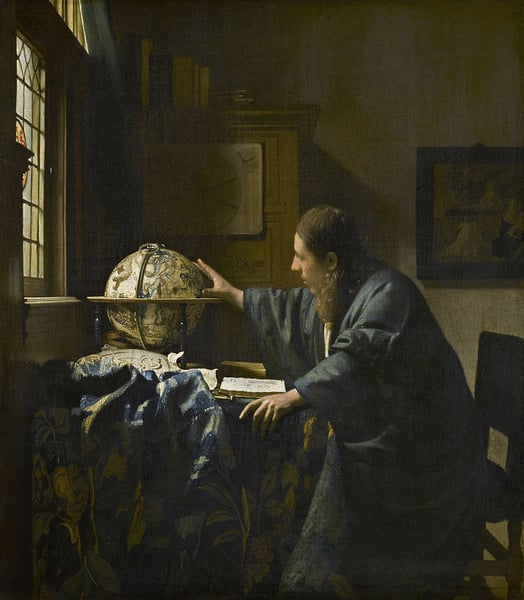
The Astronomer is a painting finished in about 1668 by the Dutch Golden Age painter Johannes Vermeer. It is in oil on canvas with dimensions 51 cm × 45 cm.
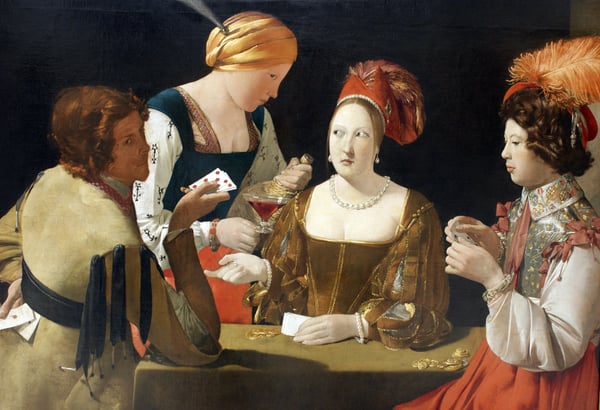
The Cheat with the Ace of Diamonds, painted by Georges de la Tour in 1635, depicts a card game rendered in the tenebrist style, with its characteristic use of dramatic light and shadow.
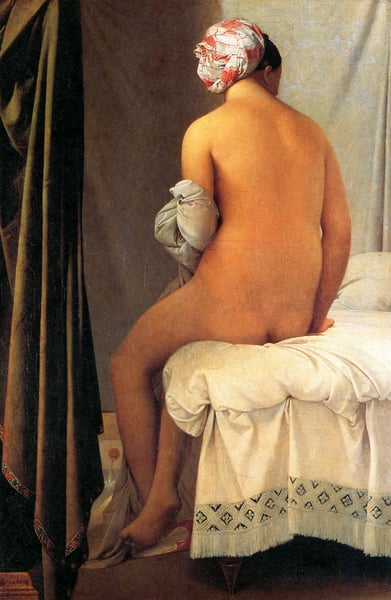
Jean Auguste Dominique Ingres · Neoclassicism, OrientalismArtwork
Jean Auguste Dominique Ingres · Neoclassicism, Orientalism · nude painting (nu)
The Bather of Valpinçon is a neoclassical nude painting by Jean Auguste Dominique Ingres from 1808, combining the formal restraint of neoclassical tradition with orientalist elements.
Gabrielle d'Estrées et une de ses soeurs is a painting by an unknown artist dated c. 1594. It is in the Louvre in Paris and is usually thought to be the work of a painter from the Fontainebleau School. A second, clothed version was produced by the same school shortly afterwards.
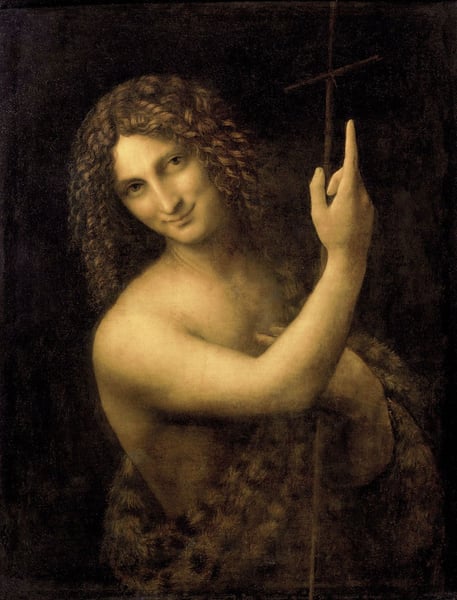
Andrei Rublev · Byzantine, Moscow school of icon painting · religious painting, icon
Saint John the Baptist is a religious icon painted by Andrei Rublev in 1408, belonging to the Byzantine tradition and the Moscow school of icon painting.
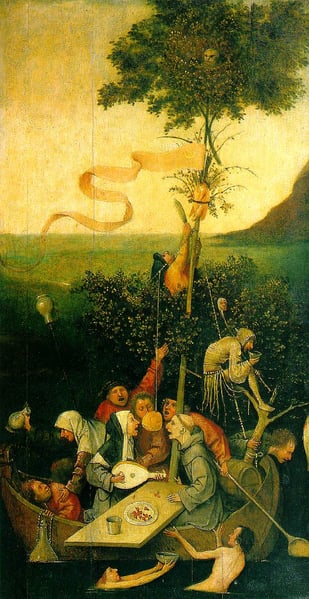
Hieronymus Bosch · Northern Renaissance · religious painting
The Ship of Fools is a religious painting by Hieronymus Bosch from 1500, executed in the Northern Renaissance style. The work takes its title from a literary and moral tradition in which a ship serves as the vessel for a cast of human figures, each representing folly or vice, rendered in Bosch's characteristically dense and detailed compositional manner.
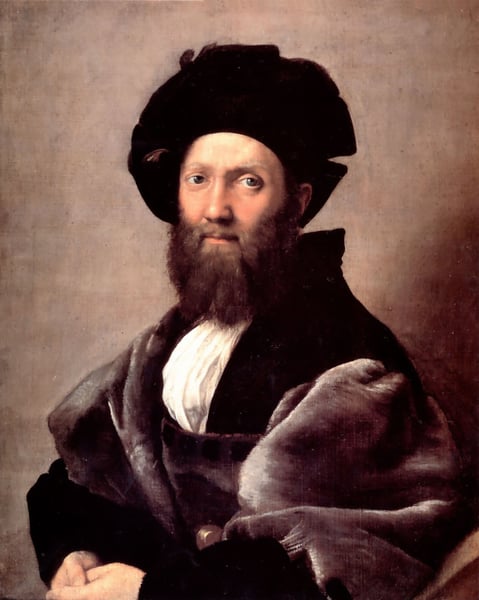
Portrait of Baldassare Castiglione is a c. 1514–1515 oil painting attributed to the Italian High Renaissance painter Raphael. Considered one of the great portraits of the Renaissance, it has an enduring influence. It depicts Raphael's friend, the diplomat and humanist Baldassare Castiglione, who is considered a quintessential example of the High Renaissance gentleman.
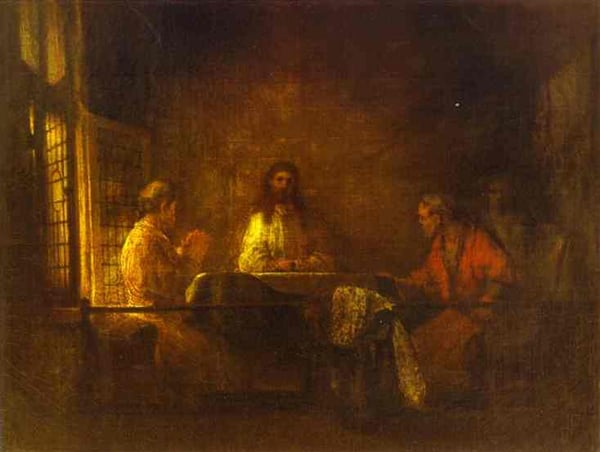
Rembrandt · Baroque, Tenebrism · religious painting
The Pilgrims at Emmaus is a Baroque religious painting by Rembrandt in the tenebrist style, employing dramatic contrasts between light and shadow to render the scene. The work depicts the biblical encounter at Emmaus, a subject of Christian iconography central to Gospel narrative.
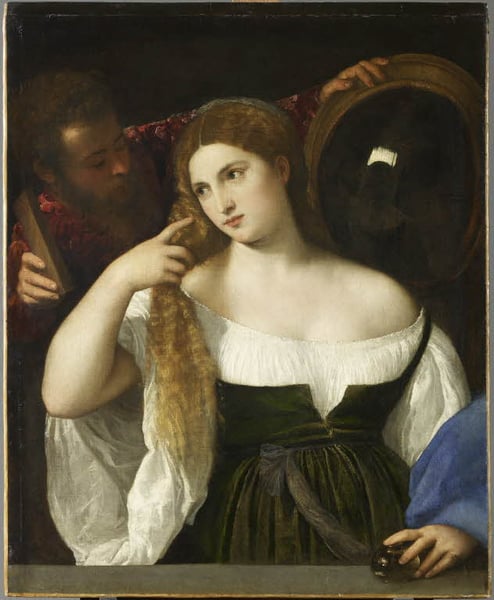
Woman with a Mirror is an oil on canvas painting by Titian, dated to c. 1515. Also known as Woman at Her Toilet, it is held in the Musée du Louvre, in Paris.
The sculpture of the Seated Scribe or Squatting Scribe is a famous work of ancient Egyptian art. It represents a figure of a seated scribe at work. The sculpture was discovered at Saqqara, north of the alley of sphinxes leading to the Serapeum of Saqqara, in 1850, and dated to the period of the Old Kingdom, from either the 5th Dynasty, c. 2450–2325 BCE or the 4th Dynasty, 2620–2500 BCE. It is n...
No comments yet — be the first.