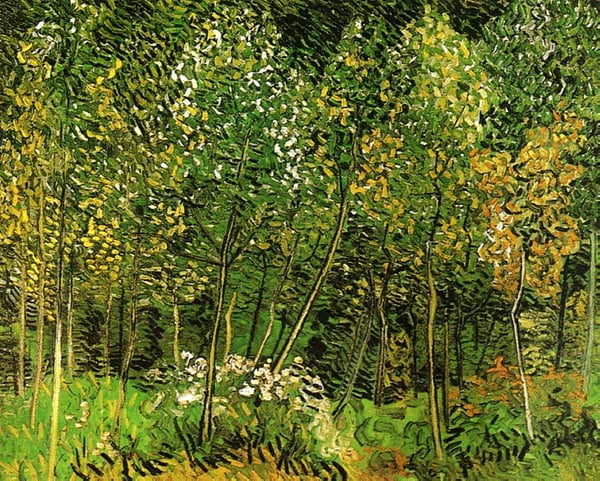
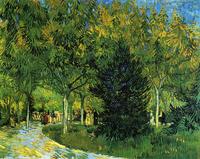
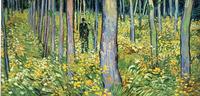
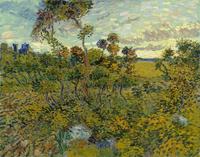
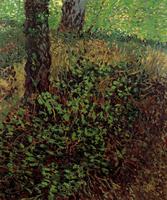
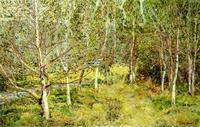
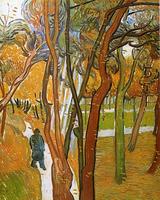
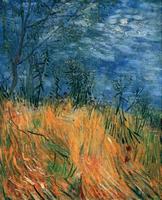
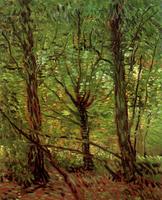
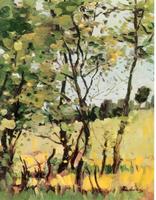
Based solely on the supplied facts, an expert analysis of The Grove by Vincent van Gogh must focus on the work's significance within Post-Impressionism and the landscape genre.
As a Post-Impressionist landscape, The Grove represents a shift away from the naturalistic depiction of nature typical of earlier movements. The painting's significance lies in its embodiment of Post-Impressionism's core principle: the artist's subjective expression and emotional response to the subject matter are prioritized over faithful optical representation. Within the landscape genre, this work would demonstrate how van Gogh transformed a conventional rural scene (a grove of trees) into a vehicle for personal vision—likely through heightened color, texture, or rhythmic composition—thus expanding what a landscape could communicate. Its importance rests on being a clear example of how Post-Impressionism redefined the landscape genre from mere documentation to a powerful language of inner feeling and symbolic meaning.