
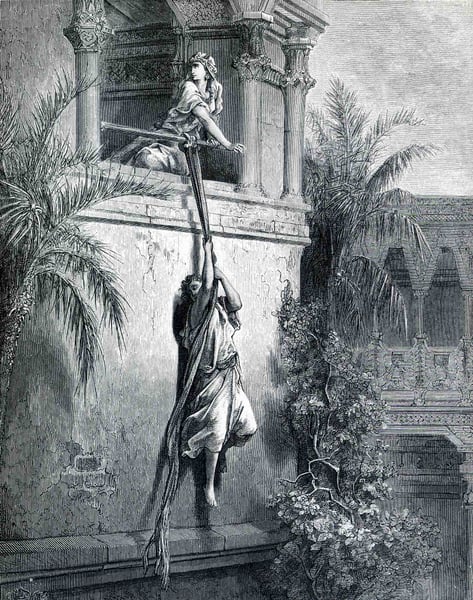
Analisi esperta di The Escape of David through the Window di Gustave Dore
Stile: Romanticism · Genere: religious painting
Expert Analysis: "The Escape of David through the Window" by Gustave Doré
Gustave Doré’s The Escape of David through the Window stands as a compelling exemplar of Romanticism in religious painting, merging the period’s fascination with heightened emotional drama, sublime natural forces, and individual heroism. Though Doré is best known for his prolific book illustrations, this work showcases his ability to translate narrative tension into a monumental, painterly composition.
Significance within Romanticism and Religious Art
Romanticism rejected the calm order of Neoclassicism, favoring instead the chaotic, the sublime, and the psychologically charged. Here, Doré captures a pivotal biblical moment—David’s flight from King Saul’s wrath (1 Samuel 19:12)—as a scene of desperate, nocturnal escape. The painting’s significance lies in how it transforms a simple scriptural event into a symbol of human vulnerability and divine protection.
-
Dramatic Use of Light and Shadow (Chiaroscuro): The window becomes a glowing portal, illuminating David’s figure as he slides into the darkness. This stark contrast between the warm interior light and the cool, murky exterior reflects Romanticism’s obsession with the struggle between hope and peril. The light does not merely illuminate; it sanctifies David’s flight, suggesting divine guidance even in secrecy.
-
Intense Emotional and Physical Action: David’s body is captured mid-motion, one hand gripping the window frame, the other reaching outward. This dynamic posture—borrowed from theatrical traditions—conveys urgency and fear, while his upward gaze implies a prayerful reliance on God. Romanticism prized such moments of supreme physical and spiritual exertion.
-
Sublime Setting and Narrative Compression: Doré compresses the narrative into a single, claustrophobic frame: the shadowy interior of David’s room and the menacing presence of Michal (or a servant) watching the door. The viewer feels the imminent threat of Saul’s soldiers, heightening the suspense. This technique—borrowed from his illustration work—gives the painting a cinematic immediacy rare in religious art of the era.
Art Historical Context
While many Romantic painters (e.g., Delacroix) favored exotic or historical themes, Doré’s religious works retained a popular, accessible intensity that appealed to a broad 19th-century audience. The Escape of David through the Window exemplifies his skill in turning biblical stories into visceral, human dramas—a hallmark that would influence later Symbolists and even filmmakers. The work’s significance lies not in iconographic innovation but in its emotional directness: it makes the viewer feel the terror and trust of a fugitive king, bridging the sacred and the sensual with unmistakable Romantic fervor.
Museum / Gallery
Visivamente simili
20 opere con composizione e palette affini
Don Quixote
Gustave Dore
Solomon Receives the Queen of Sheba
Gustave Dore
Heliodorus Is Cast Down
Gustave Dore
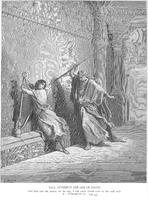
Saul Attempts to Kill David
Gustave Dore
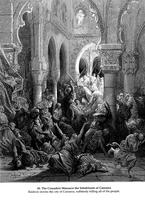
The Crusaders massacre the inhabitants of Caesarea
Gustave Dore
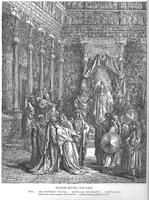
Esther Before the King
Gustave Dore
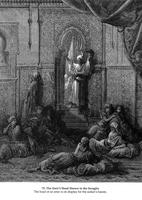
The Emir's Head Shown in the Seraglio
Gustave Dore
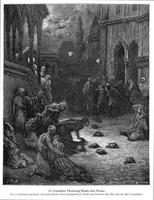
Crusaders Throwing Heads into Nicaea
Gustave Dore
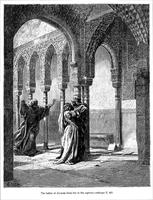
Don Quixote
Gustave Dore
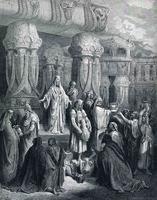
Cyrus Restores the Vessels of the Temple
Gustave Dore
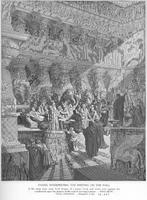
Daniel Interpreting the Writing on the Wall
Gustave Dore
Don Quixote
Gustave Dore
Don Quixote
Gustave Dore
The Captives
Gustave Dore
The Death of Athaliah
Gustave Dore
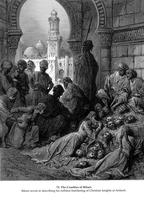
The Cruelties of Bibars
Gustave Dore
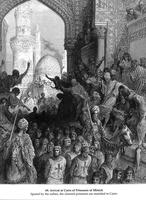
Arrival at Cairo of Prisoners of Minich
Gustave Dore
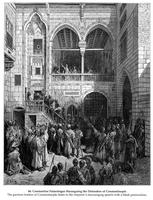
Constantine Palaeologus Haranguing the Defenders of Constantinople
Gustave Dore
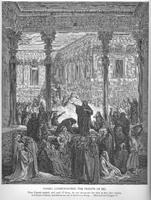
Daniel Confounds the Priests of Bel
Gustave Dore
Invocation to Muhammad
Gustave Dore