Caleido Editorial Team9 июня 2026 г.35 мин чтения0 просмотров
The Renaissance (roughly 1400–1600) transformed European art from the stylized traditions of the medieval period into a new era of naturalism, perspective, and human-centered beauty. Beginning in Florence and spreading across Italy and Northern Europe, the movement produced some of the most iconic images in human civilization.
From Leonardo's enigmatic Mona Lisa to Michelangelo's breathtaking Sistine Chapel ceiling, from Botticelli's ethereal Birth of Venus to Dürer's meticulous self-portraits, these 50 paintings represent the pinnacle of Renaissance achievement across multiple schools and national traditions.
Use the checklist below to track which Renaissance masterworks you've seen in person.
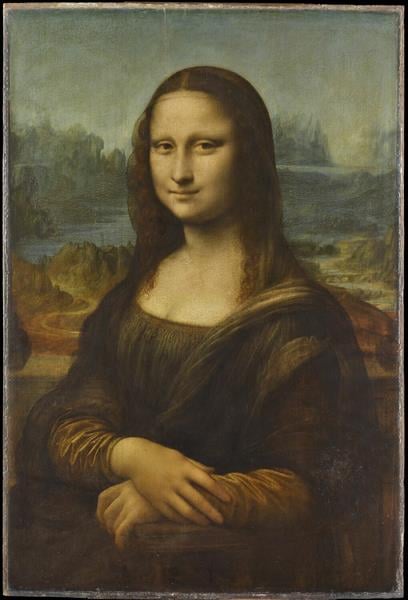
One of the most iconic and recognizable paintings in the world is the [i]Mona Lisa[/i] (ca. 1503-1519) painted by Leonardo da Vinci. The unique appeal of the portrait lies in its enigmatic nature, Mona Lisa’s smile radiates mystery, sensuality and contentment. This was achieved through sfumato, Leonardo’s painting technique that softened the transition between colors. This depth and complexity ...
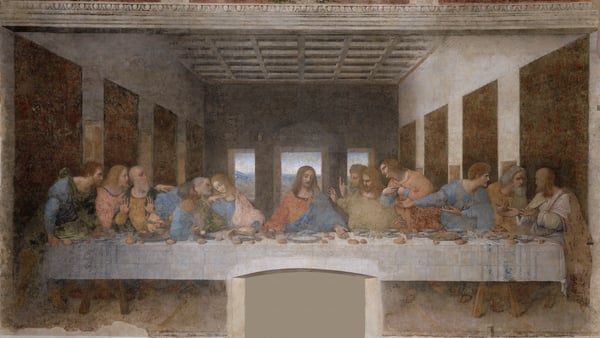
Leonardo da Vinci · High Renaissance · religious painting
One of the most famous paintings in the world, [i]The Last Supper[/i] by Leonardo da Vinci was painted in the late 15th century for the Dominican monastery Santa Maria delle Grazie in Milan. The wall painting was commissioned by the Duke of Milan, Ludovico Sforza, who was Leonardo’s patron during his first extended stay in Milan.
The composition of [i]The Last Supper[/i] is neatly arranged - J...
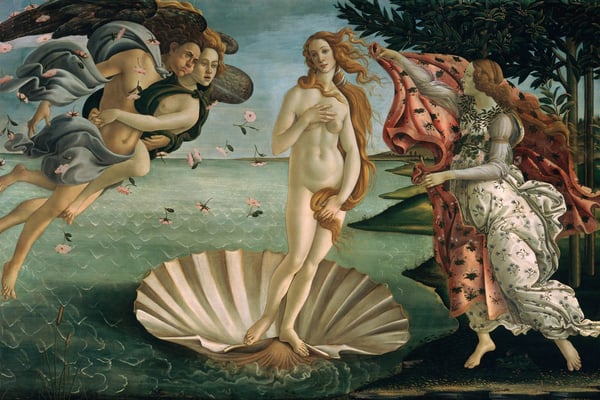
Sandro Botticelli · Early Renaissance · mythological painting
[i]The Birth of Venus[/i], painted by Sandro Botticelli in the 1480s, is one of the most famous paintings in the world: it is a celebrated work of art and the high point of a visit to the Uffizi Gallery in Florence. It is also a commercial icon and a line mark of European Art.
The real subject of the painting and its meaning is a mystery under discussion. Over the centuries, many theories and ...
Mikhail Vrubel · Art Nouveau (Modern), Symbolism · portrait
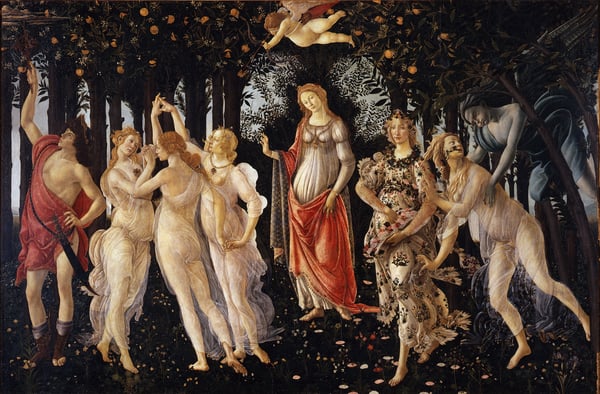
Primavera is a large panel painting in tempera paint by the Italian Renaissance painter Sandro Botticelli made in the late 1470s or early 1480s. It has been described as "one of the most written about, and most controversial paintings in the world", and also "one of the most popular paintings in Western art".
Michelangelo · High Renaissance · mythological painting
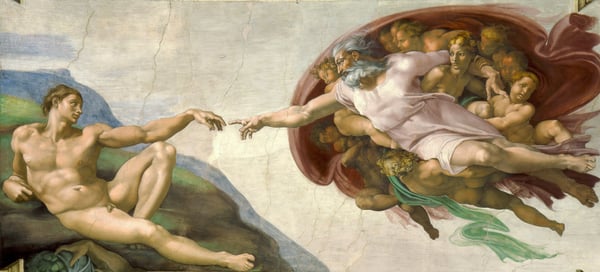
The Creation of Adam, also known as The Creation of Man, is a fresco painting by Italian artist Michelangelo, which forms part of the Sistine Chapel's ceiling, painted 1508-1512. It illustrates the Biblical creation narrative from the Book of Genesis in which God gives life to Adam, the first man. The fresco is part of a complex scheme and is chronologically the fourth in the series of panels d...
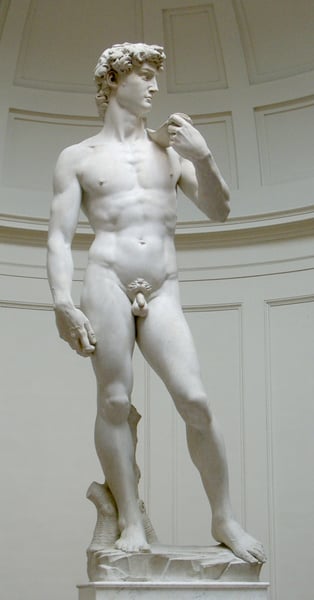
David is a masterpiece of Renaissance sculpture created between 1501 and 1504, by the Italian artist Michelangelo. It is a 5.17-metre (17.0 ft) marble statue of a standing male nude. The statue represents the Biblical hero David, a favoured subject in the art of Florence. It is possible that the David was conceived as a political statue before Michelangelo began to work on it. Certainly David t...
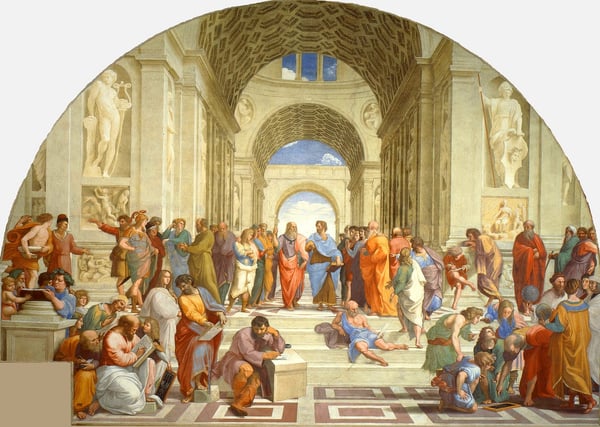
The School of Athens fresco, which is one of Raphael’s most famous works, was completed to decorate the Stanza della Segnatura commission by the Pope. The Stanza was the first set of rooms to be decorated, and this painting was the second in the set of paintings that adorn the walls. Although it was created for a grand room in the Vatican, nearly every one of the figures in the painting can be ...
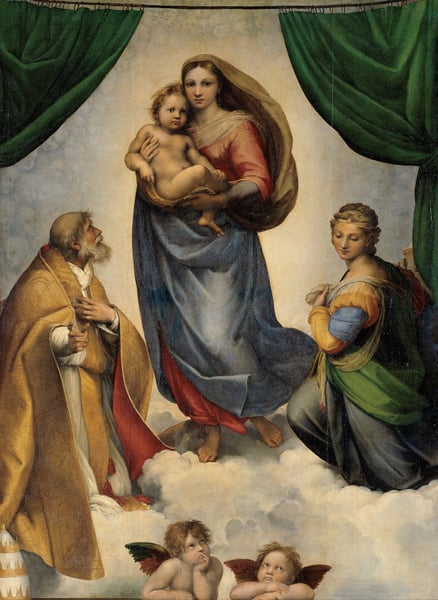
The Sistine Madonna, also called the Madonna di San Sisto, is an oil painting by the Italian artist Raphael. The painting was commissioned in 1512 by Pope Julius II for the church of San Sisto, Piacenza, and probably executed c. 1513–1514. The canvas was one of the last Madonnas painted by Raphael. Giorgio Vasari called it "a truly rare and extraordinary work".
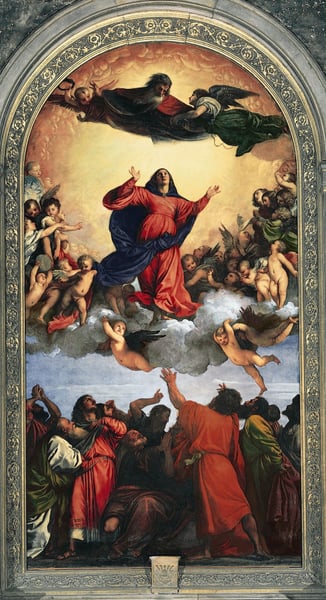
This altarpiece by Titian, one of the most inspirational works of Christian art, is undoubtedly among the greatest Renaissance paintings of the [url href=https://www.wikiart.org/en/artists-by-painting-school/venetian-school]Venetian School[/url]. The most substantial work of its type in Venice (nearly seven meters high), it was Titian's first major commissioned work in the city and took him two...
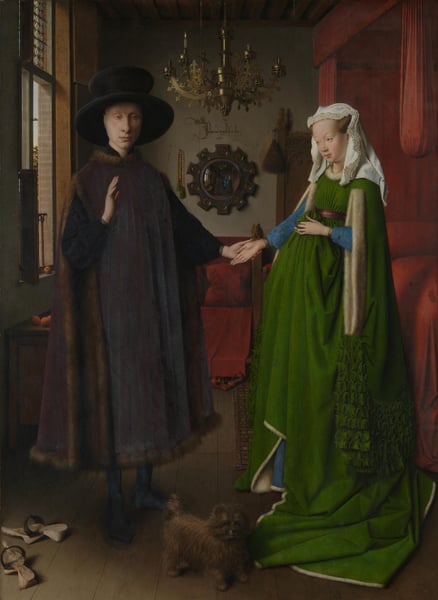
The Arnolfini Portrait is an oil painting on oak panel by the Early Netherlandish painter Jan van Eyck, dated 1434 and now in the National Gallery, London. It is a full-length double portrait, believed to depict the Italian merchant Giovanni di Nicolao Arnolfini and his wife, presumably in their residence at the Flemish city of Bruges.
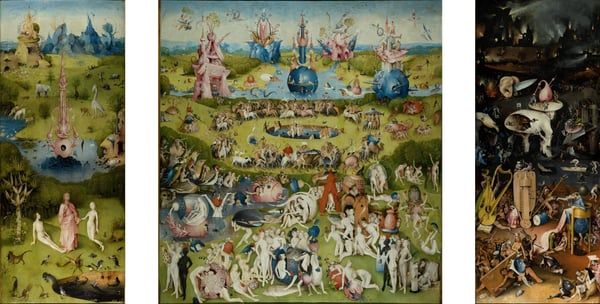
The Garden of Earthly Delights is the modern title given to a five-panel triptych by the Early Netherlandish master Hieronymus Bosch, between 1490 and 1510, when Bosch was between 40 and 60 years old. Because of Bosch's religious beliefs, interpretations of the work typically assume it is a warning against the perils of temptation. The outer panels place the work on the Third Day of Creation. T...
Jacopo Bellini · Early Renaissance · religious painting
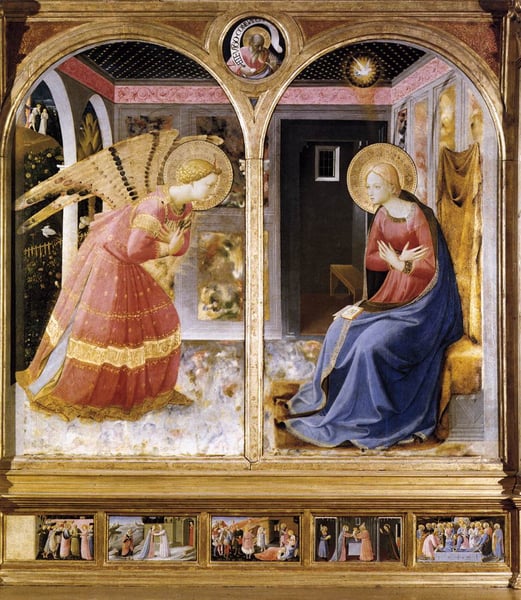
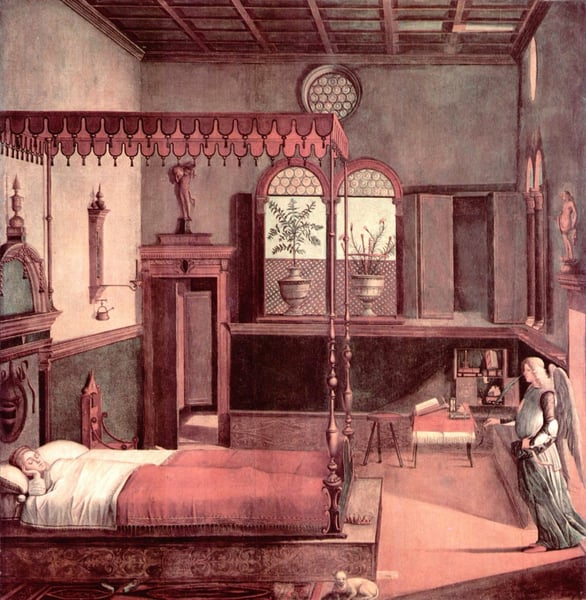
Created in 1444, this painting is one of the mature works of Jacopo Bellini. Annunciation is a panel, which is a permanent part of the exhibition of Sant Allesandro, Brescia, along with many other works from the early Renaissance period. This painting is a beautiful example of Bellini’s incorporation of Byzantine and Gothic techniques with the new style of Renaissance painting, which included t...
The Tribuna of the Uffizi is an oil painting by German-British painter Johan Zoffany, created in 1772-1778. It depicts the north-east section of the Tribuna room in the Uffizi, in Florence, Italy. The painting is part of the Royal Collection.
Hans Holbein the Younger · Northern RenaissanceПроизведение
Hans Holbein the Younger · Northern Renaissance · portrait
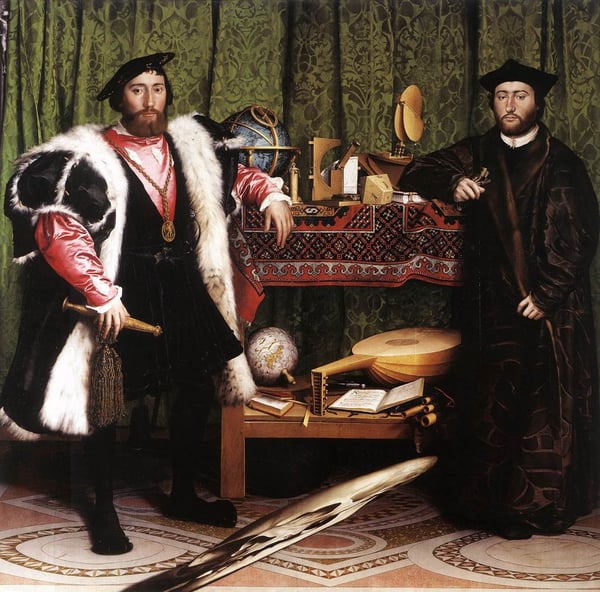
The Ambassadors is a 1533 painting by Hans Holbein the Younger. Also known as Jean de Dinteville and Georges de Selve, after the two people it portrays, it was created in the Tudor period, in the same year Elizabeth I was born. Franny Moyle speculates that Elizabeth's mother, Anne Boleyn, then Queen of England, might have commissioned it as a gift for Jean de Dinteville, the French ambassador, ...
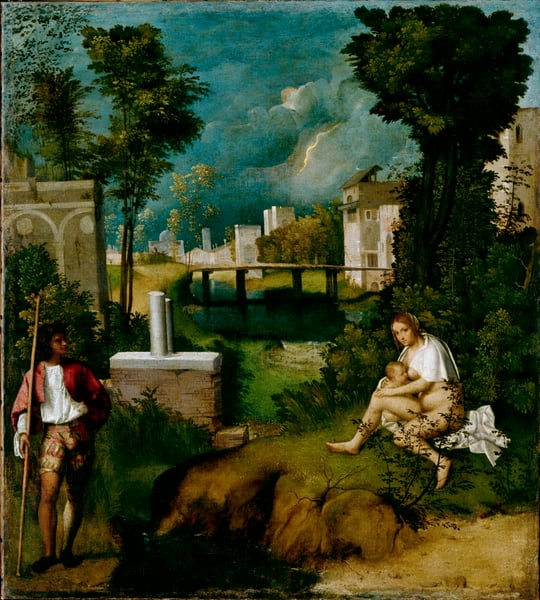
Apart from his larger commissioned works, most of what Giorgione painted was smaller paintings, designed for personal collectors to keep in their homes. This is one such piece, measuring 33 by 29 inches, commissioned by Gabriele Vendramin, a Venetian noble. It is said to be the first landscape in Western painting, and its symbolic implications are up to determination, as there have been many di...
Filippino Lippi · High Renaissance · religious painting
Saint Jerome in His Study is a High Renaissance religious painting by Filippino Lippi from 1493. The work depicts the saint in a domestic interior setting, a subject characteristic of Northern European and Italian religious art of the period.
18
Self-Portrait
Albrecht DürerПроизведение
Giuseppe Arcimboldo · Mannerism (Late Renaissance) · self-portrait
Self-Portrait is a panel painting by the German Renaissance artist Albrecht Dürer. Completed early in 1500, just before his 29th birthday, it is the last of his three painted self-portraits. Art historians consider it the most personal, iconic and complex of these.
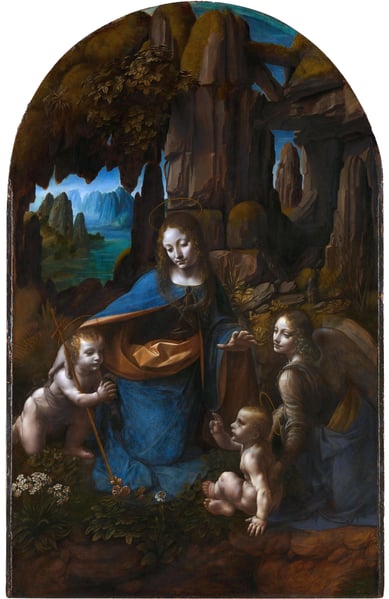
The Virgin of the Rocks, sometimes the Madonna of the Rocks, is the name of two paintings by the Italian Renaissance artist Leonardo da Vinci, of the same subject, with a composition which is identical except for several significant details. The version generally considered the prime version, the earlier of the two, is unrestored and hangs in the Louvre in Paris. The other, which was restored b...
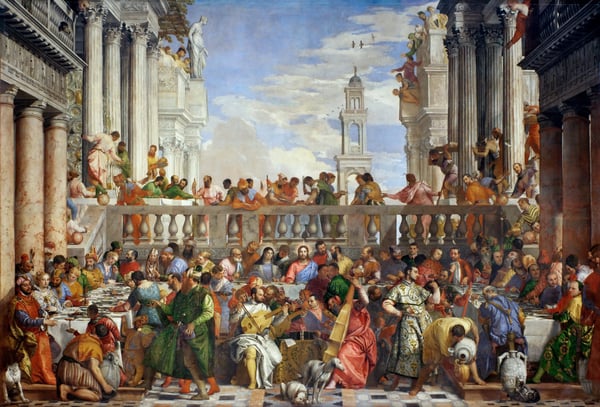
Paolo Veronese · Mannerism (Late Renaissance), OrientalismПроизведение
Adam van Noort · Mannerism (Late Renaissance), Northern Renaissance
The Wedding at Cana by Adam van Noort is a Mannerist work depicting the biblical feast scene. The painting exemplifies Northern Renaissance visual conventions within the Mannerist style that dominated late sixteenth-century artistic practice.
Albrecht Durer · Northern Renaissance · religious painting
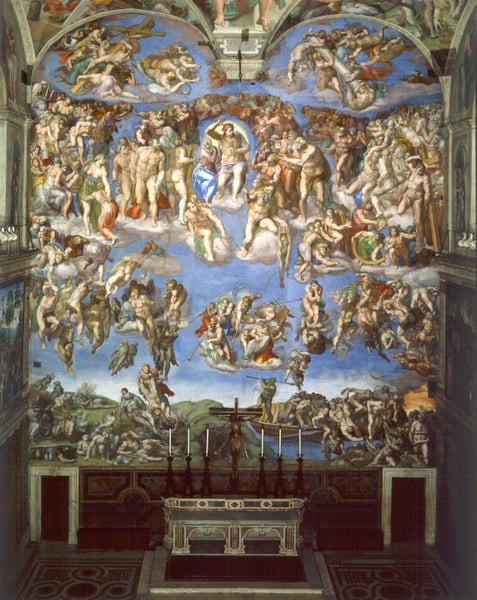
The Last Judgment is a fresco by the Italian Renaissance painter Michelangelo covering the whole altar wall of the Sistine Chapel in Vatican City. It is a depiction of the Second Coming of Christ and the final and eternal judgment by God of all humanity. The dead rise and descend to their fates, as judged by Christ who is surrounded by prominent saints. Altogether there are over 300 figures, wi...
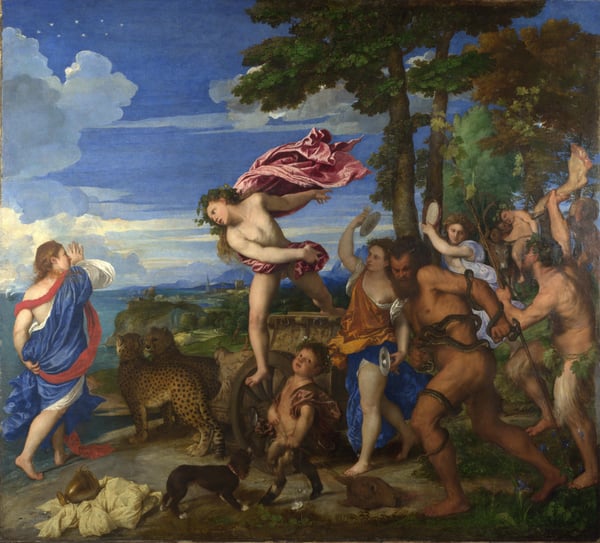
This colorful history painting (also known as a [i]poesie[/i]) is one of a cycle of mythological pictures based on classical texts which were commissioned by Alfonso I d'Este, Duke of Ferrara, for his [i]Camerino d'Alabastro[/i] – a private chamber in his ducal palace in Ferrara. This work - a substitute for one by [url href=https://www.wikiart.org/en/raphael]Raphael[/url] - was one of three pr...
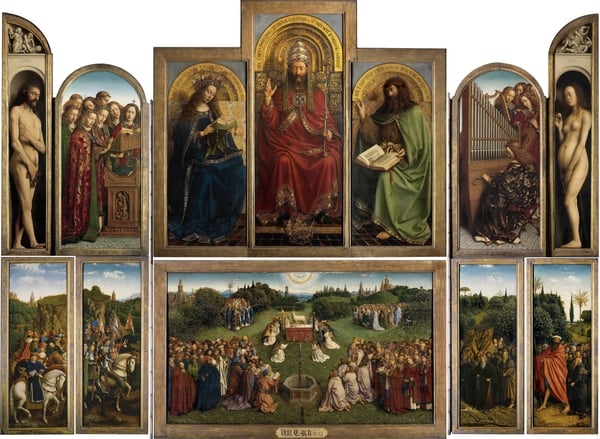
The Ghent Altarpiece, also called the Adoration of the Mystic Lamb, is a very large and complex 15th-century polyptych altarpiece in St Bavo's Cathedral, Ghent, Belgium. It was begun around the mid-1420s and completed by 1432, and it is attributed to the Early Netherlandish painters and brothers Hubert and Jan van Eyck. The altarpiece is a prominent example of the transition from Middle Age to ...
Rogier van der Weyden · Northern RenaissanceПроизведение
Eugene Delacroix · Romanticism · religious painting
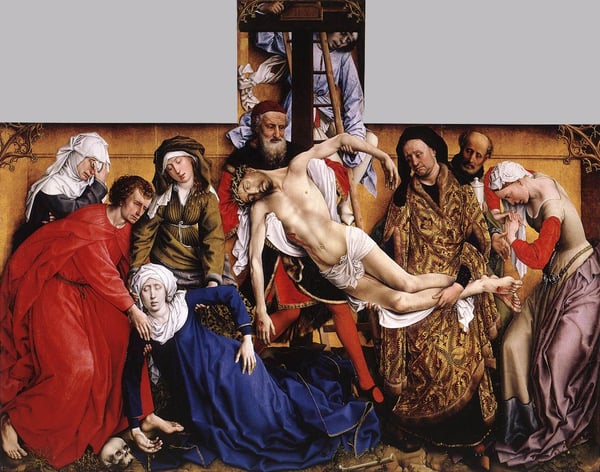
The Descent from the Cross is a panel painting by the Flemish artist Rogier van der Weyden created c. 1435, now in the Museo del Prado, Madrid. The crucified Christ is lowered from the cross, his lifeless body held by Joseph of Arimathea and Nicodemus.
Eugene Delacroix · Romanticism · religious painting
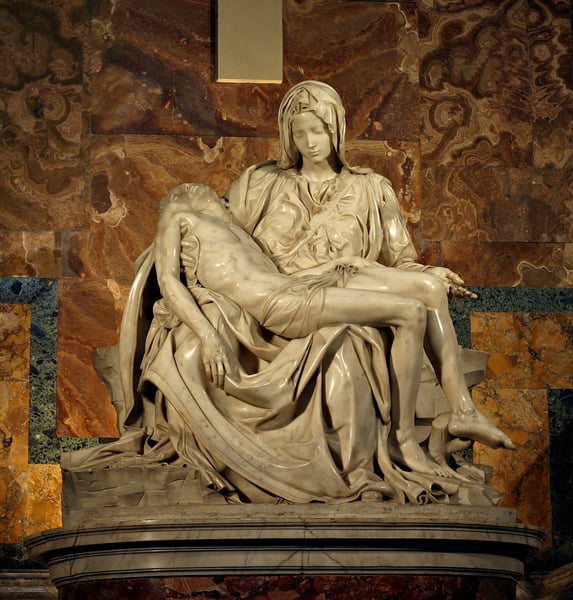
The Pietà is a Carrara marble sculpture of Jesus and Mary at Mount Golgotha representing the "Sixth Sorrow" of the Virgin Mary by Michelangelo Buonarroti, in Saint Peter's Basilica, Vatican City, for which it was made. It is a key work of Italian Renaissance sculpture and often taken as the start of the High Renaissance.
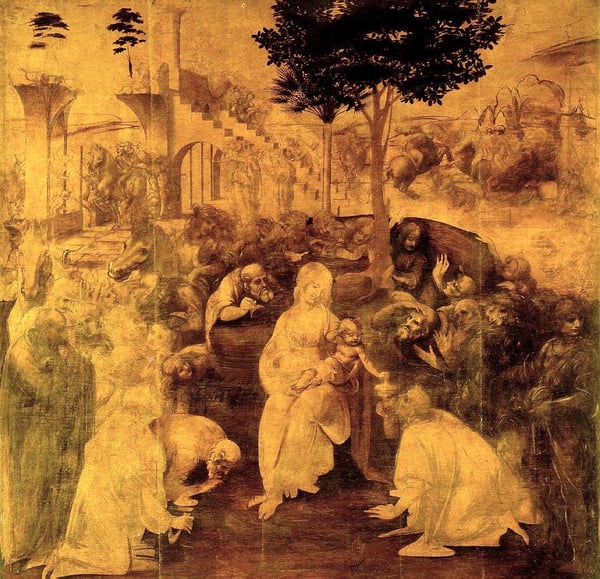
The Adoration of the Magi is an unfinished early painting by the Italian Renaissance artist Leonardo da Vinci. Leonardo was given the commission by the Augustinian monks of San Donato in Scopeto in Florence in 1481, but he departed for Milan the following year, leaving merely more than the preparatory underdrawing in charcoal, ink and watercolor. It has been in the Uffizi Gallery in Florence si...
Eugene Delacroix · Romanticism · religious painting
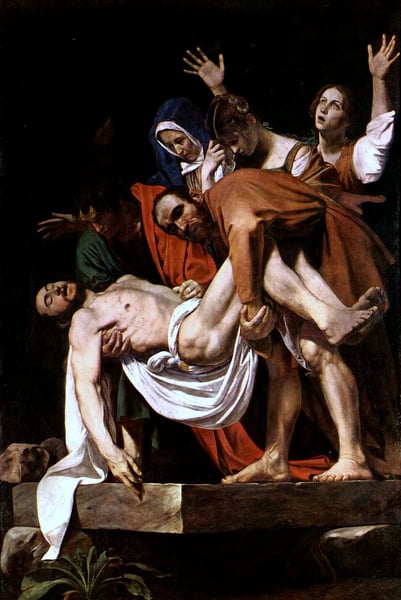
The Entombment of Christ is a religious painting by Eugene Delacroix, created in 1848 and executed in the Romantic style. The work depicts the burial of Christ, a subject central to Christian tradition and a frequent motif in European religious art of the period.
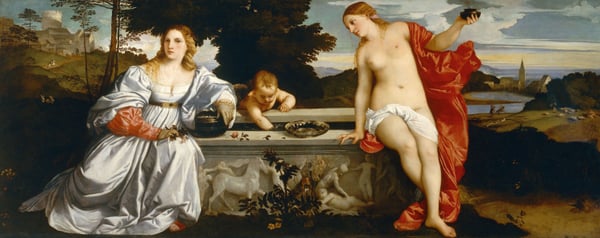
Two women, apparently drawn from the same model, are posed in a bucolic landscape by a trough, while its water is stirred by a winged Eros. The painting is rich in symbolism and iconography, although there is a lack of consensus amongst critics about its meaning. Even the title of the painting may not be original, as it was not recorded until 1693. The composition of the picture contains elemen...
Andrea del Verrocchio · Early RenaissanceПроизведение
Giotto · Proto Renaissance · religious painting
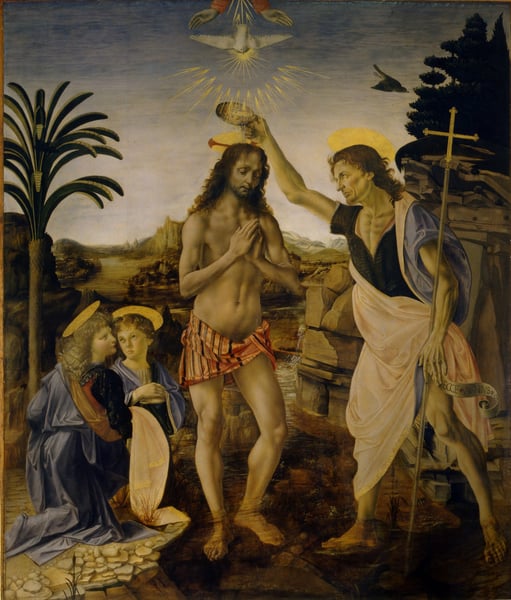
The Baptism of Christ is an oil-on-panel painting finished around 1475 in the studio of the Italian Renaissance painter Andrea del Verrocchio and generally ascribed to him and his pupil Leonardo da Vinci. Some art historians discern the hands of other members of Verrocchio's workshop in the painting as well.
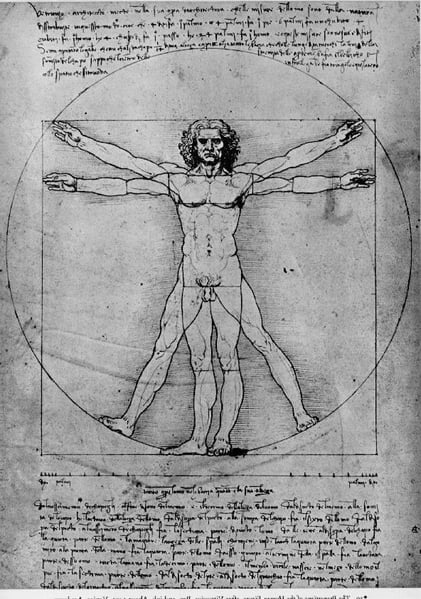
Vitruvian Man is a drawing by the Italian Renaissance artist and scientist Leonardo da Vinci, dated to c. 1490. Inspired by the Roman architect Vitruvius, it depicts a nude man in two overlapping standing positions, inscribed within a circle and a square. Art historian Carmen C. Bambach described it as "justly ranked among the all-time iconic images of Western civilization". While not the only ...
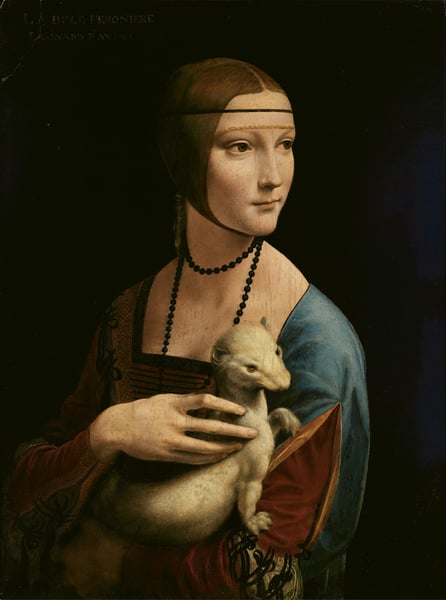
The Lady with an Ermine is a portrait painting by the Italian Renaissance artist Leonardo da Vinci. Dated to c. 1489–1491, the work is painted in oils on a panel of walnut wood. Its subject is Cecilia Gallerani, a mistress of Ludovico Sforza, Duke of Milan; Leonardo was painter to the Sforza court in Milan at the time of its execution. It is the second of only four surviving portraits of women ...
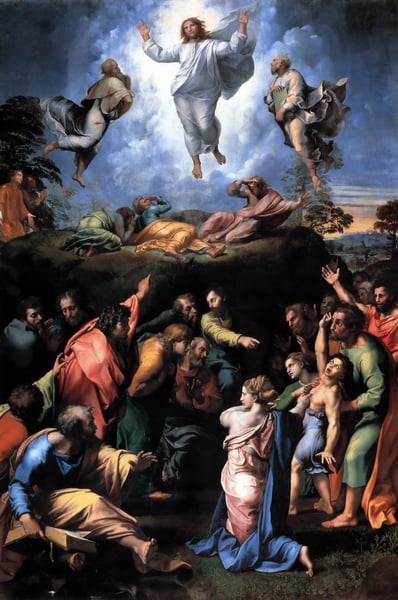
Considered the last painting by Raphael, The Transfiguration was incomplete at the time of his death. It is generally thought that Raphael’s pupil, Giulio Romano, completed the rest of the painting in 1520. Raphael began the high altarpiece in 1516, which was commissioned by Cardinal Giulio de Medici, who later became Pope Clement VII. At the time it was commissioned, Raphael was busy with many...
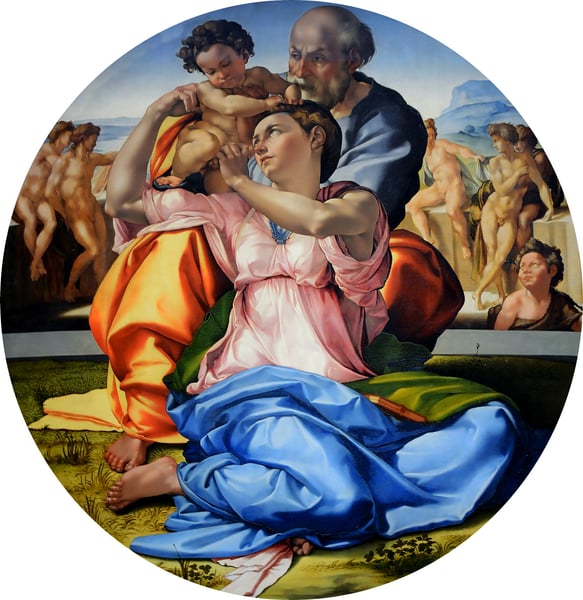
The Doni Tondo or Doni Madonna is the only finished panel painting by the mature Michelangelo to survive. Now in the Uffizi in Florence, Italy, and still in its original frame, the Doni Tondo commissioned by Agnolo Doni, probably to commemorate his marriage to Maddalena Strozzi, the daughter of a powerful Tuscan family. The painting is in the form of a tondo, meaning in Italian 'round', a shape...
Giovanni Bellini · High Renaissance · religious painting
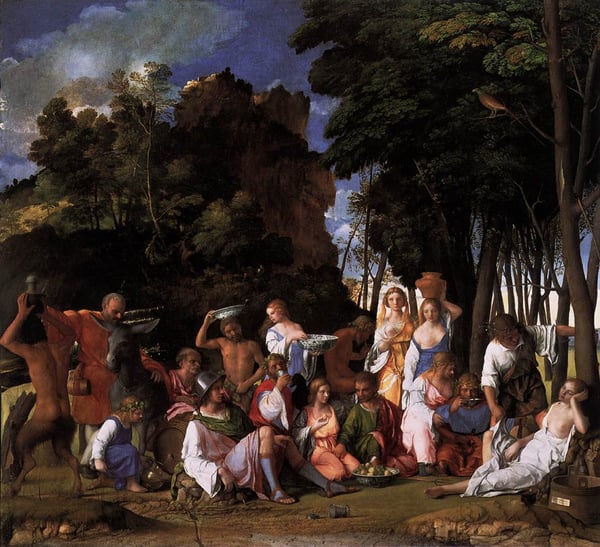
The Feast of the Gods is an oil painting by Giovanni Bellini, with substantial additions by Titian, who added all the landscape to the left and centre. It is one of a cycle of paintings on mythological subjects produced for Alfonso I d'Este, the Duke of Ferrara, for his camerino d'alabastro ('chamber of alabaster') in the Castello Estense, Ferrara. It is one of the few mythological pictures by ...
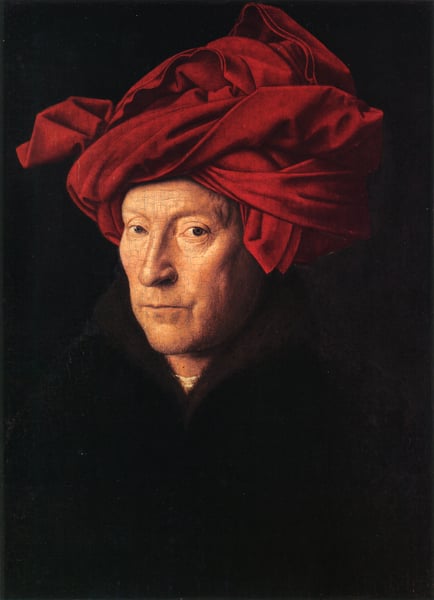
Portrait of a Man is the title given to a small oil painting by the Early Netherlandish painter Jan van Eyck, completed in 1433 in Bruges. The inscription at the top of the frame, which is original, contains his motto Als Ich Can was a common autograph for van Eyck. However this is his first known usage of the term, and it is unusually large and prominent. This and the sitter's unusually direc...
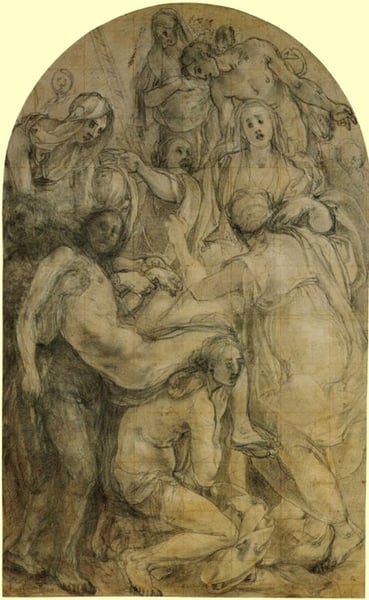
Jacopo Pontormo · Mannerism (Late Renaissance) · religious painting
The Deposition is a religious painting by Jacopo Pontormo, executed in 1524 in the Mannerist style of the Late Renaissance. The work depicts the removal of Christ from the cross, a subject central to Christian iconography.
Piero della Francesca · Early RenaissanceПроизведение
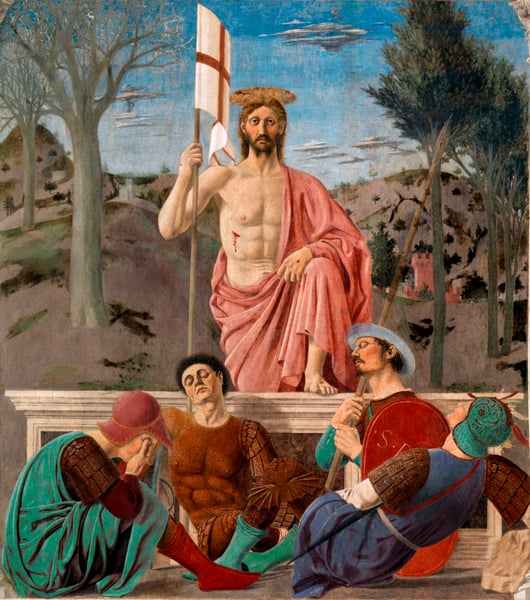
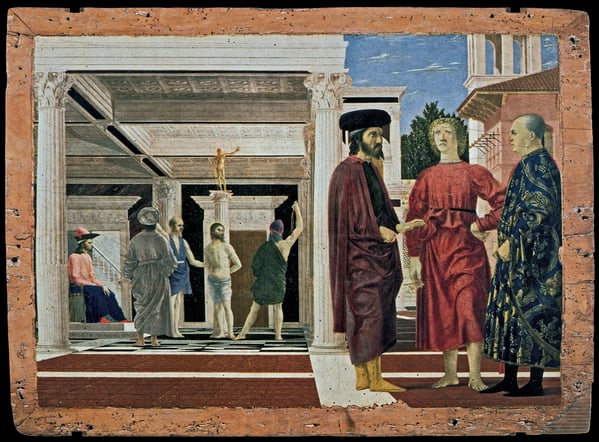
Piero della Francesca · Early Renaissance · religious painting
A diminutive 23 by 32 inches, this painting has been called the best small painting in the world. The subject and composition of the painting is unusual, and the iconography in the painting has been subject to much conjecture. The painting illustrates the flagellation of Christ in an open courtyard, while three unidentified men stand indifferent in the foreground. The small painting is lauded f...
The Ghent Altarpiece, also called the Adoration of the Mystic Lamb, is a very large and complex 15th-century polyptych altarpiece in St Bavo's Cathedral, Ghent, Belgium. It was begun around the mid-1420s and completed by 1432, and it is attributed to the Early Netherlandish painters and brothers Hubert and Jan van Eyck. The altarpiece is a prominent example of the transition from Middle Age to ...
Sandro Botticelli · Early Renaissance · religious painting
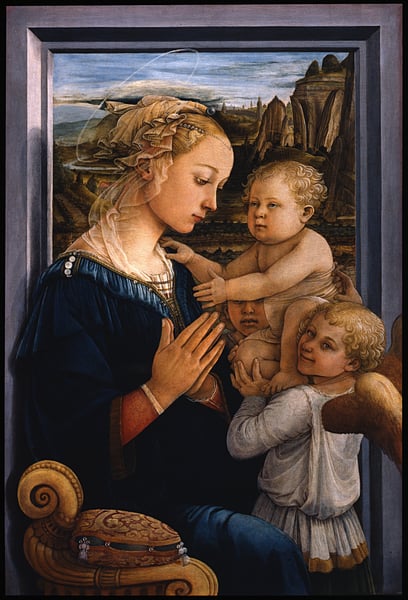
Virgin and Child with Two Angels may refer to one of these paintings:Virgin and Child with Two Angels, by Sandro Botticelli, in Naples
Virgin and Child with Two Angels, by Sandro Botticelli, in Strasbourg
Virgin and Child with Two Angels, by Cimabue, in National Gallery, UK
Virgin and Child with Two Angels, by Andrea del Verrocchio, in National Gallery, UK
Madonna and Child, by Filippo Lippi, i...
The Allegory of Spring is a tempera painting by Sandro Botticelli, a Florentine Renaissance master of the 15th century.
That is the sum of the grounded facts supplied. Without dimensions, date, location, subject description, or other documented details, I cannot responsibly expand beyond this single sentence.
Rogier van der Weyden · Northern Renaissance · religious painting
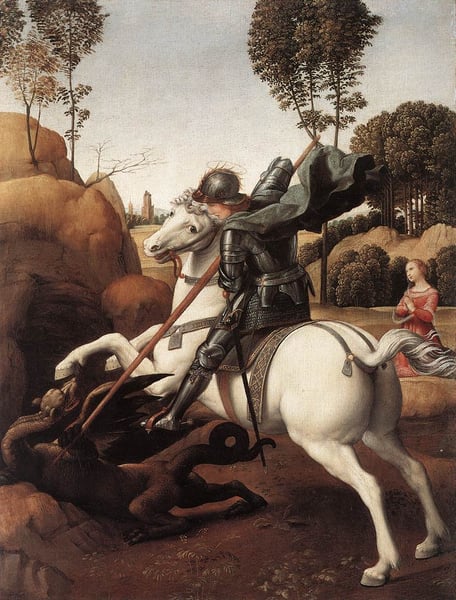
Saint George and the Dragon is a religious painting by Rogier van der Weyden from 1435, executed in the Northern Renaissance style. The work depicts the titular saint and dragon, subjects drawn from Christian tradition and popular devotional imagery of the period.
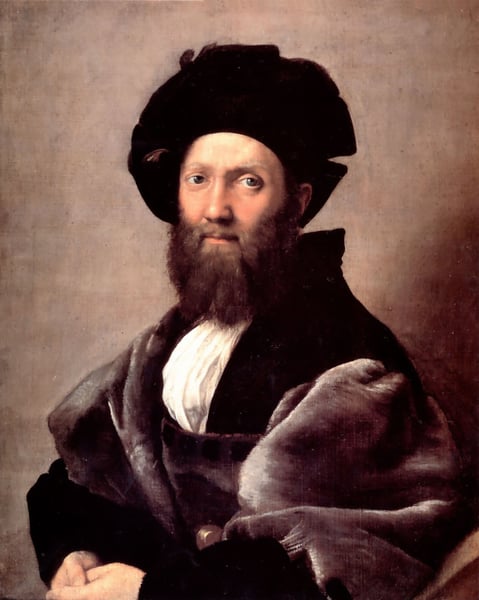
Portrait of Baldassare Castiglione is a c. 1514–1515 oil painting attributed to the Italian High Renaissance painter Raphael. Considered one of the great portraits of the Renaissance, it has an enduring influence. It depicts Raphael's friend, the diplomat and humanist Baldassare Castiglione, who is considered a quintessential example of the High Renaissance gentleman.
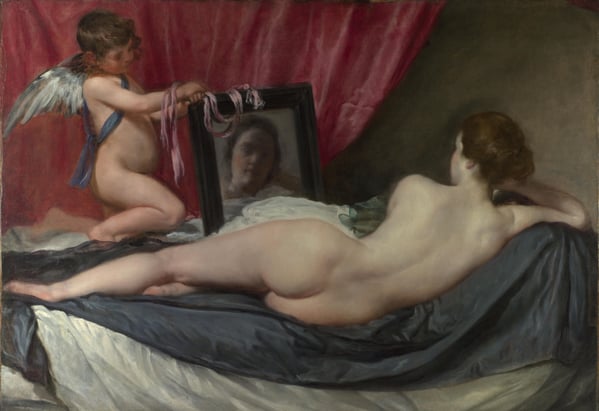
The Rokeby Venus is a painting by Diego Velázquez, the leading artist of the Spanish Golden Age. Completed between 1647 and 1651, and probably painted during the artist's visit to Italy, the work depicts the goddess Venus in a sensual pose, lying on a bed with her back facing the viewer, and looking into a mirror held by the Roman god of physical love, her son Cupid. The painting is in the Nati...
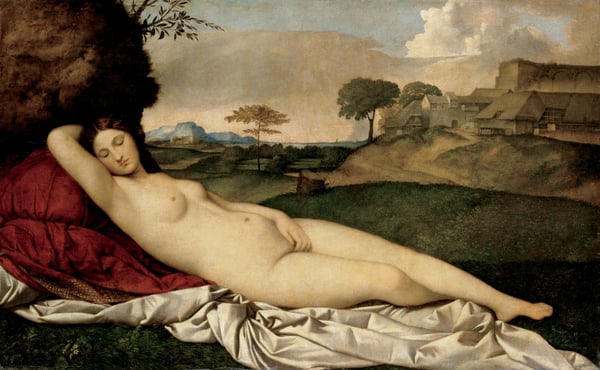
Sleeping Venus may refer to:Sleeping Venus (Carracci), a c. 1603 painting by Annibale Carracci
Sleeping Venus (Delvaux), a 1944 painting by Paul Delvaux
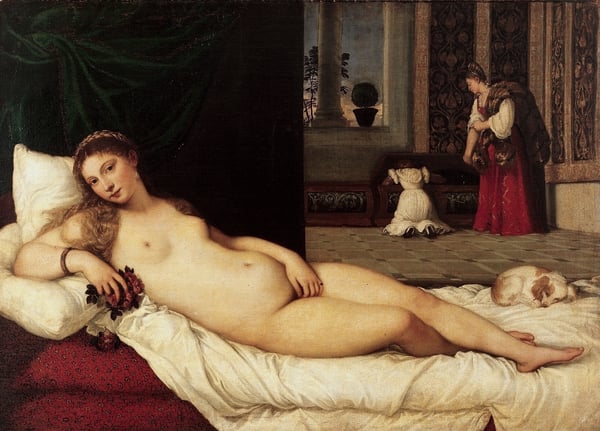
Sleeping Venus (Giorgione), a 1510 painting by Giorgione and Titian
Sleeping Venus with Cupid (Poussin), a 1630 painting by Nicolas Poussin
Venus and Cupid (Gentileschi) a c. 1626 painting by Artemisia Gentileschi, known also as Sleeping Venus
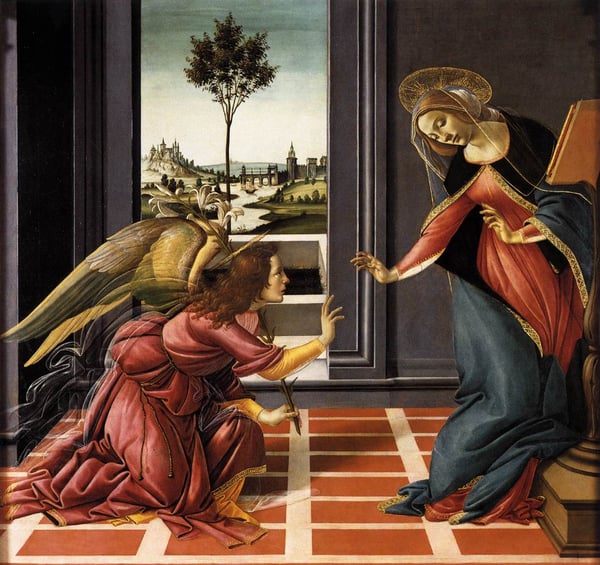
Sandro Botticelli · Early Renaissance · religious painting
The Cestello Annunciation, painted by Sandro Botticelli in 1489, is an Early Renaissance religious painting depicting the Annunciation—the moment when the Angel Gabriel announces to the Virgin Mary that she will bear Christ.
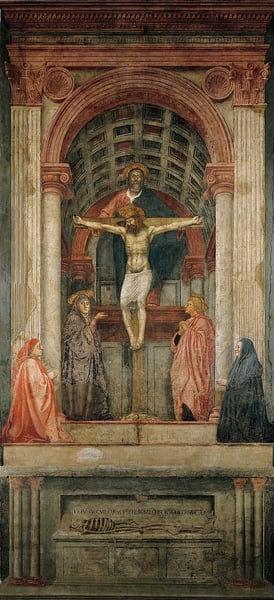
Masaccio · Early Renaissance · religious painting, trompe-l'œil
The Holy Trinity is a religious painting by Masaccio from 1428, executed in the Early Renaissance style with trompe-l'œil effects—a technique that creates the illusion of three-dimensional space on a flat surface.
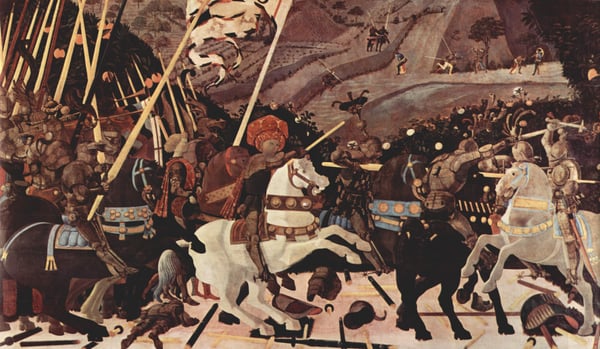
Paolo Uccello · Early Renaissance · battle painting
The Battle of San Romano is a set of three paintings by the Florentine painter Paolo Uccello depicting events that took place at the Battle of San Romano between Florentine and Sienese forces in 1432. They are significant as revealing the development of linear perspective in early Italian Renaissance painting, and are unusual as a major secular commission. The paintings are in egg tempera on wo...
Пока нет комментариев — будьте первым.