Caleido Editorial Team9 Haziran 202635 dk okuma0 görüntülenme
Rönesans (yaklaşık 1400–1600), Avrupa sanatını ortaçağ döneminin stilize geleneklerinden natüralizm, perspektif ve insan merkezli güzelliğin yeni bir çağına dönüştürdü. Floransa'da başlayan hareket İtalya ve Kuzey Avrupa'ya yayıldı.
Leonardo'nun esrarengiz Mona Lisa'sından Michelangelo'nun nefes kesici Sistine Şapeli tavanına kadar, bu 50 tablo Rönesans başarısının zirvesini temsil eder.
Hangi Rönesans başyapıtlarını bizzat gördüğünüzü takip etmek için kontrol listesini kullanın.
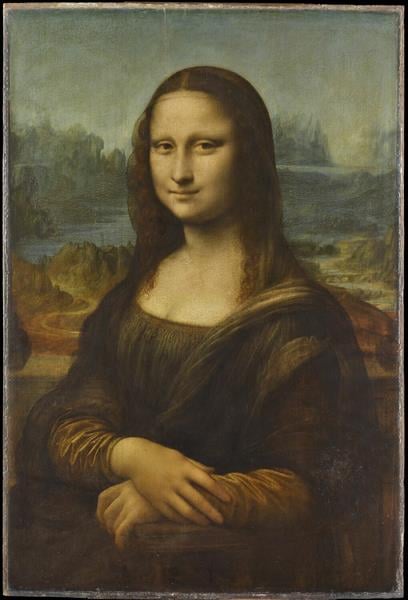
Mona Lisa, İtalya'nın Floransa şehrindeki Rönesans sırasında Leonardo da Vinci tarafından kavak bir pano üzerine Sfumato tekniği ile resmedilmiş 16. yüzyıl yağlı boya portresidir. Resim hâlen Paris'teki Louvre Müzesi'nde Francesco del Giocondo'nun karısı, Lisa Gherardini Portresi başlığı altında sergilenmektedir. Tabloda oturmuş bir kadın resmedilmiştir, kadının yüzünün kime ait olduğu hala giz...
Leonardo da Vinci · High Renaissance · religious painting
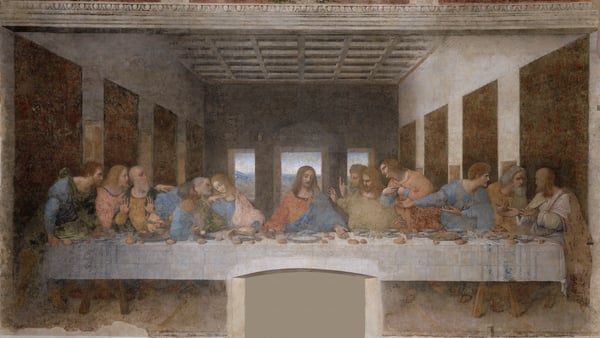
Son Akşam Yemeği, İtalyan Yüksek Rönesans sanatçısı Leonardo da Vinci tarafından yapılmış bir duvar resmidir. Yaklaşık 1495–1498 yıllarına tarihlenen eser, İtalya'nın Milano kentinde bulunan Santa Maria delle Grazie Manastırı'nın yemekhane bölümünde yer almaktadır.
Sandro Botticelli · Early Renaissance · mythological painting
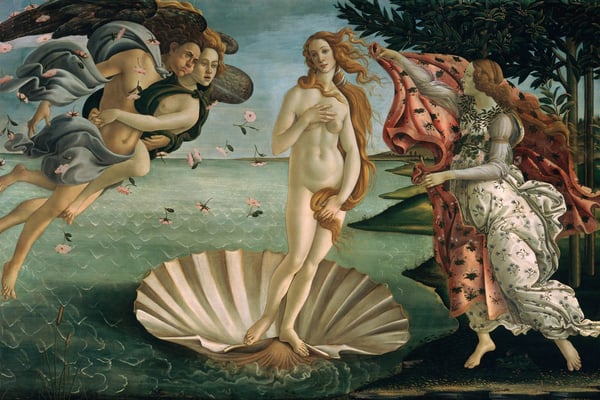
Venüs'ün Doğuşu, İtalyan ressam Sandro Botticelli'nin 1482–1486 yılları arasında tuval üzerine tempera ile çizdiği tablodur. Tabloda, Venüs'ün ergen bir kadın olarak denizden doğarak kıyıya çıkışı betimlenir. Dünyanın en bilinen resimlerinden biri olan tablo, Floransa'daki Uffizi'de sergilenmektedir.
Mikhail Vrubel · Art Nouveau (Modern), Symbolism · portrait
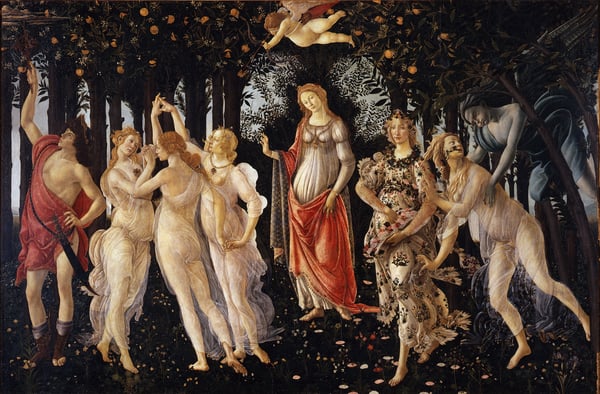
Primavera is a large panel painting in tempera paint by the Italian Renaissance painter Sandro Botticelli made in the late 1470s or early 1480s. It has been described as "one of the most written about, and most controversial paintings in the world", and also "one of the most popular paintings in Western art".
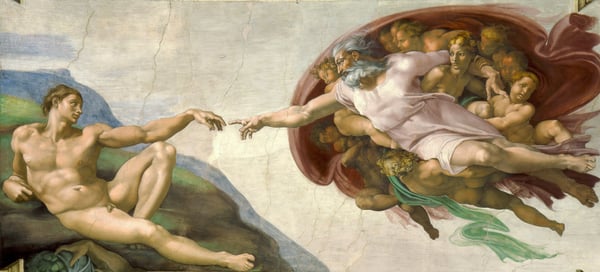
Michelangelo · High Renaissance · mythological painting
Adem'in Yaratılışı, Sistine Şapeli'nin tavanındaki ünlü bir fresktir. Michelangelo tarafından 1511 dolaylarında yapılmıştır. Tüm zamanların en çok replikası yapılan dinî resimlerinden biridir.
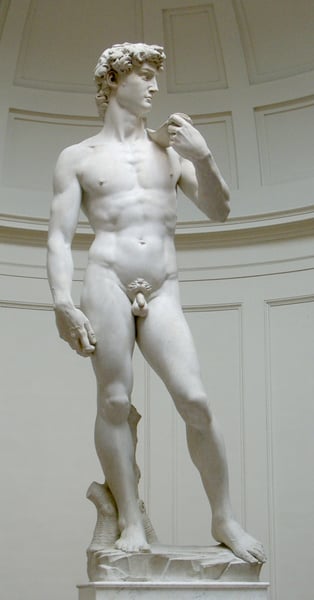
Davut, 1501 ile 1504 yılları arasında Michelangelo tarafından yapılan, İtalyan Rönesans mimar sanatının mermerden bir şaheseridir. Davut, 5,17 metre yüksekliğiyle Yüksek Rönesans döneminde yapılan ilk devasa mermer heykeldir ve klasik antik çağdan bu yana 16. yüzyıl ve sonrası için bir emsal teşkil etmektedir. Davut, başlangıçta Floransa Katedrali'nin doğu ucunun çatı hattı boyunca konumlandırı...
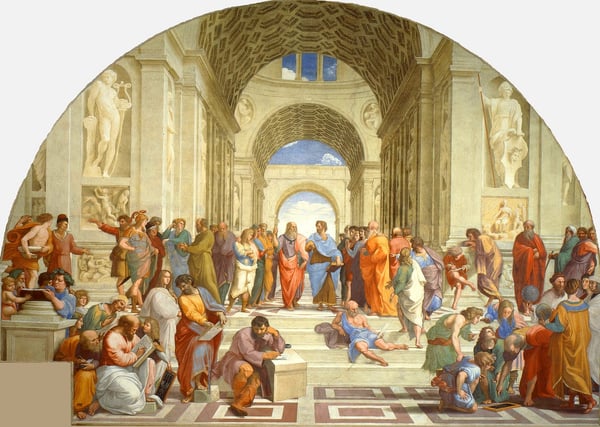
Atina Okulu, İtalyan ressam Raffaello Sanzio tarafından 1509-1511 yılları arasında yapılmış fresk. Atina Okulunda ana konu felsefe ve astrolojiyi ilahiyat ile bağdaştırmaktır. Fresk Vatikan'da Stanza della Segnatura'da bulunmaktadır.
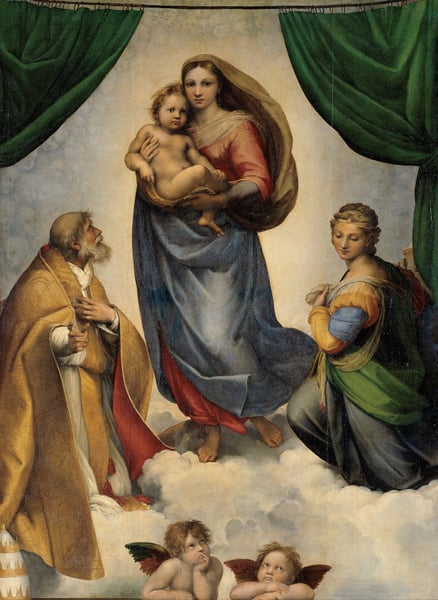
The Sistine Madonna, also called the Madonna di San Sisto, is an oil painting by the Italian artist Raphael. The painting was commissioned in 1512 by Pope Julius II for the church of San Sisto, Piacenza, and probably executed c. 1513–1514. The canvas was one of the last Madonnas painted by Raphael. Giorgio Vasari called it "a truly rare and extraordinary work".
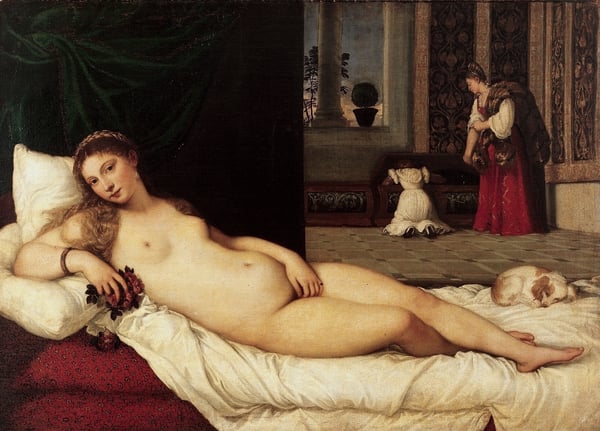
Urbino Venüsü, İtalyan ressam Tiziano'ın 1538 yılında çizdiği yağlı boya tablodur. Tabloda, Venüs olduğu düşünülen çıplak bir genç kadın, Rönesans dönemine ait bir sarayın gösterişli ortamında, bir kanepe ya da yatak üzerinde uzanmış olarak betimlenmiştir. Tablo, Floransa'daki Uffizi Galerisi'nde sergilenmektedir.
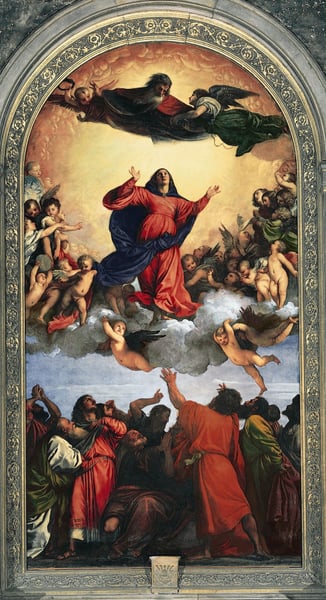
This altarpiece by Titian, one of the most inspirational works of Christian art, is undoubtedly among the greatest Renaissance paintings of the [url href=https://www.wikiart.org/en/artists-by-painting-school/venetian-school]Venetian School[/url]. The most substantial work of its type in Venice (nearly seven meters high), it was Titian's first major commissioned work in the city and took him two...
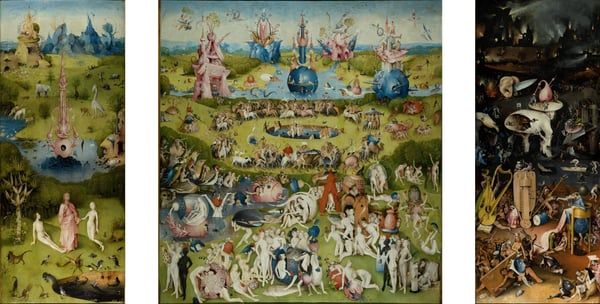
Dünyevi Zevkler Bahçesi Hollandalı ressam Hieronymus Bosch'un 1503 ve 1504 yılları arasında yaptığı bir tablodur. Bir triptik olan eser 1939'dan beri Madrid'deki Prado Müzesi'nde bulunmaktadır.
Jacopo Bellini · Early Renaissance · religious painting
Created in 1444, this painting is one of the mature works of Jacopo Bellini. Annunciation is a panel, which is a permanent part of the exhibition of Sant Allesandro, Brescia, along with many other works from the early Renaissance period. This painting is a beautiful example of Bellini’s incorporation of Byzantine and Gothic techniques with the new style of Renaissance painting, which included t...
The Tribuna of the Uffizi is an oil painting by German-British painter Johan Zoffany, created in 1772-1778. It depicts the north-east section of the Tribuna room in the Uffizi, in Florence, Italy. The painting is part of the Royal Collection.
Hans Holbein the Younger · Northern RenaissanceEser
Hans Holbein the Younger · Northern Renaissance · portrait
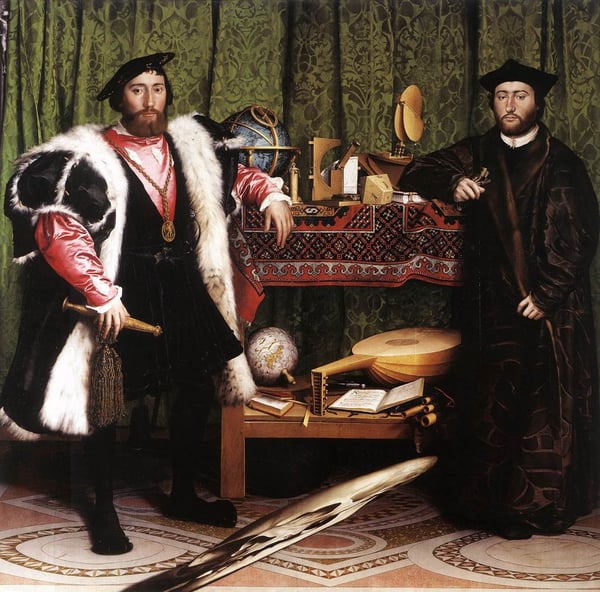
Elçiler , Alman ressam Hans Holbein tarafından 1533 yılında yapılmış tablodur. Tablo, Holbein'ın en çok bilinen eseridir. Alt kısmında bulunan, şekli bozulmuş ve ancak belirli bir açıda bakıldığında ne olduğu anlaşılabilen bir kafatası figürü ile oldukça ilgi çeken ve tanınan eser; Londra Ulusal Galerisi'nde sergilenmektedir.
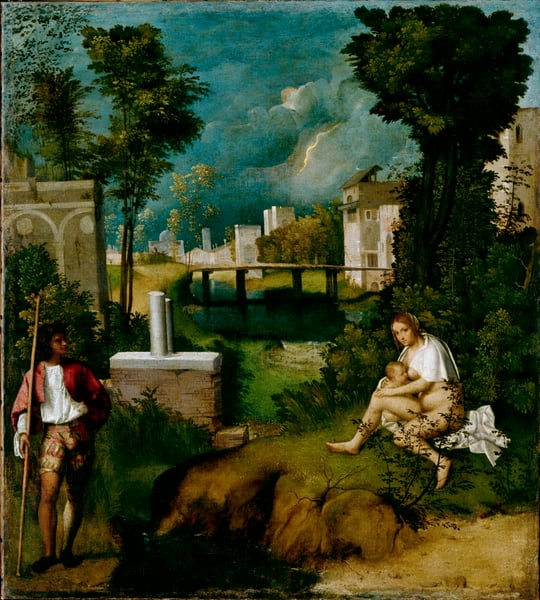
Fırtına, İtalyan ressam Giorgione'nin 1506 - 1508 tarihleri arasında yaptığı Rönesans tablosu. Venedikli bir soylu olan Gabriele Vendramin tarafından sipariş edilen eser, şu anda Venedik'teki Gallerie dell'Accademia'da sergilenmektedir. Tablo, ressamın ilk resmi olarak bilinir.
Filippino Lippi · High Renaissance · religious painting
Saint Jerome in His Study is a High Renaissance religious painting by Filippino Lippi from 1493. The work depicts the saint in a domestic interior setting, a subject characteristic of Northern European and Italian religious art of the period.
18
Self-Portrait
Albrecht DürerEser
Giuseppe Arcimboldo · Mannerism (Late Renaissance) · self-portrait
Self-Portrait is a panel painting by the German Renaissance artist Albrecht Dürer. Completed early in 1500, just before his 29th birthday, it is the last of his three painted self-portraits. Art historians consider it the most personal, iconic and complex of these.
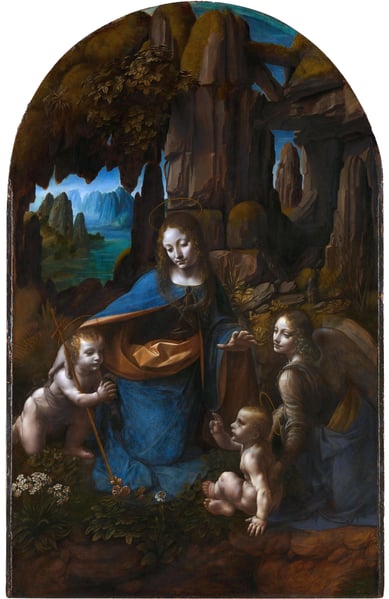
The Virgin of the Rocks, sometimes the Madonna of the Rocks, is the name of two paintings by the Italian Renaissance artist Leonardo da Vinci, of the same subject, with a composition which is identical except for several significant details. The version generally considered the prime version, the earlier of the two, is unrestored and hangs in the Louvre in Paris. The other, which was restored b...
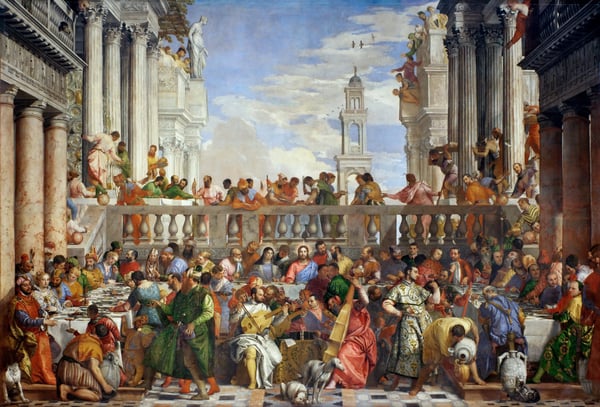
Paolo Veronese · Mannerism (Late Renaissance), OrientalismEser
Adam van Noort · Mannerism (Late Renaissance), Northern Renaissance
The Wedding at Cana by Adam van Noort is a Mannerist work depicting the biblical feast scene. The painting exemplifies Northern Renaissance visual conventions within the Mannerist style that dominated late sixteenth-century artistic practice.
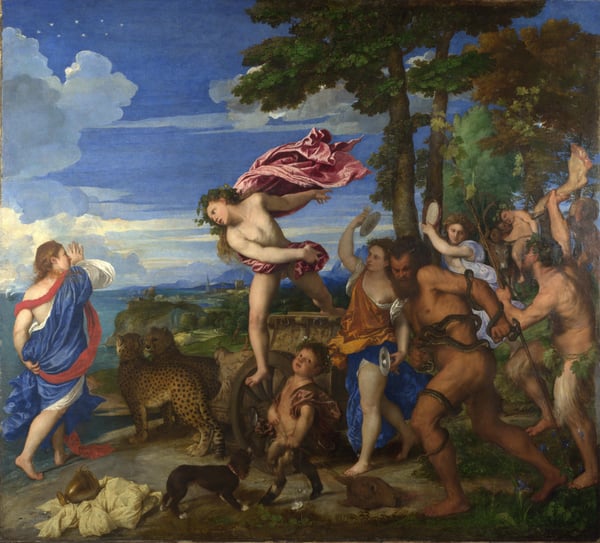
This colorful history painting (also known as a [i]poesie[/i]) is one of a cycle of mythological pictures based on classical texts which were commissioned by Alfonso I d'Este, Duke of Ferrara, for his [i]Camerino d'Alabastro[/i] – a private chamber in his ducal palace in Ferrara. This work - a substitute for one by [url href=https://www.wikiart.org/en/raphael]Raphael[/url] - was one of three pr...
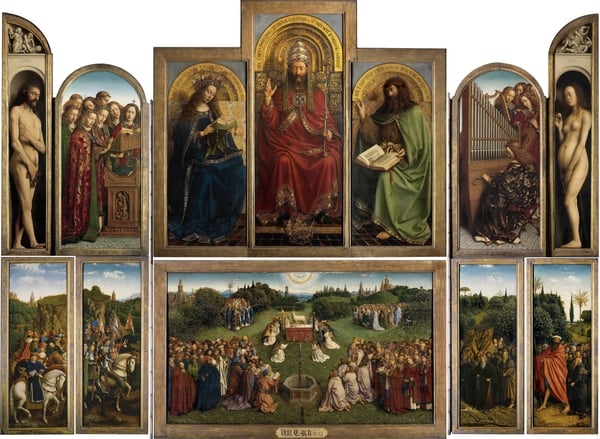
The Ghent Altarpiece, also called the Adoration of the Mystic Lamb, is a very large and complex 15th-century polyptych altarpiece in St Bavo's Cathedral, Ghent, Belgium. It was begun around the mid-1420s and completed by 1432, and it is attributed to the Early Netherlandish painters and brothers Hubert and Jan van Eyck. The altarpiece is a prominent example of the transition from Middle Age to ...
Eugene Delacroix · Romanticism · religious painting
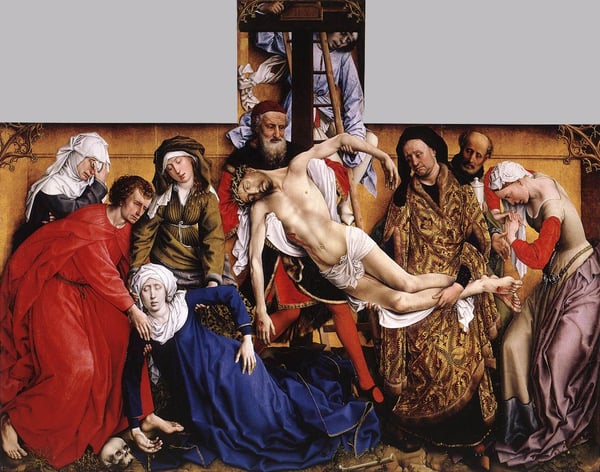
The Descent from the Cross is a panel painting by the Flemish artist Rogier van der Weyden created c. 1435, now in the Museo del Prado, Madrid. The crucified Christ is lowered from the cross, his lifeless body held by Joseph of Arimathea and Nicodemus.
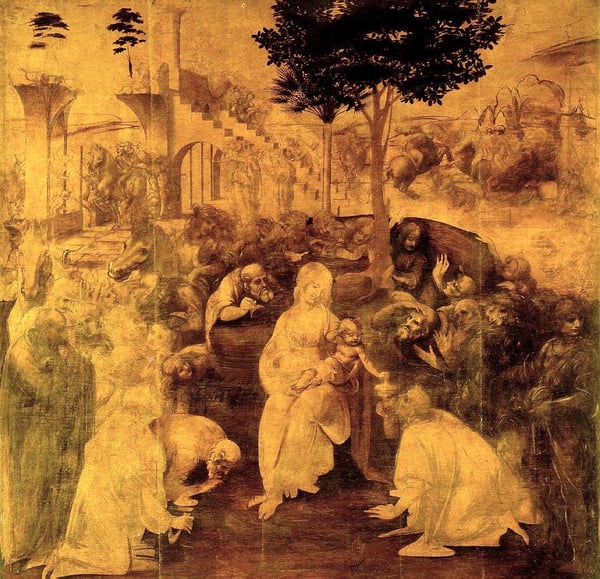
The Adoration of the Magi is an unfinished early painting by the Italian Renaissance artist Leonardo da Vinci. Leonardo was given the commission by the Augustinian monks of San Donato in Scopeto in Florence in 1481, but he departed for Milan the following year, leaving merely more than the preparatory underdrawing in charcoal, ink and watercolor. It has been in the Uffizi Gallery in Florence si...
Eugene Delacroix · Romanticism · religious painting
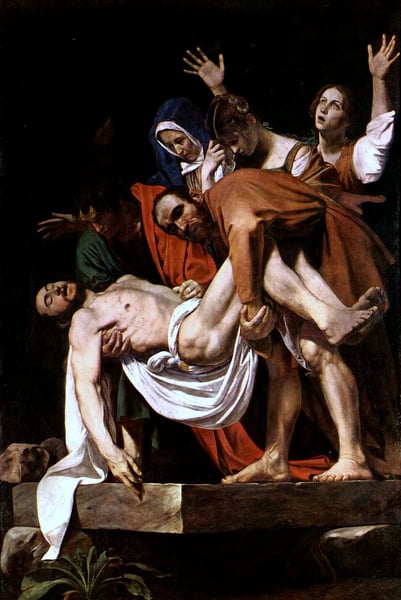
The Entombment of Christ is a religious painting by Eugene Delacroix, created in 1848 and executed in the Romantic style. The work depicts the burial of Christ, a subject central to Christian tradition and a frequent motif in European religious art of the period.
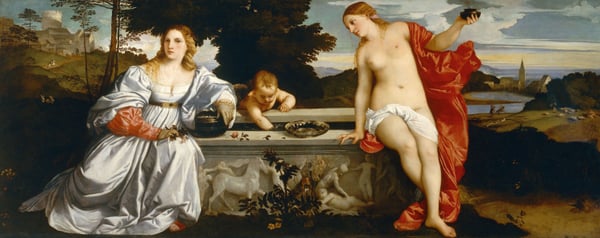
Two women, apparently drawn from the same model, are posed in a bucolic landscape by a trough, while its water is stirred by a winged Eros. The painting is rich in symbolism and iconography, although there is a lack of consensus amongst critics about its meaning. Even the title of the painting may not be original, as it was not recorded until 1693. The composition of the picture contains elemen...
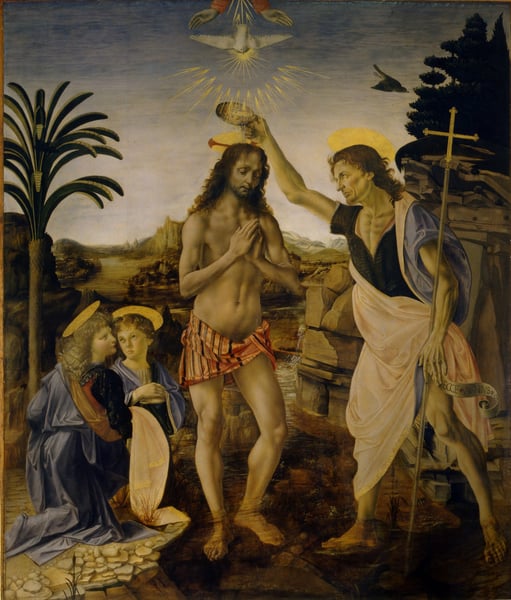
The Baptism of Christ is an oil-on-panel painting finished around 1475 in the studio of the Italian Renaissance painter Andrea del Verrocchio and generally ascribed to him and his pupil Leonardo da Vinci. Some art historians discern the hands of other members of Verrocchio's workshop in the painting as well.
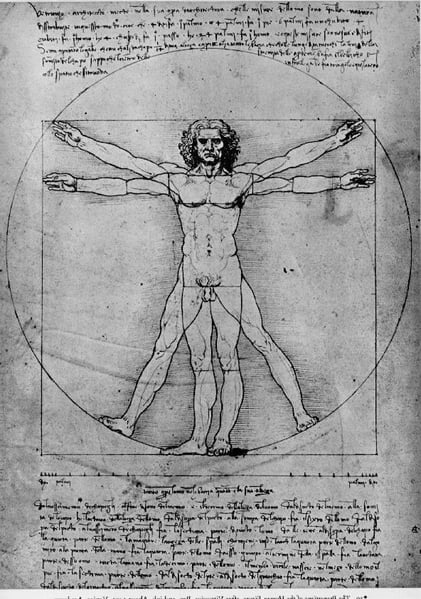
Vitruvius Adamı, ünlü ressam Leonardo da Vinci'nin günlüklerinin birinde bulunan, aldığı notların yanında çizdiği bir eskizdir. 1492 yılında yapıldığı düşünülmektedir. Antik Romalı ünlü mimar ve yazar Marcus Vitruvius Pollio'nun (MÖ.80-15) "De Architectura" adlı eserinde açıkladığı oranlardan esinlenerek yapıldığından, "Vitruvius Adamı" olarak anılır.
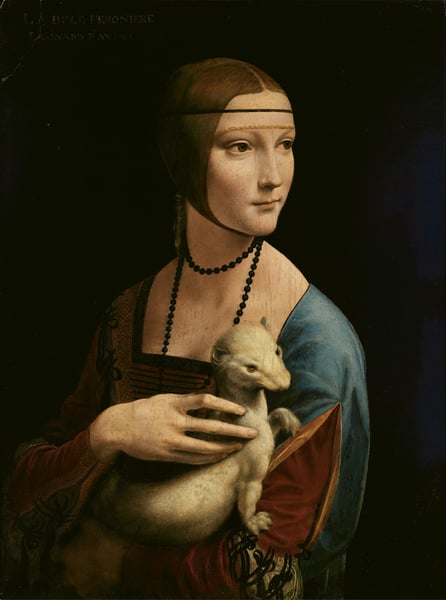
Kakımlı Kadın İtalyan Rönesans sanatçısı Leonardo da Vinci'nin 1489 - 1491'de yaptığı portre tablosudur. Eser ceviz ağacından bir panel üzerine yağlı boya ile boyanmıştır. Konusu, Milano Dükü Ludovico Sforza'nın metresi Cecilia Gallerani'dir. Eser, Leonardo tarafından yapılmış, hayatta kalan dört kadın portresinden ikincisidir; diğerleri Ginevra de' Benci, La Belle Ferronnière ve Mona Lisa'dır....
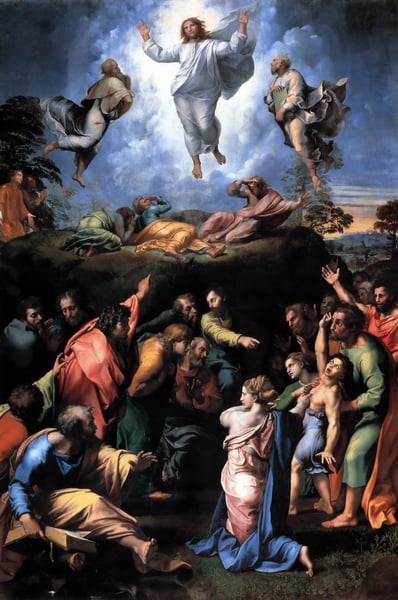
Considered the last painting by Raphael, The Transfiguration was incomplete at the time of his death. It is generally thought that Raphael’s pupil, Giulio Romano, completed the rest of the painting in 1520. Raphael began the high altarpiece in 1516, which was commissioned by Cardinal Giulio de Medici, who later became Pope Clement VII. At the time it was commissioned, Raphael was busy with many...
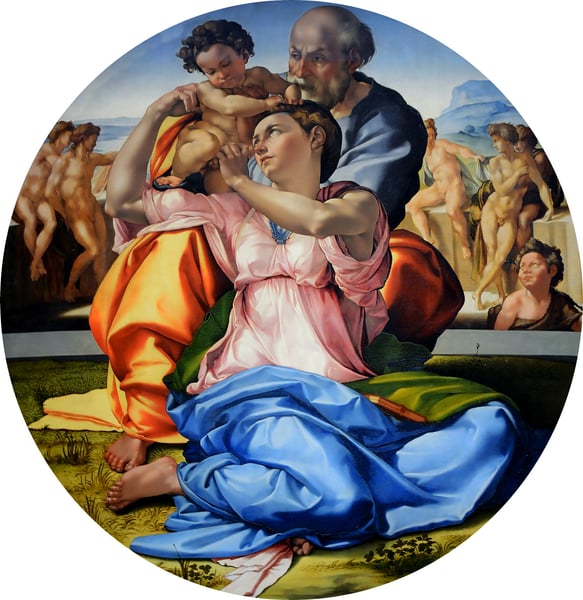
Doni Tondo veya Doni Madonna, Olgun Michelangelo'nun hayatta kalan tek bitmiş panel resmi. Şimdi İtalya'nın Floransa şehrindeki Uffizi'de hâlâ orijinal çerçevesinde sergilenen Doni Tondo, muhtemelen Agnolo Doni tarafından güçlü bir Toskana ailesinin kızı Maddalena Strozzi ile evliliğini anmak için yaptırılmıştır. Resim, İtalyancada 'yuvarlak' anlamına gelen tondo şeklinde, yani Rönesans sırasın...
Giovanni Bellini · High Renaissance · religious painting
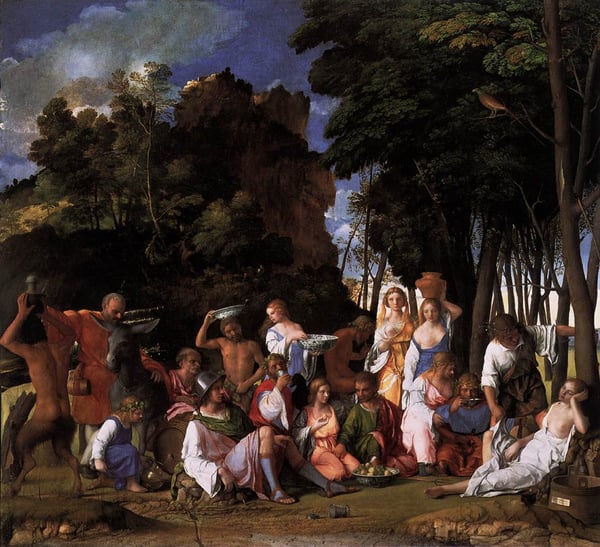
The Feast of the Gods is an oil painting by Giovanni Bellini, with substantial additions by Titian, who added all the landscape to the left and centre. It is one of a cycle of paintings on mythological subjects produced for Alfonso I d'Este, the Duke of Ferrara, for his camerino d'alabastro ('chamber of alabaster') in the Castello Estense, Ferrara. It is one of the few mythological pictures by ...
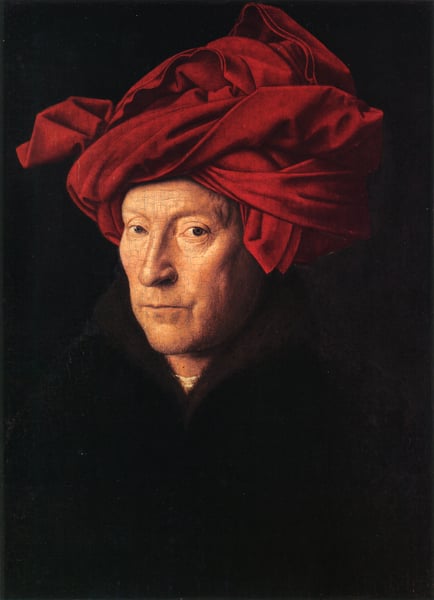
Portrait of a Man is the title given to a small oil painting by the Early Netherlandish painter Jan van Eyck, completed in 1433 in Bruges. The inscription at the top of the frame, which is original, contains his motto Als Ich Can was a common autograph for van Eyck. However this is his first known usage of the term, and it is unusually large and prominent. This and the sitter's unusually direc...
Jacopo Pontormo · Mannerism (Late Renaissance) · religious painting
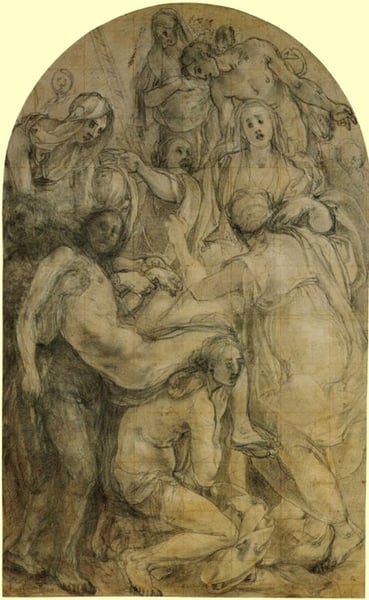
The Deposition is a religious painting by Jacopo Pontormo, executed in 1524 in the Mannerist style of the Late Renaissance. The work depicts the removal of Christ from the cross, a subject central to Christian iconography.
Piero della Francesca · Early Renaissance · religious painting
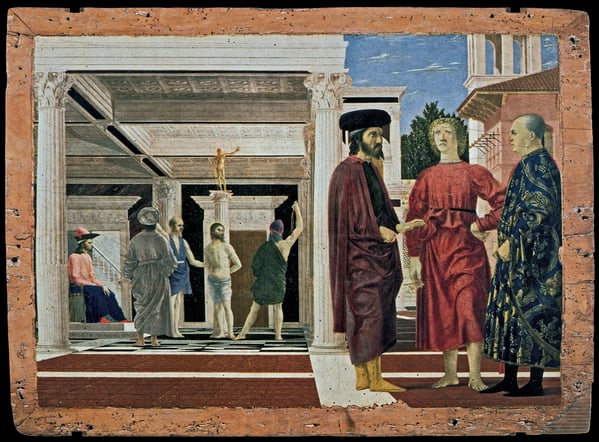
A diminutive 23 by 32 inches, this painting has been called the best small painting in the world. The subject and composition of the painting is unusual, and the iconography in the painting has been subject to much conjecture. The painting illustrates the flagellation of Christ in an open courtyard, while three unidentified men stand indifferent in the foreground. The small painting is lauded f...
The Ghent Altarpiece, also called the Adoration of the Mystic Lamb, is a very large and complex 15th-century polyptych altarpiece in St Bavo's Cathedral, Ghent, Belgium. It was begun around the mid-1420s and completed by 1432, and it is attributed to the Early Netherlandish painters and brothers Hubert and Jan van Eyck. The altarpiece is a prominent example of the transition from Middle Age to ...
Sandro Botticelli · Early Renaissance · religious painting
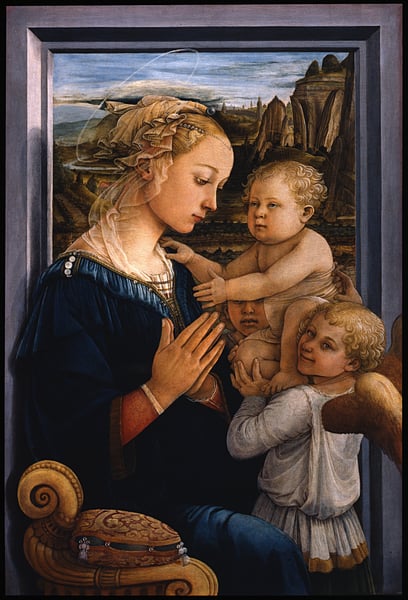
Virgin and Child with Two Angels may refer to one of these paintings:Virgin and Child with Two Angels, by Sandro Botticelli, in Naples
Virgin and Child with Two Angels, by Sandro Botticelli, in Strasbourg
Virgin and Child with Two Angels, by Cimabue, in National Gallery, UK
Virgin and Child with Two Angels, by Andrea del Verrocchio, in National Gallery, UK
Madonna and Child, by Filippo Lippi, i...
The Allegory of Spring is a tempera painting by Sandro Botticelli, a Florentine Renaissance master of the 15th century.
That is the sum of the grounded facts supplied. Without dimensions, date, location, subject description, or other documented details, I cannot responsibly expand beyond this single sentence.
Rogier van der Weyden · Northern Renaissance · religious painting
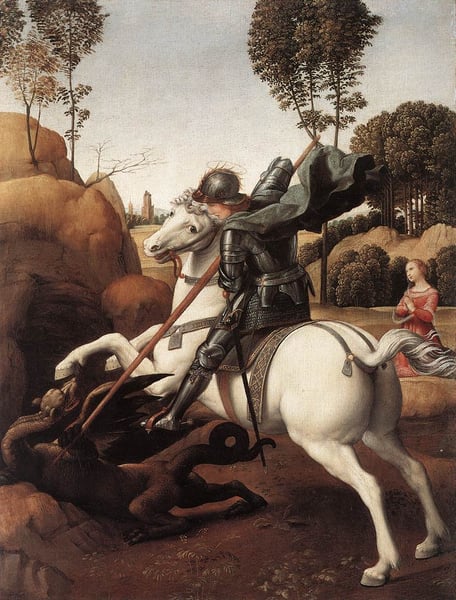
Aziz Yorgi’nin efsanesinde insan kurbanı isteyen bir ejderhayı öldürmesini anlatır. Hikaye ejderhanın köylülerden zorla haraç aldığından bahseder. Köylülerin verecek hayvanları ve incik boncukları kalmadığında yılda bir defa insan kurban etmeye başlamışlardır. Bu sistem sıradaki kurban olarak bir prenses seçilene kadar köylülerce kabul edilmiştir. Daha sonra Aziz Yorgi sıradaki kurban olarak se...
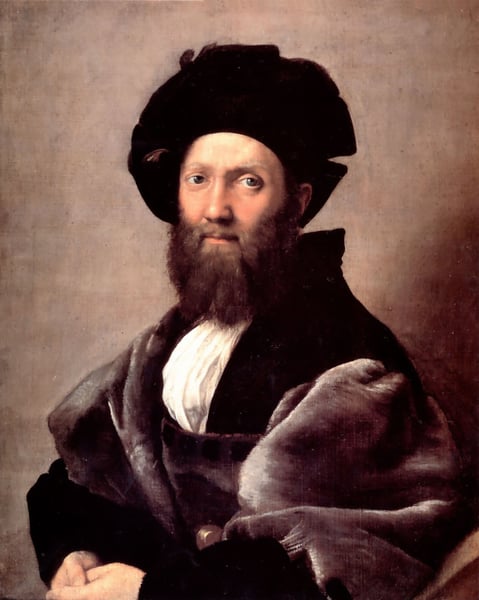
Portrait of Baldassare Castiglione is a c. 1514–1515 oil painting attributed to the Italian High Renaissance painter Raphael. Considered one of the great portraits of the Renaissance, it has an enduring influence. It depicts Raphael's friend, the diplomat and humanist Baldassare Castiglione, who is considered a quintessential example of the High Renaissance gentleman.
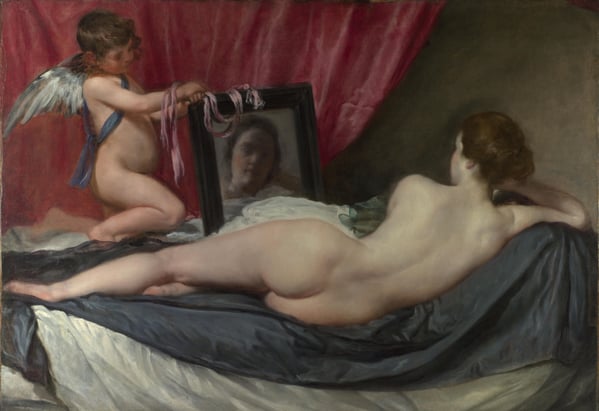
Aynadaki Venüs, İspanyol Altın Çağı'nın önde gelen ressamlarından Diego Velázquez'in (1599–1660) tablosu. Eser Londra'daki Ulusal Galeri'de sergilenmektedir. Velázquez bu tabloyu 1647 ile 1651 yılları arasında tamamlamıştır.
Sleeping Venus may refer to:Sleeping Venus (Carracci), a c. 1603 painting by Annibale Carracci
Sleeping Venus (Delvaux), a 1944 painting by Paul Delvaux
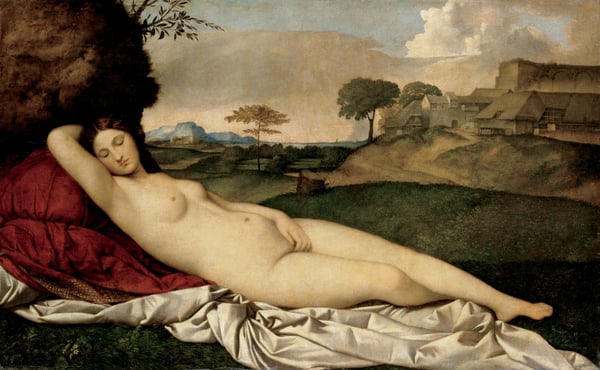
Sleeping Venus (Giorgione), a 1510 painting by Giorgione and Titian
Sleeping Venus with Cupid (Poussin), a 1630 painting by Nicolas Poussin
Venus and Cupid (Gentileschi) a c. 1626 painting by Artemisia Gentileschi, known also as Sleeping Venus
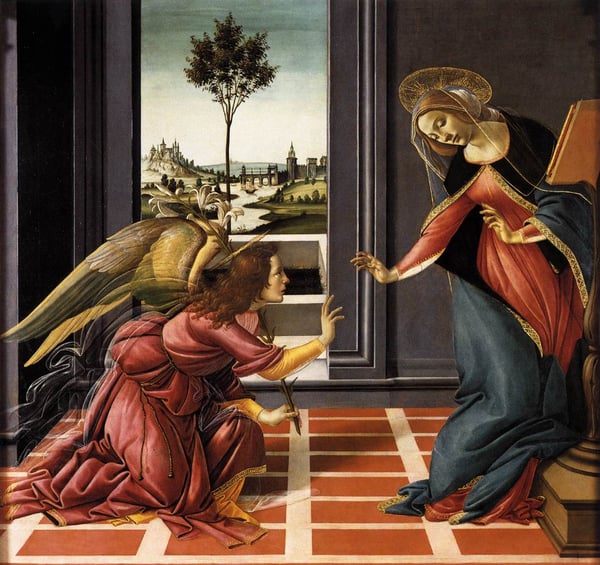
Sandro Botticelli · Early Renaissance · religious painting
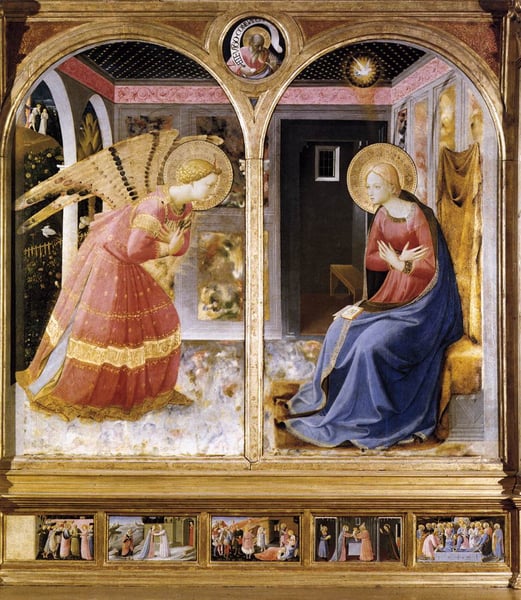
The Cestello Annunciation, painted by Sandro Botticelli in 1489, is an Early Renaissance religious painting depicting the Annunciation—the moment when the Angel Gabriel announces to the Virgin Mary that she will bear Christ.
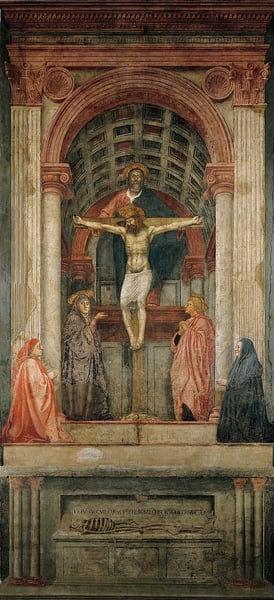
Masaccio · Early Renaissance · religious painting, trompe-l'œil
Teslis, Kutsal Üçleme ya da Üçlü Birlik, tek olan Tanrı'nın Kutsal Kitap'ta kendisini bildirdiği her biri eşit yücelikte, özünde tek, ezeli ve ebedi olan üç benliğini konu edinen ve Hristiyan kiliselerinin çoğunluğu tarafından inanılan ana akım Hristiyan dininin merkezindeki inanç esasıdır. Baba Tanrı, Oğul Tanrı ve Kutsal Ruh üç farklı benlik (hipostaz) olarak aynı özü paylaşmaktadırlar (Homoo...
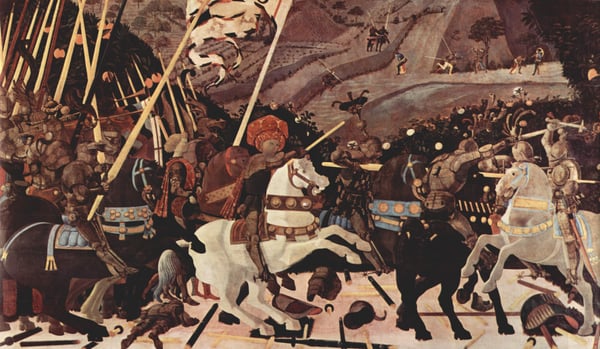
Paolo Uccello · Early Renaissance · battle painting
The Battle of San Romano is a set of three paintings by the Florentine painter Paolo Uccello depicting events that took place at the Battle of San Romano between Florentine and Sienese forces in 1432. They are significant as revealing the development of linear perspective in early Italian Renaissance painting, and are unusual as a major secular commission. The paintings are in egg tempera on wo...
Henüz yorum yok — ilk sen ol.