40 masterworks from the age of drama, light, and shadow
CE
Caleido Editorial TeamJune 9, 202630 min read1 views
The Baroque era (roughly 1600–1750) produced art of extraordinary emotional power and visual drama. At its forefront was Caravaggio, whose revolutionary use of chiaroscuro — the dramatic contrast of light and shadow — transformed painting and influenced generations of artists across Europe.
From Caravaggio's raw, theatrical realism to Rembrandt's psychological depth, from Rubens's exuberant energy to Vermeer's luminous intimacy, and from Velázquez's royal portraits to Bernini's ecstatic sculptures, the Baroque masters created works of unmatched intensity and beauty.
Use the checklist below to track which Baroque masterworks you've seen in person.
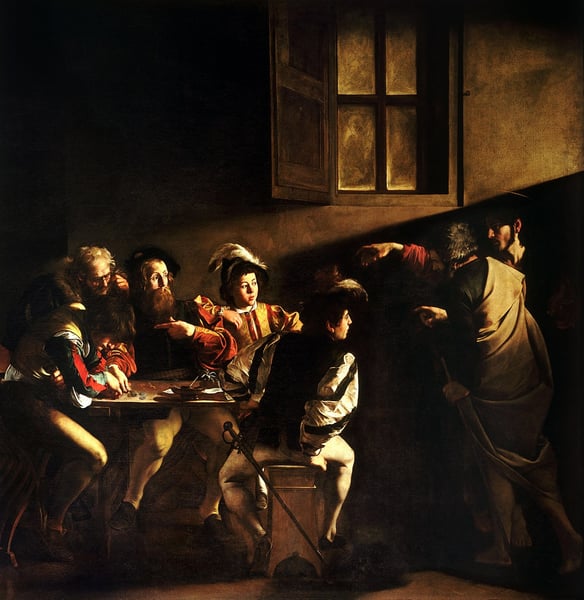
The Calling of Saint Matthew is an oil painting by the Italian Baroque master Caravaggio that depicts the moment Jesus Christ calls on the tax collector Matthew to follow him. It was completed in 1599–1600 for the Contarelli Chapel in the church of the French congregation, San Luigi dei Francesi in Rome, where it remains. It hangs alongside two other paintings of Matthew by Caravaggio: The Mart...
Caravaggio · Baroque, Tenebrism · religious painting
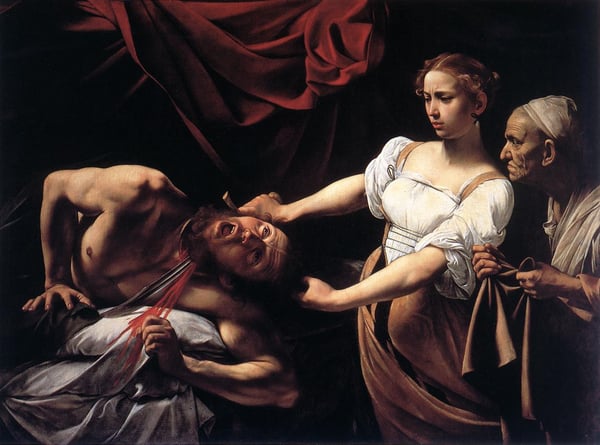
This painting tells the story Biblical story of Judith, who saved her people by seducing and beheading the Assyrian general Holofernes, which was a common theme in the 16th century. The same story has also been painted by artists such as Sandro Botticelli, Donatello, Artemesia Gentileshi, Giorgione, and Andrea Mantegna. In typical Caravaggio style, the painting depicts the moment of greatest im...
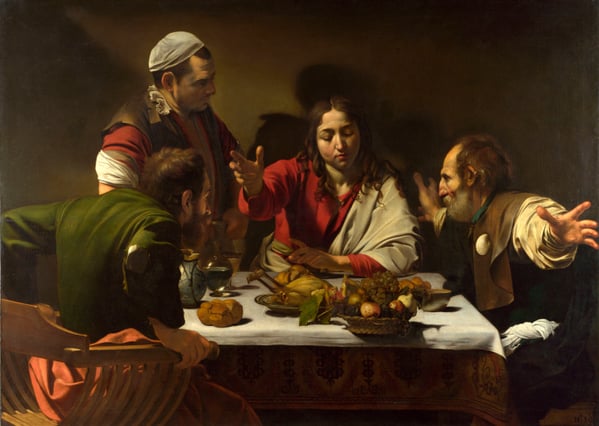
The Supper at Emmaus is a painting by the Italian Baroque master Caravaggio, completed in 1601, and now in London. It depicts the Gospel story of the resurrected Jesus's appearance in Emmaus.
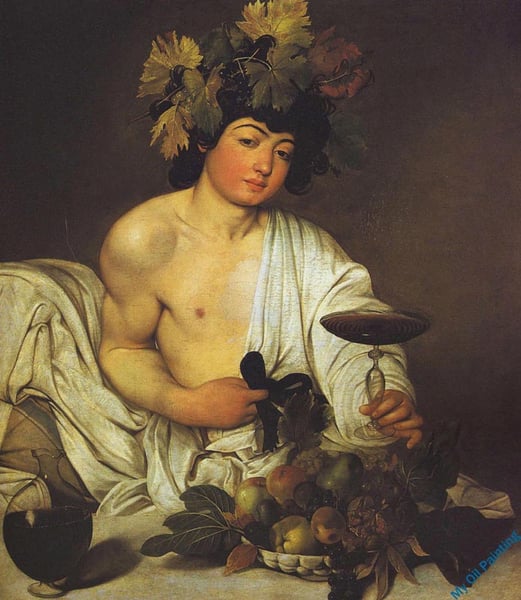
Bacchus is an oil painting by Italian Baroque master Michelangelo Merisi da Caravaggio (1571–1610) commissioned by Cardinal Francesco Maria del Monte. The painting shows a youthful Bacchus reclining in classical fashion with grapes and vine leaves in his hair, fingering the drawstring of his loosely draped robe. On a stone table in front of him is a bowl of fruit and a large carafe of red wine....
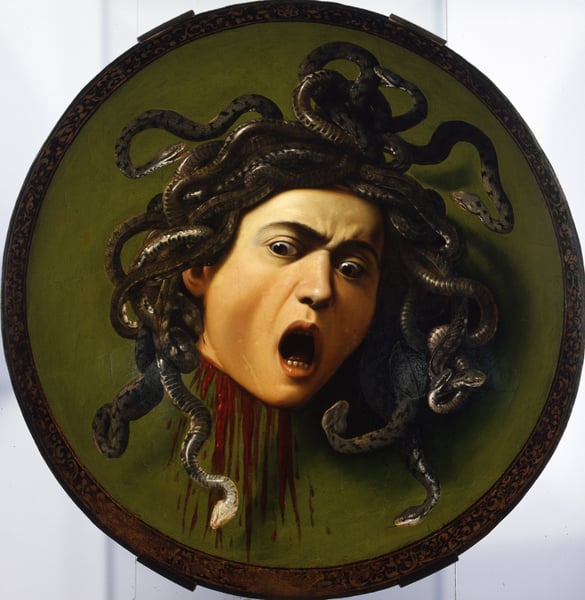
Caravaggio (1571-1610) painted two versions of the Head of Medusa. The first in 1596 and the other presumably in 1597/8. The first version also known as Murtula, due to the poet who wrote about it (48x55 cm) is signed Michel A F, (Michel Angelo Fecit) and was found on the painter’s studio only after his dead. Nowadays it belongs to a private collection whilst the second version, slightly bigger...
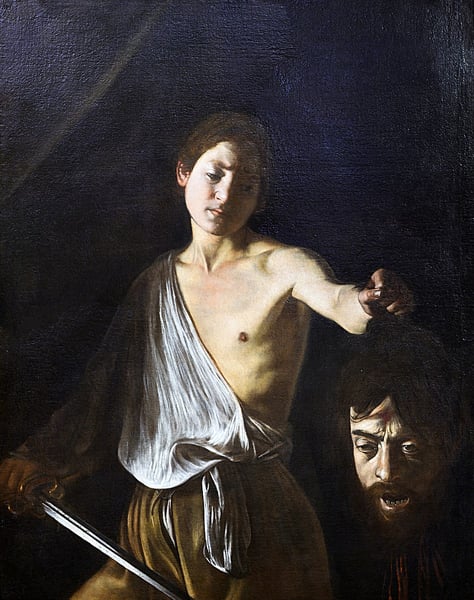
Caravaggio · Baroque, Tenebrism · religious painting
David with the Head of Goliath depicts the biblical subject of David holding the severed head of Goliath, rendered by Caravaggio in 1610 in the Baroque style with pronounced tenebrism—the dramatic use of light and shadow characteristic of the artist's method.
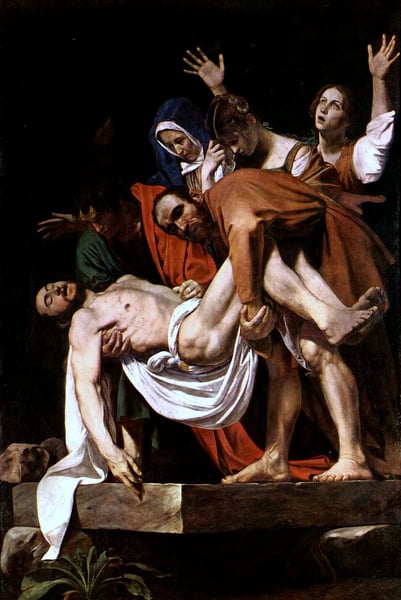
Eugene Delacroix · Romanticism · religious painting
The Entombment of Christ is a religious painting by Eugène Delacroix from 1848, executed in the Romantic style. The work depicts the burial of Christ, a subject central to Christian iconography and a recurring theme in European art history.
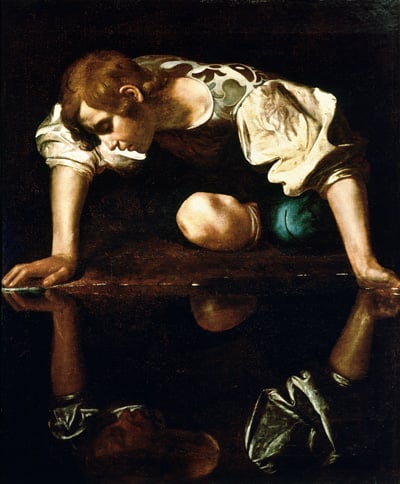
Narcissus is a Baroque painting by Caravaggio from 1599, executed in the tenebristic style characteristic of the artist's work. The portrait depicts the figure of Narcissus, employing dramatic contrasts of light and shadow that define the tenebristic approach.
Bartolome Esteban Murillo · Baroque · religious painting
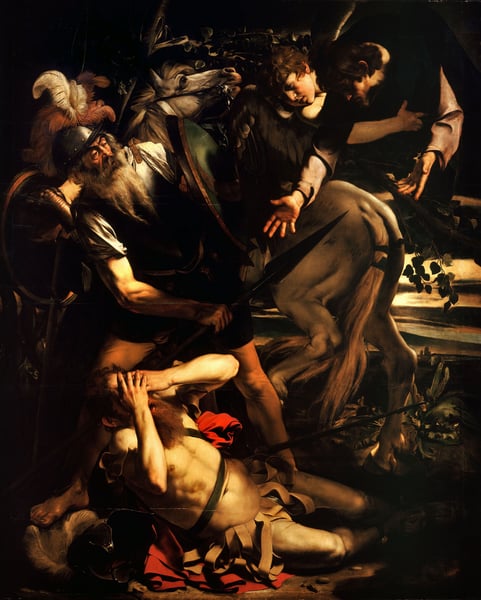
The Conversion of Saint Paul is a Baroque religious painting by Bartolome Esteban Murillo, created in 1682, depicting the biblical moment of Paul's miraculous transformation on the road to Damascus.
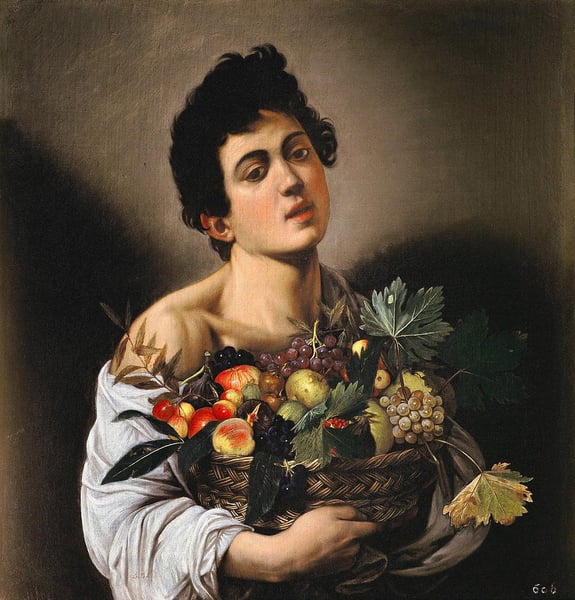
Caravaggio completed this painting when he was new to Rome and relatively unknown in the art world. The model for the boy in painting was Caravaggio’s good friend Mario Minniti, who was 16 at the time, and who would serve as one of his models many times in the future. As a realist painter, Caravaggio did not idealize his paintings, instead he captured the very essence of what he saw on the canv...
Charles Blackman · Expressionism · flower painting
Militia Company of District II under the Command of Captain Frans Banninck Cocq, also known as The Shooting Company of Frans Banning Cocq and Willem van Ruytenburch, but commonly referred to as The Night Watch, is a 1642 painting by Rembrandt van Rijn. It is in the collection of the Amsterdam Museum but is prominently displayed in the Rijksmuseum as the best-known painting in its collection. Th...
Rembrandt · Baroque, Tenebrism · religious painting
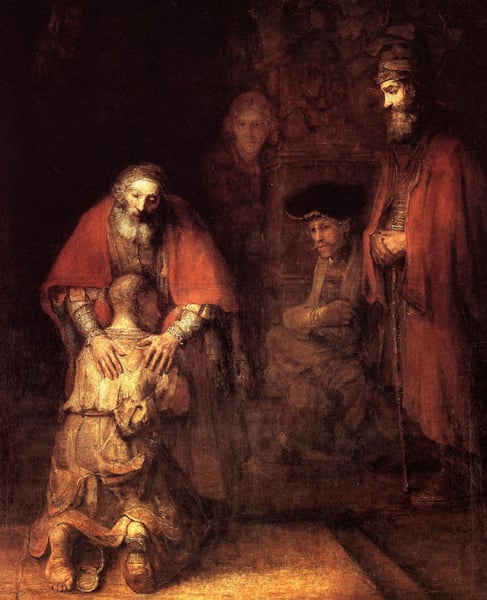
The Return of the Prodigal Son is an oil painting by Rembrandt, part of the collection of the Hermitage Museum in St. Petersburg. It is among the Dutch master's final works, likely completed within two years of his death in 1669. Depicting the moment of the prodigal son's return to his father in the Biblical parable, it is a renowned work described by art historian Kenneth Clark as "a picture w...
Self-Portrait with Two Circles is an oil-on-canvas painting by the Dutch artist Rembrandt, painted c. 1665–1669, one of over 40 painted self-portraits by Rembrandt.
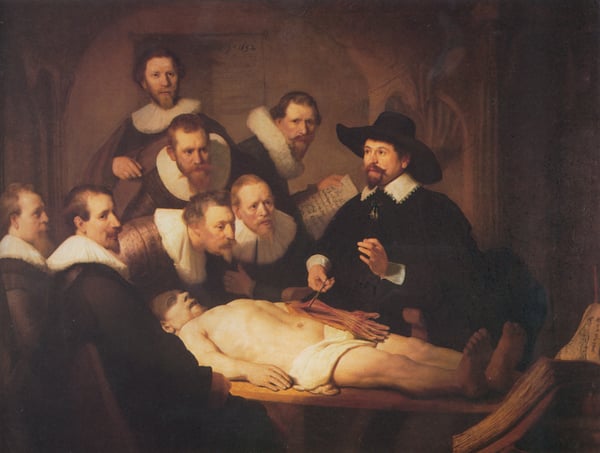
This iconic painting shows Dr. Tulp providing an anatomy lesson, as the forceps in his right hand lift a tendon from the partially dissected arm of a man who had been executed for armed robbery earlier that morning. Tulp looks toward the seven men gathered around the corpse as his left hand gestures to explain an anatomical point. The men, their white collars and fine clothes indicating their w...
Rembrandt's Bathsheba at Her Bath depicts the biblical subject of Bathsheba during her bathing scene. The painting belongs to Rembrandt's body of work engaging with Old Testament narratives rendered in the artist's characteristic approach to light, form, and human figure.
Eugene Delacroix · Romanticism · religious painting
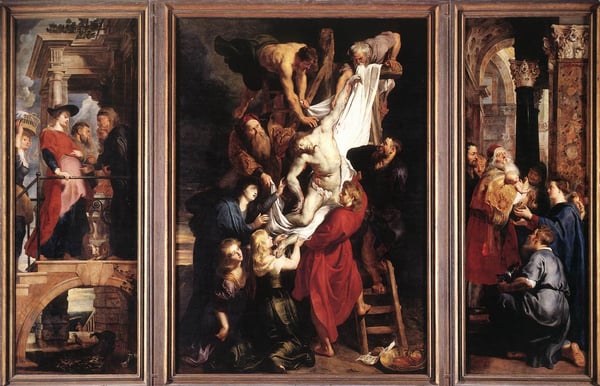
The Descent from the Cross may refer to one of several paintings by Peter Paul Rubens:The Descent from the Cross , Siegerland-Museum, Siegen, Oberes Schloss
The Descent from the Cross , Antwerp Cathedral
The Descent from the Cross , Palais des Beaux-Arts de Lille
The Descent from the Cross , Hermitage Museum, St Petersburg
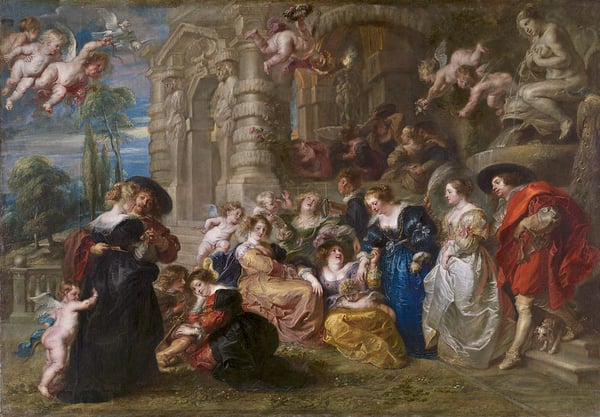
The Garden of Love is a painting by Rubens, produced in around 1633 and now in the Prado Museum in Madrid. The work was first listed in 1666, when it was hung in the Royal Palace of Madrid, in the Spanish king's bedroom. In early inventories, the painting was called The Garden Party.
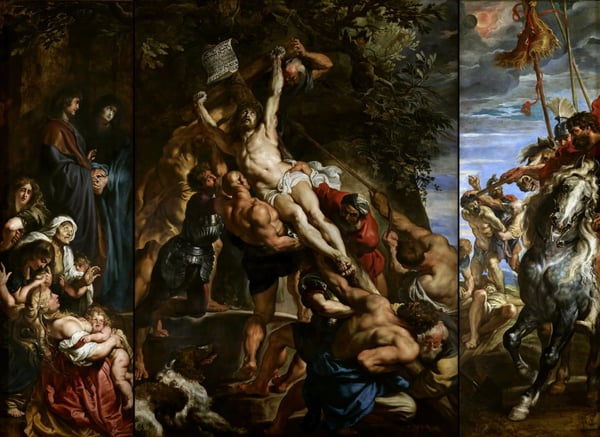
The Elevation of the Cross is a triptych panel painting, depicting many rippling-muscled men lifting Jesus in the Cross. This painting clearly shows the influence of Michelangelo, Caravaggio, and Tintoretto, all of whose paintings influenced Rubens a great deal. Rubens completed the painting after returning to Flanders from Italy, after the death of his mother in 1608. This painting, along with...
This is the first in a series of two paintings by Rubens of the same name. This particular piece was held in the Liechtenstein Collection in Vienna Austria, since the 17th century. In 1767, it was miscatalogued as a piece by one of Rubens’ students, which remained an error until 2001, when an expert art historian correctly attributed the work to Rubens, based on his similar work Samson and Deli...
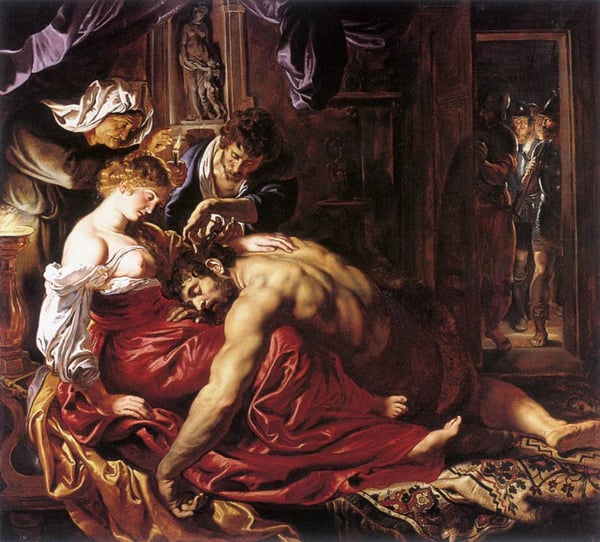
Samson and Delilah is a painting long attributed to the Flemish Baroque artist Peter Paul Rubens (1577–1640) in the National Gallery, London. It dates from about 1609 to 1610.
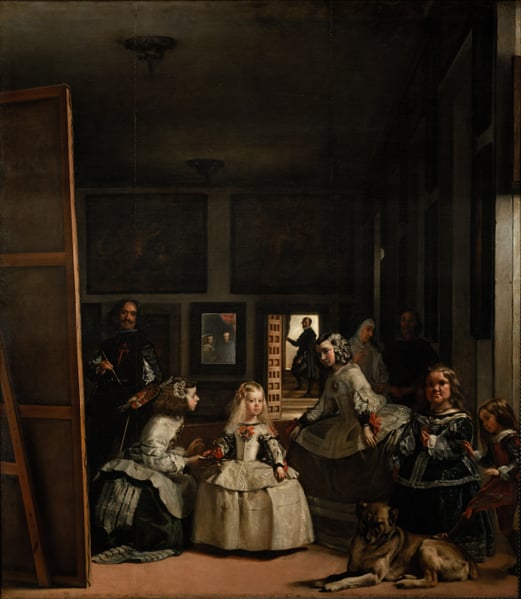
Las Meninas is a 1656 painting in the Museo del Prado in Madrid, by Diego Velázquez, the leading artist in the court of King Philip IV of Spain and Portugal, and of the Spanish Golden Age. It has become one of the most widely analyzed works in Western painting for the way its complex and enigmatic composition raises questions about reality and illusion, and for the uncertain relationship it cre...
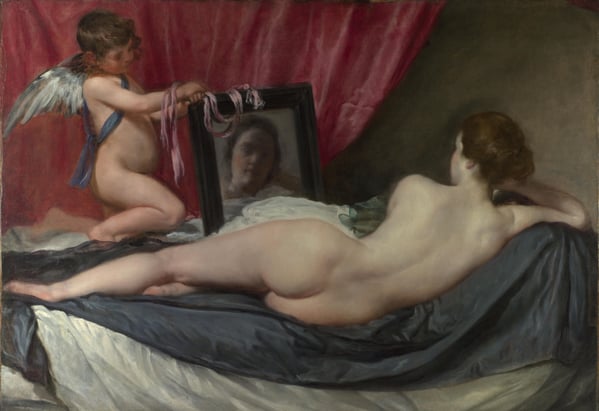
The Rokeby Venus is a painting by Diego Velázquez, the leading artist of the Spanish Golden Age. Completed between 1647 and 1651, and probably painted during the artist's visit to Italy, the work depicts the goddess Venus in a sensual pose, lying on a bed with her back facing the viewer, and looking into a mirror held by the Roman god of physical love, her son Cupid. The painting is in the Nati...
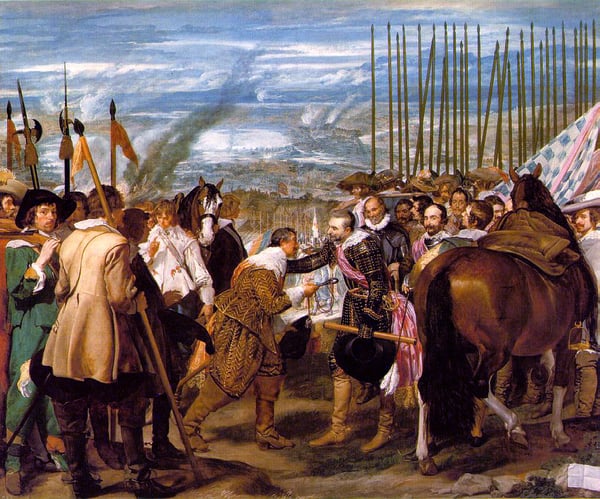
La rendición de Breda is a painting by the Spanish Golden Age painter Diego Velázquez. He painted it during the years 1634 and 1635, inspired by his visit to Italy with Ambrogio Spinola, the Genoese-born Spanish general who conquered Breda on June 5, 1625. The painting depicts the exchange of the key of Breda from the Dutch to the Spanish.
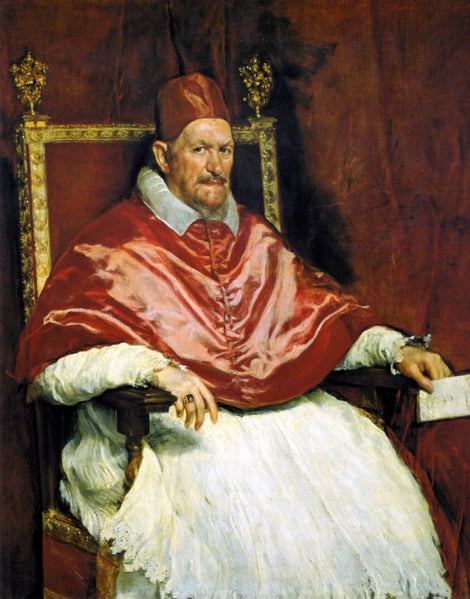
Portrait of Pope Innocent X is an oil on canvas portrait by the Spanish painter Diego Velázquez, created during a trip to Italy around 1650. Many artists and art critics consider it the finest portrait ever created. It is housed in the Galleria Doria Pamphilj in Rome. A smaller version is held by the Metropolitan Museum of Art in New York, and a study is on display at Apsley House in London. Th...
Old Woman Frying Eggs is a genre painting by Diego Velázquez, produced during his Seville period. The date is not precisely known but is thought to be around the turn of 1618 before his definitive move to Madrid in 1623. The painting is in the Scottish National Gallery in Edinburgh. Velázquez frequently used working-class characters in early paintings like this one, in many cases using his fami...
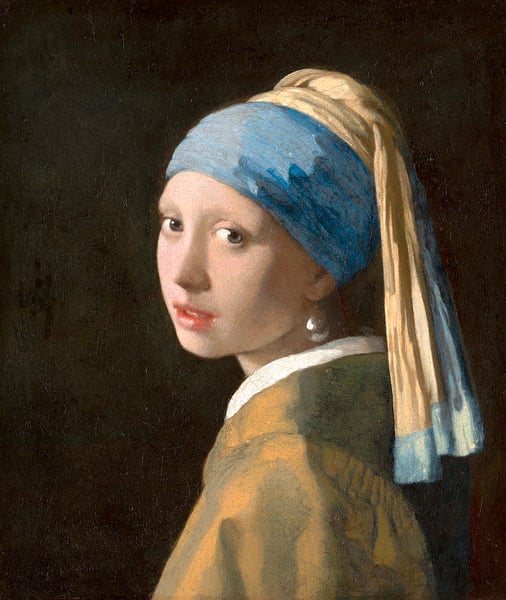
Girl with a Pearl Earring is an oil painting by Dutch Golden Age painter Johannes Vermeer, dated c. 1665. Going by various names over the centuries, it acquired its present title towards the end of the 20th century. The work has been in the collection of the Mauritshuis in The Hague since 1902 and has been the subject of various literary and cinematic treatments.
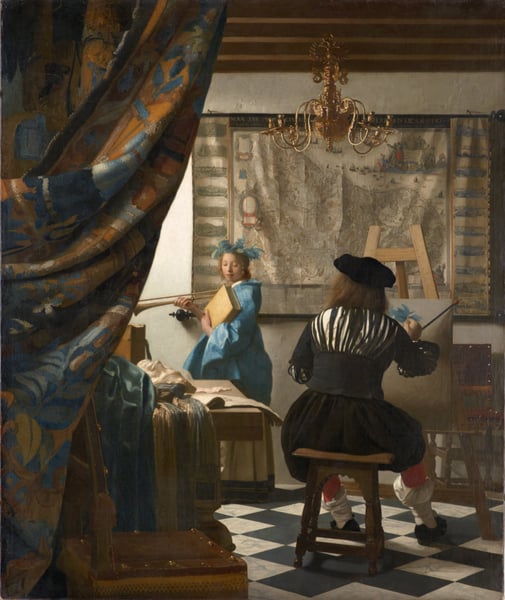
The Art of Painting, also known as The Allegory of Painting, or Painter in his Studio, is a 17th-century oil on canvas painting by Dutch painter Johannes Vermeer. It is owned by the Austrian Republic and is on display in the Kunsthistorisches Museum in Vienna.
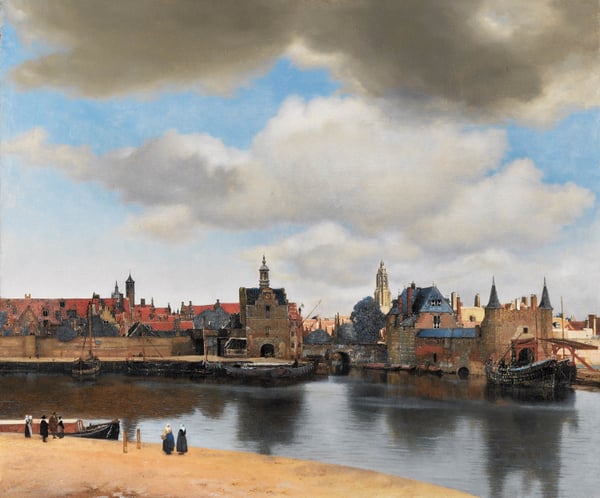
This accurately observed landscape shows the buildings of the artist's hometown of Delft, its roofs and steeples, caught in shadow and light, beneath the gathering clouds in a blue sky. The waters of the Schie Canal shimmer with rippling currents and the reflections of buildings. A number of precisely detailed people gather on the shore in the left, each of them representative of Delft life. Ye...
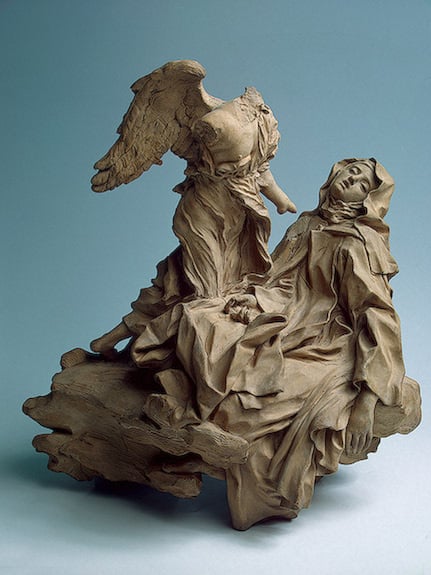
The Ecstasy of Saint Teresa is a sculptural altarpiece group in white marble set in an elevated aedicule in the Cornaro Chapel of the church of Santa Maria della Vittoria in Rome. It was designed and carved by Gian Lorenzo Bernini, the leading sculptor of his day, who also designed the setting of the chapel in marble, stucco and paint. The commission was completed in 1652.
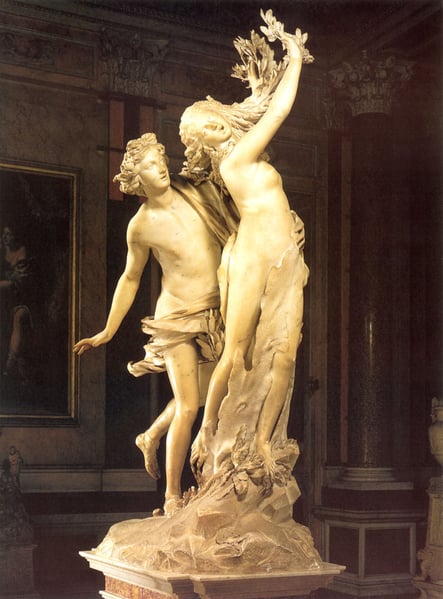
Apollo and Daphne is a marble sculpture by Gian Lorenzo Bernini created in 1625 in the Baroque style. The work depicts the mythological subject of Apollo pursuing Daphne, rendered as a three-dimensional carved composition characteristic of Baroque sculptural practice.
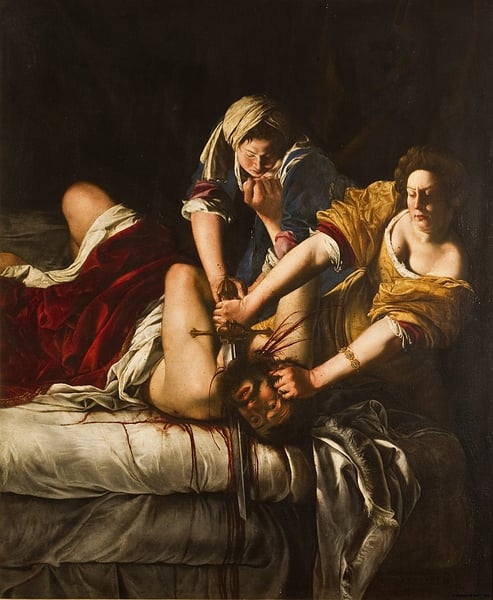
The beheading of Holofernes by Judith is recounted in the deuterocanonical Book of Judith, and is the subject of many paintings and sculptures from the Renaissance and Baroque periods. In the story, Judith, a beautiful Jewish widow, enters the tent of Assyrian general Holofernes under the guise of seduction, as he was preparing to destroy Judith's home, the city of Bethulia. He passes out and i...
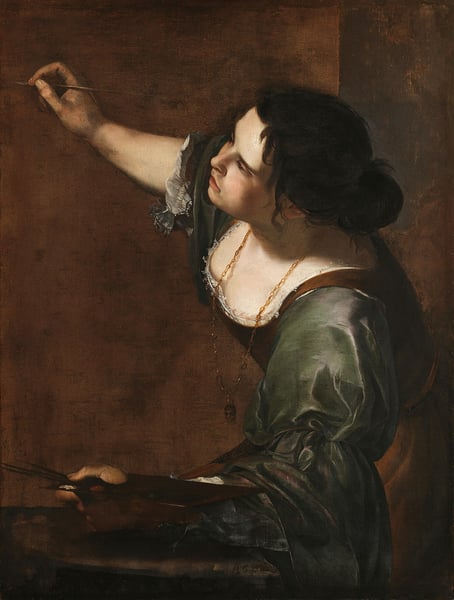
Self-Portrait as the Allegory of Painting, also known as Autoritratto in veste di Pittura or simply La Pittura, was painted by the Italian Baroque artist Artemisia Gentileschi. The oil-on-canvas painting measures 98.6 by 75.2 centimetres and was probably produced during Gentileschi's stay in England between 1638 and 1639. It was in the collection of Charles I and was returned to the Royal Colle...
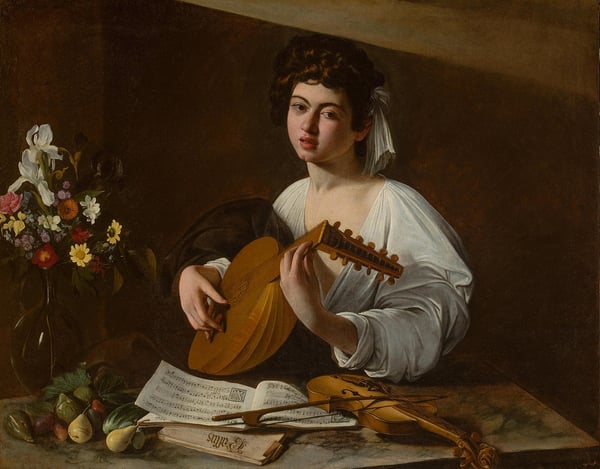
The Lute Player is a Baroque portrait by Caravaggio from 1596, executed in the tenebrism style characteristic of the artist's dramatic use of light and shadow. The work depicts a figure with a lute, rendered with the pronounced chiaroscuro for which Caravaggio is known.
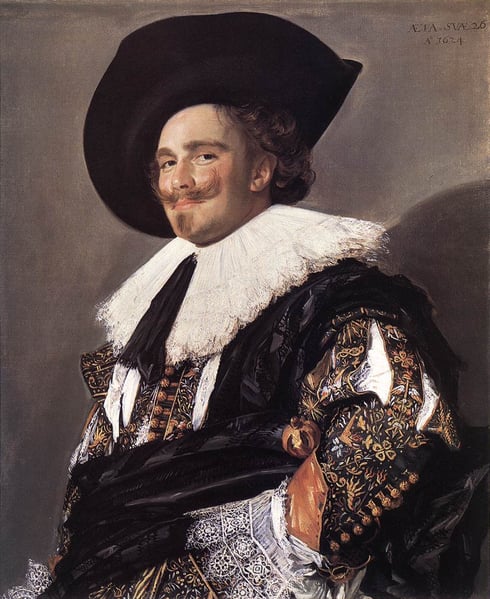
[i]The Laughing Cavalier[/i] stands out among Hals’s works of male portraiture, because of the vibrant coloring and exuberant costume. The treatment and details of the painting indicate that this was a commissioned portrait for a man of high stature. Hals demonstrates his virtuosity and skill through the exquisite execution of the textures and garment details, painting the beautiful gold and si...
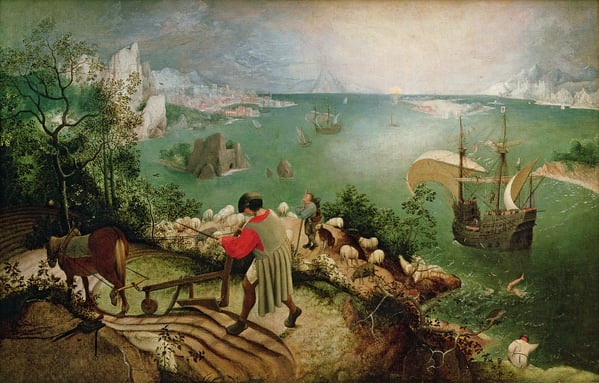
Pieter Bruegel the Elder · Northern RenaissanceArtwork
Pieter Bruegel the Elder · Northern Renaissance · mythological painting
The painting is probably a version of a lost original by Bruegel, probably from the 1560s or soon after. It is in oils whereas Bruegel's other paintings on canvas are in tempera.
Though the world landscape, a type of work with the title subject represented by small figures in the distance, was an established type in Early Netherlandish painting, pioneered by Joachim Patiner, to have a much lar...
El Greco · Mannerism (Late Renaissance) · religious painting
The Penitent Magdalene is a religious painting by El Greco from 1578, executed in the Mannerist style of the late Renaissance. The work depicts the biblical figure of Mary Magdalene in a moment of penitence, rendered with the elongated forms and spiritual intensity characteristic of El Greco's approach to religious subject matter.
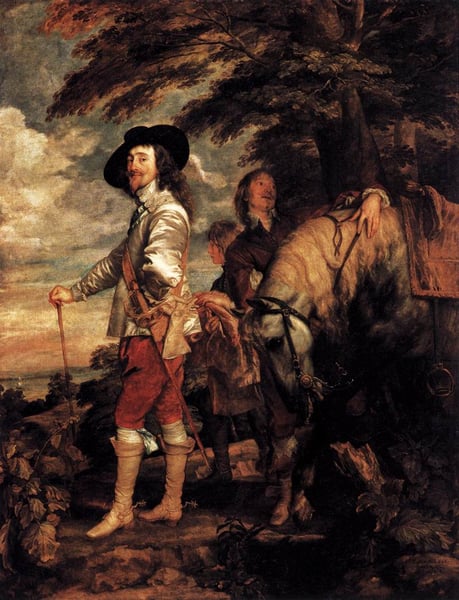
Charles I at the Hunt, also known under its French title Le Roi à la chasse, is an oil-on-canvas portrait of Charles I of England by Anthony van Dyck, dated to c. 1635, and now in the Louvre Museum in Paris. It depicts Charles in civilian clothing and standing next to a horse as if resting on a hunt, in a manner described by the Louvre as a "subtle compromise between gentlemanly nonchalance and...
No comments yet — be the first.