All known paintings by the master of light and domestic scenes
CE
Caleido Editorial TeamJune 9, 202625 min read0 views
Johannes Vermeer (1632–1675) is one of the most celebrated painters in art history, yet his surviving body of work consists of only about 34–36 paintings. Each one is a masterpiece of light, color, and quiet domestic beauty.
Working in Delft during the Dutch Golden Age, Vermeer developed an extraordinary ability to capture the play of light on surfaces — from the luminous pearl earring of his most famous subject to the sunlit rooms where women read letters, pour milk, and make lace. His use of the camera obscura, his signature pointillé technique, and his unmatched sense of composition have made him a timeless icon of Western art.
Use the checklist below to track which Vermeer paintings you've seen in person.
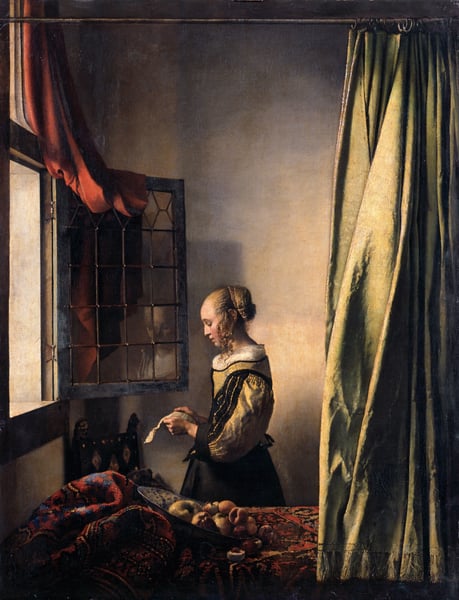
Girl Reading a Letter at an Open Window, also known as Lady reading at an open window, is an oil painting by Dutch Golden Age painter Johannes Vermeer. Completed in approximately 1657–1659, the painting is on display at the Gemäldegalerie in Dresden, which has held it since 1742. For many years, the attribution of the painting—which features a young Dutch woman reading a letter before an open w...
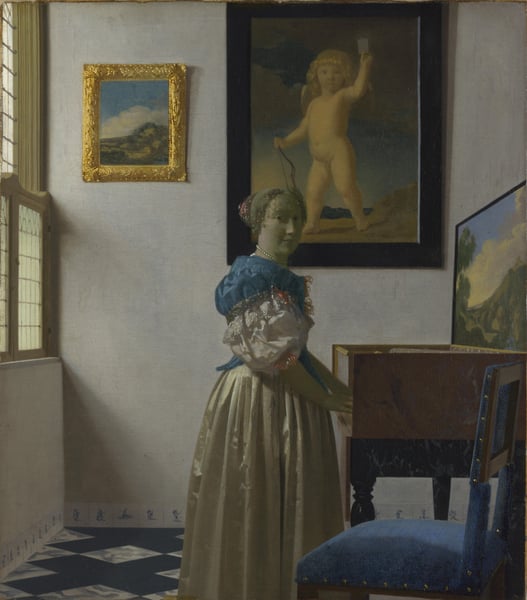
A Lady Standing at a Virginal is a Baroque genre painting by Johannes Vermeer from 1672, depicting a standing female figure at a virginal, a keyboard instrument of the period.
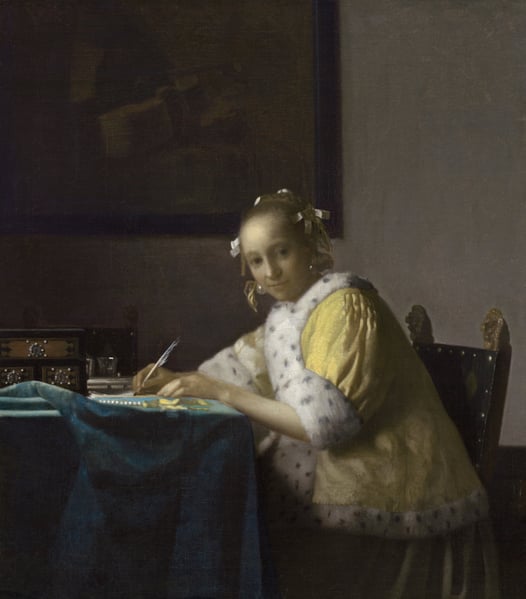
A lady writing is a genre painting in the Baroque style by Johannes Vermeer, created in 1666. The work depicts a woman engaged in the act of writing, capturing a moment of domestic activity characteristic of seventeenth-century Dutch interior scenes.
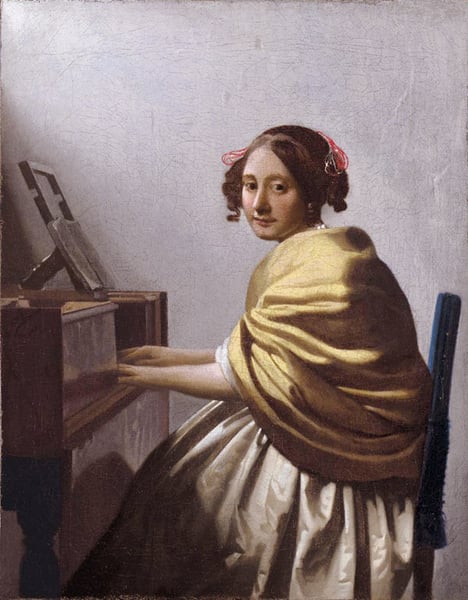
A young woman seated at a virginal depicts a figure at a keyboard instrument, rendered in the Baroque genre-painting tradition by Johannes Vermeer in 1672.
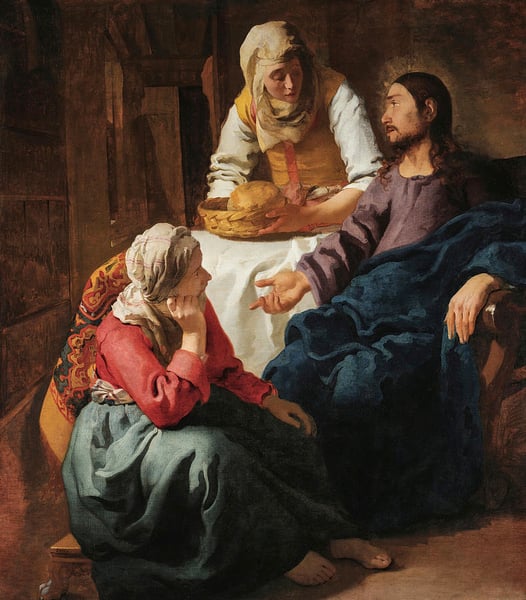
Christ in the House of Martha and Mary is an oil painting finished in 1655 by the Dutch Golden Age painter Johannes Vermeer. It is now in the Scottish National Gallery in Edinburgh. It is the largest painting by Vermeer and one of the very few with an overt religious subject. The story of Christ visiting the household of the two sisters Mary of Bethany and Martha goes back to the New Testament....
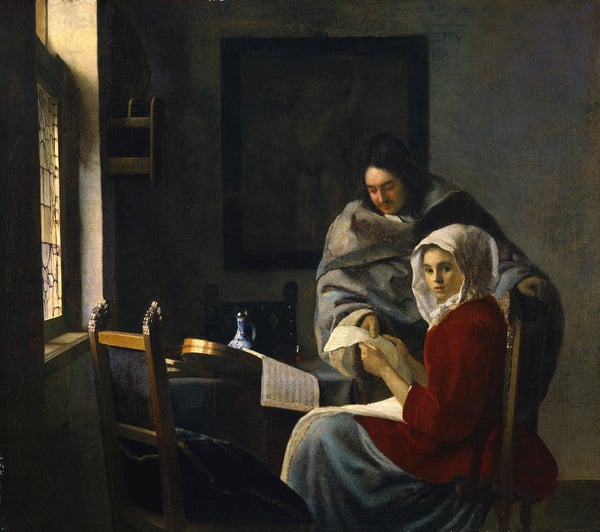
Girl Interrupted at Her Music is a painting by the Dutch artist Johannes Vermeer. It was painted in the baroque style, probably between the years 1658 and 1659, using oil on canvas. Since 1901 it has been in the Frick Collection in New York City.
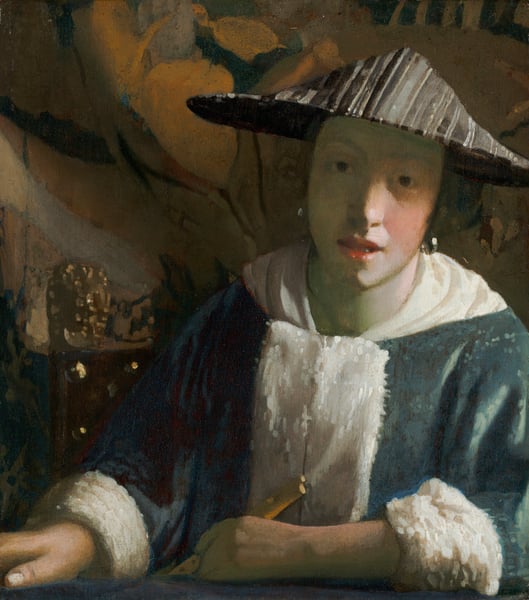
Girl with a Flute is a small painting by Johannes Vermeer. It is currently believed to have probably been painted between 1669 and 1675. It is owned by the National Gallery of Art in Washington, D.C. along with three paintings attributed to Vermeer: Woman Holding a Balance, A Lady Writing a Letter, and Girl with a Red Hat.
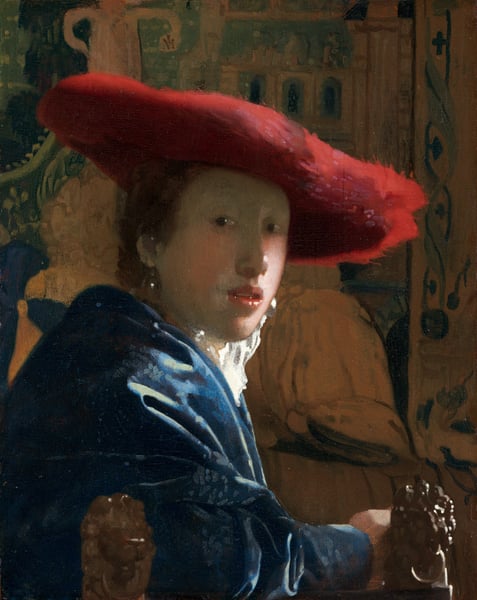
Girl with the Red Hat is a Baroque portrait by Johannes Vermeer, painted in 1667. Classified as a tronie—a type of character study rather than a formal portrait commission—the work depicts a young girl wearing a red hat, exemplifying Vermeer's characteristic attention to light, color, and intimate domestic space.
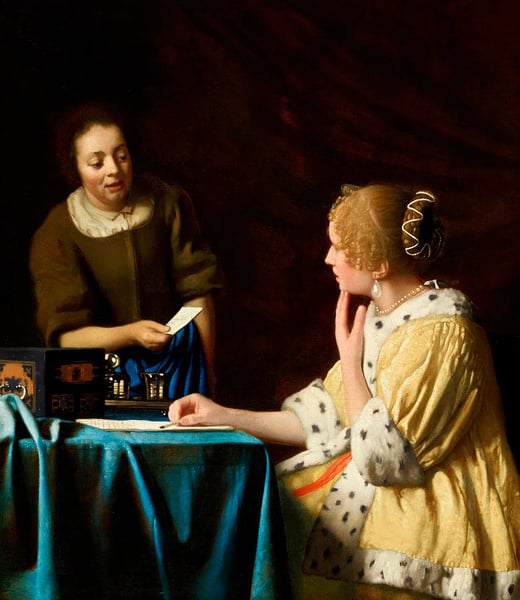
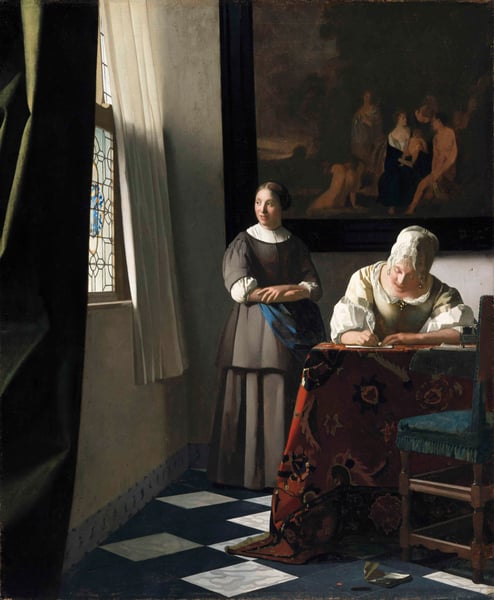
Mistress and Maid (Lady with Her Maidservant Holding a Letter) is a Baroque genre painting by Johannes Vermeer from 1667 that depicts a woman and her attendant, with the maidservant holding a letter.
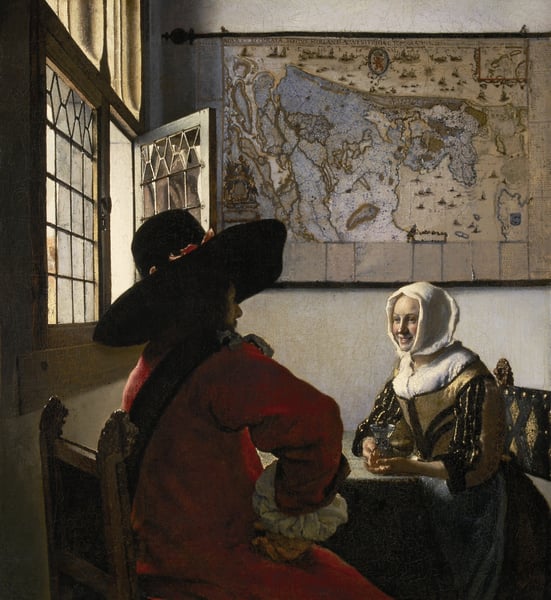
Officer and Laughing Girl, also known as Officer and a Laughing Girl, Officer With a Laughing Girl or, in Dutch, De Soldaat en het Lachende Meisje, is an oil painting on canvas executed ca. 1657 by the Dutch artist Johannes Vermeer. Its dimensions are 50.5 by 46 cm. It belongs to the Frick Collection in New York, along with Girl Interrupted at Her Music and Mistress and Maid.
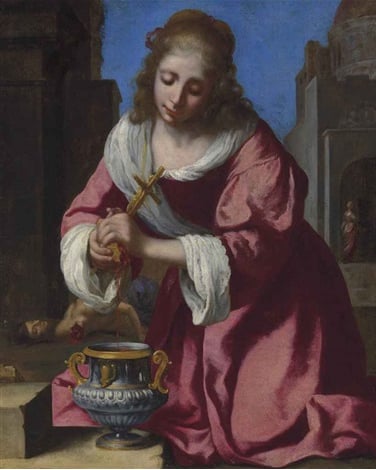
Saint Praxedis is a Baroque religious painting by Johannes Vermeer completed in 1655. The work depicts its titular saint, rendered in the style characteristic of Counter-Reformation devotional imagery of the period.
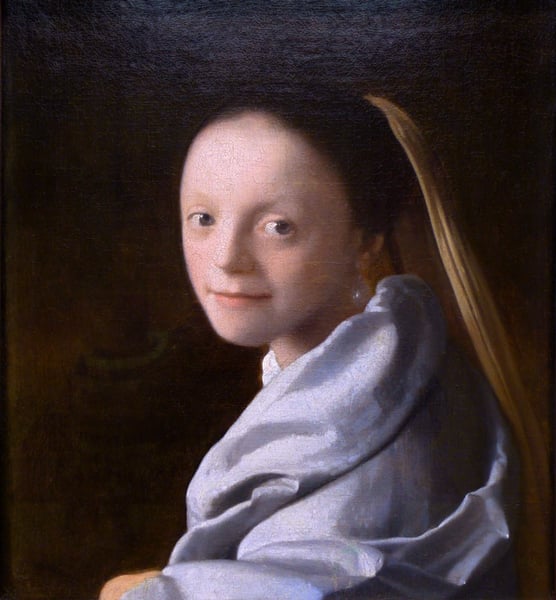
Study of a young woman is a Baroque portrait by Johannes Vermeer from 1667, classified as a tronie—a Dutch Golden Age genre depicting a single figure without named identity or narrative context. The work presents a young woman in the restrained, light-filled manner characteristic of Vermeer's portraiture.
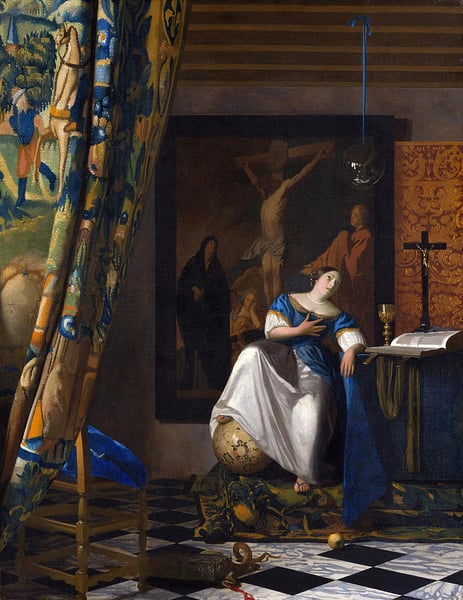
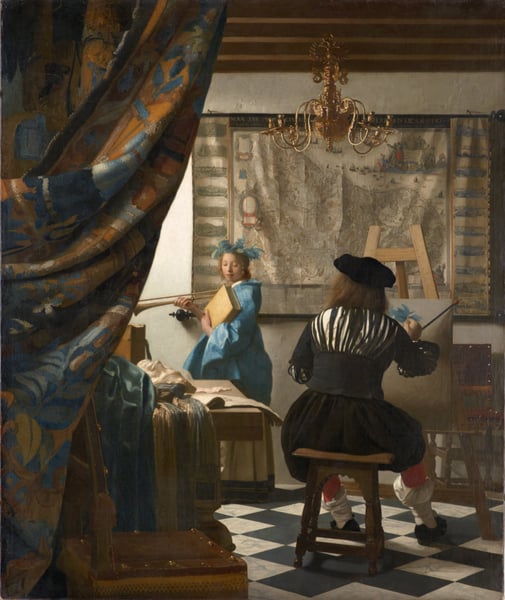
The Art of Painting, also known as The Allegory of Painting, or Painter in his Studio, is a 17th-century oil on canvas painting by Dutch painter Johannes Vermeer. It is owned by the Austrian Republic and is on display in the Kunsthistorisches Museum in Vienna.
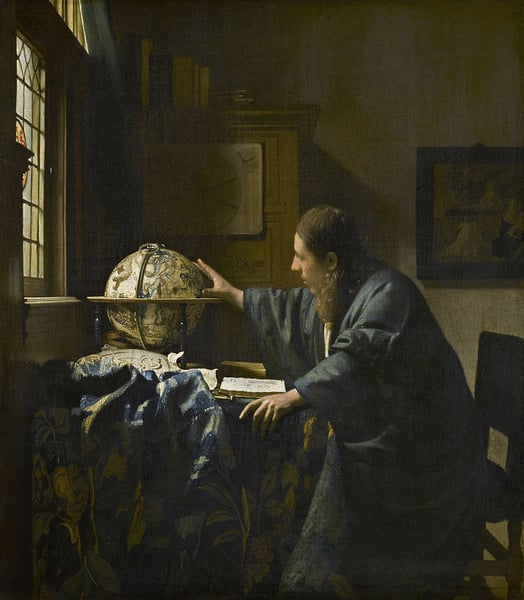
The Astronomer is a genre painting by Johannes Vermeer from 1668, executed in the Baroque style. The work depicts a figure engaged in astronomical observation or study, rendered according to Vermeer's characteristic approach to domestic interior scenes.
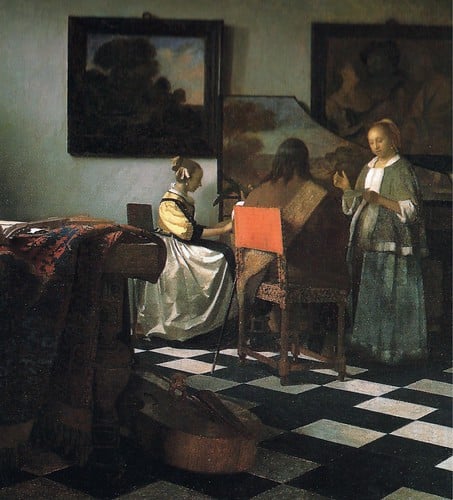
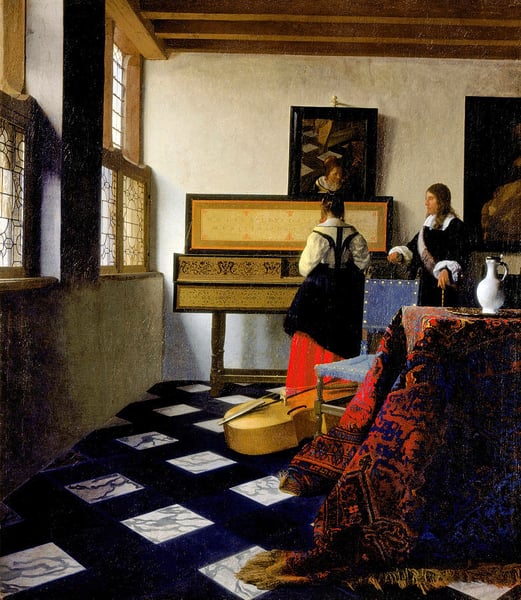
[i]The Concert[/i] is another painting by Vermeer that deals with the theme of music. The three figures form a music ensemble; they play, keep time and sing in harmony. Music functions as a metaphor for harmony in love, and Vermeer’s intimate, quiet scene embodies qualities of moderation and harmony. The setting, furniture and clothes help identify the music players as members of the upper clas...
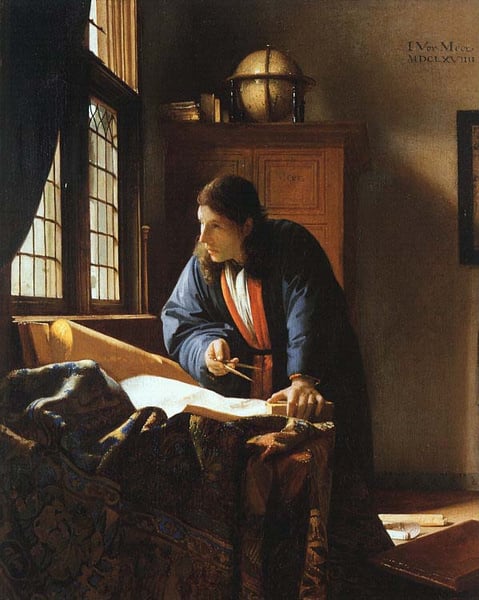
The Geographer is a painting created by Dutch artist Johannes Vermeer in 1668–1669, and is now in the collection of the Städel museum in Frankfurt, Germany. It is closely related to Vermeer's The Astronomer, for instance using the same model in the same dress, and has sometimes been considered a pendant painting to it. A 2017 study indicated that the canvas for the two works came from the same ...
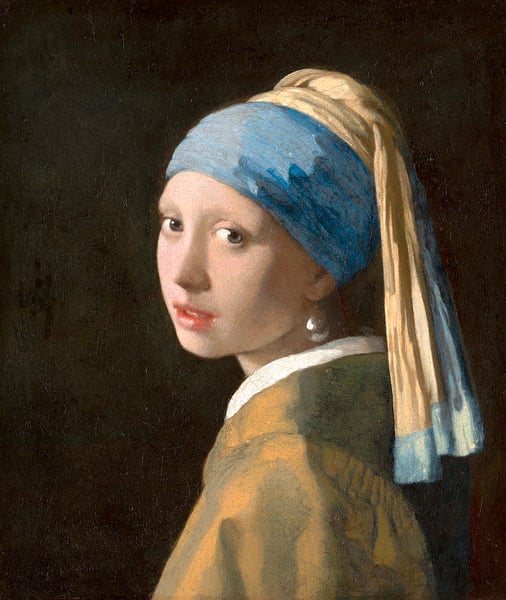
[i]The Girl with a Pearl Earring[/i], Jan Vermeer’s most famous painting, is often called the ‘Dutch Mona Lisa’. The comparison to Leonardo Da Vinci’s [url href=https://www.wikiart.org/en/leonardo-da-vinci/mona-lisa][i]Mona Lisa[/i][/url] (ca. 1504) makes sense: both paintings share an air of mystery, from the model’s enigmatic gaze to the speculations surrounding the identities of the women in...
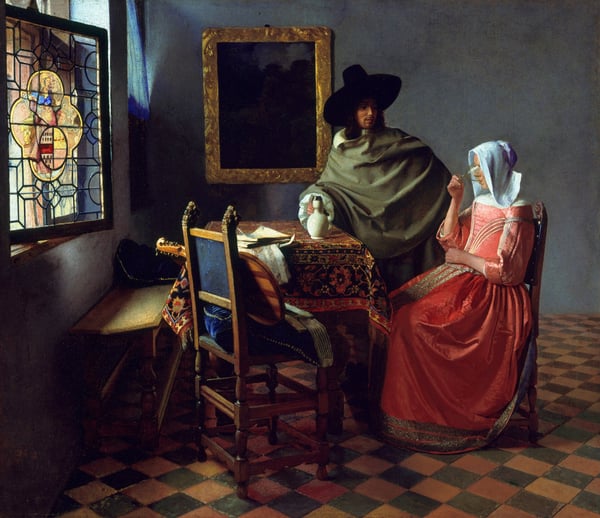
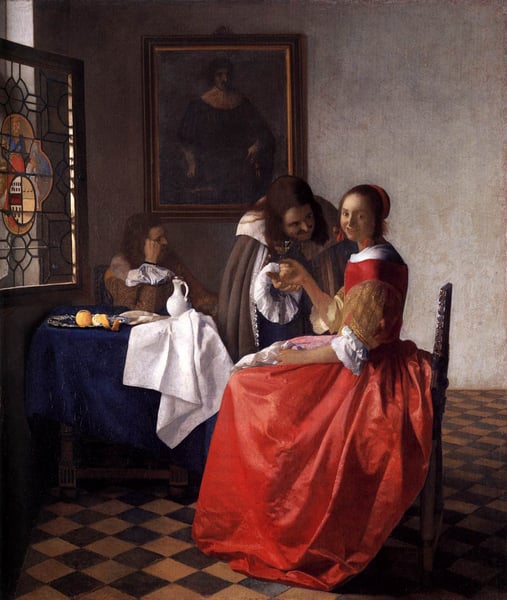
The Glass of Wine is a Baroque genre painting by Johannes Vermeer from 1660. The work depicts figures in an interior setting engaged with the titular object.
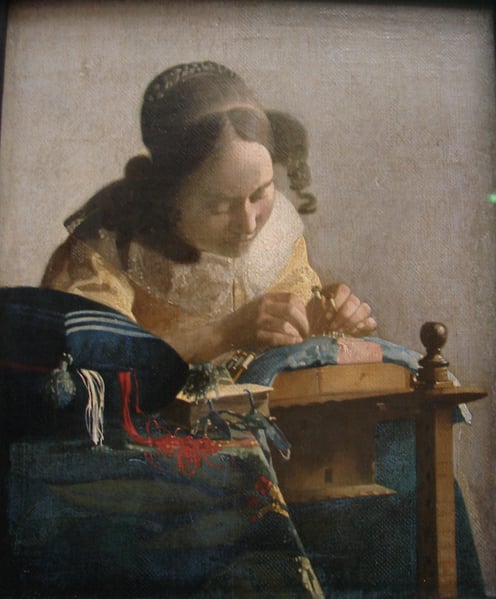
The Lacemaker is a painting by the Dutch artist Johannes Vermeer (1632–1675), completed around 1669–1670 and held in the Louvre, Paris. The work shows a young woman wearing a yellow bodice, holding up a pair of bobbins in her left hand as she carefully places a pin in the pillow on which she is making her bobbin lace.
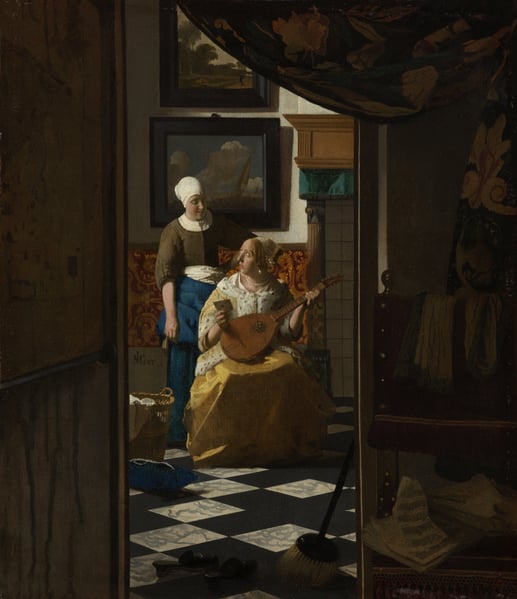
The Love Letter is a 17th-century genre painting by Jan Vermeer. The painting shows a servant maid commenting to her mistress on a letter the woman holds. The painting is in the Rijksmuseum Amsterdam.
Johannes Vermeer's The Procuress (1656) is a Baroque self-portrait in which the artist depicts himself as a figure within the composition, identified by the title's reference to the procuress—a woman who arranges illicit encounters.
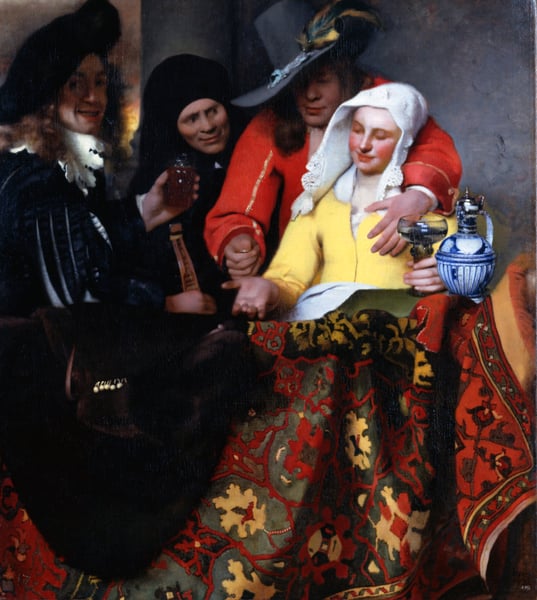
The Procuress is a 1656 oil-on-canvas painting by the then 24-year-old Johannes Vermeer. It can be seen in the Gemäldegalerie Alte Meister in Dresden. It is his first genre painting and shows a scene of contemporary life, an image of mercenary love perhaps in a brothel. It differs from his earlier biblical and mythological scenes. It is one of only three paintings Vermeer signed and dated. In 1...
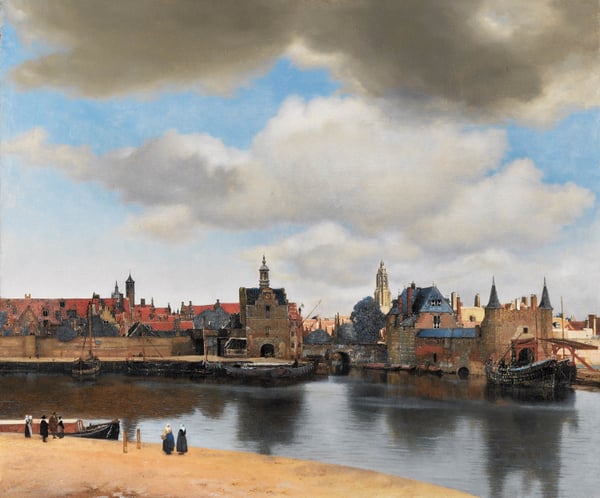
This accurately observed landscape shows the buildings of the artist's hometown of Delft, its roofs and steeples, caught in shadow and light, beneath the gathering clouds in a blue sky. The waters of the Schie Canal shimmer with rippling currents and the reflections of buildings. A number of precisely detailed people gather on the shore in the left, each of them representative of Delft life. Ye...
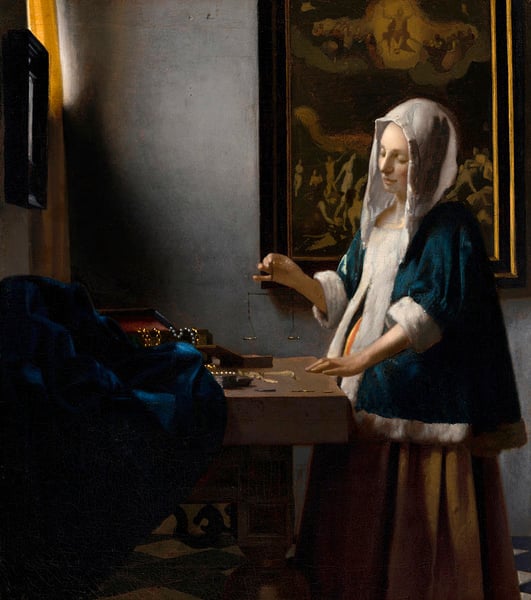
Woman Holding a Balance, also called Woman Testing a Balance, is an oil painting by Dutch Golden Age painter Johannes Vermeer, now in the National Gallery of Art in Washington, DC.
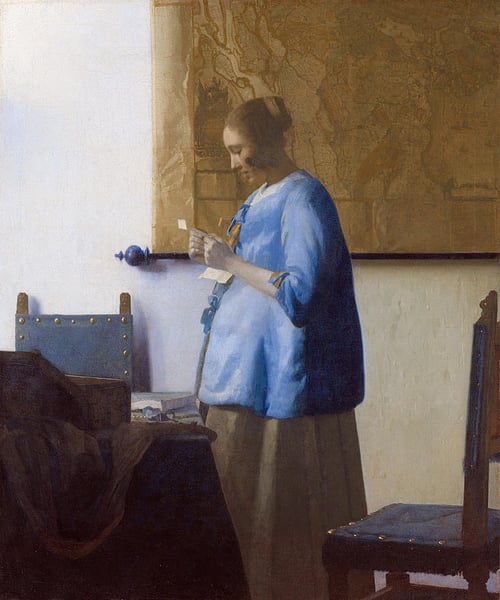
Woman reading a letter depicts a woman in blue, painted by Johannes Vermeer in 1663. The work is a Baroque genre painting that takes as its subject the domestic act of reading correspondence.
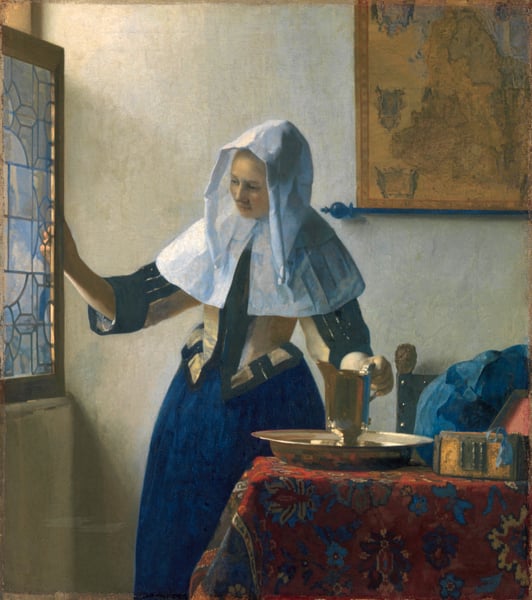
Woman with a Water Jug, also known as Young Woman with a Water Pitcher, is a painting finished between 1660–1662 by the Dutch painter Johannes Vermeer in the Baroque style. It is oil on canvas, 45.7cm × 40.6 cm, and is on display at the Metropolitan Museum of Art, New York.
Lady Writing a Letter with Her Maid is a Baroque genre painting by Johannes Vermeer from 1670, depicting a woman composing a letter while attended by her maid.
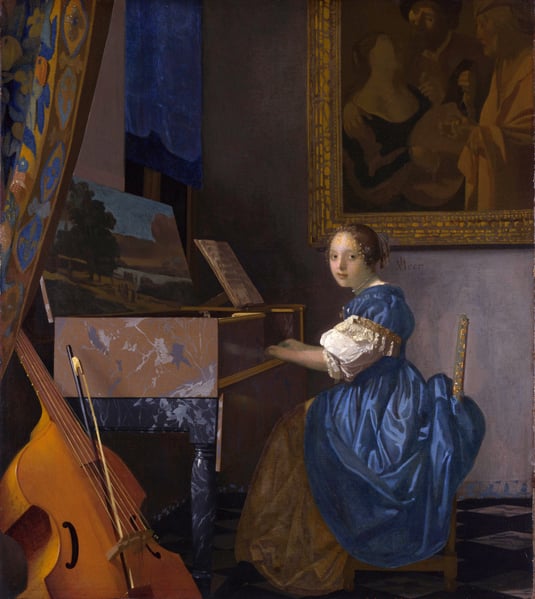
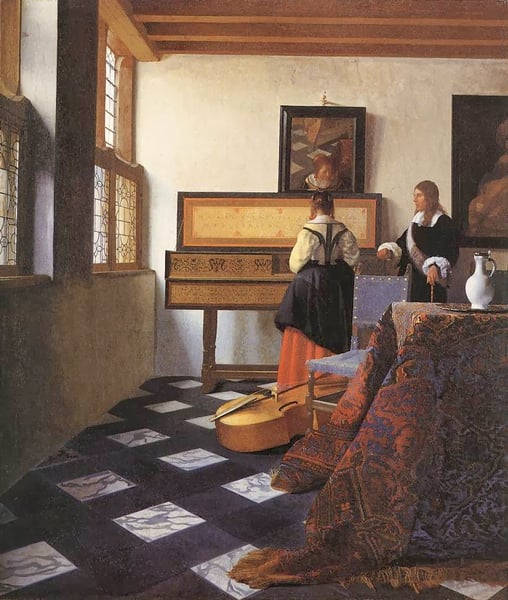
A Lady at the Virginals with a Gentleman is a Baroque genre painting by Johannes Vermeer from 1665, depicting a woman at the virginals (a keyboard instrument) in the presence of a man.
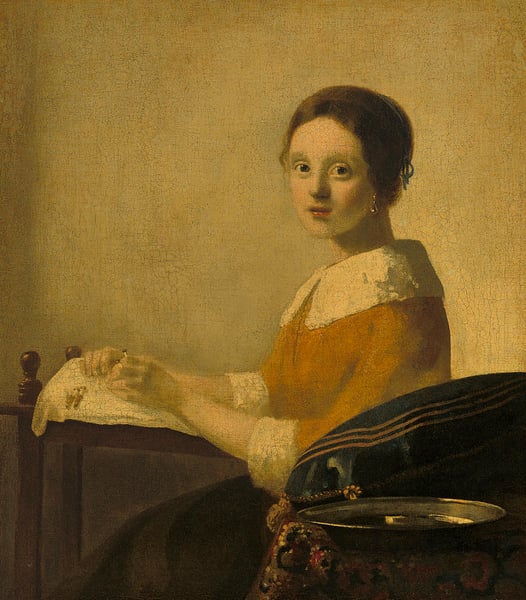
Johannes Vermeer's plaque depicts a Dutch woman engaged in tatting lace, rendered in the Baroque style as a genre painting. The work captures a domestic scene centered on the detailed handwork of lacemaking, a common subject in Dutch art of the period.
The Lacemaker is a painting by the Dutch artist Johannes Vermeer (1632–1675), completed around 1669–1670 and held in the Louvre, Paris. The work shows a young woman wearing a yellow bodice, holding up a pair of bobbins in her left hand as she carefully places a pin in the pillow on which she is making her bobbin lace.
Johannes Vermeer's "Plaque of a Dutch woman tatting lace" is a Baroque genre painting depicting the domestic craft of lace-making. The work captures a moment of everyday labor through Vermeer's characteristic attention to light and domestic interior life.
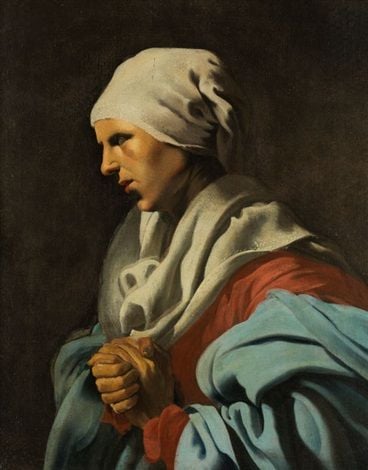
Young woman with hands one over the other is a Baroque portrait by Johannes Vermeer. The work depicts a young woman posed with her hands placed one over the other.
No comments yet — be the first.