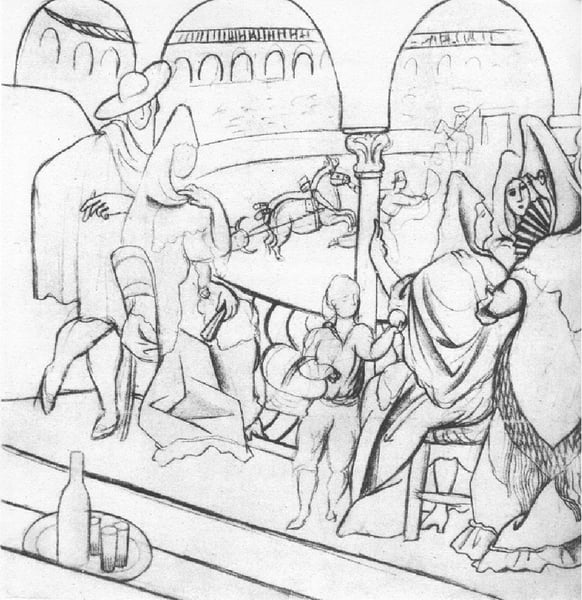
Pablo Picasso · Neoclassicism · sketch and study
"Tricorne" is a neoclassical sketch and study by Pablo Picasso from 1919, depicting the three-cornered hat that gives the work its title.
Les premières œuvres maîtresses qui ont lancé la plus grande carrière de l'art moderne
Pablo Picasso (1881–1973) est sans doute l'artiste le plus influent du XXe siècle. Sa Période bleue (1901–1904) et sa Période rose (1904–1906) représentent les premières phases profondément émotionnelles d'une carrière qui allait s'étendre sur plus de sept décennies et révolutionner l'art occidental.
La Période bleue, marquée par des peintures sombres de pauvreté et de désespoir dans des tons monochromes de bleu, a cédé la place à la plus chaleureuse Période rose avec ses artistes de cirque et ses tendres scènes familiales.
Utilisez la liste pour suivre les peintures de Picasso que vous avez vues en personne.
Pablo Picasso · Neoclassicism · sketch and study
"Tricorne" is a neoclassical sketch and study by Pablo Picasso from 1919, depicting the three-cornered hat that gives the work its title.
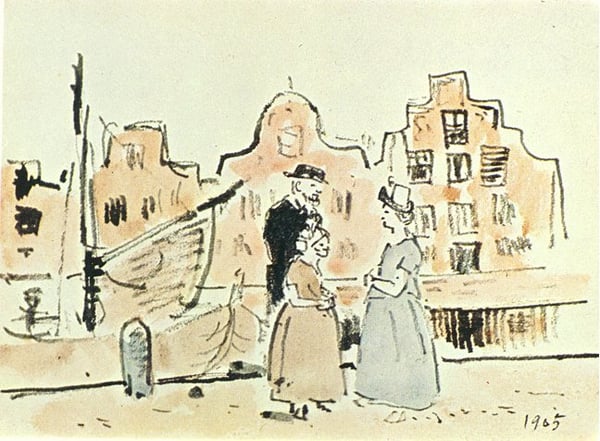
Pablo Picasso · Naïve Art (Primitivism) · genre painting
A bank of canal is a genre painting by Pablo Picasso from 1905, executed in the naïve art style associated with primitivism.
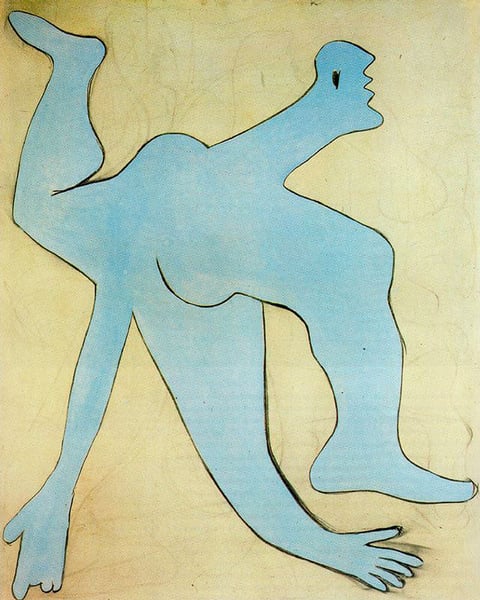
Pablo Picasso · Surrealism · genre painting
A blue acrobat is a surrealist genre painting by Pablo Picasso from 1929.
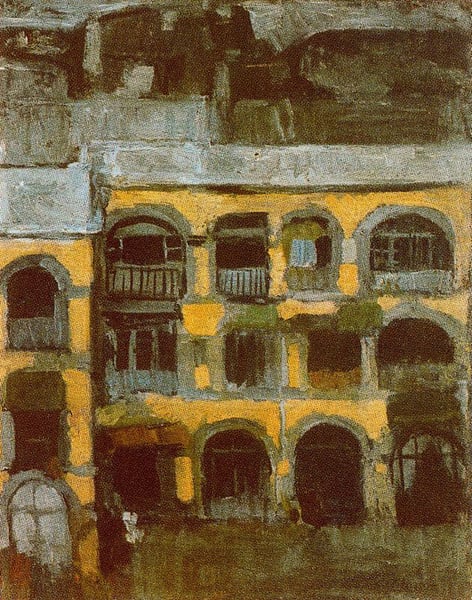
Pablo Picasso · Expressionism · cityscape
A Blue House is a cityscape in the Expressionist style created by Pablo Picasso in 1902, depicting a dwelling rendered in blue tones.
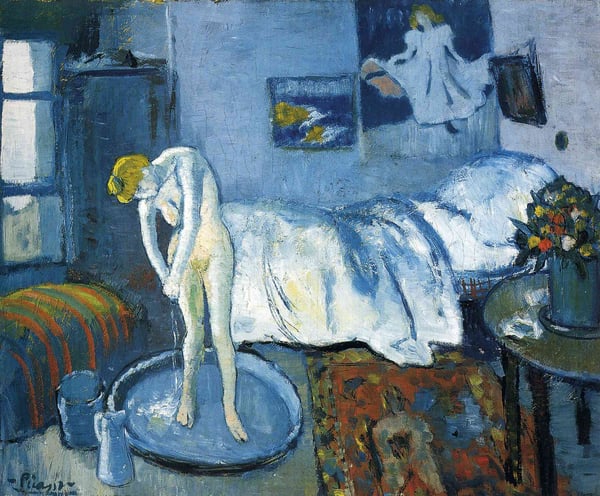
Pablo Picasso · Post-Impressionism · genre painting
A blue room (A tub) is a Post-Impressionist genre painting by Pablo Picasso from 1901, executed in the blue tonality that characterizes his early work during this period.
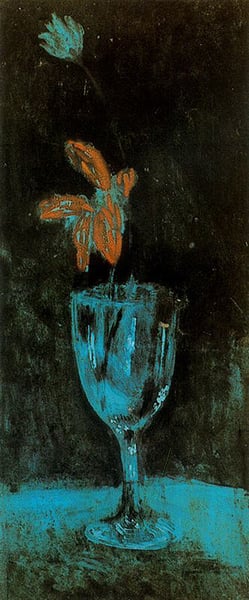
Pablo Picasso · Symbolism · still life
A blue vase by Pablo Picasso, dated 1903, is a still life work in the Symbolist style.
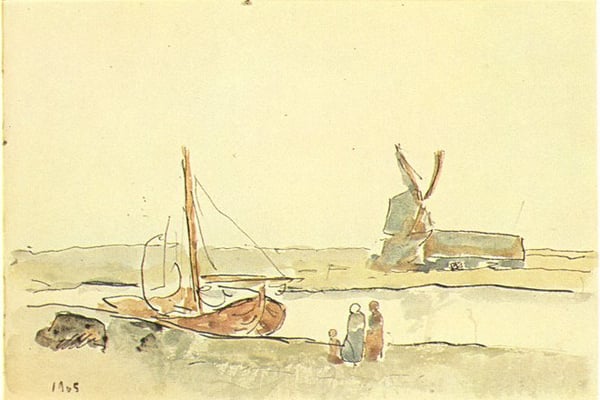
Pablo Picasso · Post-Impressionism · landscape
A boat on the canal is a landscape painting by Pablo Picasso from 1905, created in the Post-Impressionist style.
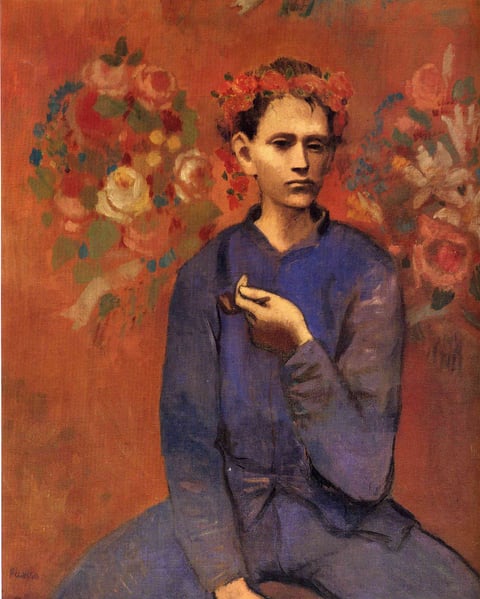
Pablo Picasso · Post-Impressionism · genre painting
A boy with pipe, painted by Pablo Picasso in 1905, is a genre painting in the Post-Impressionist style. The work depicts a boy holding a pipe, rendered according to the formal and coloristic concerns of early twentieth-century modernism.
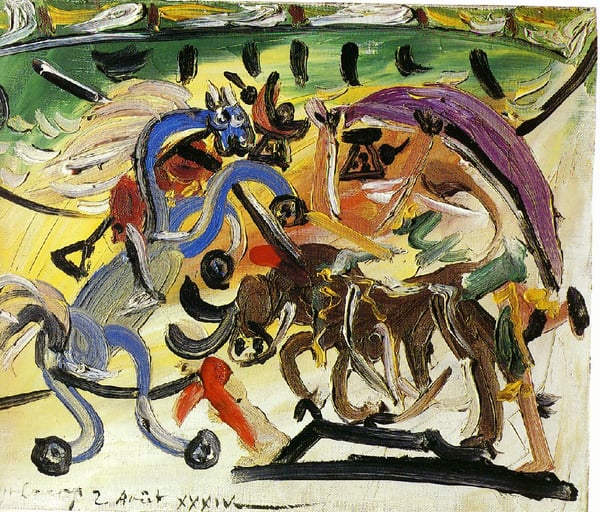
Pablo Picasso · Cubism, Surrealism · genre painting
A Bullfight depicts a bullfighting scene rendered in a hybrid of Cubism and Surrealism by Pablo Picasso in 1934. The work combines the fragmented, faceted approach of Cubism with the dreamlike distortions characteristic of Surrealism, collapsing the visual coherence of the bullfight's dramatic action across flattened planes and dislocated forms.
Pablo Picasso · Surrealism · genre painting
A bullfight, created by Pablo Picasso in 1934, is a surrealist genre painting that takes the traditional subject of bullfighting as its departure point for dreamlike visual exploration.
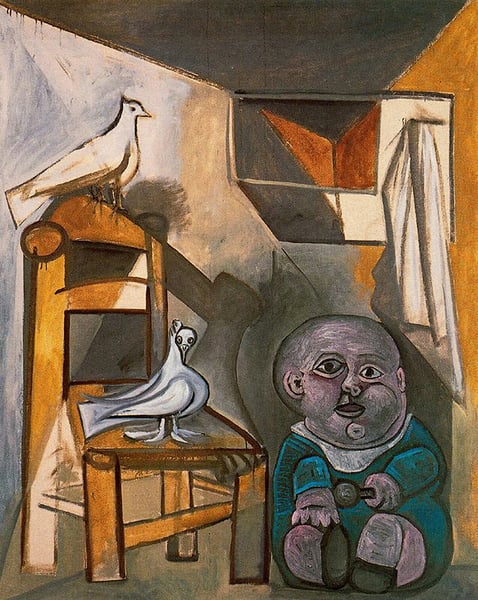
Pablo Picasso · Cubism, Surrealism · genre painting
A child with pigeons is a painting by Pablo Picasso from 1943, executed in a style that combines cubist and surrealist elements. The work depicts its subject—a child and pigeons—within the formal vocabulary of fragmented form and spatial disjunction characteristic of early twentieth-century modernism.
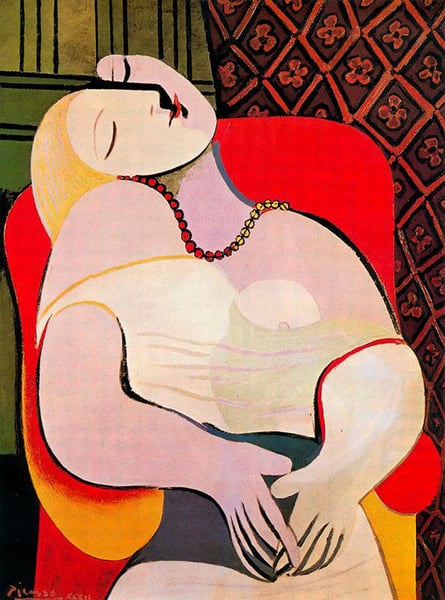
Pablo Picasso · Cubism · portrait
A dream is a cubist portrait by Pablo Picasso from 1932, in which the artist fractures and recombines facial features according to the formal principles of his mature cubist style.
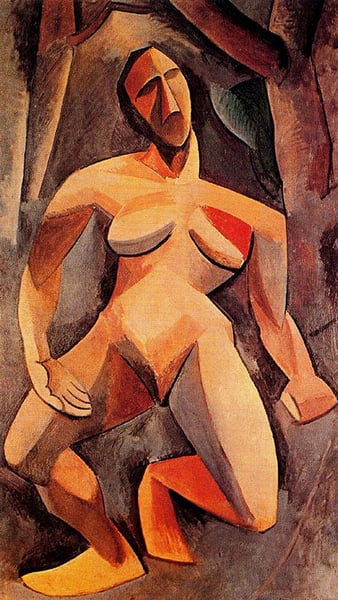
Pablo Picasso · Cubism · nude painting (nu)
A driade (Nude in the forest) is a 1908 cubist painting by Pablo Picasso depicting a nude figure in a forest setting. The work exemplifies Picasso's early engagement with cubist fragmentation and geometric restructuring of form during a period when he was moving away from his earlier representational approaches.
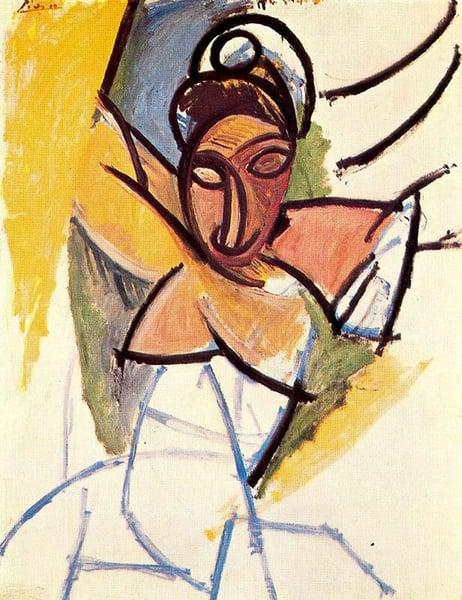
Pablo Picasso · Cubism, Naïve Art (Primitivism) · sketch and study
A girl from Avignon is a sketch and study by Pablo Picasso from 1907, executed in the cubist and naïve art traditions. The work depicts a girl associated with Avignon, rendered through the fragmented forms and simplified, direct approach characteristic of primitivism and early cubism.
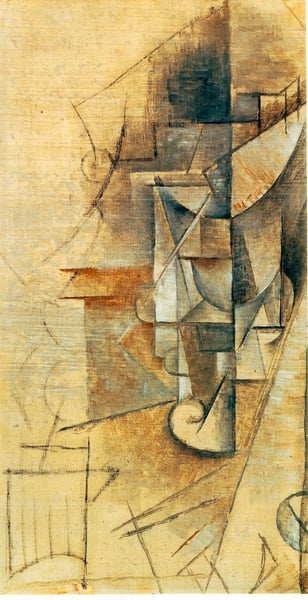
Pablo Picasso · Analytical Cubism · still life
A Glass is a still life painting by Pablo Picasso from 1911, executed in the Analytical Cubism style. The work depicts a glass rendered through the fractured planes and fragmented perspectives characteristic of early Cubism, where the object is deconstructed into its constituent geometric and spatial elements rather than presented as a unified, coherent form
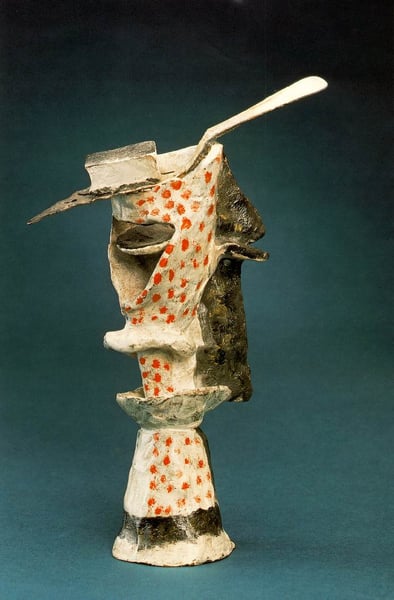
Pablo Picasso · Cubism · sculpture
A glass of absinthe is a cubist sculpture by Pablo Picasso from 1914. The work applies cubism's fragmented formal vocabulary to the subject named in its title.
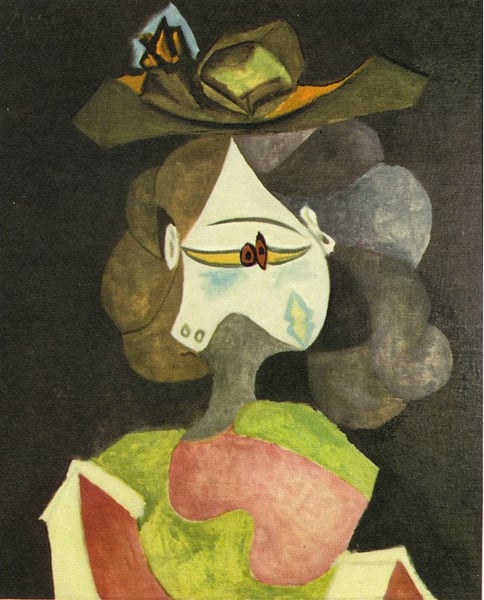
Pablo Picasso · Surrealism · portrait
A hat with flowers is a surrealist portrait by Pablo Picasso from 1940, in which the titular hat adorned with flowers serves as the work's subject. The painting exemplifies Surrealism's departure from conventional representation, treating an ordinary object as the focal point of portraiture.
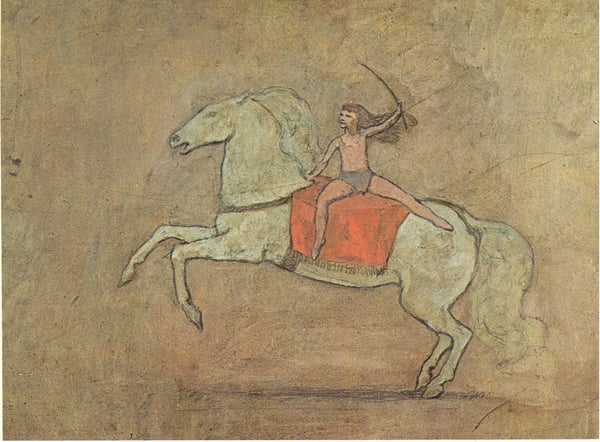
Pablo Picasso · Naïve Art (Primitivism) · genre painting
A Horsewoman, painted by Pablo Picasso in 1905, is a genre painting executed in the naïve art style. The work depicts a horsewoman as its subject, rendered in the primitivist aesthetic that characterizes Picasso's approach during this period.
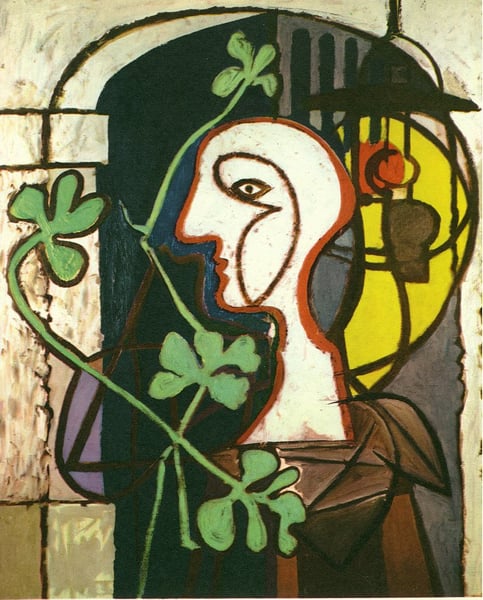
Pablo Picasso · Surrealism · portrait
A lamp is a Surrealist work by Pablo Picasso from 1931, classified as a portrait in the genre.
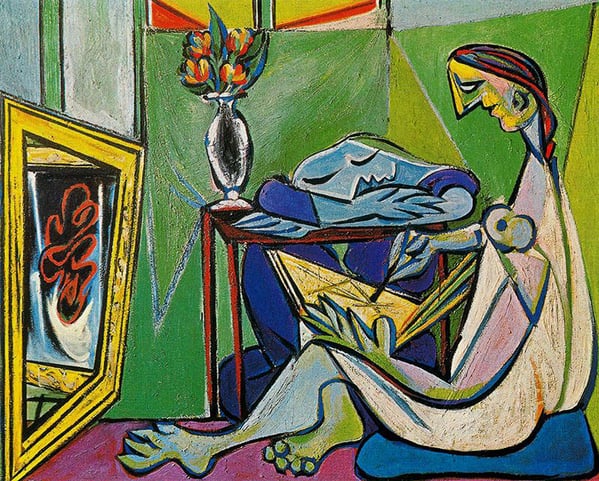
Pablo Picasso · Cubism, Surrealism · nude painting (nu)
A muse is a nude painting by Pablo Picasso from 1935, made during a period when the artist worked between cubist and surrealist approaches. The work combines fragmented forms and dreamlike spatial disruptions characteristic of both movements.
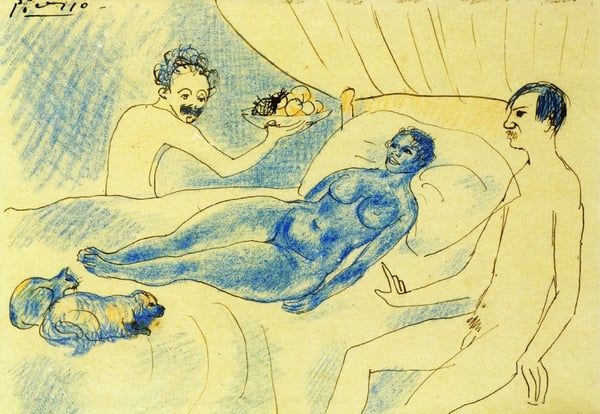
Pablo Picasso · Naïve Art (Primitivism) · genre painting
A Parody of Manet's Olympia with Junyer and Picasso is a genre painting by Pablo Picasso from 1902, executed in the Naïve Art (Primitivism) style. The work takes up Manet's Olympia as its compositional reference, introducing the figures of Junyer and Picasso into the scene.
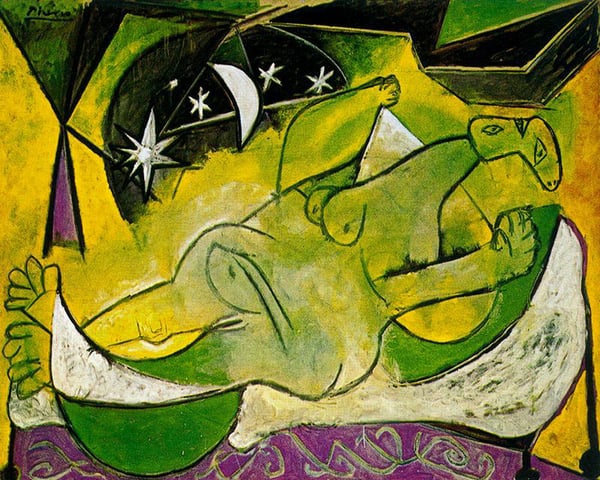
Pablo Picasso · Cubism, Surrealism · nude painting (nu)
A reclining female nude by Pablo Picasso from 1936 combines cubist and surrealist approaches to depict the human form. The work belongs to the tradition of the academic nu (nude painting) while employing the fragmented, abstracted vocabulary characteristic of both cubism and surrealism during that period.
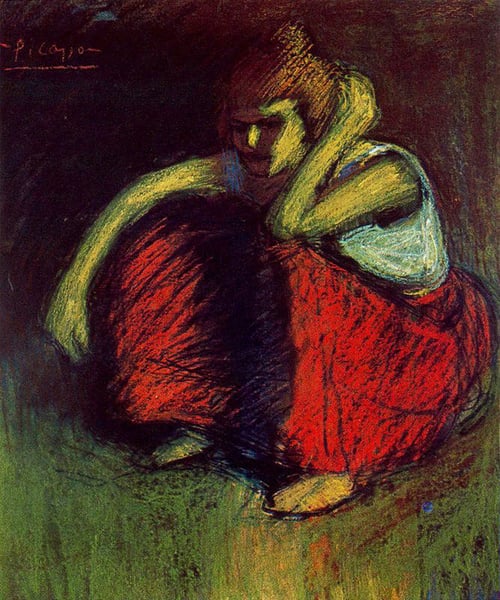
Pablo Picasso · Expressionism · genre painting
A red skirt is a genre painting by Pablo Picasso from 1901, executed in the Expressionist style. The work's title identifies its primary subject, a red skirt, rendered within the conventions of early twentieth-century Expressionism.
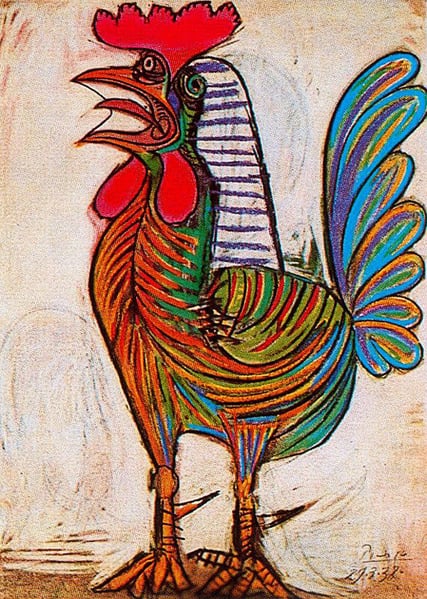
Pablo Picasso · Naïve Art (Primitivism) · animal painting
A rooster is an animal painting by Pablo Picasso from 1938, executed in the naïve art style associated with primitivism.
Pablo Picasso · Naïve Art (Primitivism) · animal painting
A rooster, painted by Pablo Picasso in 1938, is executed in the Naïve Art style characteristic of Primitivism. The work depicts an animal subject rendered in this mode.
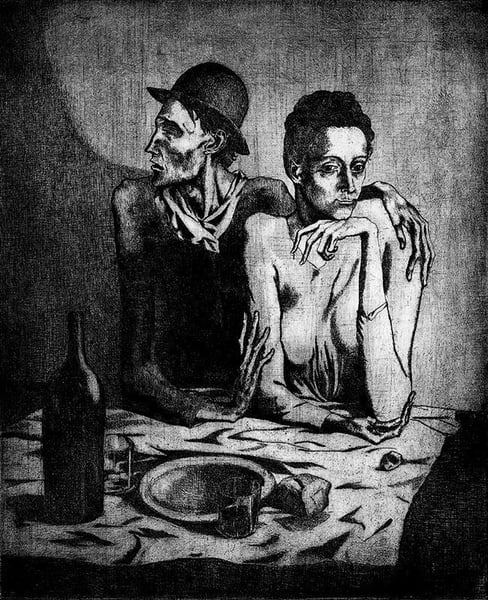
Pablo Picasso · Expressionism · genre painting
The Frugal Repast is a genre painting by Pablo Picasso created in 1904 in the Expressionist style. The work depicts figures at a meal, rendered in a manner characteristic of early twentieth-century Expressionism.
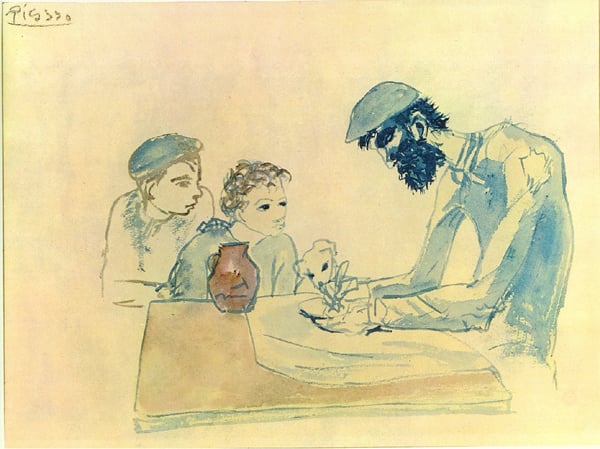
Pablo Picasso · Naïve Art (Primitivism) · genre painting
A simple meal by Pablo Picasso (1904) is a genre painting executed in the naïve art style. The work depicts an everyday domestic scene rendered in the primitivist mode characteristic of Picasso's early exploration of non-naturalistic representation.
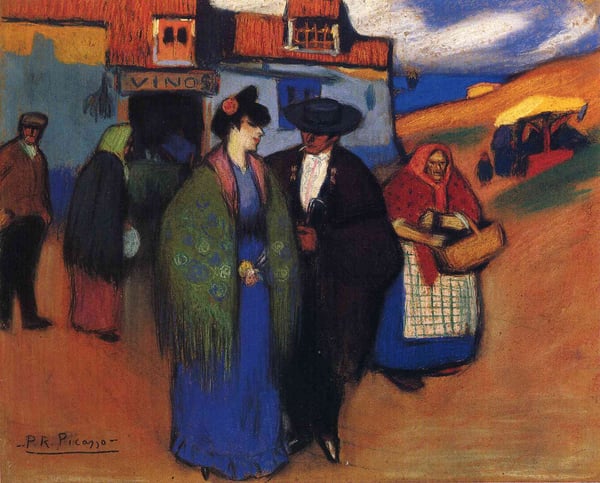
Pablo Picasso · Post-Impressionism · genre painting
A Spanish Couple in Front of an Inn is a genre painting by Pablo Picasso from 1900, executed in the Post-Impressionist style. The work depicts a couple positioned before an inn, rendered in Picasso's early modernist approach to everyday subject matter.
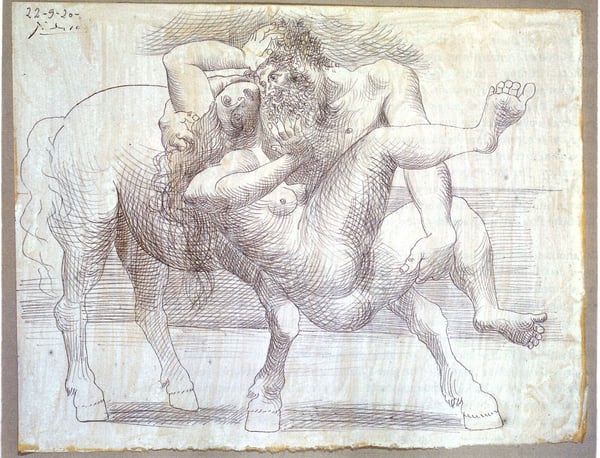
Pablo Picasso · Neoclassicism · mythological painting
Abduction (Nessus and Deianeira) is a neoclassical mythological painting by Pablo Picasso from 1920, depicting the classical subject of the centaur Nessus abducting the mortal woman Deianeira.
Pablo Picasso · Neoclassicism · mythological painting
Picasso's Abduction (Nessus and Deianeira) is a neoclassical painting from 1920 depicting the mythological scene of Nessus abducting Deianeira. The work treats the violent encounter between the centaur and the mortal woman within the formal vocabulary of neoclassical painting.
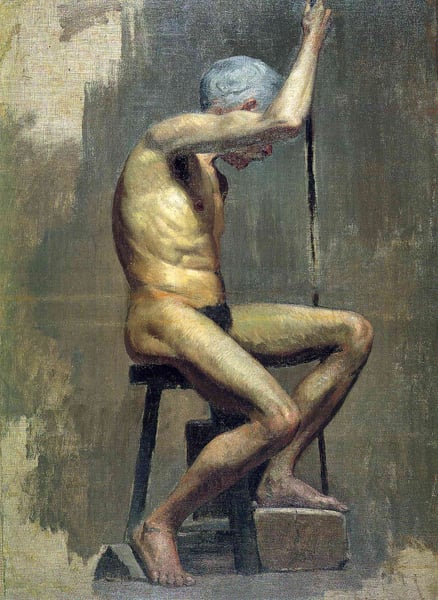
Pablo Picasso · Realism · nude painting (nu)
Academical study is a realist nude painting by Pablo Picasso from 1895.
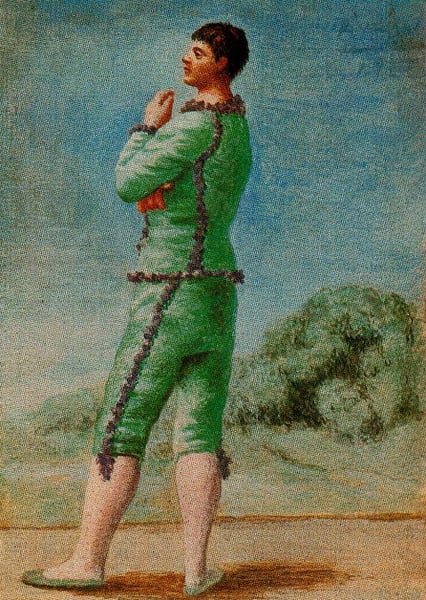
Pablo Picasso · Neoclassicism · portrait
Une acrobatie, est un mouvement spectaculaire et difficile à réaliser, qui peut demander de la force, de l'équilibre, de l'agilité ou de la souplesse.
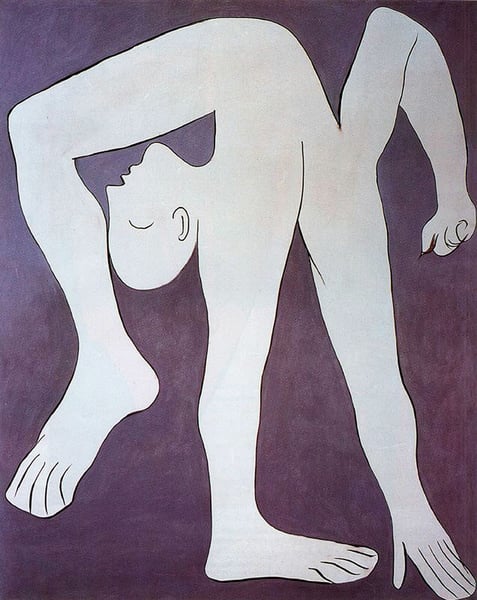
Pablo Picasso · Surrealism · genre painting
Une acrobatie, est un mouvement spectaculaire et difficile à réaliser, qui peut demander de la force, de l'équilibre, de l'agilité ou de la souplesse.
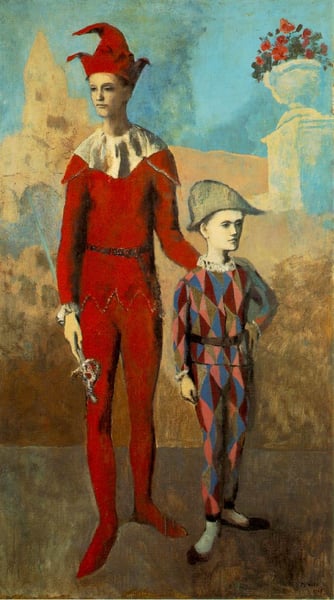
Pablo Picasso · Post-Impressionism · genre painting
Acrobat and Young Harlequin is a genre painting by Pablo Picasso from 1905, created during his Post-Impressionist period. The work depicts two figures—an acrobat and a young harlequin—rendered in the artist's characteristic style of that era.
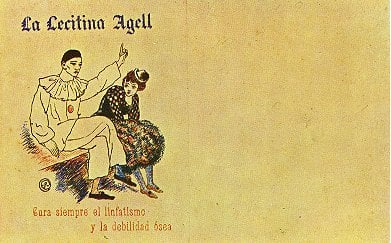
Pablo Picasso · Art Nouveau (Modern) · advertisement
Picasso's 1902 advertisement for Lecitina Agell is an Art Nouveau design promoting a commercial product. The work exemplifies the style's characteristic integration of commercial messaging with decorative modernist aesthetics typical of early twentieth-century advertising.
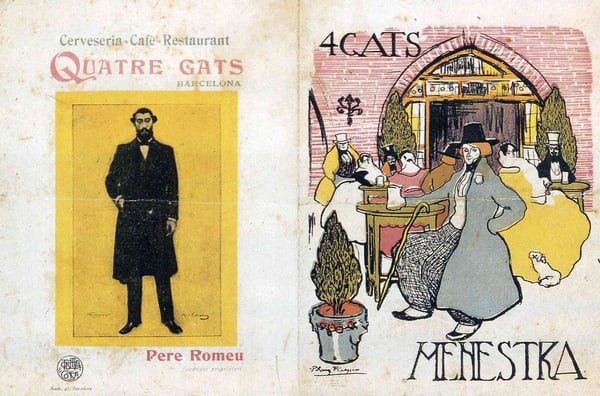
Pablo Picasso · Art Nouveau (Modern) · advertisement
Advertisement for tavern "Four cats" is an Art Nouveau advertisement by Pablo Picasso from 1897 for an establishment of that name.
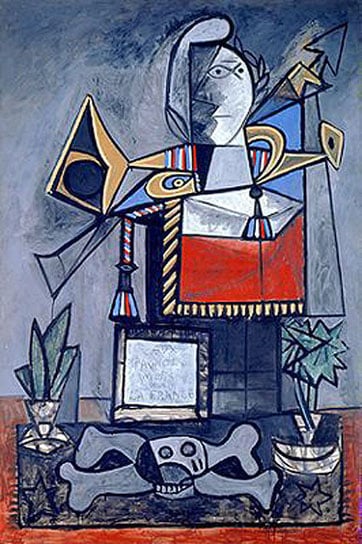
Pablo Picasso · Cubism, Surrealism · genre painting
Algerian Women is a 1955 painting by Pablo Picasso rendered in the combined styles of Cubism and Surrealism. The work is a genre painting depicting women.
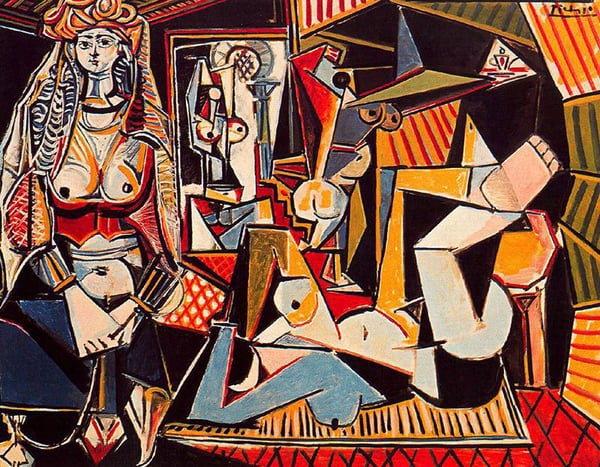
Pablo Picasso · Cubism · genre painting
Algerian Women is a cubist genre painting by Pablo Picasso from 1955, depicting the work's titular subject through the fragmented, geometric forms characteristic of the style.
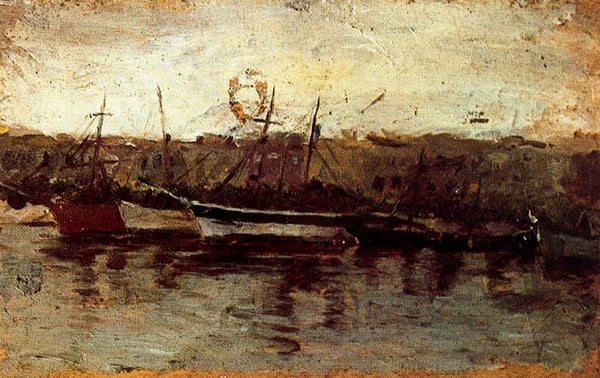
Pablo Picasso · Impressionism · cityscape
Picasso's Alicante, view of boats (1895) is an Impressionist cityscape depicting boats, executed in the artist's early period before his development of Cubism.
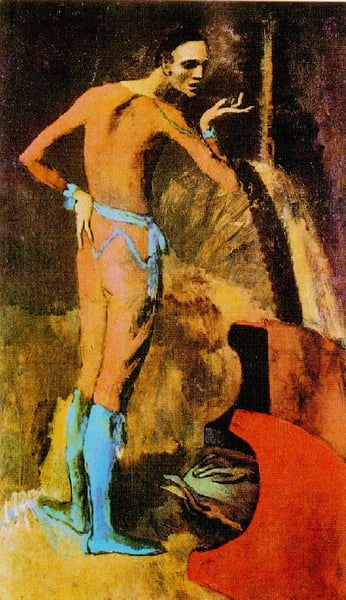
Pablo Picasso · Expressionism · genre painting
An actor by Pablo Picasso, created in 1904, is an expressionist genre painting that depicts a performer. The work dates to Picasso's early career and employs the distorted forms and emotional intensity characteristic of expressionist style.
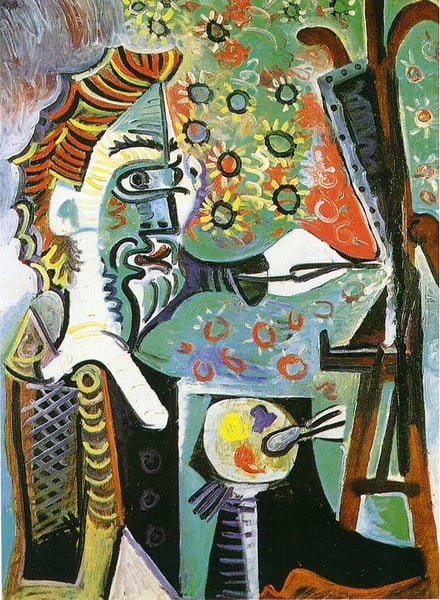
Pablo Picasso · Surrealism · portrait
An Artist is a portrait by Pablo Picasso from 1963, executed in the Surrealist style.
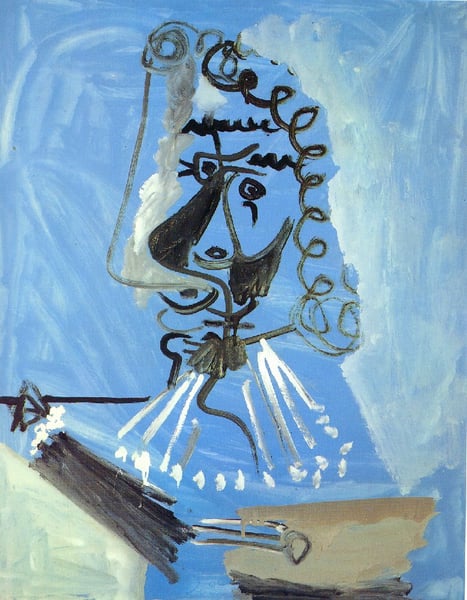
Pablo Picasso · Surrealism · portrait
An artist by Pablo Picasso, painted in 1967, is a surrealist portrait.
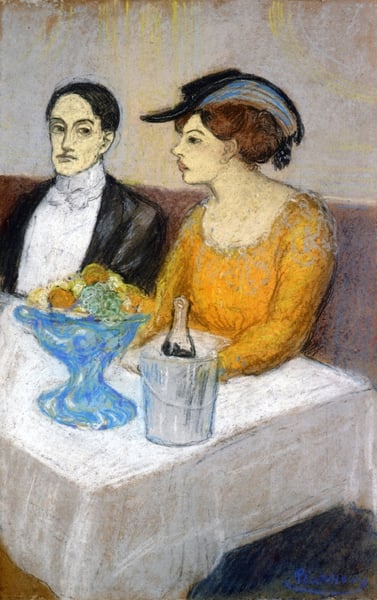
Pablo Picasso · Post-Impressionism · portrait
Angel Fernandez de Soto and his Friend is a portrait by Pablo Picasso from 1903, executed in the Post-Impressionist style. The work depicts two figures as named in its title.
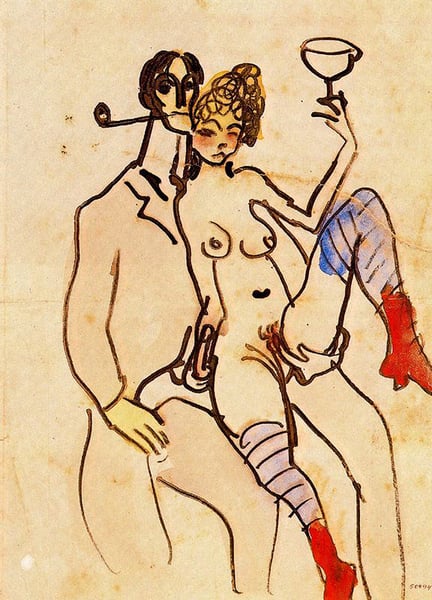
Pablo Picasso · Expressionism · nude painting (nu)
Angel Fernandez de Soto with Woman is a 1903 expressionist nude painting by Pablo Picasso. The work depicts its titular subjects in the idiom of early expressionism, a style that prioritizes emotional intensity and distorted form over representational accuracy.
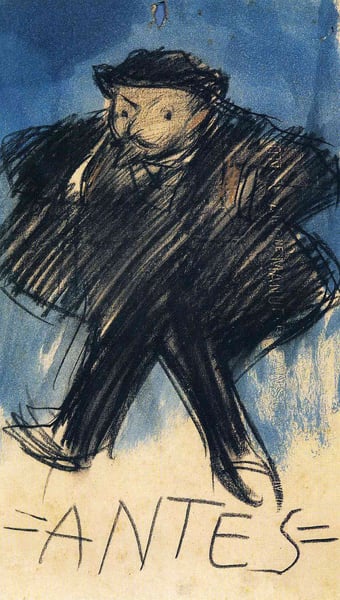
Pablo Picasso · Expressionism · portrait
Antes is a portrait by Pablo Picasso from 1906, executed in the Expressionist style.
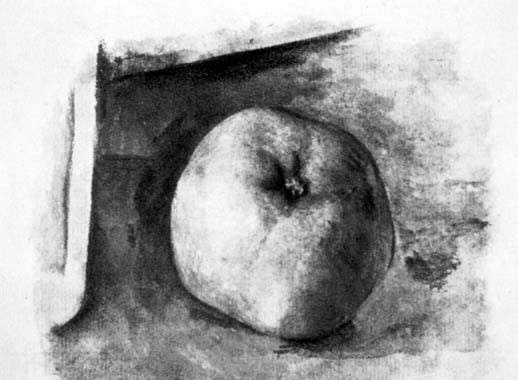
Pablo Picasso · Realism · still life
La pomme est un fruit comestible produit par les pommiers. Les pommiers sont cultivés à travers le monde et représentent l'espèce la plus cultivée du genre Malus. Cet arbre est originaire d'Asie centrale, où son ancêtre sauvage, le Malus sieversii, peut encore être trouvé de nos jours. Les pommes sont cultivées depuis des milliers d'années en Asie et en Europe et ont été importées en Amérique d...
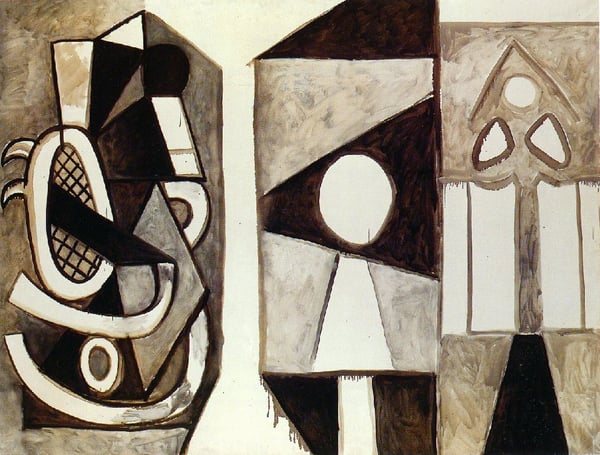
Pablo Picasso · Surrealism · design
Armchair 'California' is a surrealist design by Pablo Picasso from 1956.
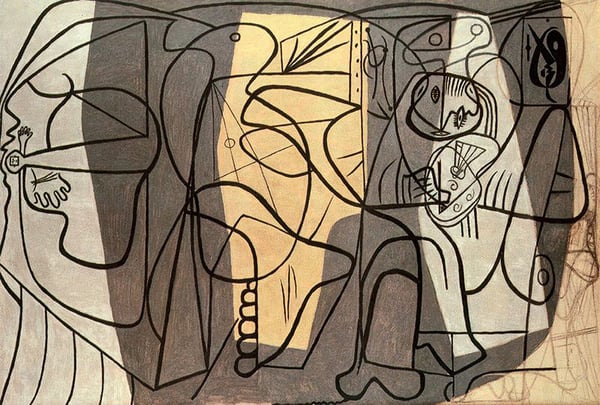
Pablo Picasso · Surrealism · genre painting
Artist and his Model is a 1926 painting by Pablo Picasso in the Surrealist style, depicting the titular figures through the conventions of genre painting.
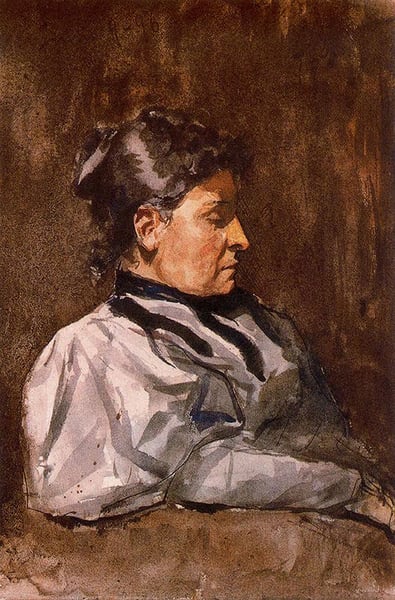
Pablo Picasso · Realism · portrait
Artist's Mother is a portrait by Pablo Picasso from 1896, executed in the Realist style. The work depicts the artist's mother as its subject.
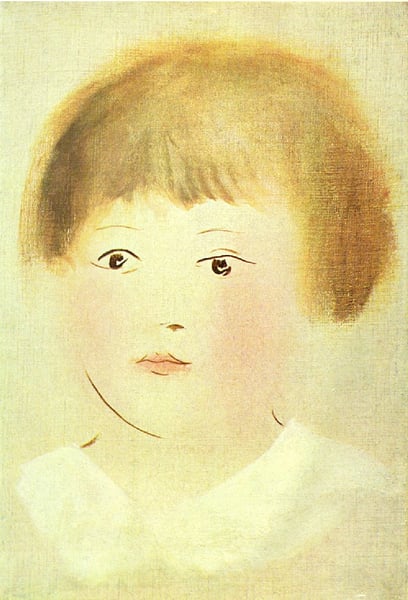
Pablo Picasso · Expressionism · portrait
Pablo Picasso's 1925 Artist's son is an Expressionist portrait. The work depicts the artist's son and exemplifies Picasso's engagement with portraiture during this period.
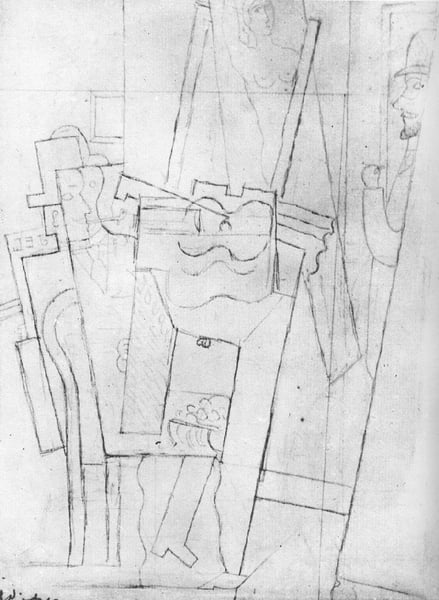
Pablo Picasso · Cubism · sketch and study
L'atelier d'artiste est le lieu de travail et, accessoirement, le logement d'un artiste. Peut s'appeler un « studio ».
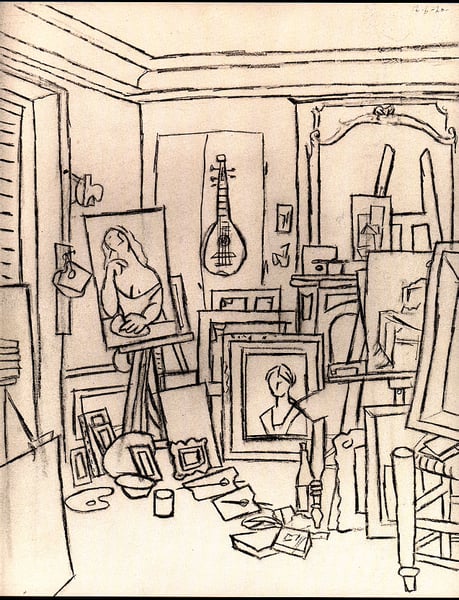
Pablo Picasso · Cubism · interior
Picasso's 1920 work depicts an interior space rendered in the cubist style, fragmenting the studio setting into geometric planes and multiple viewpoints characteristic of the movement.
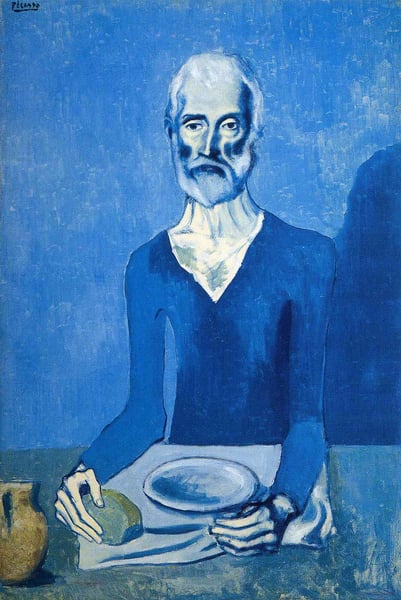
Pablo Picasso · Expressionism, Symbolism · genre painting
Ascet, a work from 1903 by Pablo Picasso, is a genre painting executed in the Expressionist and Symbolist styles of that period.
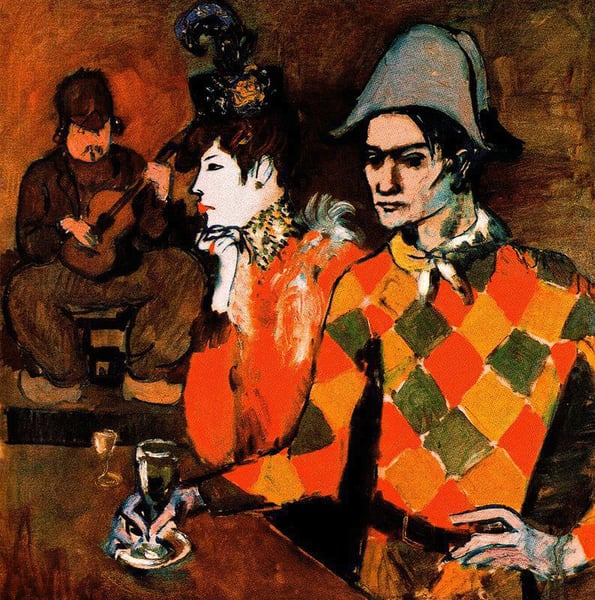
Pablo Picasso · Post-Impressionism · genre painting
At "Lapin Agile" (Harlequin with Glass), painted by Pablo Picasso in 1905, depicts a harlequin figure holding a glass within the genre painting tradition of Post-Impressionism. The work takes its title from the cabaret establishment referenced in the composition.
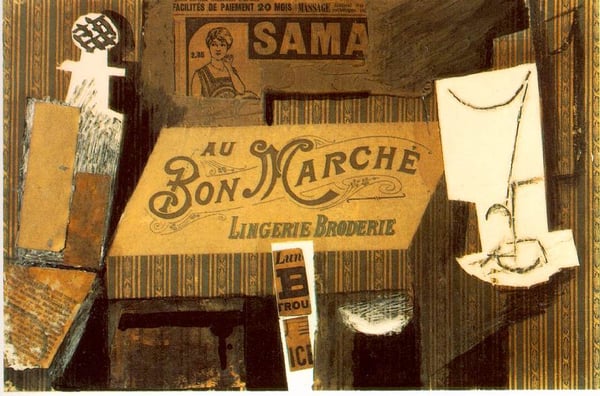
Pablo Picasso · Synthetic Cubism · still life
Au bon marché is a synthetic cubist still life by Pablo Picasso from 1913. The title references a Parisian department store, a subject that Picasso incorporated into his fragmented compositional approach characteristic of the period.
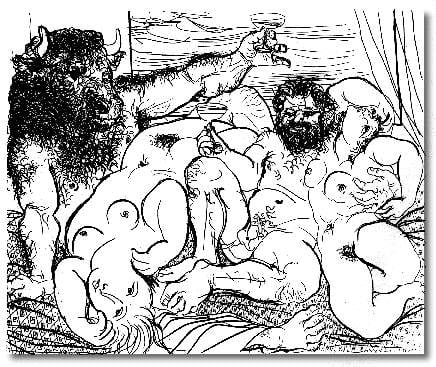
Pablo Picasso · Neoclassicism · genre painting
Bacchic scene with minotaur is a 1933 neoclassical genre painting by Pablo Picasso depicting a bacchic scene that includes a minotaur.
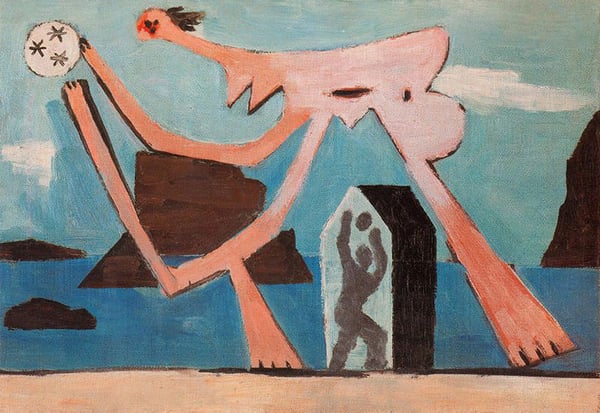
Pablo Picasso · Surrealism · genre painting
Ballplayers on the Beach is a 1928 surrealist genre painting by Pablo Picasso depicting figures engaged in ball play on a beach.
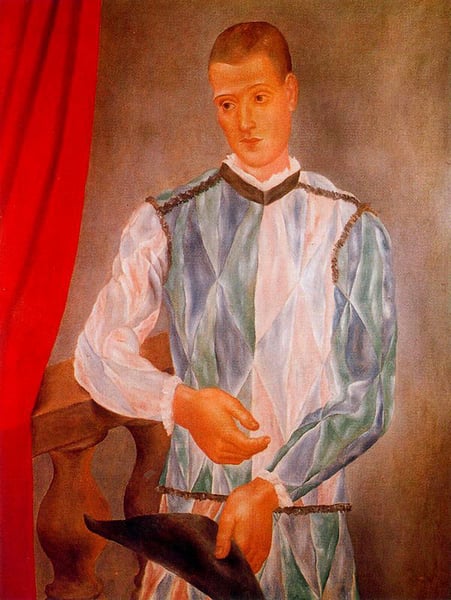
Pablo Picasso · Cubism · portrait
The Barcelona Harlequin, painted by Pablo Picasso in 1917, is a Cubist portrait that fragments the figure of a harlequin into angular, intersecting planes characteristic of the artist's approach to form during this period. The work exemplifies Cubism's systematic deconstruction of the human subject into geometric components.
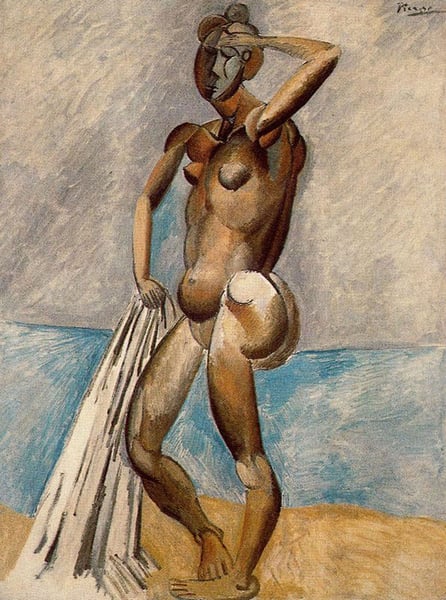
Pablo Picasso · Cubism · nude painting (nu)
La notion de baignade désigne toutes les formes de natation, ou d'ablutions, pratiquée dans le milieu naturel, ou dans un bain ou un bassin. Elle peut être pratiquée en tant que telle ou de manière associée à d'autres activités
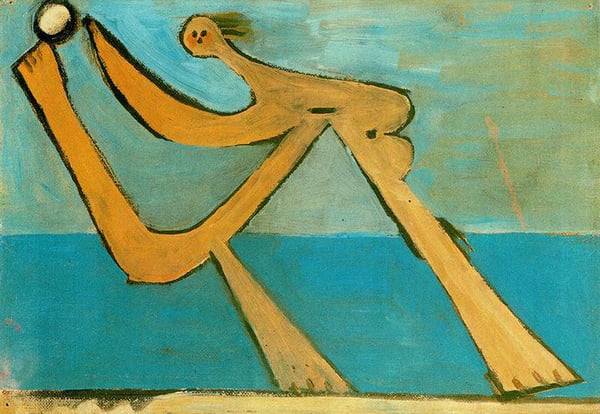
Pablo Picasso · Surrealism · nude painting (nu)
La notion de baignade désigne toutes les formes de natation, ou d'ablutions, pratiquée dans le milieu naturel, ou dans un bain ou un bassin. Elle peut être pratiquée en tant que telle ou de manière associée à d'autres activités
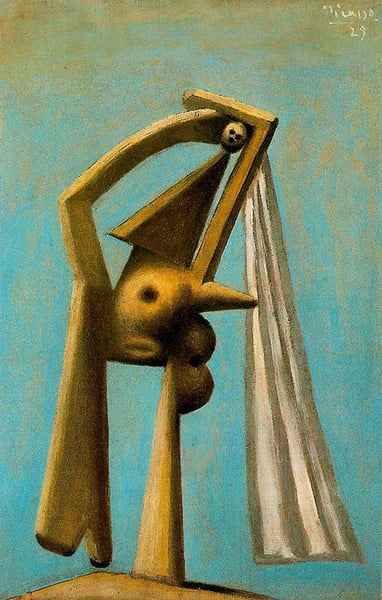
Pablo Picasso · Surrealism · nude painting (nu)
La notion de baignade désigne toutes les formes de natation, ou d'ablutions, pratiquée dans le milieu naturel, ou dans un bain ou un bassin. Elle peut être pratiquée en tant que telle ou de manière associée à d'autres activités
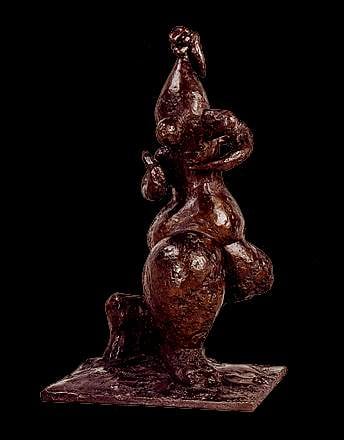
Pablo Picasso · Surrealism · sculpture
La notion de baignade désigne toutes les formes de natation, ou d'ablutions, pratiquée dans le milieu naturel, ou dans un bain ou un bassin. Elle peut être pratiquée en tant que telle ou de manière associée à d'autres activités
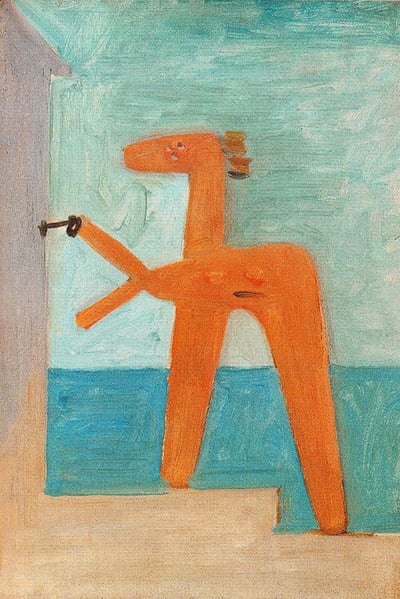
Pablo Picasso · Surrealism · nude painting (nu)
Bather opening a cabin is a 1928 surrealist nude painting by Pablo Picasso. The title names its subject directly—a figure in the act of opening a cabin—rendered in the biomorphic vocabulary characteristic of Picasso's surrealist work from this period.
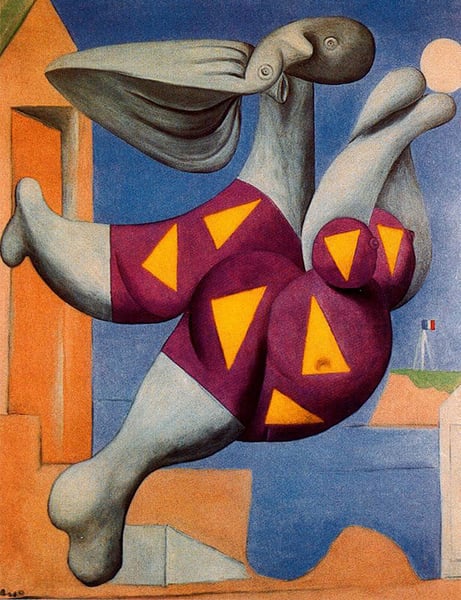
Pablo Picasso · Surrealism · genre painting
Bather with beach ball, a surrealist work by Pablo Picasso from 1932, depicts a figure with a spherical form against a seaside context.
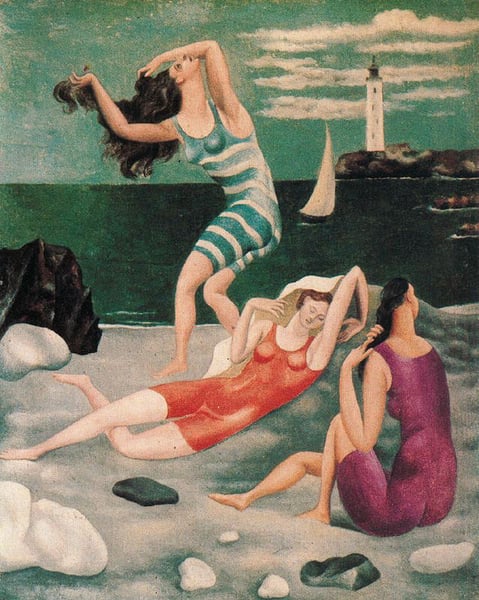
Pablo Picasso · Neoclassicism · genre painting
Le maillot de bain, ou le costume de bain en Suisse et au Canada, est un vêtement destiné à cacher certaines parties du corps lors de la pratique de la natation, de la baignade, de la détente au bord de l'eau ou, plus généralement, lors de toute activité de plein air.
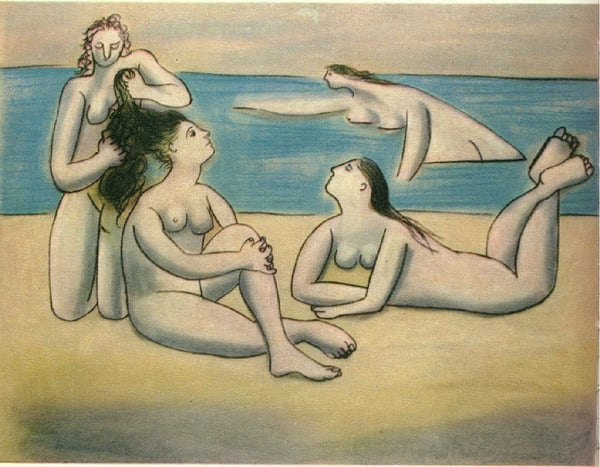
Pablo Picasso · Neoclassicism · genre painting
Le maillot de bain, ou le costume de bain en Suisse et au Canada, est un vêtement destiné à cacher certaines parties du corps lors de la pratique de la natation, de la baignade, de la détente au bord de l'eau ou, plus généralement, lors de toute activité de plein air.
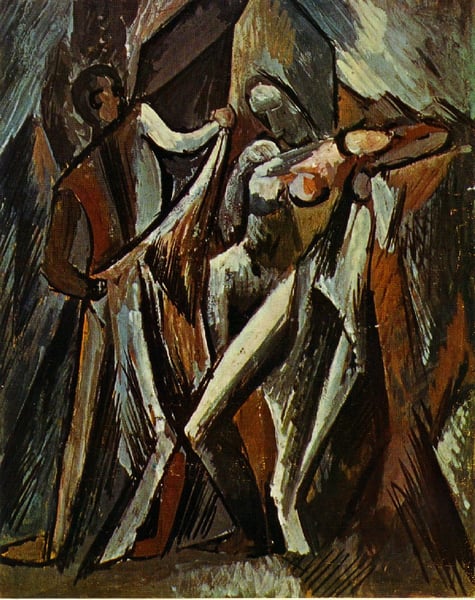
Pablo Picasso · Analytical Cubism · genre painting
Bathers Drying Themselves is a genre painting by Pablo Picasso from 1909, executed in the analytical cubist style.
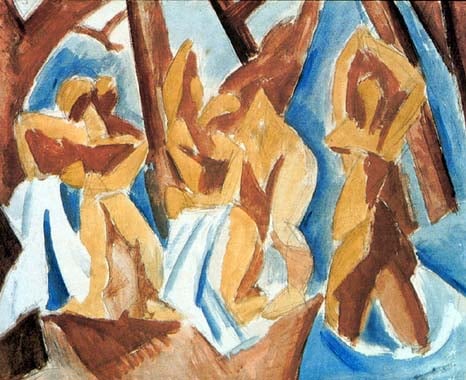
Pablo Picasso · Analytical Cubism · genre painting
Bathers in the forest is a 1908 painting by Pablo Picasso executed in the Analytical Cubist style. The work depicts bathers as its subject, rendered through the geometric fragmentation and multiple viewpoints characteristic of early Cubism.
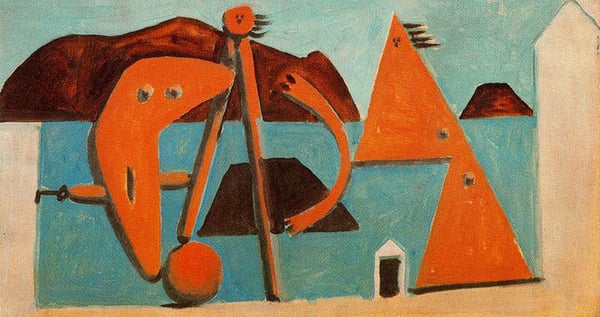
Pablo Picasso · Surrealism · genre painting
Bathers on the Beach is a 1928 surrealist genre painting by Pablo Picasso depicting bathers on a beach. The work belongs to Picasso's surrealist period and engages with the subject of figures at leisure by the seaside.
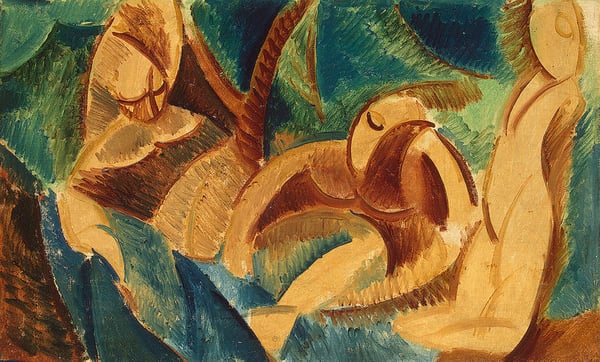
Pablo Picasso · Analytical Cubism · genre painting
La notion de baignade désigne toutes les formes de natation, ou d'ablutions, pratiquée dans le milieu naturel, ou dans un bain ou un bassin. Elle peut être pratiquée en tant que telle ou de manière associée à d'autres activités
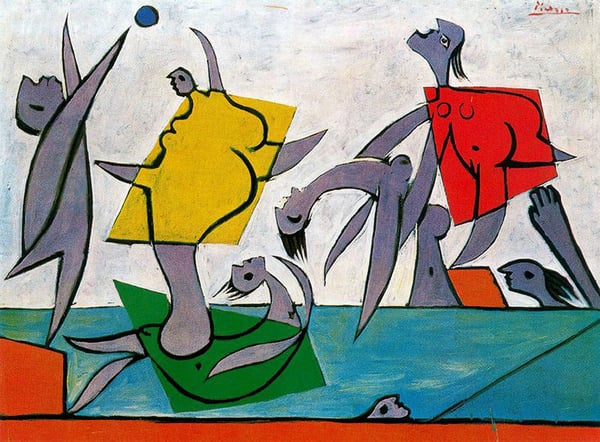
Pablo Picasso · Surrealism · genre painting
Beach game and rescue is a 1932 surrealist painting by Pablo Picasso depicting a beach scene with figures engaged in play and rescue activities, rendered in the distorted forms and dreamlike spatial logic characteristic of surrealism.
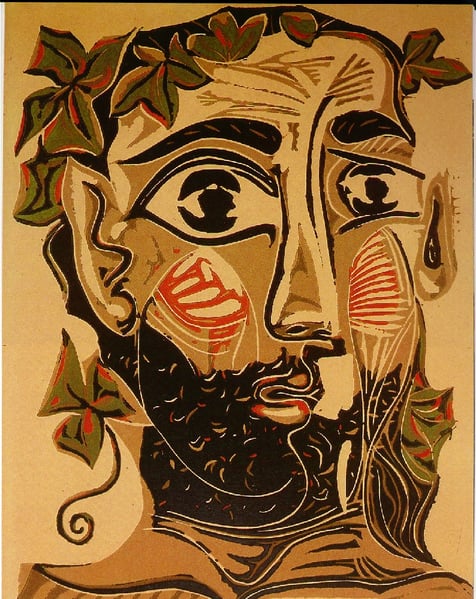
Pablo Picasso · Expressionism · portrait
Bearded Man is a 1962 portrait by Pablo Picasso in the Expressionist style. The work depicts a man with a beard, rendered according to Expressionist conventions that prioritize emotional intensity and distorted form over naturalistic representation.
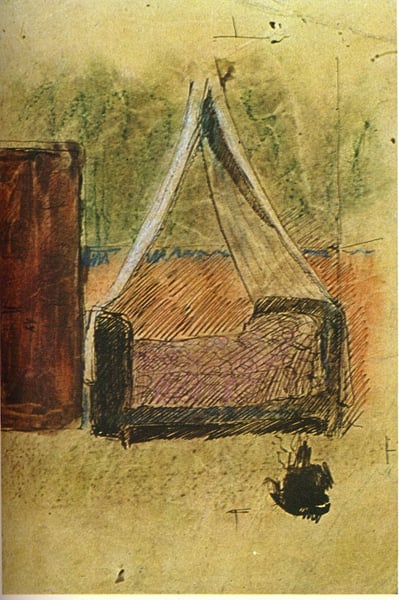
Pablo Picasso · Post-Impressionism · interior
Bed with Mosquito Nets by Pablo Picasso (1906) depicts an interior scene featuring a bed outfitted with protective netting. Working in the Post-Impressionist style, Picasso renders this domestic arrangement as his subject, capturing a functional household fixture of the period.
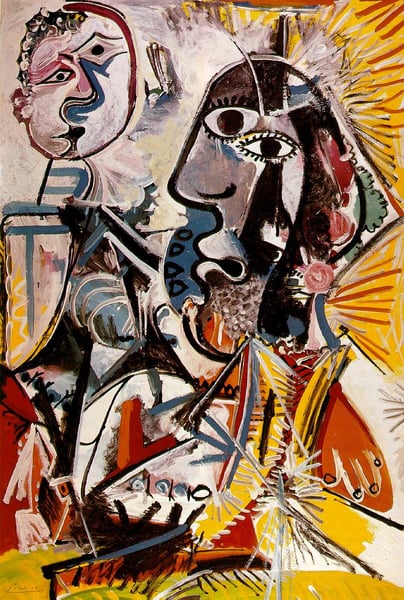
Pablo Picasso · Expressionism, Surrealism · genre painting
Big Heads is a 1969 work by Pablo Picasso executed in expressionist and surrealist styles. The painting takes the form of a genre work, engaging with figurative subjects through the formal languages of distortion and psychological imagery characteristic of those movements during that period.
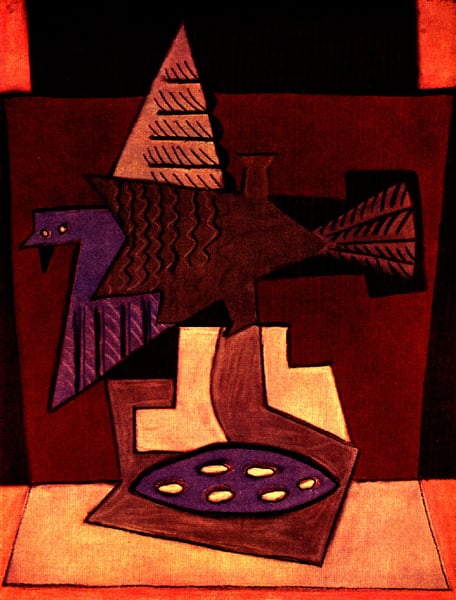
Pablo Picasso · Surrealism · symbolic painting
Birds of a Feather, a symbolic painting by Pablo Picasso from 1920, employs surrealist visual language to explore its titular theme of avian kinship or similarity.
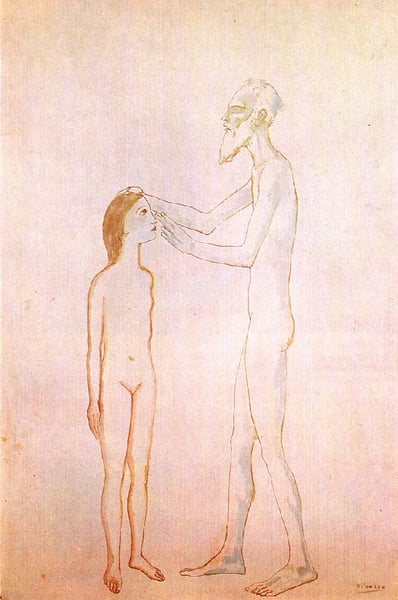
Pablo Picasso · Naïve Art (Primitivism) · genre painting
Blind Man and Girl is a genre painting by Pablo Picasso from 1904, executed in the Naïve Art style associated with Primitivism.
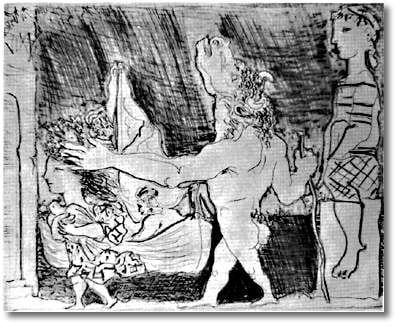
Pablo Picasso · Surrealism · mythological painting
Blind Minotaur is guided by girl is a 1934 surrealist painting by Pablo Picasso depicting the mythological figure of a blind minotaur being led by a girl. The work belongs to Picasso's surrealist period and engages with classical myth as subject matter.
Pablo Picasso · Surrealism · mythological painting
Blind Minotaur is guided by girl depicts a mythological subject in the Surrealist style, created by Pablo Picasso in 1934. The work literalizes its title by presenting the classical figure of the Minotaur in a state of blindness, led by a girl—a pairing that subverts the creature's traditional role as a labyrinthine threat.
Pablo Picasso · Surrealism · mythological painting
Blind Minotaur is guided by girl is a 1934 surrealist painting by Pablo Picasso depicting the mythological figure of a blind minotaur led by a girl. The work belongs to the surrealist movement and draws its subject from classical mythology.
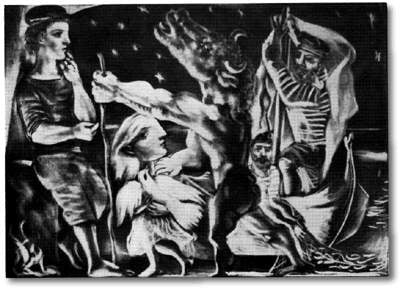
Pablo Picasso · Neoclassicism, Surrealism · mythological painting
Blind Minotaur is guided by girl through the night depicts a mythological subject in a work combining Neoclassical and Surrealist elements. Painted by Pablo Picasso in 1934, the composition shows a blind minotaur led by a girl, visualizing the encounter between these two figures as the title specifies.
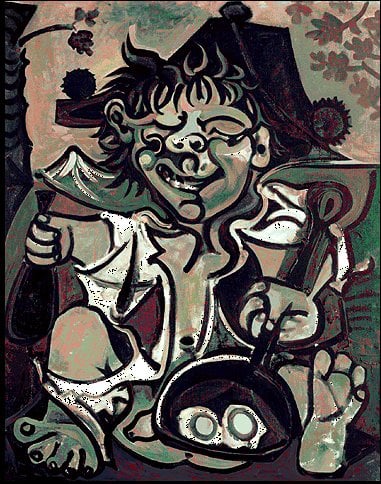
Pablo Picasso · Surrealism · genre painting
Picasso's Bobo (Velazquez-Murillo) is a 1959 surrealist work that engages with Spanish artistic tradition through its title's reference to two canonical painters of the seventeenth century.
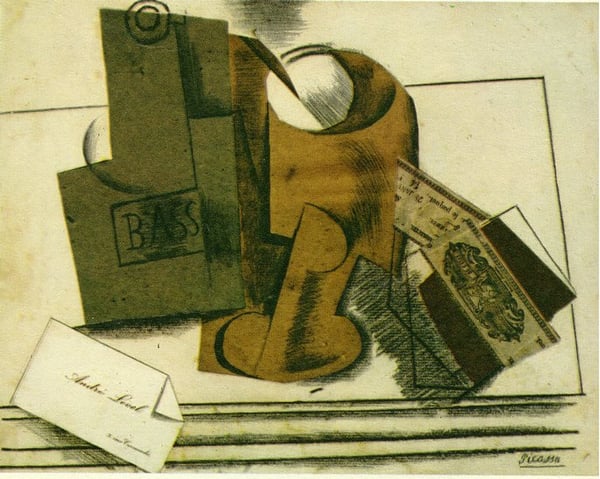
Pablo Picasso · Synthetic Cubism · still life
Bottle of Bass, Glass and Package of Tobacco is a synthetic cubist still life by Pablo Picasso from 1914, depicting the objects named in its title arranged in a composition typical of the artist's approach to fragmented and reassembled form during this period.
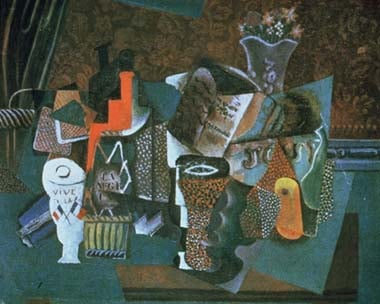
Pablo Picasso · Synthetic Cubism · still life
Picasso's Bottle of black rum (Vive la France) is a synthetic cubist still life from 1913 that takes a bottle of black rum as its subject, fragmenting and recombining its form according to the principles of cubist composition. The title's parenthetical phrase anchors the work to its moment of creation during the early twentieth century.
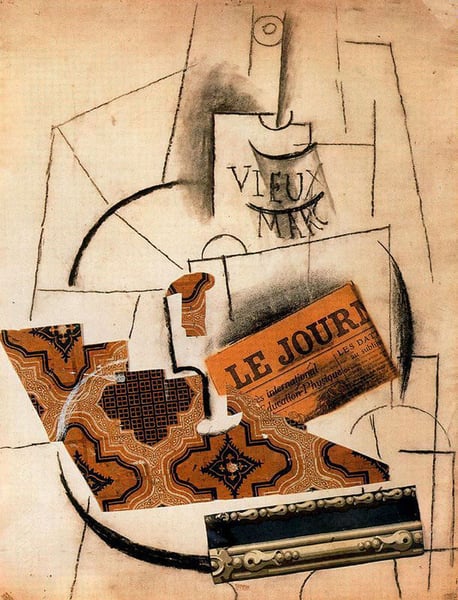
Pablo Picasso · Synthetic Cubism · still life
Bottle of Vieux Marc, Glass and Newspaper is a still-life composition by Pablo Picasso from 1913, executed in the synthetic cubist style.
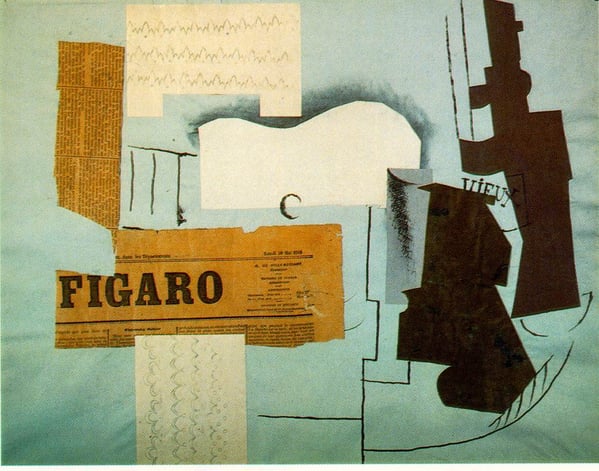
Pablo Picasso · Synthetic Cubism · still life
Bottle of Vieux Marc, Glass, Guitar and Newspaper is a still-life work in synthetic cubism created by Pablo Picasso in 1913, depicting a bottle of Vieux Marc, a glass, a guitar, and a newspaper assembled in the fractured, planar vocabulary characteristic of the style.
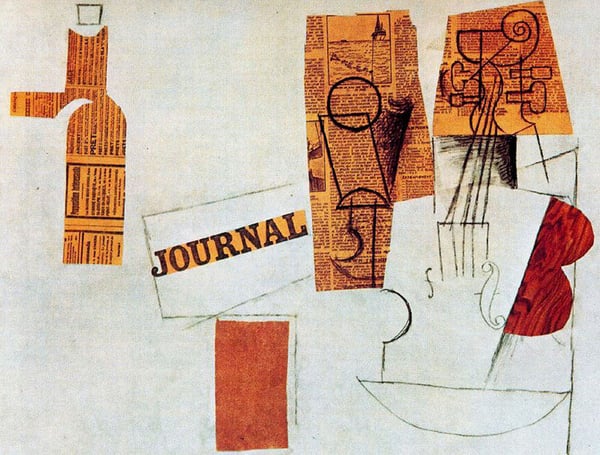
Pablo Picasso · Synthetic Cubism · still life
Bottle, glass, violin is a synthetic cubist still life by Pablo Picasso from 1912. The work assembles fragmented depictions of its three named objects—a bottle, glass, and violin—according to the formal principles of synthetic cubism, which emphasizes planar construction and the flattened picture plane rather than illusionistic depth.
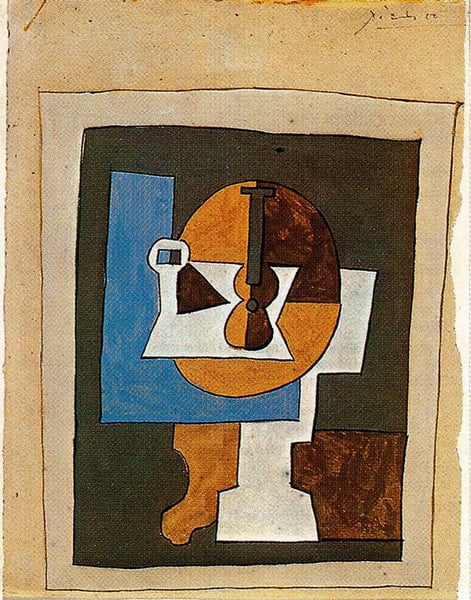
Pablo Picasso · Cubism · still life
Bowl of Fruit and Guitar is a still life by Pablo Picasso from 1920 in the Cubist style, depicting a bowl of fruit and a guitar through fragmented, recombined formal elements characteristic of Cubism.
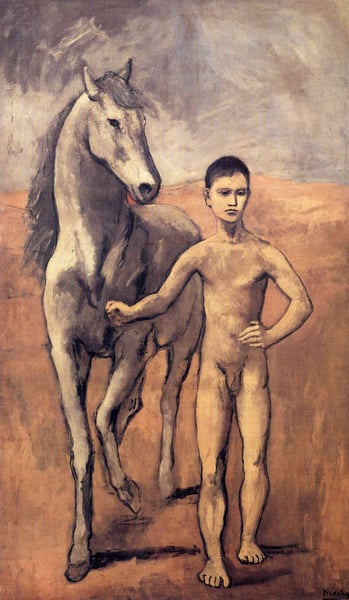
Pablo Picasso · Expressionism · genre painting
Jeune Garçon au cheval est une peinture de jeunesse de Pablo Picasso. C'est un travail de sa période rose, peint en 1905 et 1906, à Paris.
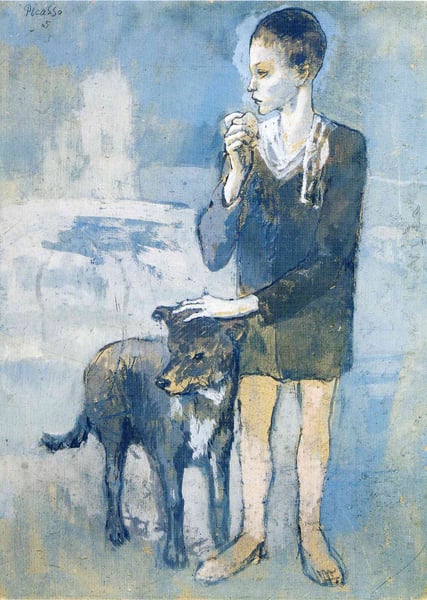
Pablo Picasso · Expressionism, Symbolism · genre painting
Garçon avec un chien, ou Garçon au chien est un tableau de scène de genre du peintre espagnol Bartolomé Esteban Murillo, réalisé entre 1655 et 1660, et conservé au Musée de l'Ermitage de Saint-Pétersbourg, en Russie.
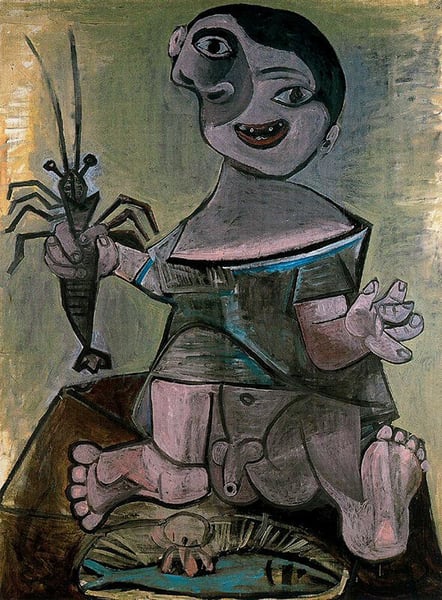
Pablo Picasso · Surrealism · genre painting
Boy with a Langosta is a surrealist genre painting by Pablo Picasso from 1941. The work depicts a boy and a langosta (lobster), rendered in the surrealist style characteristic of Picasso's mid-twentieth-century practice.
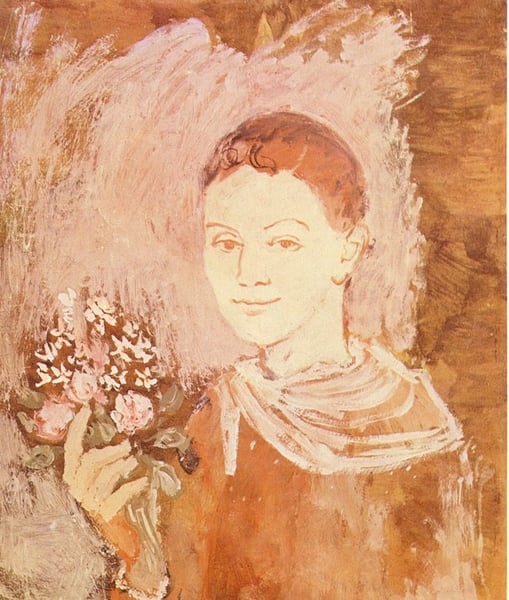
Pablo Picasso · Post-Impressionism · genre painting
Boy with Bouquet of Flowers in His Hand depicts a youth holding flowers, rendered by Pablo Picasso in 1905 within the Post-Impressionist style. The work exemplifies the genre painting tradition through its focus on a figure engaged in an everyday action.
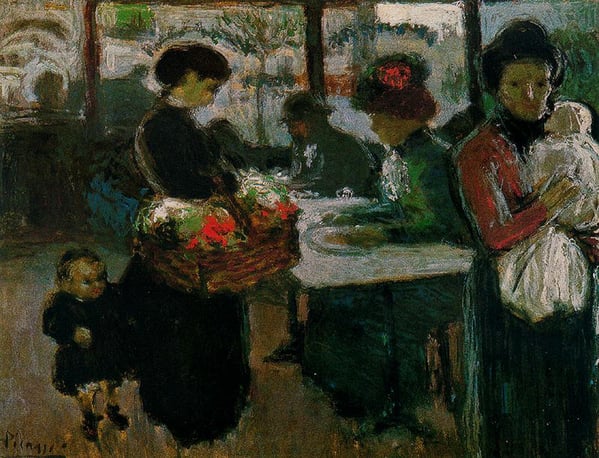
Pablo Picasso · Impressionism · genre painting
Brasserie on Monmartre is a genre painting by Pablo Picasso from 1901, created in the Impressionist style. The work depicts a scene of everyday social life in a brasserie located on Montmartre.
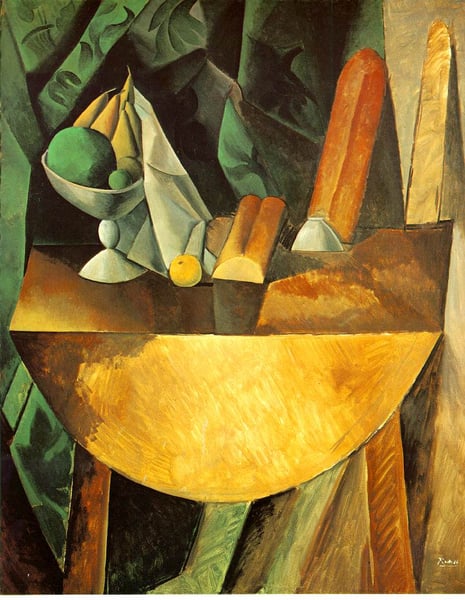
Pablo Picasso · Analytical Cubism · still life
Bread and Dish with Fruits on the Table is a still-life painting by Pablo Picasso from 1909, executed in the Analytical Cubist style. The work depicts bread, a dish, and fruits arranged on a table, fragmenting and analyzing these objects through the geometric abstraction characteristic of Cubism during this period.
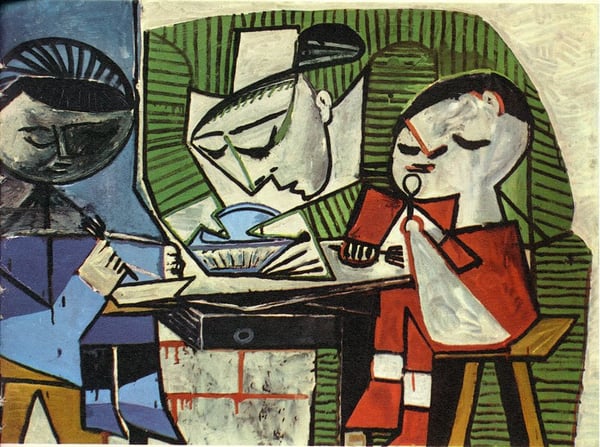
Pablo Picasso · Cubism · genre painting
Le déjeuner, ou petit déjeuner, est à l'origine le premier repas de la journée, celui qui se prend au lever ou qui rompt le jeûne. Le déjeuner est également, dans de nombreuses régions francophones, le repas pris au milieu de la journée mais cet article ne traite que du déjeuner du matin.
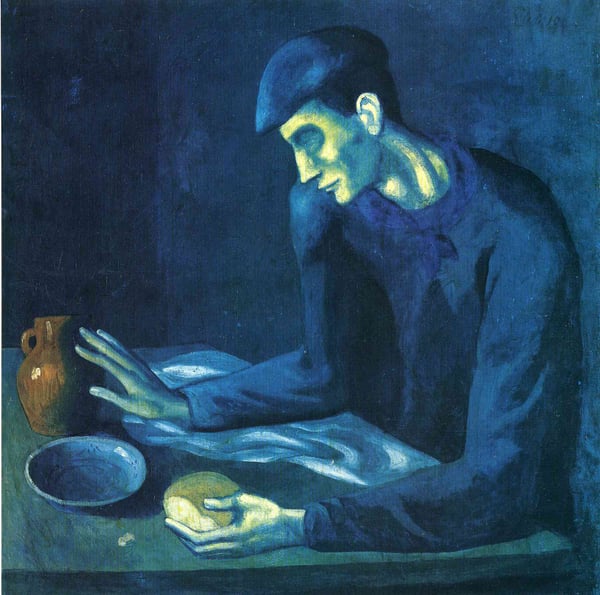
Pablo Picasso · Expressionism, Symbolism · genre painting
Breakfast of a Blind Man is a genre painting by Pablo Picasso from 1903, executed in the Expressionist and Symbolist styles. The work depicts its titular subject—a blind man at breakfast—treating an ordinary domestic moment through the registers of early modernism.
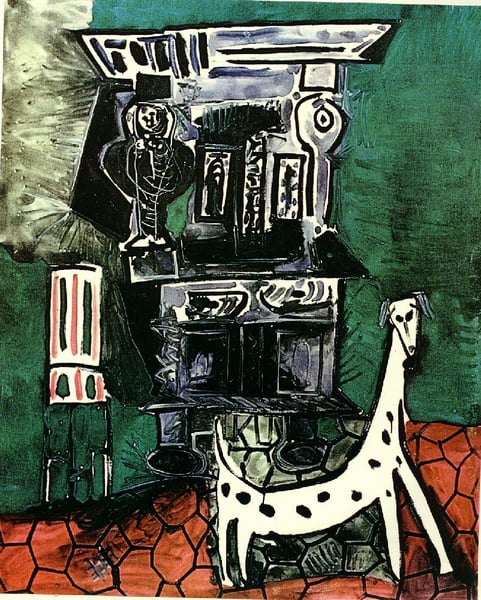
Pablo Picasso · Surrealism · interior
Buffet Henry II and armchair with dog is a 1959 Surrealist interior by Pablo Picasso depicting a buffet and armchair with a dog. The work belongs to Picasso's Surrealist practice during this period.
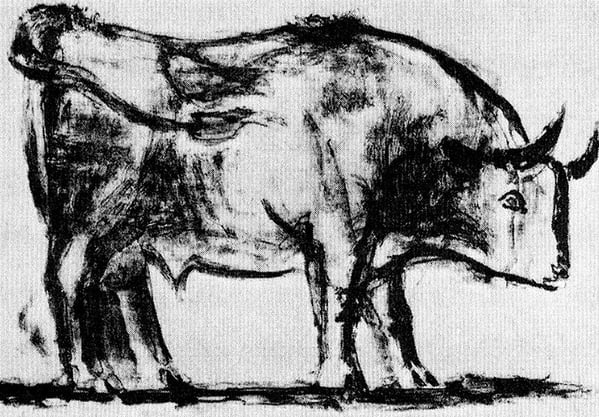
Pablo Picasso · Expressionism · animal painting
Bull (plate I) is an animal painting by Pablo Picasso from 1945, executed in the Expressionist style. The work depicts a bull as its subject, rendered within Picasso's characteristic approach to the form during the mid-twentieth century.
Pablo Picasso · Expressionism · animal painting
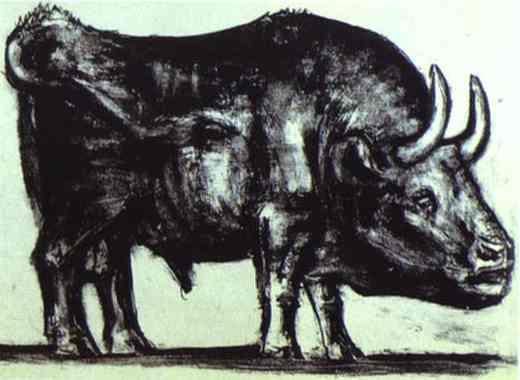
Bull (plate II) is an animal painting by Pablo Picasso from 1945 in the Expressionist style. The work depicts a bull, rendered in the expressive manner characteristic of that movement during the post-war period when Picasso created this print.
Pablo Picasso · Expressionism · animal painting
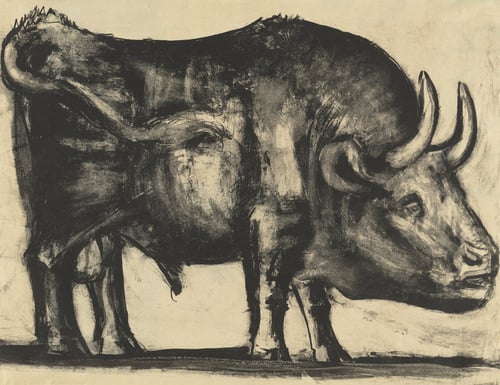
Bull (plate III) is an expressionist animal painting by Pablo Picasso created in 1945. The work depicts a bull, rendered in Picasso's characteristically bold expressionist style of that period.
Pablo Picasso · Cubism · animal painting
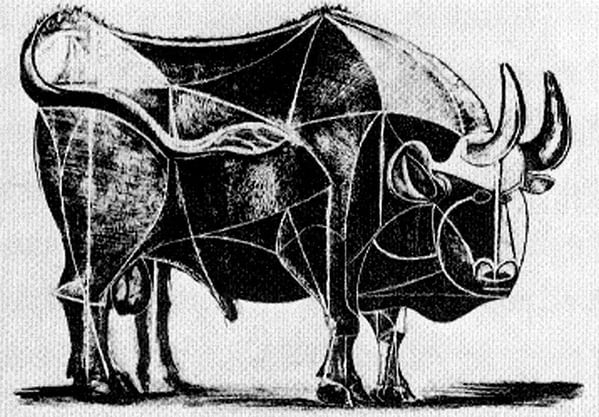
Bull (plate IV) is a cubist animal painting by Pablo Picasso from 1945. The work depicts a bull rendered in the fragmented, geometric planes characteristic of cubism.
Aucun commentaire pour l’instant — soyez le premier.